_1776908283214.jpg)




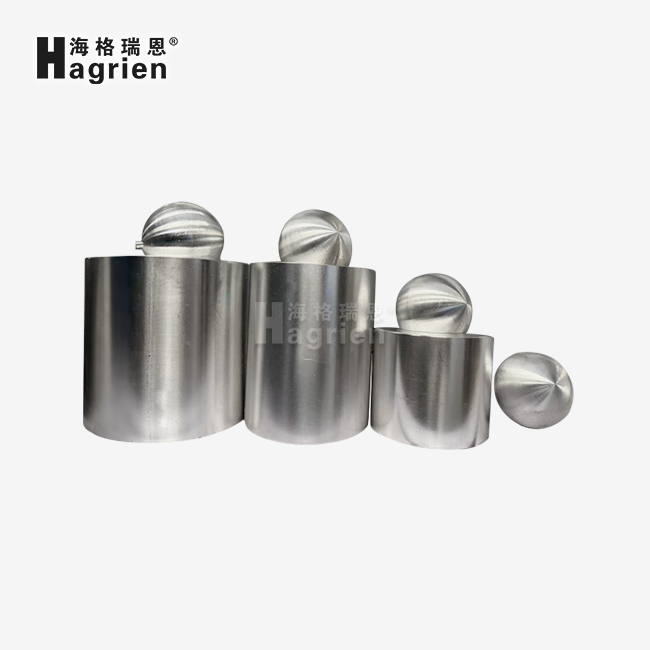
Magnesium Alloy Ball Seat
Form: Customizable
Dissolution rate: Adjustable by alloy design and test condition
Documents: CNAS test/COA/COC available.
- Product Description
Magnesium Alloy Ball Seat: Engineered Dissolvable Solution for Multi-Stage Fracturing
When your completion program requests both mechanical astuteness and post-frac cleanup effectiveness, HAGRIEN's Magnesium Alloy Ball Seat conveys demonstrated execution. Made with closed-loop control from amalgam plan to exactness machining, our seats give ductile quality extending from 280 MPa to 450 MPa and withstand differential weights up to 10,000 psi (70 MPa) at temperatures coming to 150°C. With expulsion capability up to Ø300 mm, strict microstructure consistency, and movable disintegration energy custom fitted to your wellbore chemistry, each component comes with full traceability documentation (COA/COC/SDS). You get unsurprising execution, repeatable quality, and the unwavering quality you require to decrease mediation costs over your program.
 What Is a Magnesium Alloy Ball Seat?
The item is a high-performance downhole component outlined for multi-stage pressure driven breaking and well completion operations.
It serves as a landing profile for frac balls amid high-pressure zone isolation.
Here's why it things to you:
Traditional steel or composite seats require costly mechanical processing after incitement. That implies coiled tubing, workover rigs, and expanded non-productive time.
Our seats fathom this problem.
Engineered from progressed magnesium lattice composites, they keep up auxiliary astuteness amid pumping operations. At that point they break up totally in wellbore fluids—brine or acid—leaving a full-bore generation path.
No drill-out. No flotsam and jetsam. No mediation crew.
This innovation straightforwardly decreases your Add up to Taken a toll of Proprietorship (TCO) and quickens Time to Production.
CNC Machining
Key Technical Properties
Your completion tools must perform under extreme conditions. Our Magnesium Alloy Ball Seat is engineered for exactly that.
The Magnesium Alloy Ball Seat Parameters | |||||||
Item No. | Casing Pipe | ID(mm) | OD(mm) |
Temperature |
Press Level |
OD of the ball(mm) | |
ID (In) | OD(In) | ||||||
HG-400 | 3.5 | 104.3-106 | 22.00 | 66.00 | 40℃-160℃ | 70 Mpa | 35.00 |
HG-400 | 4.5 | 104.3-106 | 40.00 | 88.00 | 40℃-160℃ | 70 Mpa | 50.00 |
HG-400 | 5.0 | 104.3-106 | 40.00 | 92.90 | 40℃-160℃ | 70 Mpa | 55.00 |
HG-400 | 5.5 | 114.3-116 | 35.00 | 87.90 | 40℃-160℃ | 70 Mpa | 55.00 |
HG-400 | 5.5 | 114.3-116 | 42.00 | 99.80 | 40℃-160℃ | 70 Mpa | 55.00 |
HG-400 | 5.5 | 114.3-116 | 45.00 | 102.50 | 40℃-160℃ | 70 Mpa | 55.00 |
H4-300 | 5.5 | 121.36-124.26 | 50.00 | 110.00 | 40℃-160℃ | 70 Mpa | 60.00 |
Raw material parameter:
Serial No. | Tensile Strength/MPa | Yield Strength/MPa
| Elongation% | Hardness/HB | mg/ DissolutionRate(cm2.h) | Dissolution Condition |
AML001 | ≥310 | ≥220 | ≥15.0 | ≥60 | 2-10 | 93℃/3%KCL |
AML003 | ≥200 | ≥140 | ≥32 | ≥50 | 1-5 | 93℃/3%KCL |
AML004 | ≥220 | ≥160 | ≥12.0 | ≥55 | 130-150 | 93℃/3%KCL |
AML005 | ≥300 | ≥200 | ≥15.0 | ≥60 | 90-140 | 93℃/3%KCL |
AML006 | ≥270 | ≥190 | ≥13.0 | ≥55 | 40-80 | 50℃/0.84%KCL |
AML007 | ≥290 | ≥190 | ≥14.0 | ≥60 | 40-80 | 93℃/3%KCL |
AML009 | ≥190 | ≥120 | ≥30 | ≥50 | 20-70 | 93℃/3%KCL |
AML010 | ≥220 | ≥170 | ≥14.0 | ≥55 | 30-50 | 50℃/0.84%KCL |
AML011 | ≥220 | ≥170 | ≥12.0 | ≥55 | 30-60 | 50℃/0.84%KCL |
AML012 | ≥260 | ≥210 | ≥9.0 | ≥70 | 60-100 | 50℃/0.84%KCL |
AML013 | ≥370 | ≥260 | ≥2.5 | ≥90 | 50-70 | 93℃/3%KCL |
AML014 | ≥195 | ≥125 | ≥27 | ≥45 | 15-35 | 93℃/3%KCL |
AML015 | ≥310 | ≥220 | ≥7.0 | ≥80 | 50-70 | 93℃/3%KCL |
AML016 | ≥230 | ≥180 | ≥12.0 | ≥55 | 45-65 | 50℃/0.84%KCL |
AML017 | ≥260 | ≥220 | ≥5 | ≥65 | 50-70 | 43℃/0.05%KCL |
AML018 | ≥400 | ≥280 | ≥4.0 | ≥100 | 40-60 | 93℃/3%KCL |
AML020 | ≥100 | ≥60 | ≥7.0 | ≥42.0 | 50-100 | 93℃/3%KCL |
AML021 | ≥400 | ≥300 | ≥3.0 | ≥100 | 40-60 | 93℃/3%KCL |
AML022 | ≥275 | ≥200 | ≥12 | ≥65 | 90-110 | 50℃/0.84%KCL |
AML023 | ≥450 | ≥340 | ≥3.0 | ≥100 | 10-30 | 93℃/3%KCL |
AML024 | ≥270 | ≥220 | ≥5.0 | ≥70 | 60-120 | 50℃/0.84%KCL |
AML025 | ≥360 | ≥260 | ≥3.0 | ≥100 | 40-70 | 50℃/0.84%KCL |
AML026 | ≥310 | ≥220 | ≥8.0 | ≥60 | 0-5 | 93℃/3%KCL |
Why These Numbers Matter to You
Strength-to-weight proportion: At 1.8 g/cm³, transport and taking care of dangers drop essentially compared to steel alternatives.
Controlled debasement energy: We plan amalgam chemistry and prepare parameters around your wellbore conditions—temperature, saltiness, and liquid type.
Uniform disintegration: Our electrochemical micro-galvanic erosion property guarantees the situate breaks down equitably, not unpredictably.
Quality affirmation: Each clump is confirmed in our CNAS-accredited HTHP research facility. You get total documentation to back review and provider qualification.
Core Advantages You Can Count On
Eliminate or Reduce Post-Frac Milling
You no longer require to send processing units or coiled tubing to clear the wellbore. The Magnesium Alloy Ball Seat vanishes on plan, diminishing intercession time and labor costs.
Full-Metal Structure for Mechanical Integrity
Unlike composite options, our all-metal plan gives a metal-to-metal seal able of withstanding extraordinary differential weights amid stimulation.
Controlled Dissolution for Wellbore Cleanup
Dissolution timing is not mystery. We build it based on your supply chemistry, liquid contact, and temperature profile. This consistency makes strides arranging and diminishes risk.
Shorten Time to Production
When the situate breaks down naturally, you skip the holding up period for drill-out operations. Your well moves to generation faster.
Ideal for Multi-Stage Fracturing Workflows
In plug-and-perf operations over handfuls of stages, amassing of conventional flotsam and jetsam gets to be unmanageable. Our dissolvable seats unravel that bottleneck entirely.
Where You'll Use This Technology
1. Multi-Stage Plug-and-Perf in Horizontal Wells
You're separating handfuls of stages in a single trip. Conventional seats would make a flotsam and jetsam issue inconceivable to process out efficiently.
Our seats are coordinates into dissolvable bridge plugs. They give a secure seal amid high-rate infusion, at that point break up completely—eliminating stuck flotsam and jetsam chance in sidelong sections.
2. High-Pressure/High-Temperature (HPHT) Reservoirs
Deep wells and HPHT situations request more than elastomers or composites can handle.
Our built magnesium grades keep up execution at differential weights up to 10,000 psi and temperatures coming to 150°C. You get a steady metal-to-metal seal all through the incitement stage, taken after by modified degradation.
3. Remote or Offshore Completions
Intervention costs in seaward or farther areas are restrictive. Mobilizing processing units can delay generation by weeks.
Our seats offer a "set-and-forget" arrangement. Store brine clears the wellbore consequently, slicing TCO and quickening cash flow.
4. Acid Stimulation in Carbonate Reservoirs
In carbonate arrangements, you're occupying corrosive into particular zones. The acidic environment really quickens situate evacuation once treatment finishes.
This guarantees prompt generation status without extra cleanup operations.
5. Temporary Zonal Isolation
Any application requiring brief separation taken after by unhampered stream benefits from dissolvable innovation. Our seats give the mechanical quality you require forthright and the vanishing you require afterward.
Why HAGRIEN's Manufacturing Approach Makes a Difference
Materials + Downhole Tools Integration
We don't just sell components. We design alloy systems and process parameters around your operating conditions—temperature, salinity, fluid chemistry, and dissolution timeline.
This application-oriented approach ensures stable, repeatable performance.
Large-Diameter Capability with Consistency Control
Our extrusion capacity reaches up to Ø300 mm. Strict process discipline delivers uniform microstructure, dimensional stability, and high surface quality.
That consistency reduces your downstream machining risks and scrap rates.
Closed-Loop Manufacturing
From alloy formulation to process optimization, validation, and production, everything happens in-house.
You benefit from:
- Scalable transition from prototype to mass production
- Application-specific material selection guidance
- Repeatable and controlled production windows
Verification-First Approach
Our CNAS-accredited HTHP laboratory validates every batch. You receive full documentation packages, batch traceability, and inspection records.
This makes supplier qualification and audit processes smooth and predictable.
Reliable Lead Times
- Standard products: 2–4 weeks
- Customized solutions: 4–8 weeks
- Expedited delivery: Available on request
With 7+ years of continuous production experience since 2019, safety stock for standard sizes, and in-house control of critical processes, we deliver on schedule.
 Engineering Support & Customization
Drawing-Based Production
Send us your technical drawings. We'll manufacture to your exact specifications.
Prototype Development and Scaling
We support material + structural co-design, helping you reduce trial-and-error costs and accelerate commercialization.
FAT and Verification Plan Support
Our engineering team works with you to define acceptance criteria and verification protocols, ensuring alignment with your program requirements.
Frequently Asked Questions (FAQ)
Q: How long does it take for the product to dissolve?
A: Dissolution time is adjustable based on alloy formulation and wellbore conditions. Typical ranges are 24 hours to several weeks. We work with you to design the dissolution profile that matches your production schedule and fluid chemistry.
Q: Will the seat maintain integrity during high-pressure pumping operations?
A: Yes. Our seats are engineered to withstand differential pressures up to 10,000 psi and temperatures up to 150°C during stimulation. Dissolution begins only after exposure to wellbore fluids for the designed contact period.
Q: What documentation do you provide for quality assurance?
A: Every batch includes a Certificate of Analysis (COA), Certificate of Conformance (COC), and Safety Data Sheet (SDS). Full traceability records and inspection reports are available to support audit and supplier qualification.
Q: Can you customize the seat design to our specific tool dimensions?
A: Absolutely. We offer drawing-based production and work closely with your engineering team to ensure dimensional compatibility, performance requirements, and dissolution timing align with your completion design.
Q: What is the lead time for customized seats?
A: Customized solutions typically require 4–8 weeks from order confirmation. For urgent projects, expedited delivery options are available. Standard products ship within 2–4 weeks.
Q: How do you ensure consistency across large production runs?
A: Our closed-loop manufacturing system controls every step—from alloy melting and extrusion to precision machining. Strict process discipline, in-house metallurgy control, and batch verification ensure uniform microstructure and repeatable performance.
Q: Are your products compliant with industry standards?
A: Yes. We operate under ISO 9001, ISO 14001, and ISO 45001 certifications. Our alloy compositions follow ASTM B107/B107M standards, and our CNAS-accredited laboratory ensures compliance with quality and safety requirements.
Q: Do you support international shipping and export documentation?
A: Yes. With operational presence in the United States and experience serving global oil and gas operators, we handle export documentation, logistics coordination, and compliance with international shipping requirements.
Ready to Reduce Your Intervention Costs?
Get a quote within 1–3 business days. Contact us at cyrus@us-hagrien.com to discuss your completion program requirements for Magnesium Alloy Ball Seat.

USER EVALUATE
Here is the customer's evaluation of us
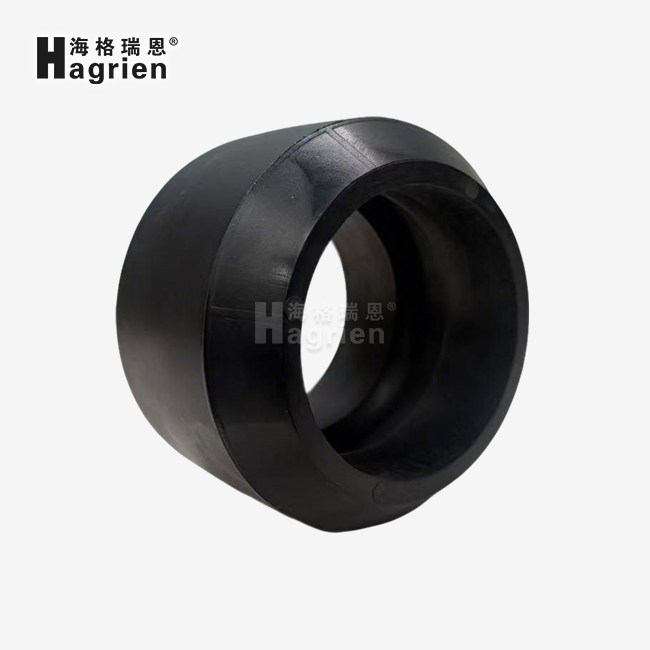 VIEW MORERubber Element
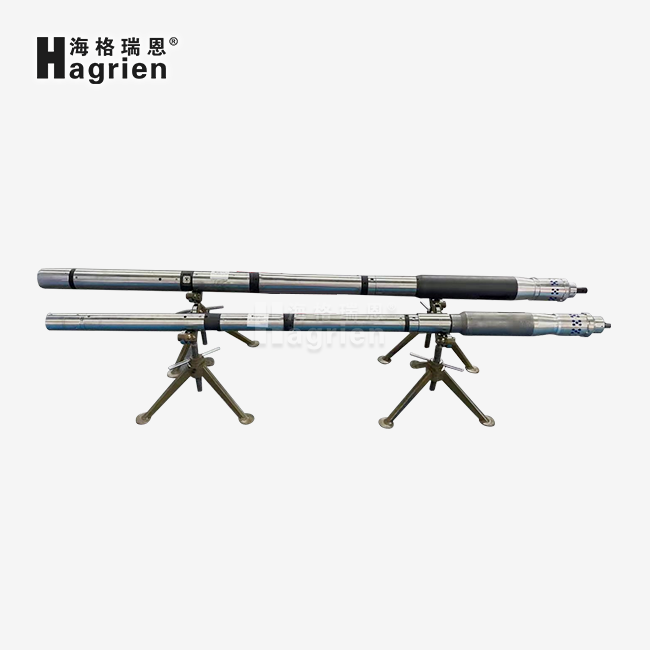 VIEW MOREElectric-hydraulic Setting tool
 VIEW MOREControlled Degradation Magnesium Alloy Plugging Ball
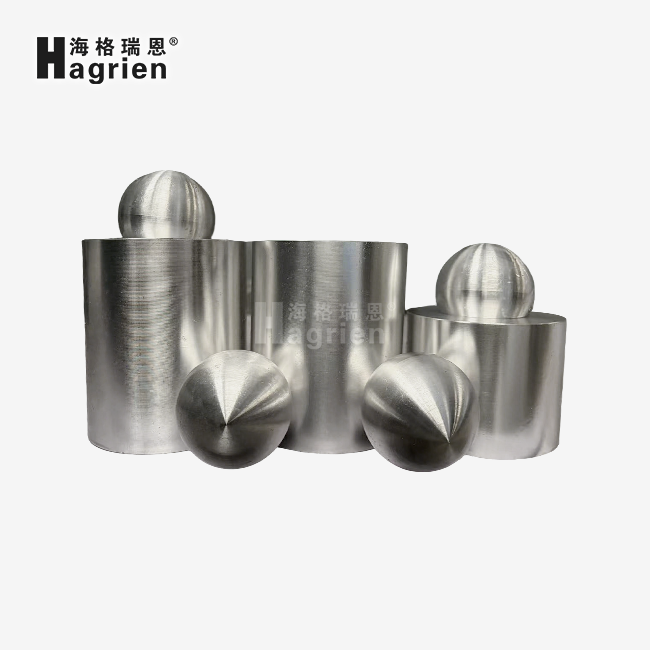 VIEW MOREFull-Metal Degradable Magnesium Alloy Frac Ball
 VIEW MOREPyrotechnic Setting tool
 VIEW MOREMechanical setting tool
 VIEW MOREWellbore sealing Elastomer Element
 VIEW MOREWellbore sealing Rubber Element