_1776908283214.jpg)




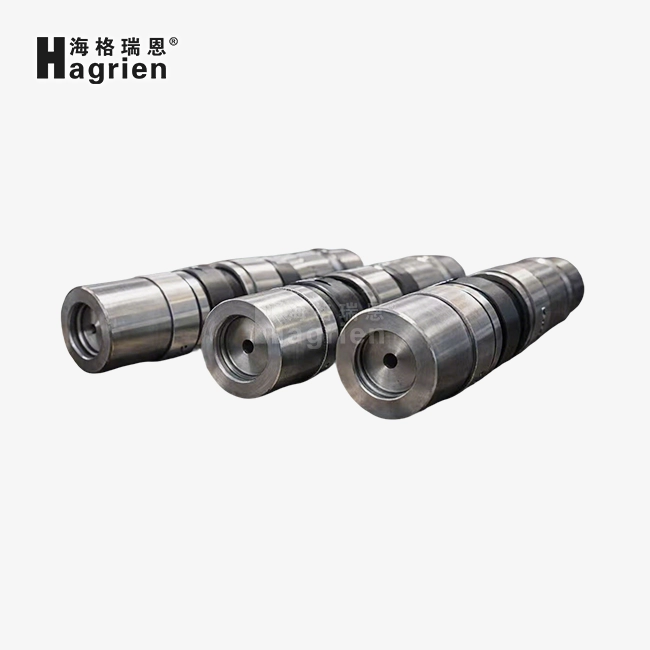
Horizontal Well Bridge Plug
Horizontal Well Bridge Plugs: The Core Technology Powering Efficient Unconventional Oil & Gas Development
In the development of unconventional resources such as shale gas and tight oil, horizontal drilling combined with staged hydraulic fracturing has become the key method to boost single-well production and ultimate recovery. At the heart of this process lies the horizontal well bridge plug — the indispensable “throat core” tool that enables precise zonal isolation and efficient stimulation. 1. What is a Horizontal Well Bridge Plug? Three Irreplaceable Core Functions
A horizontal well bridge plug is a pumpable, settable, and sealable downhole isolation tool designed to divide long horizontal reservoir sections into multiple independent stimulation units. It is the essential companion tool for staged fracturing operations.
Unlike conventional vertical well packers, it must handle gentle wellbore trajectories, high friction, and strong reservoir heterogeneity. Its three core functions are irreplaceable:
1. Precise Zonal Isolation: Divides kilometer-long horizontal sections into several smaller stages based on geological differences, preventing cross-flow between high- and low-permeability zones. This enables independent staged fracturing and targeted volume stimulation.
2. High-Pressure Sealing and Control: After setting, it achieves high-pressure wellbore sealing with a maximum rating of 105 MPa and temperature resistance up to 175°C. It fully supports high-pressure fracturing in deep and ultra-deep horizontal wells, preventing fluid channeling and pressure leakage.
3. Simplified Wellbore Operations: Replaces traditional packer layering processes, achieving “one-trip, multi-stage, continuous operation”. This significantly reduces trip times, shortens operation cycles, and lowers downhole risks.
2. Main Types: Speed-Drill Composite vs. Dissolvable Bridge Plugs
After years of technical iteration, mainstream bridge plugs fall into two categories.
Speed-Drill Composite Bridge Plugs (Most Widely Applied)
These are the primary tools for conventional shale oil and tight gas horizontal well stimulation. The main body uses high-strength resin composite materials combined with slip systems and metal mandrels.
Key Advantages:
• Reliable sealing with arc-face seal design, stable pressure bearing, high temperature resistance.
• High setting stability with anti-rotation and anti-downward movement mechanisms.
• High milling efficiency: lightweight composite allows fast milling with coiled tubing; small debris volume, easy flowback, low risk of wellbore blockage.
Application Scenarios: Conventional medium-shallow horizontal wells, multi-stage staged fracturing wells, and production wells requiring full-bore access.
Dissolvable Bridge Plugs (Next-Generation High-Efficiency Energy-Saving Technology)
Dissolvable bridge plugs are innovative zero-residue stimulation tools. The core material is magnesium-aluminum alloy that dissolves automatically in downhole formation water or fracturing fluid.
Key Advantages:
• Zero milling operation: Self-dissolves after fracturing, completely eliminating coiled tubing milling and greatly reducing cost and time.
• Zero wellbore residue: No solid debris after dissolution, preventing stuck pipe and sand accumulation.
• Suitable for complex well conditions: Avoids milling difficulties in deep horizontal wells.
Application Scenarios: Deep shale gas horizontal wells, high-deviation complex trajectory wells, high-risk operations, and large-scale batch development.
Image suggestion: Insert product photos or 3D renders of both types here (see recommended images below).
3. Core Construction Workflow (Four Standardized Steps)
The mainstream process is pump-down bridge plug + perforating gun combined operation, featuring high automation and standardization.
Step 1: Tool String Pump-Down
Assemble bridge plugs, multi-stage perforating guns and centralizers into one string. Use hydraulic pumping to convey the string smoothly to the preset staging position in the horizontal section.
Step 2: Precise Setting
Activate the setting sequence via surface pressure or electric line. Slips anchor to the casing and the sealing element expands for perfect isolation.
Step 3: Fixed-Point Staged Fracturing
Using the set bridge plug as isolation boundary, perform oriented perforating and volume fracturing. Repeat for continuous multi-stage treatment across the horizontal well.
Step 4: Wellbore Post-Treatment
• Speed-drill plugs: Mill out with coiled tubing + mill shoe to establish full-bore wellbore.
• Dissolvable plugs: Simply wait for natural dissolution, then put the well on production directly.
4. Common On-Site Issues and Optimization Solutions
Common issues include pumping obstruction, setting failure, milling sticking, and debris accumulation. Targeted optimizations:
1. Pumping Obstruction — Optimize tool string with centralizers, thorough wellbore cleaning before operation, and low-friction pumping parameters.
2. Milling Sticking / Debris — Add strong magnetic fishing tools and optimize milling RPM/flow rate for full debris return.
3. High-Pressure Sealing Failure — Strictly follow standardized setting pressure, inspect casing integrity beforehand, and select high-pressure rated plugs for deep wells.
5. Technology Evolution Trends
As unconventional development moves toward deeper formations, lower costs, and larger scale, bridge plug technology evolves with three major trends:
1. Fully Operation-Free — Dissolvable plugs continue to improve and gradually replace traditional speed-drill plugs.
2. Intelligent Monitoring & Visualization — Fiber optic monitoring enables real-time tracking of setting status, sealing effectiveness, and fracturing dynamics.
3. Multi-Functional Integration — Controllable switchable bridge plugs support temporary isolation, later autonomous opening, underbalanced operations, and layered water control.
6. Conclusion
Although small in size, the horizontal well bridge plug is the indispensable “throat core” for efficient development of unconventional oil and gas. Every iteration — from early simple isolation tools to today’s intelligent dissolvable and visualization-monitored systems — has significantly improved reservoir stimulation precision, operational efficiency, and development economics.
Mastering bridge plug selection, processes, troubleshooting, and optimization is essential core competency for horizontal well operations, especially in deep and complex wells.
Looking ahead, lightweight, intelligent, maintenance-free, and zero-residue bridge plug technologies will become the core enabler for large-scale, efficient development of low-permeability and unconventional resources, continuously empowering oilfields to achieve stable production, increased output, cost reduction, and efficiency gains.

USER EVALUATE
Here is the customer's evaluation of us