




Completion Tool Selection Buying Guide
Selecting the right completion tools for an oil and gas well program is one of the most consequential procurement decisions a category manager will make. The wrong choice—whether driven by fragmented suppliers, inconsistent documentation, or unverifiable quality—can delay an entire project and expose your organization to serious interface risk. This guide walks through the key criteria, demand-matching logic, and supplier evaluation framework you need to make a sound, defensible decision when sourcing wellbore isolation hardware, setting assemblies, and zonal-isolation systems.
 What Are Completion Tools and Why Does Selection Matter?
Defining Downhole Completion Hardware
Completion tools are a special set of downhole hardware that is put in place after a well hits its goal depth. They turn a drilled hole into a controlled, working output asset. This includes things like packers, bridge plugs, frac plugs, sliding sleeves, setting tools, and rubber elements. They are all designed to keep the wellbore intact and control the flow of fluid across the producing zones.
The Cost of a Poor Procurement Decision
A 2022 SPE technical paper on well integrity failures said that interface risk between downhole parts that don't work well together caused a measured amount of non-productive time (NPT) events in multi-stage completions. Field crews pay for the cost of rework when completion tools from different suppliers don't match in terms of material grade, seal geometry, or dimensional tolerance.
How This Guide Helps
This buying guide helps you judge based on five factors: the ability of the supplier, quality certification, project-based delivery, traceability, and standardization of quotes. Each part is directly related to the problems category procurement managers have when they try to bring together a bunch of different vendors into a reliable, auditable supply framework.
Key Criteria for Evaluating Completion Tool Suppliers
To choose the right provider, you need to look beyond the list specs. The procurement teams with the most experience use an organized screening process that looks at things like academic depth, quality system development, and operational flexibility.
Here are the main factors for review that you should look into in more depth:
- One-stop supply scope: Confirm whether the supplier covers raw material, precision machining, tool assembly, and elastomer sealing elements under one roof. When materials and tools come from the same production line, interface accountability is clear and blame-shifting between vendors disappears.
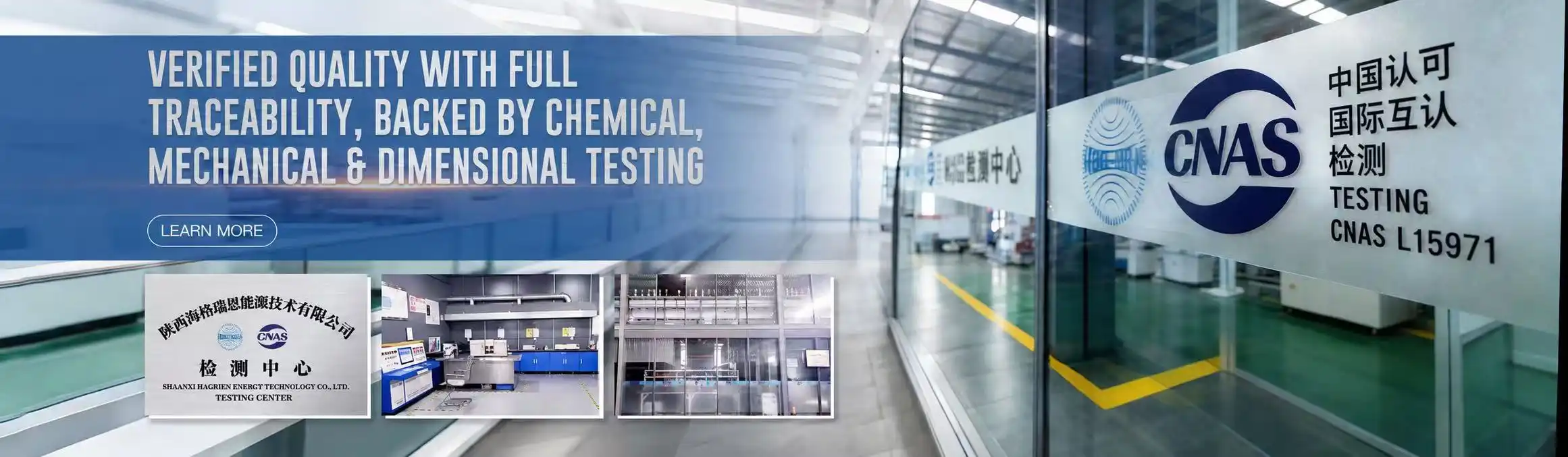
- Certification stack: API Spec Q1 registration, ISO 9001/14001/45001, and CNAS laboratory accreditation are the baseline. A CNAS-accredited HTHP test lab means the supplier can validate seal performance under actual downhole temperature and pressure conditions—not just ambient bench tests.
- Project-based delivery architecture: Ask whether the supplier can structure batch shipments aligned to project milestones and execute emergency replenishment within a committed window. For large integrated completion programs, this is often the deciding factor.
These three factors can get rid of a lot of sellers who don't meet the requirements. The next step is to look at how documentation is done and how quotes are put together after checking for skills and certification.
 Matching Supplier Capability to Your Program Demands
Conventional vs. HPHT and Deepwater Programs
Normal onshore wells can handle small changes in material and process. The HPHT and offshore projects don't do that. For sour service areas, you need suppliers who make sure the materials meet the requirements of NACE MR0175/ISO 15156 for Sulfide Stress Cracking (SSC) resistance. The choice of elastomer—NBR for normal use, FKM or Aflas for wells that are heated and contain chemicals that are very aggressive—must be written down and linked to the exact batch.
Dissolvable and Degradable Tool Categories
In multi-stage unusual completions, it is now common to use frac plugs and bridge plugs that dissolve. These are usually made from designed magnesium alloys. After breaking, these tools dissolve in brine, so there are no more costs for coiled tubing drill-outs. When looking at different providers of dissolvable completion tools, make sure that the alloy dissolving rate is tailored to the temperature, salinity, and fluid chemistry of the well, not just a general requirement.
Zonal Isolation and Multi-Stage Fracturing Systems
Infinite-stage keyless sleeve systems and hydraulically set packer units need accurate measurements and a seal that doesn't break on every run. Make sure the supplier grades their packer and plug assemblies with ISO 14310 V0 or V3 gas tests. Zero-bubble gas-tight performance, or V0, is the standard for high-risk gas wells. The V3 standard is used in lower-risk situations because it is liquid-tight.
 Comparing Supplier Profiles: What Separates Capable from Compliant
It's not true that all ISO-certified suppliers can actually deliver on a large scale. Here is how to tell the difference between real skill and mere compliance on paper.
Every part of the production process is controlled by a supplier that has vertically integrated manufacturing, which includes making alloys, extruding them up to 300 mm in diameter, CNC machining them precisely, and putting them together in-house. Microstructural uniformity from batch to batch, physical stability, and surface quality are all results of process control, not luck during inspection. A supplier that only sells blanks that have been machined cannot promise the same level of traceability.
Architecture for documentation is just as important. There should be a Certificate of Analysis (COA) and a Certificate of Conformance (COC) for each shipment that are linked to the production batch. A supplier with full batch traceability and a structured 8D corrective action process can close the loop with proof if an audit finds a nonconformance six months after delivery. If your provider doesn't have these tools, your quality team will have to fill in the gaps.
This is exactly how HAGRIEN's suite of completion tools is put together. As part of its manufacturing process, HAGRIEN does everything from melting and extruding alloys to precise cutting, assembly, and CNAS-accredited HTHP laboratory validation. Each part that it sends comes with COA/COC paperwork. Rubber packer elements, electric-hydraulic setting tools, infinite-stage keyless sleeve systems, and controlled-dissolution frac plug assemblies are all in the product line. They can be used for standard, unconventional, HPHT, and deepwater projects.
Best Practices for Supplier Onboarding and Qualification
Structure Your Pre-Qualification Audit
The pre-qualification audit should check more than just the ISO certificate expiration date. It should also check the quality management system scope, the capability of the production equipment, and the records of the calibration of inspection instruments. Before you place your first order, ask for examples of inspection plans and make sure that the supplier's internal acceptance criteria match the requirements of your project.
Establish a Change Management Protocol from Day One
If you need to make technical changes to a project, like swapping out materials, changing the size, or changing the way something is done, you must follow a written change management workflow. You should make sure that your provider has a proper Engineering Change Notice (ECN) process and that all changes require a new first-article inspection before production can start up again.
Build Batch Traceability Into Your Contract
Standard quote packages should include information about the grade of the material, the process route, the inspection plan, the trade term, and the payment schedule. Make batch tracking and COA/COC delivery terms of the contract, not extras that can be chosen or left out. This keeps you safe during checks and gives your quality team proof for any actions they need to take to fix things.
Conclusion
It's not a shopping exercise to pick completion tools for a large-scale well program; it's a supply chain risk decision. Before they can be on your approved vendor list, the provider you choose has to show that they can do everything in one place, have a quality system that has been checked, be able to deliver on time, be able to fully track each batch, and have a standard quote package. Fragmented sourcing leads to interface risk, gaps in documentation, and schedule vulnerability that are eliminated by suppliers that work together. When you put all of your completion tools and materials under one roof, you save time and money on coordination and get one partner who is responsible for the whole program.
FAQ
1. What is the difference between V0 and V3 rated completion tools?
V0 means that the seal is gastight and there are no bubbles when tested according to ISO 14310 standards. V3 is a standard for testing liquids that lets pressure drops happen in certain situations. In high-pressure gas wells, where zero loss tolerance is a must, V0 is needed.
2. How do I select the correct elastomer for a downhole packer?
The type of elastomer used depends on the temperature, H2S/CO2 partial pressure, and chemistry of the fluid in the well. For standard service wells, NBR is fine. FKM (Viton) and Aflas materials are designed to work in harsh chemical and high-temperature conditions where regular elastomers break down too quickly.
3. What makes a dissolvable frac plug reliable?
Reliable dissolvable completion tools are made to dissolve within a certain range of temperatures. This range balances the tools' mechanical strength during pumping with their controlled dissolution rate in brine at the well temperature. Suppliers should give you dissolving test results that are based on the chemistry of your fluid and the temperature of the bottomhole, not on general lab conditions.
4. Can retrievable packers be recertified after use?
Yes, retrievable packers can be used again after being completely disassembled, having the rubber replaced, having their dimensions checked, and being functionally re-certified to the original API standard. The recertified assembly must come with full inspection records.
5. What documentation should accompany each shipment?
There should be a certificate of analysis (COA) that says the chemical make-up and mechanical properties of each shipment, a certificate of conformity (COC) that says the assembly meets the requirements of the drawing and specification, and batch traceability records that connect each part to its production run.
Partner with HAGRIEN for Verified Completion Tool Supply
There are many types of completion tools made by HAGRIEN, such as electric-hydraulic setting tools, dissolvable bridge plug assemblies, and infinite-stage sleeve systems. These tools are backed by API certification, HTHP laboratory testing that is approved by CNAS, and ISO 9001/14001/45001 certification. Every part that ships comes with a COA or COC and full batch tracking. It takes 2–4 weeks to ship standard sizes, and 4–8 weeks to engineer custom solutions. You can ask for a standard quote package by emailing cyrus@us-hagrien.com or going to us-hagrien.com.
References
1. Society of Petroleum Engineers (SPE). Well Integrity and Completion Tool Failure Analysis in Multi-Stage Fracturing Operations. SPE Journal, 2022.
2. American Petroleum Institute. API Specification Q1: Specification for Quality Management System Requirements for Manufacturing Organizations for the Petroleum and Natural Gas Industry. 9th Edition, 2013 (Addendum 1, 2015).
3. International Organization for Standardization. ISO 14310: Petroleum and Natural Gas Industries — Downhole Equipment — Packers and Bridge Plugs. ISO, 2008.
4. NACE International / ISO. NACE MR0175 / ISO 15156: Petroleum and Natural Gas Industries — Materials for Use in H2S-Containing Environments in Oil and Gas Production. 3rd Edition, 2015.
5. World Oil. Dissolvable Plug Technology and Its Role in Reducing Completion Costs in Unconventional Wells. World Oil Magazine, 2021.
6. Journal of Petroleum Technology. Zonal Isolation Best Practices for HPHT and Deepwater Completions. JPT, Society of Petroleum Engineers, 2020.

USER EVALUATE
Here is the customer's evaluation of us