




How to Select an Interventionless Completion System for Long Laterals
To select an interventionless completion system for long laterals, start with a written design basis that lists lateral length, trajectory, pressure, temperature, and fluid chemistry. Next, compare how each option deploys, isolates zones, and avoids later intervention. Then request test records, field references, and traceable materials before you approve a supplier. Finally, build a weighted scorecard that counts rig time, coiled-tubing runs, and production risk, not just tool price. I follow this order because it ties the decision to well data and total cost. Below, I walk through each step in plain language.
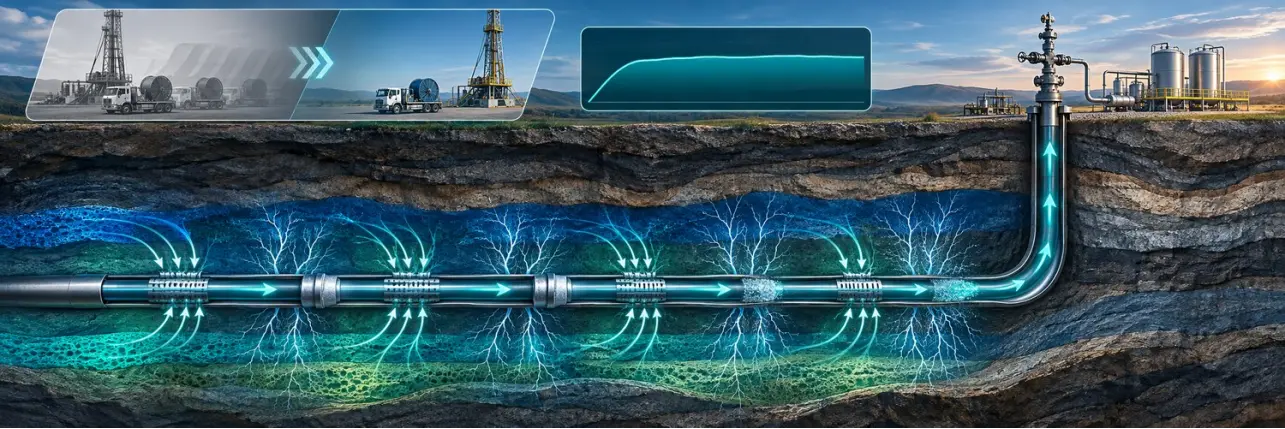
Start With the Well, Not the Product Catalog
Define the Completion Requirements Before Comparing Systems
Before I compare any product, I write down the design basis. It lists measured depth, true vertical depth, lateral length, trajectory, hole and casing size, pressure, temperature, fluid chemistry, and expected rates. Then I decide what the well needs: multizone isolation, selective production, injection control, or surface-actuated functions. Procurement items go on the same page. These include standards, certificates, delivery dates, installation support, spare parts, and after-sales service. Operators that complete many wells each year can reuse one design basis across a pad or a full program. When this step is vague, every later quote becomes harder to compare. An interventionless completion system should be judged against this page, not against a brochure.
Analyze the Main Challenges of Completing Long Laterals
Long laterals bring problems that short wells hide. High contact forces, tortuous paths, cuttings beds, and differential sticking can stop a string before total depth. After installation, isolation elements face pressure changes, thermal cycling, formation movement, and uneven hole quality. Access is the bigger issue. Coiled tubing loses reach as friction builds along a long horizontal, so a remedial run costs more and has a lower chance of success. Heterogeneous reservoirs add uneven inflow, heel-toe effects, early water or gas breakthrough, and inefficient stimulation. For an interventionless completion system, the access problem is the main reason to choose it. I treat deployment, isolation, access, and production control as one design problem. If I fix one and ignore the rest, the savings can disappear.
Match the System to Specific Long-Lateral Well Scenarios
Different types of wells put different amounts of weight on different features. Horizontal oil wells with uneven inflow need to be able to balance their inflow, protect against erosion, and keep an eye on their production. Gas wells that are under a lot of pressure and heat need gas-tight seals and the right materials. Self-controlling the flow of water into mature, water-sensitive pools may work well. Multistage unconventional wells need to be able to work with fracture isolation, stimulation pressure, sleeves, and high-rate flow. It is important for extended-reach wells to have low drag and only one trip for installation. Injection and geothermal wells add loading, scaling, and reverse flow that happen over and over again to the review. An interventionless completion system should keep each stage under frac pressure and then clear the wellbore without having to make a separate millout trip. That requirement quickly cuts down the list of options.
Build the Selection Criteria and Compare the Options
Establish the Core Selection Criteria for an Interventionless Completion System
Can the tool reach the planned depth, work with rough wellbores, and make sure it's set? The next thing I do is check the values for temperature, pressure, burst, collapse, axial load, and pressure cycling in normal and changing situations. To that, I add compatibility with open-hole or cased-hole, seal performance, erosion resistance, fluid chemistry, sour-service exposure, and long-term material aging. Qualification proof and work experience are the most important when failure would cost a lot. I also want to know how the supplier proves that the actuation method works. Nobody should be able to test a mechanism in a bench or pilot well before putting it into a main producer.
Compare the Main Completion System Options
People are used to conventional intervention-based completions, but long laterals can need more rig time and more than one visit. Hydraulic-set multizone systems can be set up based on pressure and can selectively isolate certain areas. When cementing isn't an option, open-hole packers and swellable elements can make installation easier. Intelligent completions let you handle things from a distance, but they also need control lines and to be watched. Self-contained inflow-control devices help get rid of unwanted gas or water without having to constantly move the surface. Dissolvable plugs take the place of coiled tubes in plug-and-perf and multistage fracturing to do the millout run. Each choice for an interventionless completion system has pros and cons, and none of them is better in every case. I make my choice based on the well's risk profile, not the type of product.
Build a Weighted Decision Matrix
A weighted matrix lets both engineering and buying rate choices in the same way when they are technically good. When I rank each interventionless completion system, I look at things like how well it was deployed, how well it isolated zones, how well it controlled flow, how well it reduced the need for intervention, how hard it was to install, how well it met regulations, how much it cost to own, and how much it cost to operate. Weights are based on the main well risk. In an HPHT project, qualifications and materials may be given more weight, while in an established field, water control and monitoring may be given more weight. Before I give a commercial score, I get rid of options that don't meet a must-have condition. This step makes sure that a cheap tool doesn't get saved because it can't handle the well's pressure, size, or fitting needs.
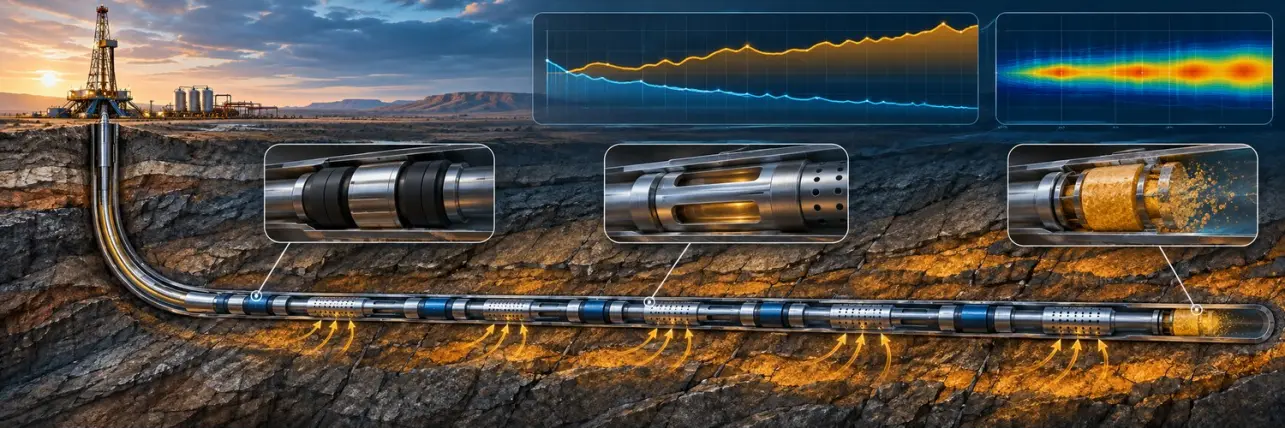
Check the Evidence Behind the Supplier
Evaluate Technical Evidence Before Approving a Supplier
Datasheets don't show how well something works. When I look at a supplier of an interventionless completion system, I ask for qualification records that cover things like setting performance, thermal and pressure cycling, seal integrity, erosion, materials, failure-mode analysis, and pressure, temperature, and sealing integrity. The length, deviation, pressure, and temperature of my well should match the field references. I also want a review of the design, an analysis of torque and drag, a model of the hydraulics, help with planning the installation, and support in the field. When I buy something from another country, I check the company's manufacturing capacity, quality certificates, the ability to track down parts, inspection procedures, experience with exporting, packaging, spare parts, and the project region's response time. When a seller only sells one thing, it's up to the operator to do the work.
Where the HAGRIEN Reduced-Intervention Dissolvable Bridge Plug Fits
The HAGRIEN Reduced-Intervention Dissolvable Bridge Plug separates different areas for multiple stages of fractures without using coiled tubing. It can handle up to 15,000 psi of pressure, works at temperatures between 40 and 150°C, and has controlled breakdown rates. It has an ISO 14310 V0-grade seal of integrity. In that standard, V0 is the best confirmation grade, and its gas test shows that there is no leakage. Targeted uses include long-reach laterals, deepwater completions where the cost of intervention can be more than USD 1 million per day, and re-fracturing programs in wells where access to the casing is limited. The plan drops a coiled-tubing run because the plug breaks down. That fits the goal of an interventionless completion system.
Material Control, Traceability, and Audit Readiness
When using dissolvable parts in an interventionless completion system, the speed is determined by how consistent the materials are. HAGRIEN extrudes bars and billets made of dissolvable magnesium alloy up to Ø300 mm in diameter. We are in charge of melting, extruding, and milling the alloy ourselves. We make the alloy and process work with the temperature, salinity, fluid chemistry, and time we want to reach our goal. There are inspection and traceability records for each batch, and you can get COA, COC, and SDS documents on request. Our HTHP lab is accredited by the CNAS and supports traceable validation. We also have ISO 9001, ISO 14001, and ISO 45001 certificates. In order to pass operator audits, contractors need to show this paperwork. It also helps operators find the billet where any plug came from.
 Plan, Verify, and Avoid Costly Mistakes
Plan the Deployment and Verification Process
An interventionless completion system still needs to be designed, installed, and checked by a trained professional. Before moving the equipment, I make sure that the final path, hole condition, completion tally, setting sequence, hydraulic needs, test limits, and backup plans are all clear. Before running in, the team checks the wellbore for dirt, drift, fluid properties, connections, seals, tool position, and spacing. We watch the running speed, drag, pressure response, and setting confirmation while the installation is going on. After that, we make sure there is no leakage by checking the pressure, the inflow or injection, the gage data, and the baseline production. The field crew also knows what to do if a tool doesn't set because of a written plan. People often worry that "interventionless" means "no backup."
Avoid Common Mistakes When Selecting an Interventionless Completion System
Four mistakes happen a lot. First, buyers decide based only on the price of the tools, which can longer the rig time, cost more to fix, and delay production. Second, they think that what works in a short horizontal will work in an extended-reach well as well. Third, they check the chemistry of the fluid, the temperature, the effect of sourness, erosion, and the aging of the material one at a time instead of all at once. Fourth, they don't make backup plans in case the setting isn't complete, the control system fails, or the pressure response isn't normal. Additionally, I tell teams that "interventionless" does not mean "maintenance-free." As long as the well is in use, it will be important to keep an eye on it, review its performance, help the seller, get extra parts, and get service in the area.
Follow a Recommended Selection Workflow
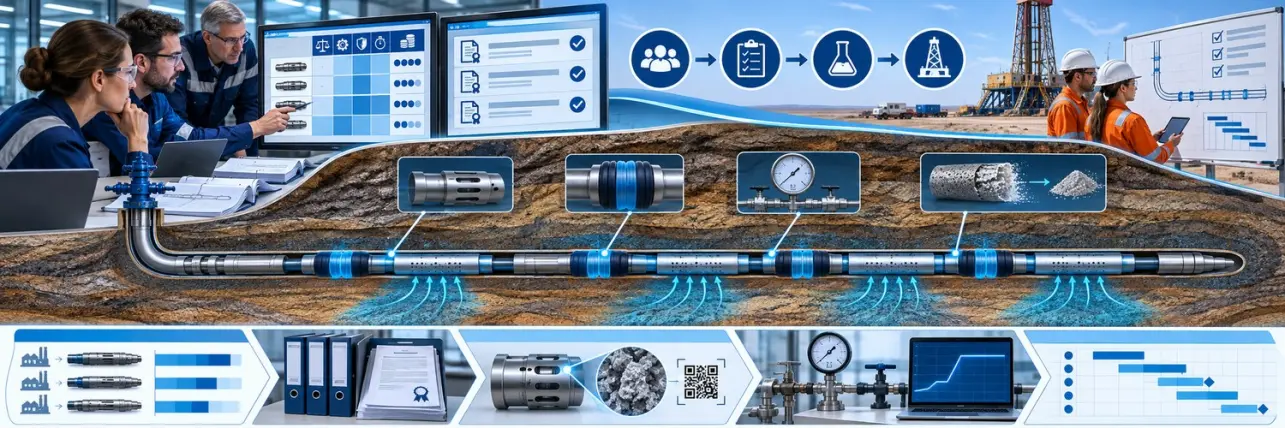
A written process makes sure that the technology and business teams work together. Step one: Make a clear design basis and separate "must-haves" from "preferences." Step 2: Make a short list of only the systems that have the right qualifications, references, and compliance documents. Step 3: Ask for similar bids that include diagrams, installation instructions, schedules, service coverage, warranties, and plans for extra parts. Fourth, have a design review with staff from HSE, production, drilling, completion, and local service. Step 5: Approve with a scorecard that lists scores, risks, and reasons. Next, many operators move on from bench and sample checks to a trial in a single well, a rollout to a well group, and a yearly supply deal. It could take six to twelve months to go that way, so I start early.
Why the Right Interventionless Completion System Creates Long-Term Value
Cut Intervention Exposure and Non-Productive Time
Every intervention that isn't done takes away a rig, a crew, and a risky window. In deepwater, where it can cost more than $1 million per day to get involved, one trip that isn't made can change the well's economics. Fewer coiled-tubing runs on land mean less equipment and fewer people near the pressure. I think "interventionless" should be turned into a cost line. Count how many planned operations there are per well, multiply by the day rate and the crew's exposure, and then take away the cost of the extra tools. The director of completions needs a number, not a slogan, to defend in a cost review. This is what a good interventionless completion system does.
Protect Wellbore Integrity and Production
Isolation and flow control that you can rely on help spread inflows more evenly, control water or gas, and keep reservoir performance steady. It comes down to two things. To begin, did the barrier keep the pressure in? Ask for seal test records that are linked to a well-known grade, like ISO 14310 V0. Second, what's left over after it dissolves? Ask for tests of dissolution in your own brine and at your own temperature. Also, ask how the provider checks the impact on equipment further down the line and on activities that will happen later. "No intervention, no protection" does not mean "no intervention, no protection" anymore when these answers are written down. Instead, the team has data that it can check before the plug is put into a main producer.
Improve Schedule Confidence for Contractors and Operators
Completion contractors take on more risk with schedules and costs, so they need fewer interfaces and firm delivery dates. Common dissolvable magnesium metal bars are kept in stock by HAGRIEN as a safety measure. Standard sizes usually take 2 to 4 weeks to get, while special solutions take 4 to 8 weeks. There are options for speeding up important projects. We confirm your needs within 24 hours, and for most requests, we give you a formal quote and delivery plan within 1 to 3 business days. We also send success reports every week. A U.S. organization coordinates the needs of North America, and EXW, FOB, and CIF are all trade terms. Together, these steps help an interventionless completion system arrive on the project's schedule.
Conclusion
A written design reason is the first step in choosing an interventionless completion system for long laterals. This is because the length, path, pressure, temperature, and chemistry of the fluid determine what the tool needs to do. Putting it in place, being alone, having restricted access, and uneven inflow are the major risks. Clear criteria, a fair comparison of finishing options, and a weighted grid that gets rid of tools that don't meet must-have criteria help you make good decisions. Qualification records, comparable field references, traceable materials, and engineering support are all important pieces of evidence that suppliers should have along with ratings. Planned deployment, post-installation checks, and backup plans make sure that "interventionless" doesn't mean "unprotected." The real value is found by adding up the prevented interventions, rig time, and exposure. This is different from the lowest buy price, which comes from lifetime cost and output continuity.
FAQ
1. What is an interventionless completion system?
It is a set of downhole tools that can be used to control, open, or separate areas that don't have wireline, slickline, or coiled-tubing runs after they have been installed. Depending on the design, pressure signals, remote triggers, or parts that dissolve may be used to move the mechanism. They want there to be fewer interventions, less time on the rig, and less risk to the crew in long laterals.
2. Which ratings should I check first?
Check the ratings for pressure, temperature, burst, collapse, axial load, and pressure cycles. Also, make sure the seal grade and material are compatible with the fluids you'll be using. The HAGRIEN Reduced-Intervention Dissolvable Bridge Plug can handle up to 15,000 psi and 40–150°C, and it has ISO 14310 V0-grade sealing integrity. Look at these numbers and compare them to the highest point of your well.
3. What should my RFQ include?
To make a list, you need to write down the well's depth, lateral length, trajectory, casing or hole size, pressure, temperature, fluid chemistry, zone count, delivery schedule, and service location. Ask for things like test data, traceability records, COAs, and COCs. Giving full information lets the supplier see all the options and give a correct quote.
Request a Long-Lateral Technical Review From HAGRIEN
Looking for a company that sells an interventionless completion system and backs up its goods with data? HAGRIEN provides the Reduced-Intervention Dissolvable Bridge Plug, as well as Ø300 mm billets, batch tracking, and application engineering. Send your plan, well depth, lateral length, pressure, and temperature to cyrus@us-hagrien.com. You can also find out more at us-hagrien.com. Inside 24 hours, our team confirms what you need.
References
1. ISO 14310: Petroleum and Natural Gas Industries – Downhole Equipment – Packers and Bridge Plugs, 2008
2. API Specification 11D1: Packers and Bridge Plugs, 2009
3. Well Completion Design (Elsevier), 2009
4. Reservoir Stimulation, 3rd Edition (Wiley), 2000
5. Petroleum Engineering Handbook, Volume IV: Production Operations Engineering (Society of Petroleum Engineers), 2007
6. Unconventional Oil and Gas Resources Handbook (Elsevier), 2016

USER EVALUATE
Here is the customer's evaluation of us