_1776908283214.jpg)




Pyrotechnic Setting Tool for Packers: A Buyer’s Guide
When you're selecting downhole equipment for oil and gas completions, understanding pyrotechnic setting mechanisms becomes critical. A pyrotechnic setting tool uses controlled propellant combustion to generate high-pressure gas, completing packer and bridge plug installations in seconds. Unlike hydraulic or mechanical alternatives, these devices operate independently without external power sources, making them ideal for remote wellsites and challenging environments where reliability and speed directly impact your bottom line. This buyer's guide walks you through everything you need to know about selecting, operating, and procuring these essential completion devices.
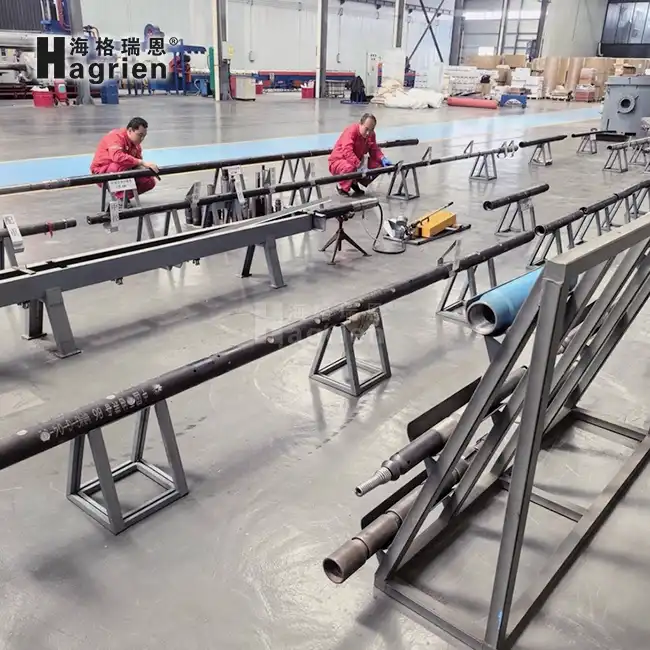
Pyrotechnic Setting tools are highly precise machines that use controlled combustion to put downhole equipment like packers, bridge plugs, and other similar items into place. The basic idea behind how it works is simple: when a propellant charge ignites, it creates high-pressure gas that moves a piston assembly. This piston changes chemical energy into mechanical force, which presses packer elements against the case wall or sets slips in place. Setting forces usually range from 5,000 to 30,000 lbf, depending on the configuration and wellbore needs. The whole cycle takes less than 10 seconds.
Core Operating Principles
A carefully prepared fuel charge is kept in the burning chamber. When turned on, either by mechanical strikes or electrical ignition devices, the fuel burns at a steady rate. The gas then expands, putting pressure on the head of a piston. This piston moves in a straight line thru the body of the tool, turning pressure into axial force. The force moves to the setting mandrel thru connecting rods. The setting mandrel then either squeezes the packer element or turns on the slip mechanism. This system is beautiful because it is so simple. It has fewer moving parts, which means it has fewer places where it could go wrong, and it doesn't need to be connected to the outside world for power.
Key Technical Features
These days, pyrotechnic setting devices have a lot of features that make them safer and more reliable. During run-in activities, shock-resistant connections keep things from shaking. Temperature-resistant materials can handle wellbore temperatures of up to 350°F (177°C), making them useful for geothermal and deep reservoir uses. Pressure rates go up to 140 MPa (20,000 psi), which makes sure that structures stay strong in high-pressure settings. The tools also have fail-safe features that keep them from starting up too soon while they are being handled or transported. The electrically controlled versions of HAGRIEN have smart monitoring features that show real-time data on displacement and tensile force on the surface thru control panels. This lets operators accurately check when the setting is finished and the release status.
Knowing these basics will help you decide if using fireworks is the right way to do things for your business. These tools are very useful in unconventional completions, offshore installations, and intervention operations where reducing rig time directly leads to cost savings. They can be set up quickly, have their own energy source, and are mechanically simple.
 How to Choose the Right Pyrotechnic Setting Tool for Your Packing Needs
To choose the best Pyrotechnic Setting tool, you need to make sure that the technical specs match your specific completion design and how it will be used. As part of the decision-making process, the wellbore shape, environmental factors, setting force needs, and compatibility with current downhole systems are all taken into account.
Wellbore and Operational Environment
First, figure out what your wellbore parameters are. The outside width of the tool needs to be able to clear any obstacles in the tube or casing string while still putting out the most setting force. A 56 mm tool is usually enough for 4.5-inch tubes. Larger case sizes (6-inch or 7-inch) can fit 76 mm or 96 mm types, which provide stronger setting forces for bigger packers and bridge plugs. Ratings for temperature and pressure must be higher than what is expected downhole, with enough room for error. Wells that show H₂S or CO₂ need materials that don't rust, like 17-4PH stainless steel, or special alloys that keep their shape in sour conditions.
Setting Force Requirements
The company that made your packer or plug will tell you what the minimum setting forces are that are needed to get the element to compress and slip engage properly. If the tools are too small, they might not be fully set, which could cause the seal to fail or the parts to slip under differential pressure. Tools that are too big waste working capability and may put too much stress on parts. The electrically controlled setting tools from HAGRIEN have maximum setting forces that can be changed. This means that they can be fine-tuned to fit different downhole systems without having to use tools of different sizes. The 56 mm version has a force of at least 10 metric tons, which is enough for most isolation tasks. Heavy-duty completions and large-bore needs can be met by the 96 mm model, which can handle up to 32 metric tons.
Manual vs. Electric Activation Systems
Pyrotechnic tools can be set off by either a mechanical or electrical fire device. Impact strikers or shear pins are used in mechanical systems, which are simple and don't need any electrical parts. Electric devices let you control the time of the spark and keep an eye on the surface. The electrically controlled tools made by HAGRIEN have single-core connections that are resistant to shock and get power from the surface at 220 V thru downhole lines. The smart controller checks the connections, finds common problems like line faults or low insulation, and starts the generator when told to. Real-time feedback thru displays on the control panel confirms that the setting is complete, removing any doubt and letting you check right away before pulling out of the hole.
Supplier Credibility and Certification
When downhole equipment breaks down, it can lead to lost tools, more repair runs, delayed production, and safety risks. Your operations will be safer if you work with makers who have strict quality control systems. Check for ISO 9001, ISO 14001, and ISO 45001 certifications. These show that the company cares about quality control, being good to the earth, and keeping workers safe. API recognition and CNAS-accredited lab skills show that the provider can back up claims of performance with independent testing. HAGRIEN has its own high-temperature, high-pressure laboratory that is certified by CNAS. Before shipping, the company does simulated downhole tests to make sure that the setting force is consistent, the activation is reliable, and the pressure is intact.
After-sales support and warranty terms after the sale are just as important as the specifications given at the start. Tools that need to be serviced often or don't have new parts available cause problems in the workplace. The electrically controlled versions of HAGRIEN have a service life of more than 200 runs without any upkeep. They can be automatically retrieved and restarted from the surface with the push of a button, which cuts down on downhole exposure time and makes operations easier.
 Safe and Effective Use of Pyrotechnic Setting Tools
Every part of using Pyrotechnic Setting tools must follow operational safety rules. If you don't handle these devices properly, the chemical energy they hold could hurt you or damage your equipment. The right processes, training, and upkeep methods make sure that deployment is safe and that the system works consistently.
Handling and Storage Protocols
When moving and storing Pyrotechnic Setting tools, care must be taken. Keep tools in places with controlled temperatures and humidity, away from things that could catch fire, electrical equipment, and chemicals that react. Extreme temperatures can make fuel less stable. Do not drop or hit the body of the tool, as this could damage internal parts or make safety systems less effective. When moving tools to the well site, keep them safe in padded containers and away from sources of vibration. Before using the tool, you should always check it for signs of harm, rust, or worn connectors.
Pre-Deployment Setup
Make sure the tool works with the packer or plug unit before running it downhole. Make sure that the manufacturer's instructions for thread engagement and force are met. If the system is triggered by electricity, check the surface continuity to make sure the fire circuit works right. This process is done automatically by HAGRIEN's intelligent controller, which checks the connections and finds problems before they are deployed. As usual, load the tool onto cable or coiled tubing while keeping the weight and stress in check. Keep the descent rates under control to avoid jarring that could set off mechanical firing mechanisms before they're supposed to.
Activation and Post-Setting Verification
Once you get to the goal depth, use magnetic collar locators, gamma ray logs, or pressure-temperature surveys to confirm your location. Once you're sure, start the fuel charge according to the tool's instructions. The surface processor sends firing orders to the electric systems and checks the flow of power to make sure the ignition is working. Weight or jarring movements are what set off strikes in mechanical systems. As soon as the device is turned on, look for changes in the surface's pressure or weight, or readouts on the control panel that show that the setting is complete. The tools made by HAGRIEN show the movement and tension of the mandrel in real time, which is objective proof that the packer or plug was properly deployed.
Troubleshooting Common Issues
Misfires can happen sometimes, usually because of problems with the electricity, the propellant breaking down, or mechanical binding. If an electric tool won't work, bring it to the surface and use the clever controller to do troubleshooting tests on it. The system finds the cause by finding open circuits, low insulation, or bad detonator contact. For mechanical misfires, make sure that the jarring forces were higher than the activation level and look for blockages in the piston assembly. If you try to take apart a tool that has been turned on but not properly set, you could accidentally ignite fuel. Instead, call the maker for help.
Safe habits are reinforced by regular training. Make sure that everyone who handles pyrotechnics knows how to set them off, how to spot malfunctioning ones, and how to respond to an emergency. Keep track of every deployment with run sheets that record depth, activation time, surface observations, and any strange events. This will help you build an operational history that will help you keep getting better.
Maintenance, Calibration, and Longevity of Your Pyrotechnic Setting Tool
Systematic maintenance and calibration practices are needed to make Pyrotechnic Setting tools last as long as possible and keep them working reliably. Pyrotechnic Setting tools have to work in difficult conditions downhole, including high pressures, corrosive fluids, and mechanical forces that wear down parts over time. Preventative care keeps your investment safe and stops problems before they happen.
Routine Inspection and Cleaning
Check the tool for damage that can be seen every time it's used, like holes, scratches, rust, or seal wear. Clean the outside to get rid of drilling mud, completion fluids, and other things that could get into threaded connections or sealing areas. Use cleaners that are safe for the tool's materials and don't scratch them. Check connections for pin distortion or damage to the insulation. For versions that are controlled by electricity, make sure that the wire links are still tight and that water hasn't gotten into the electrical parts. According to the maker, worn seals and o-rings should be replaced every 50 to 100 runs, but this can change based on the conditions in the wellbore.
Component Replacement and Calibration
Pyrotechnic tools require replacement of used propellant charges and worn components such as piston seals and shear pins at authorized service facilities. HAGRIEN minimizes wear points, allowing electrically driven models up to 200 runs without maintenance. Calibration verifies piston stroke, pressure, and force output under simulated conditions, with intervals based on usage.
Storage and Transport Best Practices
Explosive tools should be stored in dry, temperature-stable areas with protection from moisture, impacts, vibration, and electrical sources, while transport requires secure packaging and clear safety labeling. HAGRIEN provides traceability documents, including COA, COC, inspection reports, and batch records, supporting audits, maintenance, and quality control.
Procurement Guide: Buying the Best Pyrotechnic Setting Tool for Packers
When buying Pyrotechnic Setting tools, you have to balance technical needs with business concerns and supply relationships. The goal is to get equipment that meets operational requirements while also lowering costs and reducing risks in the supply chain.
Direct Manufacturer vs. Distributor Channels
Direct manufacturer channels provide engineering support, customization, transparent pricing, and production flexibility. HAGRIEN manufactures Pyrotechnic Setting tools in-house, with typical lead times of 45–60 days and expedited options for urgent needs. Distributors offer local inventory and faster delivery for standard products, making them suitable when immediate availability outweighs customization needs.
Pricing Strategies and Bulk Discounts
Pyrotechnic Setting tool pricing depends on materials, manufacturing complexity, certification, and features. Electrically controlled models cost more due to integrated electronics, smart controllers, and surface tracking. Bulk orders reduce unit costs and ensure consistent specifications. HAGRIEN offers flexible pricing based on order volume, customization, and long-term partnerships, supporting accurate budget planning.
Certification and Quality Documentation
Reputable suppliers provide quality documents supporting procurement and compliance, including COAs for material and mechanical properties, COCs for dimensions and functional tests, and batch traceability records. HAGRIEN’s CNAS-accredited laboratory independently tests starting force, pressure stability, and temperature performance, helping satisfy internal procurement standards, third-party audits, and certification requirements.
OEM and Customization Capabilities
Standard tool setups work for most jobs, but sometimes they need to be changed because of things like unique wellbore shapes, proprietary packer designs, or specific operating needs. Look at how responsive potential Pyrotechnic Setting tool suppliers are to engineering needs and how much experience they have with customization. HAGRIEN encourages partnerships between OEMs and ODMs, working together on custom manufacturing based on drawings, making prototypes, and coordinating field testing. Our engineering team works directly with your technical staff to make sure that the tool specs match the completion designs. They do this by taking into account dimensional limitations, setting force profiles, and figuring out how to connect the new tools to the ones that are already in the ground.
Warranty and After-Sales Support
Warranty and after-sales support should clearly cover defects, claim procedures, diagnostics, and repair times. HAGRIEN provides application engineering, remote troubleshooting, technical documentation, and built-in controller diagnostics. Long-term supplier relationships can also bring better pricing, faster production, early product updates, and collaborative problem-solving, improving procurement efficiency and operational confidence.
Conclusion
To choose the correct Pyrotechnic Setting tool, you need to think about a lot of things, including technical specs, working conditions, safety concerns, and the supplier's abilities. These tools are the fastest and most reliable way to install downhole packers and bridge plugs. They are especially useful in difficult or remote places where they don't need to connect to an outside power grid. Focus on tools that offer consistent setting forces, can handle tough wellbore conditions, and come with thorough quality paperwork and quick tech support. You can protect operating efficiency and lower the total cost of ownership across all of your finishing programs by working with qualified makers who can show transparency, technical knowledge, and a commitment to continuous improvement.
 FAQ
FAQ
1.What setting force do I need for my packer?
How much setting force is needed depends on the size of the packer, the material of the element, and the difference pressure values. Check the manufacturer's instructions for your packer. Usually, they range from 5,000 to 30,000 lbf. The 56 mm HAGRIEN tool can handle at least 10 metric tons, the 76 mm can handle 20 metric tons, and the 96 mm can handle 32 metric tons, which is enough for most finishing situations.
2.Can pyrotechnic tools operate in H₂S environments?
Tools made from metals that don't rust, like 17-4PH stainless steel, can handle being exposed to H₂S and CO₂. HAGRIEN's designs use materials that have been tested to work well in sour environments, keeping their mechanical integrity and sealing ability even when wellbore fluids are acidic.
3.How do I know if the tool set properly?
Electrically controlled tools show the mandrel's movement and tensile force on surface control screens in real time, which is an objective way to check that the setting is complete. Changes in weight or jarring reactions are used in mechanical systems. Post-setting pressure tests make sure the seal is still good.
4.What lead times should I expect for custom configurations?
Standard tools that are controlled by electricity usually ship within 60 days. It takes 45 days for accessories like controllers and connectors. Depending on the engineering scope and production queue, custom specs may make lead times up to eight weeks longer. Get in touch with HAGRIEN to find out how to speed up urgent projects.
Partner with HAGRIEN for Reliable Downhole Setting Solutions
HAGRIEN makes enterprise-level Pyrotechnic Setting tools that are made for oil and gas completions where speed and dependability are very important. As a Pyrotechnic Setting tool provider that is fully integrated, we are in charge of the whole production process, from making the dissolvable magnesium alloy in our ISO-certified facilities to putting the tools together and making sure they work properly, which is approved by CNAS. Our electrically controlled models have smart surface monitoring, a service life of more than 200 runs without any maintenance, and setting forces that can be changed up to 32 metric tons. No matter if you're using standard packers or special finishing assemblies, our engineering team works with your technical staff to make sure that the tool specs fit within the limits of your operations. Full traceability records, like COAs, COCs, and batch records, help you meet your supplier qualification and audit needs. Visit us-hagrien.com or email cyrus@us-hagrien.com to talk about your completion tool needs and find out how our tried-and-true designs and quick support can help you run your business more efficiently and lower your total cost of ownership.
References
1. Society of Petroleum Engineers (2021). "Advances in Well Completion Technologies for Unconventional Reservoirs." SPE Production & Operations Journal, Vol. 36, Issue 3, pp. 512-528.
2. American Petroleum Institute (2020). "Specification for Downhole Completion Equipment." API Specification 19AC, 3rd Edition, Washington, DC.
3. International Association of Drilling Contractors (2022). "Best Practices for Pyrotechnic Device Handling in Oilfield Operations." IADC Deepwater Well Control Guidelines, Chapter 8, Houston, TX.
4. Zhang, H., & Thompson, R. (2019). "Reliability Analysis of Downhole Setting Tools in HTHP Applications." Journal of Petroleum Technology, Vol. 71, No. 6, pp. 78-85.
5. National Association of Corrosion Engineers (2023). "Materials Selection for Sour Service Environments." NACE Standard MR0175/ISO 15156, Houston, TX.
6. Energy Institute (2021). "Guidelines for Safe Handling of Pyrotechnic Materials in Oil and Gas Operations." EI Technical Report 45, London, United Kingdom.

USER EVALUATE
Here is the customer's evaluation of us