




Top Important Oil and Gas Well Completion Tools
Well completion is the final—and arguably most consequential—phase before a well begins producing hydrocarbons. The right completion tools determine whether a well performs at its projected rate or becomes a costly operational problem. This guide is written for procurement managers, completion engineers, and regional distributors who need clear, practical information to make confident sourcing decisions. From packers to dissolvable bridge plugs, we cover the tools that matter most, the quality standards you should demand, and how to evaluate suppliers who can genuinely deliver on a project timeline.
 Understanding Oil and Gas Well Completion Tools
What Completion Tools Actually Do?
Completion tools are the specialized pieces of downhole equipment that are put in place when a well hits its goal depth. Their job is to turn a drilled hole into a controlled resource that can be used. They control the flow of fluid, separate zones, support the integrity of the wellbore, and keep surface equipment safe from sudden changes in pressure. Even a geologically sound reservoir may not work well or fail early if the right completion tools are not chosen and put correctly.
Common Tool Categories
Sliding sleeves, bridge plugs, subsurface safety valves, perforating guns, sand screens, and hydraulic control lines are some of the main types. Isolation, perforation, flow control, and sand exclusion are the four groups that deal with different parts of well management. In multi-stage fracturing programs, these groups work together as a whole, not as separate parts.
Key Procurement Decision Factors
When looking for completion tools, it's important to make sure they will work in the well's temperature, pressure, fluid chemistry, and H₂S/CO₂ content. Second, there must be source paperwork such as Material Test Reports (MTRs), COA/COC records, and inspection reports that can be viewed and checked. Third, you should look at how well the supplier can stick to a project schedule, even if that means making emergency supplies when things change quickly in the field.
 Top 7 Essential Oil and Gas Well Completion Tools
1. Packers
Within the production string, the main barrier for zone separation is made up of the packers. Permanent packers can be set hydraulically or mechanically and are made to last a long time. Retrievable packers can be used again and again to change the layout. ISO 14310 says that packer qualification grades range from V0 (gas-tight with no leakage) to V3 (liquid test with limited pressure drop). Standard V0 packers that meet NACE MR0175/ISO 15156 standards are used in high-risk gas wells and sour service settings. The choice of elastomer—NBR for normal conditions, FKM or Aflas for HPHT or chemically active wells—has a direct effect on the service life.
2. Sliding Sleeves and Keystone Sleeve Systems
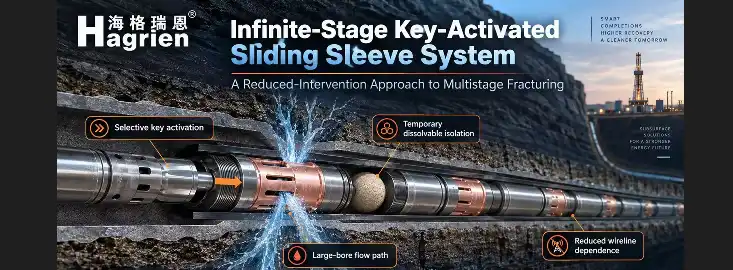
Sliding sleeves let you get to certain zones without having to pull the completion string. Keystone sliding sleeves and other infinite-stage key-coded sleeve systems let operators open certain zones in a certain order during multi-stage fracturing. This gets rid of the need for coiled tubing to be used between steps, which lowers the cost and risk at the well site for long horizontal laterals.
3. Dissolvable Bridge Plugs
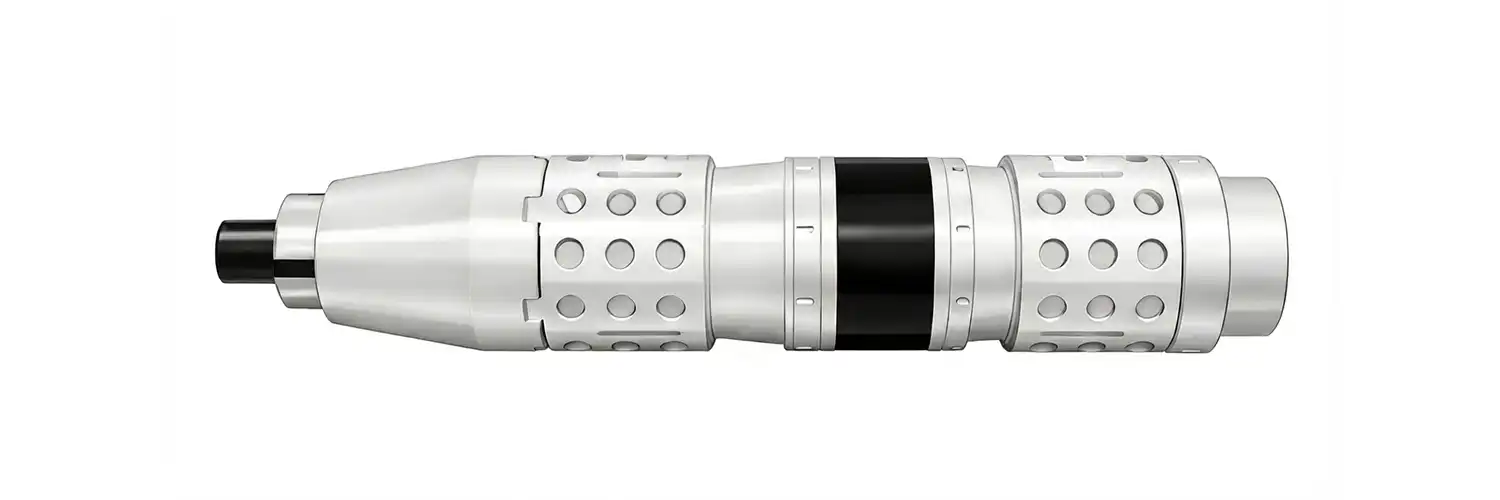
Dissolvable bridge plugs, which are usually made of magnesium alloy, keep lower zones separate while the rock breaks. After the stimulation job is done, the plug breaks down in brine over a certain amount of time. This means that there is no need for the coiled tubing drill-out step that is needed with traditional composite plugs. Rate of dissolution relies on the type of metal, the temperature, the saltiness of the fluid, and the time window you want to use it in. Post-frac intervention costs can be cut by a large amount with well-designed dissolvable completion tools that have a proven dissolving profile. HAGRIEN's dissolvable bridge plug kits are made with in-house alloy formulations that are tuned to specific working windows. Each batch comes with full COA/COC tracking paperwork.
4. Subsurface Safety Valves (SSSVs)
Subsurface safety valves are the last line of defense against a surface blowout that gets out of hand. API 14A controls how they are made, how much they leak, and how they must be tested to make sure they work. It says that the valve must fail-safe close in an emergency. The procurement teams should make sure that the valve can handle the pressure and temperature levels that have already been set for the well, as well as working with the hydraulic control line system that has already been chosen.
5. Perforating Guns
The flow path between the reservoir and the wellbore is made by perforating guns. Charge choice, shot density, and phasing angle all have an impact on the shape of the holes and, in the end, the rate of production. API RP 19B tests are usually used to measure shaped-charge speed. Modern perforating methods can be used on wireline, tubing-conveyed, or through-tubing setups, based on how easy it is to get to the wellbore.
6. Expandable Sand Screens
In formations that aren't well-consolidated, sand can quickly damage equipment subsurface and on the surface. Expandable sand screens are run undersized and then mechanically expanded to touch the formation. This filters the fluid while keeping the diameter of the borehole the same. For the screen to last a long time, it is important to choose the right screen gauge and base pipe material based on the grain size of the formation and the corrosive properties of the fluid.
7. Hydraulic Control Lines and Accessories
Subsurface safety valves, clever completion valves, and chemical injection systems all get their hydraulic pressure from control lines. They connect the surface to the downhole device and are not part of the production tubes. Whether 316L stainless steel, super duplex, or Inconel is used depends on the chemical makeup of the well fluid and the temperature at which it is used. To keep things from breaking down too soon, the fittings, joints, and hydraulic fluid must all work with each other.
How to Optimize Procurement and Usage of Well Completion Tools
Align Tool Selection with Well Parameters
Check the well's pressure and temperature rates, fluid chemistry (H₂S, CO₂, and chloride levels), casing size, and the completion program's phase count before sending out an RFQ. Mismatches between the ratings of tools and the conditions of the well are a major reason for early failures and expensive repairs.
Evaluate Supplier Credentials Rigorously
The licenses a seller has show you a lot about how they do business. At the pre-qualification stage, you should check these credentials:
- API Spec Q1 registration makes sure that the supplier's quality control system meets the production standards for oil and gas.
- ISO 9001 / 14001 / 45001 certifications show that safety systems for workers, the environment, and quality are in place and are regularly checked.
- CNAS-accredited HTHP laboratory means that the results of practical tests done in-house are recognized by outside sources, not just what the lab says itself.
- Full batch traceability with COA/COC documentation helps get ready for audits and closes 8D repair actions when problems happen.
These credentials make it less likely that you'll get parts that look good on paper but don't work right in the field. HAGRIEN is recognized by API, has ISO 9001, 14001, and 45001 certifications, and runs a CNAS-accredited HTHP laboratory. All of their products leave the facility with paperwork that can be used to track them back to the source.
Once the credentials have been checked, negotiate a standard quote package that includes details about the materials, the route for machining, an inspection plan, the terms of the deal, and a commitment to a lead time. A supplier that can't reliably make this package is a risk in the supply chain.
Manage Cost Against Long-Term Operational Value
The cheapest price per unit of a completion tool isn't always the cheapest price all together. It costs more to install a bridge plug that needs a $150,000 coiled tubing drill-out than to use a more expensive dissolvable option that doesn't need that step at all. Check how completion tools affect costs throughout the whole process, not just on the line item for the purchase order.
 Emerging Trends in Completion Tool Technology
Dissolvable and Degradable Materials
Composite bridge plugs are no longer used in multi-stage fracturing projects across North American unconventional plays. Instead, magnesium alloy dissolvable tools are used instead. The global well completion equipment market was valued at approximately $7.2 billion in 2023 and is expected to grow at a CAGR near 6% through 2030, partly driven by growing usage of dissolvable tool technologies (Grand View Research, 2024).
Intelligent Downhole Systems
Permanent downhole sensors and hydraulic or electric valves that are managed from the surface make it possible to run reservoirs in real time without using wirelines. These smart systems cut down on the number of times engineers have to get involved, lower the cost of lifting, and give engineers constant data.
Tighter Environmental and Regulatory Standards
Wellbore integrity and fluid management are getting more and more attention from operators in the U.S., North Sea, and Middle East. Suppliers are expected to provide full material traceability to back up regulatory documentation, and completion tools must now meet stricter material qualification standards for sour service.
Conclusion
It's not just a matter of technical skill; picking the right downhole tools is also a matter of good sourcing, which has direct effects on project margins, field safety, and schedule dependability. The seven types of tools we'll talk about here are the most important parts of most modern completion programs, whether they're for simple vertical wells or complicated horizontal completions with multiple stages. When it comes to projects, procurement professionals who choose completion tools based on well parameters, carefully check the credentials of suppliers, and think about the total cost will always do a better job than those who only look at unit price.
With HAGRIEN's vertically integrated capabilities, which include alloy formulation, large-diameter extrusion up to Ø300 mm, precision CNC machining, assembly, and CNAS-accredited HTHP testing, procurement teams only have to go to one place to get materials and completion tools for conventional, HPHT, and deepwater programs.
 FAQ
1. What factors should I prioritize when selecting downhole completion tools?
Make sure that the tool's pressure rating, temperature rating, and elastomer standard all match the conditions in your well. Then, make sure the seller has the right licenses—API Spec Q1, ISO 9001, and NACE MR0175/ISO 15156 for sour service. It is also important that all the paperwork is in order; you need to have MTRs, inspection records, and COA/COC files ready before the tools get to the wellsite.
2. What is the difference between a V0 and a V3 rated packer?
During ISO 14310 qualification testing, V0 means a gas-tight seal with no bubble leakage. The V3 standard has been tested in liquids and lets a small amount of pressure drop. Packers with a V0 rating are required for high-pressure gas wells or wells that contain H₂S.
3. What are dissolvable completion tools, and when should I specify them?
After being used, dissolvable tools, which are usually made of magnesium alloy, break down in formation brine. They are most often used for bridge plugs in multi-stage fracturing programs, which skip the step of drilling out coiled tubing after the fracture to save a lot of time and money.
4. Can retrievable packers be reused?
As long as each packer goes through a full breakdown, elastomer replacement, dimensional inspection, and successful pressure re-certification to its original API standard before it is put back into service, the answer is yes.
5. How does API 14A affect subsurface safety valve procurement?
For subsurface safety valves, API 14A sets the design requirements, leakage rate limits, and functional test methods. Procurement teams should make sure that any valve they are given meets the API 14A performance requirements and has proof that it passed approval testing.
Contact HAGRIEN for Completion Tools Supply and Engineering Support
As a confirmed maker of completion tools, HAGRIEN works with sourcing teams at oilfield service companies, EPC contractors, and regional distributors in North America and other countries. Our streamlined supply chain includes alloy design, precise machining, and lab approval by a CNAS-accredited body. This means that your buying team only has to deal with one responsible source for materials, machined parts, and finished tools that have been put together. Standard sizes ship in two to four weeks, while designed or special sizes ship in four to eight weeks, with choices for faster shipping.
You can email our U.S. coordination team at cyrus@us-hagrien.com or go to us-hagrien.com to ask for a standard quote package.
References
1. American Petroleum Institute. API Spec Q1: Specification for Quality Management System Requirements for Manufacturing Organizations for the Petroleum and Natural Gas Industry. 9th ed. API Publishing Services, 2013.
2. American Petroleum Institute. API 14A: Specification for Subsurface Safety Valve Equipment. 12th ed. API Publishing Services, 2015.
3. International Organization for Standardization. ISO 14310: Petroleum and Natural Gas Industries—Downhole Equipment—Packers and Bridge Plugs. ISO, 2008.
4. NACE International / ISO. NACE MR0175 / ISO 15156: Petroleum and Natural Gas Industries—Materials for Use in H₂S-Containing Environments in Oil and Gas Production. NACE International, 2015.
5. Grand View Research. Well Completion Equipment Market Size, Share & Trends Analysis Report, 2024–2030. Grand View Research, 2024.
6. Society of Petroleum Engineers. SPE 174786: Dissolvable Plug and Perforation Completion Systems: Field Results and Design Considerations for Multi-Stage Hydraulic Fracturing. SPE, 2015.

USER EVALUATE
Here is the customer's evaluation of us