_1776908283214.jpg)




Understanding the Inner Workings of Dissolvable Magnesium Alloy Square Bars
Dissolvable Magnesium Alloy Square Bars are engineered special shapes made just for making downhole tools for oil and gas completions. These high-tech materials are very strong and don't break down easily at high temperatures. They also dissolve slowly in wellbore fluids, which can be controlled. Permanent metals need expensive milling operations after the fracture, but dissolvable magnesium alloys break down completely in certain downhole environments. This means they don't need to be retrieved, there is less downtime, and they can be used as an eco-friendly alternative for frac plugs, bridge plugs, and stage isolation tools.
 Introduction
Today, energy from the earth demands efficient and functional materials. Dissolvable Magnesium Alloy Square Bars revolutionise oil and gas completions. Completion service providers, E&P operators, and downhole tool producers benefit strategically. These qualities allow high-performance dissolvable bridge plugs, packers, and frac balls to break down after use. This greatly reduces human interference and accelerates manufacturing.
Long-standing issue: removing temporary downhole obstacles without costly coiled tubing or mechanical machining. Dissolvable technology addresses it. As unconventional resources and multi-stage fracturing become more widespread, procurement teams are investigating dissolvable magnesium solutions to cut well costs while fulfilling safety and performance criteria. B2B buyers care about material qualities, application scenarios, quality control, and strategic sourcing. This handbook informs procurement managers, completion engineers, and OEM manufacturers.
We must examine their metallurgical design, controlled breakdown, and high-pressure, high-temperature underground settings to understand how these materials perform within. We will discuss how selecting materials and working with suppliers may improve finishing services, workover operations, and new energy applications.
 What Are Dissolvable Magnesium Alloy Square Bars?
Dissolvable Magnesium Alloy Square Bars are accurately extruded from strong, designed magnesium-based alloys that break down predictably. Square bars stop spinning better than round bars, making them ideal for slip segments, mandrel bodies, and locking mechanisms in bridge plugs and stage isolation tools that demand accurate alignment and great torque resistance.
These materials use precisely regulated alloying elements, including aluminium, zinc, manganese, and rare earth metals. The unique composition affects tensile strength, corrosion resistance, machinability, and dissolution rate. These bars and their tools can survive temperatures up to 150°C and pressures over 10,000 psi downhole due to their construction. They also degrade predictably in completion fluids or generated water.
Brine or KCl solutions aid in dissolving by galvanic corrosion. With chloride ions, the magnesium alloy produces magnesium hydroxide and magnesium chloride, which dissolve and mix with the wellbore fluid. Controlling alloy composition and heat treatment parameters controls reaction rate. Manufacturers may create dissolution windows from a few hours to many weeks, depending on the application.
Adoption is driven by its low density (1.8 g/cm³, 25% of steel), excellent machinability for complicated geometries, and lack of post-frac milling processes. Controlled deterioration eliminates tool jams and incomplete retrievals. It produces less mechanical trash and chemical additives, reducing its environmental impact.
Controlled Dissolution: Engineering the Degradation Window
Unlike most metals, which corrode in unpredictable ways, Dissolvable Magnesium Alloy Square Bars are made with controlled dissolving rates that work with operating schedules. Manufacturers change the alloy system and processing parameters to get degradation profiles that are right for the temperature, salinity, fluid chemistry, and required functional lifespan that are found underground. This way of engineering makes sure that tools keep their shape during the fracturing process and don't dissolve completely during the flowback or production phases.
Mechanical Properties for Demanding Downhole Applications
Even though these materials are biodegradable, they have tensile strengths between 320 MPa and 480 MPa, based on the metal grade. This is enough to handle the mechanical forces that happen during operations like setting plugs, checking pressure, and fracturing. The square bar shape makes the structure more rigid in torsional directions and makes it easier to make parts that fit together. This makes machining simpler while also improving the accuracy of the dimensions.
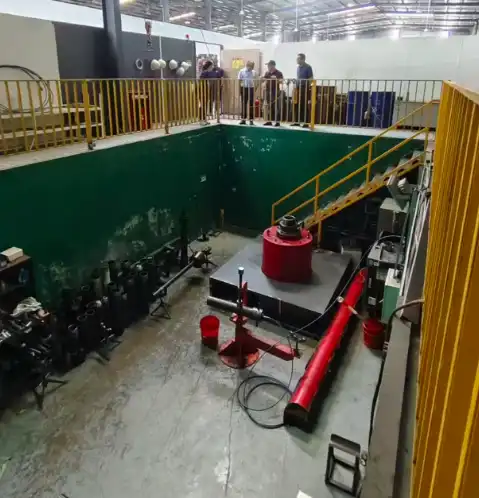
Properties and Performance Comparison of Magnesium Alloy Square Bars
You must understand how Dissolvable Magnesium Alloy Square Bars vary from other downhole materials to compare them. Steel is stronger, but titanium resists corrosion better. However, dissolvable alloys have the mechanical and biodegradability features to prevent post-operation support.
1. The finest grades of dissolvable magnesium alloys have tensile strengths between 350 and 480 MPa and yield strengths between 250 and 350 MPa. This performance meets setting forces, differential pressure ratings, and thermal cycling stresses for finishing tool loads. Aluminium alloys are employed for temporary downhole applications. Tools are lighter and easier to handle because magnesium alloys are stronger but less dense.
2. Dissolvable Magnesium Alloy Square Bars' specific weathering profile makes them distinctive. In controlled immersion testing with conventional brine solutions (often 3% KCl), dissolving rates range from 1 mg/cm²/h to over 100 mg/cm²/h, depending on alloy composition and temperature. This dependability differs from normal steel or cast iron, which corrodes unpredictably and creates residues that might hinder manufacturing.
3. Temperature Performance: Good dissolvable metals maintain shape at many temperatures. Material testing in HTHP (High Temperature High Pressure) simulates 150°C and 15,000 psi in a deep pit. The Arrhenius connection between temperature and reaction rate accelerates dissolution as temperature increases. This is crucial when constructing instruments for deep unconventional or geothermal wells.
4. Machinability and Efficiency: Magnesium's excellent machinability and square bar form allow for fast, complicated tool part production. Aluminium is machined three to five times quicker than steel. This reduces unit production time and cost. When producing precision parts like valve seats or slide inserts, the material's low work-hardening tendency lowers tool wear and permits tighter dimensional tolerances.
Due to their performance, dissolvable magnesium alloys are a good choice for finishing tools when permanent materials make labour harder and disposable alternatives are cheaper.
Procurement Insights: How to Buy Dissolvable Magnesium Alloy Square Bars
Dissolvable Magnesium Alloy Square Bars may be found by carefully examining suppliers, materials, and supply chains. These designed materials need alloy composition, extrusion process management, and quality verification knowledge, unlike basic metals. These qualities distinguish skilled producers from basic metal suppliers.
1. Supplier Qualification and Certification: B2B customers should prioritise ISO 9001, ISO 14001, and ISO 45001-certified manufacturers for their quality management and environmental controls. API- and CNAS-accredited laboratories ensure oil and gas products satisfy industry performance requirements. Manufacturing licenses and safety production certificates show the firm is legal and established.
2. Material Documentation and Traceability: Qualification and project launch need comprehensive documentation. A reputable supplier provides batch-specific COA, COC, and SDS to monitor everything from raw materials to final inspection. This paperwork aids internal audits, customer compliance, and performance issue diagnosis.
3. Pricing and Minimum Order Quantities: Dissolved magnesium alloy costs $15 to $35 per kilogram, depending on quality, bar size, order volume, and customisation. Manufacturers determine rates depending on annual use. Buying in bulk gets you better discounts. Minimum order numbers depend on bar size. Custom profiles need larger initial orders to cover tool costs than regular dimensions, which may require 500 to 1000 kg.
4. Lead Times and Inventory Models: Supplier inventory management affects project planning. Manufacturers may provide rapid sampling and emergency replenishment with 2–4 week delivery windows by providing 25mm, 50mm, and 75mm square bars. For alloy matching, process validation, and quality testing, engineering dissolution rates or unique requirements take 4–8 weeks. A framework for scheduled releases balances inventory costs and the advantages of knowing there will be plenty.
5. Logistics and Trade Terms: Flexible shipping arrangements suit many customers. EXW, FOB, and CIF are common trading terms. Export packing keeps items dry during transport. North American buyers benefit from regional distribution or U.S. corporations that simplify customs clearance and provide local technical assistance.
Use of these criteria to identify suppliers lowers procurement risk and provides access to products that fulfil rigorous downhole performance standards.
Applications and Industrial Use Cases
Dissolvable Magnesium Alloy Square Bars impact many finishing and manufacturing processes. They can be utilised in ways permanent materials cannot because of their transitory mechanical integrity and predictable deterioration.
1. The major usage is to manufacture frac plugs that disintegrate and separate perforation clusters during repeated stimulation cycles. Bridge plugs manufactured from magnesium alloy square bars can manage pressure fluctuations during pumping but dissolve entirely during flowback, eliminating the requirement for coiled tubing millout. This feature reduces work completion time, operational expenses by $50,000 to $150,000 per wellbore, and environmental impact by minimising mechanical participation.
2. Complete Tool Components: Slip segments, cone bodies, mandrel structures, anti-rotation keys, and plug assemblies are machined from square bars. Square pieces are easy to produce and align at angles, and have great torsional resilience. These materials are ideal for mixed tool designs with dissolvable and retrievable portions, giving you the greatest use possibilities.
3. Stage Isolation in Unconventional Wells: Dissolvable technology lets operators target tight oil and gas deposits for maximum reservoir contact at minimal expense. Tools built from magnesium alloy square bars offer tighter stage spacing and increased perforation cluster density without increasing intervention costs. The established dissolving time ensures isolation walls operate during stimulation and output pathways are clear on time.
4. Offshore and Extended Reach Applications: Deepwater and long-reach horizontal wells have unique technical issues. Dissolvable Magnesium Alloy Square Bars enable completion in wellbores with limited coiled tube reach or high intervention costs. The self-dissolution eliminates the operational danger of tools becoming trapped in complex wellbores.
5. Dissolvable tools are used by well intervention firms to temporarily separate wells during workover, production zone testing, and recompletion. Square bars machined into temporary barriers, or diverters, offer dependable separation during operations and may be removed without impacting rig time. This reduces project costs and accelerates production.
6. Carbon capture, usage, and storage, geothermal energy expansion, and deep hydrogen storage are emerging energy applications. Due to its high-temperature and high-salinity properties, Dissolvable Magnesium Alloy Square Bars may temporarily manage wellbores and isolate zones in these projects.
These examples show that dissolvable magnesium technology may be used in traditional, unconventional, and new energy sectors to decrease intervention and enhance efficiency.
 Why Choose Dissolvable Magnesium Alloy Square Bars? – A Rational Choice Approach
Strategic purchase choices must include technical performance, total cost of ownership, and supply chain dependability. Dissolvable Magnesium Alloy Square Bars provide more than material replacement.
Although the material costs more per kilogram than conventional steel, there are considerable savings due to the lack of post-frac milling. Coiled tubing millout costs $50,000 to $150,000 per wellbore, depending on well depth, side wall length, and plugs. Dissolvable technology reduces project costs and accelerates production in pad developments with 10–20 wells.
Supply chain reliability and predictable delivery: Material availability affects project costs and timelines. Manufacturers who can melt, extrude and inspect alloy quality control key supply chain components that ensure lead times. Standard bar size safety stock programs provide rapid sampling and emergency demands, while production planning tools allow project-specific release timing.
Engineering support and material customisation: Complex finishing conditions need specialised materials. Top manufacturers provide alloy and dissolution rate engineering depending on operating windows such as temperature, fluid chemistry, salinity, and product lifespan. This cooperation between engineers reduces trial-and-error costs and speeds up certification compared to off-the-shelf materials.
HAGRIEN offers strategic advantages via integrated production, including alloy research, extrusion up to Ø300mm, and quality assurance. Our closed-loop methodology supports prototype to full-scale manufacturing by coordinating material formulation, process optimisation, and application validation. We've optimised alloy systems and manufacturing methods to ensure batch quality, dimensional stability, and predictable dissolving performance after seven years of continuous production since 2019.
We use 3,600- and 5,600-ton extrusion machines to manufacture large-diameter bars with improved microstructural homogeneity. The consequent machining hazards and scrap rates are reduced. The CNAS-accredited HTHP laboratory provides verifiable validation data to assist companies in achieving qualification criteria and building project launch confidence. Our ISO 9001, ISO 14001, ISO 45001, API recognition, and licensed production compliance demonstrate our commitment to quality management and compliance.
Market response is faster with standard inventory and two- to four-week delivery windows. Engineered requirements take four to eight weeks, with speedier delivery for urgent jobs. Like North American project planners, our experts answer queries and provide quotations within one to three business days. Flexible trade terms and U.S. entity cooperation simplify logistics and provide buyers with local assistance throughout procurement.
Conclusion
Dissolvable Magnesium Alloy Square Bars reduce completion costs, speed up production, and simplify wellbore management in traditional, unconventional, and new energy applications. Their developed mechanical strength and regulated biodegradability ensure no post-operation work is needed. This provides real economic and operational advantages and follows industry trends toward lower-cost, lower-impact finishing solutions.
Manufacturers with alloy engineering, large-diameter extrusion, quality verification, and fast technical assistance are needed for successful procurement. Experienced suppliers can assist projects from sample to deployment with material traceability, consistent supply dates, and application-specific customisation. Dissolvable magnesium technology will remain a viable option to permanent materials and mechanical intervention as completion tactics change and operating settings increase.
FAQ
1. How does temperature affect dissolution rate?
The Arrhenius equation shows that temperature has a big effect on the speed of a reaction. For every 10 to 15°C rise in fluid temperature, the rate of dissolution doubles. Manufacturers offer dissolution rate charts that cover operating temperature ranges from 40°C to 150°C. These charts make it possible to accurately predict when a decline will happen in a wellbore under certain conditions. For important uses, it is suggested to test in real formation fluids to take into account effects on chemical composition other than temperature alone.
2. Can dissolvable magnesium alloy square bars withstand acidic environments?
Because electrochemical processes happen faster in acidic environments, magnesium alloys break down more quickly. A careful breakdown window design can handle short acid exposure during stimulation treatments, but long-term contact greatly shortens the tool's useful life. Before they are used, tools are tested in typical fluid systems to make sure they will stay in good shape during planned operations.
3. What certifications should buyers prioritize when sourcing these materials?
The ISO 9001 certification shows that the quality management system is mature. The ISO 14001 and ISO 45001 certifications show that the company cares about the environment and safety. API recognition confirms high standards specific to the oil and gas business. CNAS-accredited labs make sure that test results can be tracked and used to meet qualification requirements. Material-specific paperwork, such as group COA, COC, and full traceability records, makes it possible to be ready for an audit and solve problems quickly if they happen.
Partner with HAGRIEN for Your Dissolvable Magnesium Alloy Square Bar Requirements
Completion service providers, E&P operators, and downhole tool manufacturers looking for reliable Dissolvable Magnesium Alloy Square Bar suppliers can get them from HAGRIEN. From our own special alloy formulation to large-diameter extrusion and precise machining, we can make sure that each batch is the same, the dimensions are correct, and the dissolution rate is controlled so that it meets the strict needs of the downhole environment.
We are a qualified manufacturer that follows ISO 9001, 14001 and 45001 standards and is recognised by the API. To help your qualification processes, we offer full paperwork packages that include COA, COC, and SDS. Our CNAS-accredited HTHP laboratory checks the performance of materials under typical conditions, and our engineering team works together to choose the right alloys and make sure the dissolution window is optimised for your particular working conditions.
Standard inventory allows for delivery in two to four weeks for common sizes, while custom specifications take four to eight weeks to make, with options for faster delivery for important projects. Email our team at cyrus@us-hagrien.com to talk about your needs, get technical data sheets, or set up a sample evaluation. Let us show you how our knowledge of manufacturing and quick service can lower your procurement risk and help you reach your operational goals.
 References
1. American Petroleum Institute. "Specification for Downhole Tools and Completion Equipment," API Specification 19D1, 3rd Edition, 2020.
2. Harris, M.T., et al. "Degradable Magnesium Alloys for Temporary Wellbore Isolation: Material Properties and Field Performance," SPE Production & Operations, Vol. 36, No. 2, May 2021, pp. 387-402.
3. Zhang, L. and Chen, Y. "Corrosion Behavior of Magnesium Alloys in High-Temperature Chloride Solutions: Implications for Oilfield Applications," Materials Science and Engineering: A, Vol. 815, July 2021, Article 141298.
4. Completion Technology Research Group. "Economic Analysis of Dissolvable Plug Technology in Multi-Stage Completions," Journal of Petroleum Technology, Vol. 73, No. 8, August 2021, pp. 45-52.
5. International Organization for Standardization. "Magnesium and Magnesium Alloys—Extruded Bars, Rods, and Profiles," ISO 18279:2018, 2018.
6. Patterson, R.W. and Stevens, J.K. "Engineering Controlled Degradation in Downhole Magnesium Alloy Components," Materials Performance, Vol. 60, No. 4, April 2021, pp. 56-61.

USER EVALUATE
Here is the customer's evaluation of us