




Can a Sliding Sleeve Improve Wellbore Access?
A sliding sleeve can directly improve wellbore access by replacing conventional wireline perforating runs with a single, command-activated downhole event. Installed as part of the casing string, a key-activated sliding sleeve opens the target interval on demand, restoring full-bore internal diameter after activation. This design eliminates the need for perforating guns and reduces rig wait time between fracturing stages. For completion engineers planning multi-stage horizontal programs, the shift from plug-and-perf to a sleeve-based architecture is one of the most practical ways to recover non-productive time and protect long-term wellbore access.
 Understanding Sliding Sleeves and Their Role in Wellbore Access
What a Sliding Sleeve Actually Is?
A sliding sleeve is a ported downhole flow control device made up of an outer housing and an inner sleeve that can move along its length to open or close communication ports between the tubing bore and the formation around it. A moving sleeve controls zonal access, which means it decides which interval is open, when, and under what circumstances. A ball valve or check valve controls the direction of pressure. This difference is important in multi-pay structures where the goal is selective stimulation for production.
Core Components and Materials
The part has a ported mandrel, an inner tube that can be moved, and rubber or steel seals that meet ISO 14310 V0 standards for gas-tightness. The structure is made of high-strength metals, usually P110, Q125, or 13Cr, which can handle working pressures of 10,000 to 15,000 psi and temperatures of up to 200°C (392°F). For sour gas situations, 13Cr or Inconel types that meet NACE standards are required, along with Viton or Aflas seals and PEEK backup rings to slow down the gas evacuation process.
Sleeve Types and Profile Compatibility
Shift-up and shift-down versions of sliding sleeves are both offered. In horizontal completions, shift-up types are usually better because they can't be opened by mistake when the tool string moves downward. Each sleeve has a different internal profile, like X, R, F, or XD, and can only accept the shifting key that matches that profile. Because of this profile-based selectivity, one string can carry dozens of separately accessible steps without them activating each other.
How Sliding Sleeves Solve Wellbore Access Challenges?
The Problem With Plug-and-Perf Programs
Plug-and-perf completions that are used today need a wireline unit for each step: to run the plug, set it, perforate, pull the guns, and then pump. In a 40-stage lateral, that means 40 trips with wires. Every trip adds to the wait time, makes more trash, and leaves cast-iron or composite bits that need to be pulled out later. The wellbore is blocked until the mill-out is finished, which makes it harder to get to the well after the fracture and keep track of production.
How Key-Activated Systems Address These Gaps
Hagrid key-activated sliding sleeves are built into the casing string, so there is no need for a wireline run to open a stage. It moves along coiled tube or drops on a ball seat, engages the matched profile, and opens the sleeve all at once. These are the main benefits this architecture gives you:
- Infinite-stage capability: Profile differentiation allows each sleeve to be addressed individually, removing the practical upper limit on stage count in long laterals.
- Full-bore ID after activation: Once open, the sleeve presents no internal restriction, preserving diameter for production logging, re-fracturing tools, or coiled tubing re-entry.
- Dissolvable sealing element compatibility: Temporary ball seats or port plugs manufactured from engineered dissolvable magnesium alloy dissolve within a defined window — matched to well temperature, salinity, and fluid chemistry — and leave the bore clear without mechanical retrieval.
- Reduced non-productive time: Eliminating wireline runs cuts stage-to-stage wait time, which directly reduces total completion duration and rig cost.
Profile separation lets each sleeve be worked on separately, so there is no real limit on the number of stages that can be used in long laterals.- Full-bore ID after activation: Once the tube is open, it doesn't limit the width for production logging, re-fracturing tools, or re-entry of coiled tubing.
 Sliding Sleeve vs. Alternatives: Making the Right Choice
Performance Comparison by Well Profile
Ball valves and slide valves can turn something on or off, but they aren't made to selectively address multiple zones from a single string. When wells are highly deviated, slide sleeves moved by coiled tubing work better than slickline-activated options because coiled tubing provides uniform force no matter how much the well is deviated. With hydraulic shifting tools, this can be done on long-reach laterals that wouldn't be able to be moved mechanically because of friction.
OEM vs. Aftermarket Considerations
Major OEM providers like Weatherford, Baker Hughes, Halliburton, and SLB offer sliding sleeve systems that have been used in a lot of different situations. However, these systems come at a high cost and can't be customized much when it comes to the time of the dissolvable elements. When it comes to engineering, aftermarket and specialized makers can offer better dissolve windows, profile customization, and OEM/ODM white-label support. When making a procurement decision, field-record depth should be weighed against the need for application-specific engineering flexibility.
Material and Environmental Fit
NACE MR0175 compliance is a must for sour gas service. According to API Spec 19AC, premium connections should be torque-to-yield tested for use in deep water or high temperatures. One more quality check that separates well-engineered systems from generic goods is dissolution rate verification, which involves testing dissolvable balls at different temperatures and salt levels in brine.
Procurement Insights: How to Buy the Right Sliding Sleeve
Starting the Supplier Dialogue
Before sending out an RFQ, make sure of three things: the profile type that is needed, the target dissolution window (if dissolvable elements are given), and the minimum pressure-cycle test standard (API 11D1 or ISO 14310 V0). Suppliers who can't show test records for these criteria that are either CNAS-accredited or from a third party pose a qualification risk. As a standard, ask for batch tracking documents and a COA/COC package.
Lead Times and Customization
While some manufacturers keep alloys in stock, it can take two to four weeks for them to make standard profile covers in popular casing sizes. It usually takes four to eight weeks for custom dissolving windows, non-standard OD/ID pairs, or private-label serialization. For projects that are on a tight schedule, make sure you know if the provider has safety stock and if they can legally offer faster production.
Bulk Purchasing and Contract Management
Framework agreements with set quarterly pull volumes lower the cost per unit and guaranty capacity. Schedule risk can be reduced without tying up capital in field goods with a consignment or just-in-time stocking plan that has clear CAPA provisions for operators who run repeat multi-well programs.
 Maintaining Your Sliding Sleeves for Long-Term Operational Efficiency
Installation Best Practices
The manufacturer's written make-up standard tells you how to torque connections. Before running in the hole, check the shape of the port and the condition of the seal. In places where scale is likely to form, make sure that the port threads and shifting profile grooves on the rig floor are clean and within the allowed dimensions.
Routine Inspection and Cycling
To keep garbage from getting stuck, run each sleeve at least once every 12 to 18 months in places where scale builds up easily. An ultrasonic test and magnetic particle inspection (MPI) of the mandrel body should be a part of any re-run evaluation. Write down the activation force at the end of each cycle; a measurable rise shows that debris is building up or the seal is breaking down early on.
Troubleshooting Common Issues
If a sleeve won't move, make sure that the pressure difference between the ports is equalized before adding moving force. Equalizing sleeve designs have bypass ports that lower the pressure on the inner sleeve before it fully opens. This lowers the risk of damage to the seal. The shear-release device lets you get the tool back without sacrificing the sleeve if the moving tool gets stuck.
Conclusion
A sliding sleeve is a useful and well-known way to make wellbore entry better in multi-stage finishing projects. Key-activated designs get rid of the wireline dependence that slows down plug-and-perf. They also keep the full-bore diameter for access after completion and use dissolvable sealing elements to keep the bore clear after stimulation. It's easy to see the technical case: fewer trips, less debris, and a wellbore that can be used for as long as the well is producing. When buying teams look at this technology, the most important things for them to look at are profile selection reliability, dissolution performance that has been tested, and manufacturing paperwork that can be tracked back to the factory.
 FAQ
1. What is the typical lifespan of a sliding sleeve's internal seals?
Depending on elastomer selection — Viton, Aflas, or Chemraz — internal seals are typically rated for 10–15 years, provided operating temperatures and chemical exposures remain within design limits.
2. Can a sliding sleeve be operated in a highly deviated well?
Yes. Highly deviated wells require coiled tubing or hydraulic shifting tools rather than standard slickline to deliver sufficient actuation force to the sleeve.
3. How is selective opening achieved in a multi-stage string?
Each sliding sleeve carries a unique internal profile (X, R, XD, etc.). The shifting tool keys only engage the matching profile, so every sleeve in the string can be addressed individually without activating adjacent stages.
4. What happens to dissolvable ball seats after activation?
Dissolvable ball seats manufactured from engineered magnesium alloy dissolve within a time window determined by well temperature, brine salinity, and fluid chemistry. No mechanical retrieval is required, and the bore returns to full internal diameter.
5. Does a key-activated sleeve require pressure equalization before shifting?
Standard designs require equalization first. Equalizing variants include bypass ports that balance pressure across the sleeve before full opening, protecting seal integrity during the shift.
Ready to Evaluate a Sliding Sleeve Manufacturer for Your Next Program?
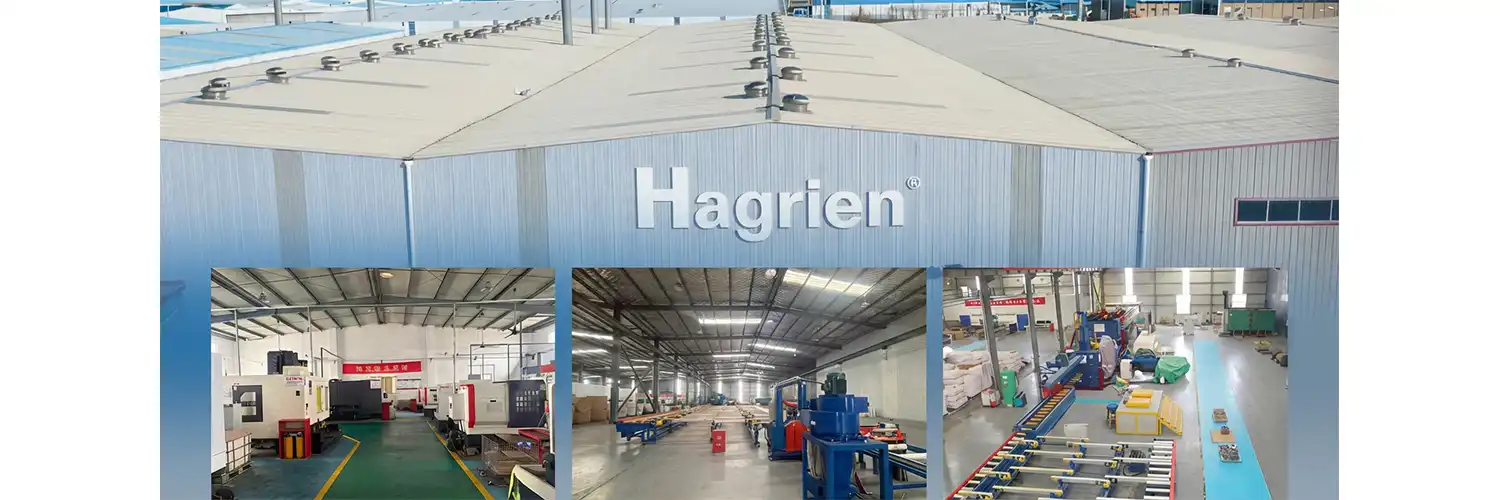
HAGRIEN engineers key-activated sliding sleeves with closed-loop quality control, CNAS-accredited HTHP testing, and full batch traceability from alloy melt through final inspection. Our dissolvable sealing elements are engineered to a specified dissolution window matched to your well conditions — not a generic timeframe. As a qualified sliding sleeve supplier, we support OEM/ODM programs, private-label serialization, and framework supply agreements with plannable lead times. Contact our technical team at cyrus@us-hagrien.com or visit us-hagrien.com to request a qualification package or application-specific consultation.
References
1. Society of Petroleum Engineers — SPE Journal, 2021
2. Benge, G. — Journal of Petroleum Technology, 2019
3. API Specification 19AC: Completion Tools and Related Equipment, American Petroleum Institute, 2022
4. ISO 14310:2008 — Petroleum and Natural Gas Industries: Packers and Bridge Plugs, International Organization for Standardization, 2008
5. Montgomery, C.T. & Smith, M.B. — Journal of Petroleum Technology, 2010
6. Economides, M.J. & Nolte, K.G. — Reservoir Stimulation, 3rd ed., Wiley, 2000

USER EVALUATE
Here is the customer's evaluation of us