




Choosing a Selective Fracturing Sleeve for Horizontal Wells
Choosing a selective fracturing sleeve for horizontal wells requires matching the activation method, isolation design, operating limits, and completion layout to the well's requirements. The review should include how each sleeve is opened, how successful activation is checked, if the stage arrangement is appropriate for the reservoir, and the dimensions and pressure constraints. Supplier documentation is equally vital since nominal specs alone are not enough to determine appropriateness for a particular well.
Engineered ports provide access to a specific treatment interval via a selective fracture sleeve. Depending on the completion design, it might assist operators in controlling the sequence of stage access and minimize the requirement for certain intervention procedures. However, successful zonal isolation and placement of treatment depends on the whole system of completion including sleeve design, sealing components, integrity of casing and cement, and operating method. This guide gives you the primary selection criteria and information to check before ordering.
Why Selective Fracturing Sleeves Matter in Horizontal Well Completions?
The Cost of Evenly Spaced Stages
Horizontal wells may go across formations of variable rock grade, thickness, pressure and production potential. A stage plan based mostly on consistent spacing may not represent these changes. Some periods may be over treated in comparison to their reservoir features while others may necessitate a different stimulation method. More than just spacing, real results rely on the reservoir, the completion architecture, and the treatment plan.
A selective fracturing sleeve gives you greater choice in selecting which interval to open and when to open it, if the completion system allows for that sequence of operations. This flexibility might be beneficial if the geological interpretation finds several target zones or the operator wants to modify the stimulation plan to include information from the reservoir. It is not in itself a guaranty of more uniform fracture development, better productivity or less fluid use. These results need proper design and field evidence.
What a Selective Fracturing Sleeve Does?
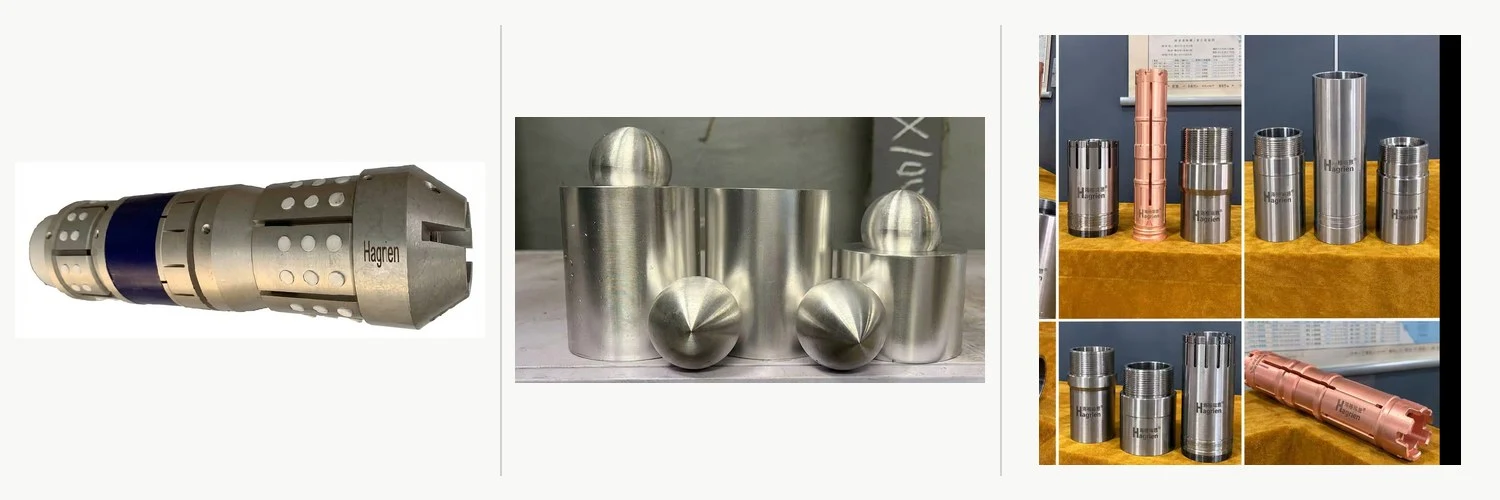
The selective fracturing sleeve is a casing-run completion element controlling access to a treatment interval using constructed ports. The activation mechanism opens the desired flow route, which allows the stimulation fluid and proppant to reach the appropriate interval under the defined operating circumstances.
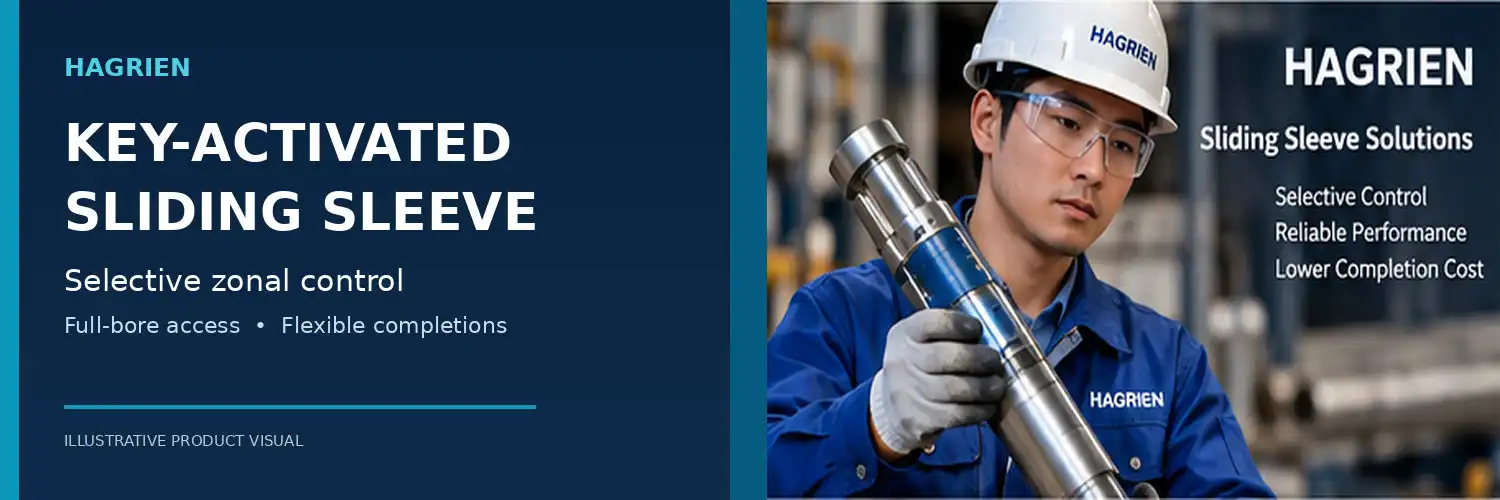
HAGRIEN says its sliding sleeves are key-activated devices meant to be inserted in the casing string. Check the activation process, opening sequence and wireline or other intervention requirements for a given configuration against the product documentation and authorized completion program. Also the phrase “full-bore” should be compared to the actual minimum internal diameter after activation, drift requirements and intended tool passage.
Selective opening and zonal isolation are functions that are similar but not identical. The sleeve controls access to a flow channel, whereas efficacy of isolation is a function of the overall design of the completion and integrity of the necessary sealing and wellbore components. I would expect a technical evaluation would include both functions. I would not expect a technical review to assume that selective activation by itself is enough to preclude communication across zones.
Where These Sleeves Fit Best?
A selective fracturing sleeve may warrant evaluation in multi-stage horizontal wells, interventionless completion designs, selected re-fracturing programs, toe-stage initiation schemes, and extended-reach wells where intervention logistics are difficult. Suitability relies on the desired activation sequence, reservoir design and pressure and temperature conditions and available completion equipment.
The potential advantage is highest when the sleeve's manner of operation addresses a particular limitation in the well design. For example, a program with restricted access to intervention could put a higher priority on an activation approach that eliminates certain wireline procedures. A well with fairly homogeneous reservoir parameters and accessible intervention services might be a basis for a completion approach.
Before choosing a system, the operator must specify the isolation needed, how each opening will be checked, and what contingency exists if a sleeve fails to operate as expected. Such conditions are more credible for comparison than vague assertions of stage control.
How a Selective Fracturing Sleeve Works and Which Options Exist
From Installation to Stimulation
selective fracturing sleeve is installed at planned positions in the completion string. Installation, running, and pressure testing must follow the approved well program and the requirements for the selected equipment. The particular sleeve to be opened for a treatment stage is actuated by the particular mechanism for that sleeve to open the flow route to the selected interval.
The practical order is dictated by the design of the sleeve. The completion team should validate how the intended sleeve is recognized, what action triggers opening, what operating parameters are necessary, and how the opening event is confirmed before deployment. These details are especially crucial for lengthy horizontal portions, where improper activation or failure to certify the state of the tool might complicate the future procedures.
Performance may be affected by pressure, temperature, fluid chemistry, seal quality and proppant exposure, depending on the materials and design. Therefore the provider should offer operational envelope, material compatibility and test proof for the particular setup. Field methods should be based on authorized documentation, not on assumptions from another sleeve design.
Activation Methods Compared
Typical methods for activating the completion include hydraulic activation, ball drop systems, mechanical shift tools, and indexing mechanisms. They are not interchangeable . They work differently and have different restrictions .
Ball-drop systems employ graded balls and chairs. Depending on the design, the number of stages and interior route dimensions may be limited by the ball-and-seat configuration. Other activation techniques may circumvent some of these limits but might impose other requirements on pressure management, tool identification, mechanical access or activation verification.
The sleeve design is key actuated and HAGRIEN characterizes it as having infinite-stage capacity. Such word is to be considered while considering the specific activation design, particularly in comparison to the systems constrained by the graded ball-seat sequence. It does not prove that a well has no practical limit to the number of sleeves or stages. The number of attainable stages and operation sequence should be checked against the completed design and the technical documentation of the manufacturer.
When comparing activation techniques, the review should answer three questions: how the target sleeve is recognized, how inadvertent opening is avoided, and how the opening event is validated. Answers must be backed by operational procedures, applicable test records, and configuration-specific documentation.
Open-Hole, Cased-Hole, and Dissolvable Choices
Open-hole completions often utilize packers or other isolation devices that seal against the formation or open-hole interval. Cased-hole completions depend on the integrity of the casing, cement and designated isolation measures. The appropriate approach depends on the formation, the well design and the desired pressure and isolation performance.
In certain completion designs, temporary isolation may be achieved using dissolvable sealing features until the material degrades or dissolves under specific downhole conditions. Their behavior is a function of the actual material, shape, temperature, fluid composition, and exposure length. The terms "dissolvable" and "temporary isolation" should not be read to suggest that all components will disappear completely or that the bore will be free of obstruction at a given point in time in the absence of supporting test data.
HAGRIEN’s sleeves are compatible with dissolvable sealing elements, the business said, and the company’s materials team produces dissolvable magnesium alloy bars. These are independent capabilities and should be evaluated individually unless the product documentation states that there is a direct relationship between the two. If you have a project with dissolvable parts, you should ask for the material spec, test-fluid conditions, temperature range, time observed to dissolve and any information on the material or residue left behind. Ensure that the test conditions are representative of the expected well environment prior to applying the results in a completion design.
Selective Fracturing Sleeve vs. Alternative Completion Methods
Versus Plug-and-Perf
Plug-and-perf typically involves setting a plug, perforating the target interval, and pumping the treatment stage. The sequence is repeated along the well, and some plug designs require drill-out before production access is restored. The resulting intervention requirements depend on the equipment, well design, and operating procedure.
A selective fracturing sleeve incorporates stage-access functionality into the completion string. Where the selected system can activate the required stages without separate wireline runs or perforating guns, it may reduce the need for those operations. The overall time and cost impact must still be evaluated against sleeve installation, activation requirements, completion complexity, and any additional contingencies.
Plug-and-perf may remain appropriate when perforation placement flexibility is a priority or when the operator already has an established and efficient operating program. The comparison should account for the complete well lifecycle, including installation, stimulation, production access, intervention, and any future recompletion requirements.
Versus Ball-Drop and Conventional Sliding Sleeves
Ball drop sleeves feature a ball and seat for actuation of flow channels. In graded systems, the number of steps permitted and the internal passage dimensions are determined by the sequence of seat sizes and the requirements for passing the ball. These constraints should be adjusted with the estimated completion time frame, number of stages and necessity for tool access.
A unique activation mechanism is included in a key-actuated selective fracturing sleeve. This might provide greater discretion in the choosing of target sleeve depending on the design instead of a set sequence of graded seats. This flexibility is helpful when the treatment sequence must comply with reservoir interpretations or project specific operational restrictions.
But it should not be decided on the basis of the mode of activation. For each system, state the identification approach, activation reliability, pressure requirements, minimum internal diameter, isolation arrangement and contingency procedure. Any claim that a design enables a certain sequence of stages or prevents a particular intervention must be verified for the design under investigation.
Matching the Method to the Well
No one finishing technique is optimal for every horizontal well. The choice should take into account reservoir variability, lateral length, number of stages anticipated, treatment pressure, temperature, fluid chemistry, proppant exposure, availability of intervention, and future production access.
A selective fracturing sleeve may be attractive when selective access or reduced reliance on certain intervention operations addresses a defined project need. If the operator has a different set of objectives, or an established procedure, or needs operational qualities that cannot be shown by the current sleeve, plug-and-perf or another sleeve design may be more appropriate.”
A detailed comparison of functionality necessary, evidence for each choice and any remaining technological hazards. This allows completion, reservoir and operations teams to benchmark systems on the same footing before to committing to a field experiment.
Key Selection Criteria and a Practical Decision Process
Dimensions, Pressure, and Materials
The sleeve has to suit the whole well system, not just the nominal casing size. The dimensional assessment should comprise specified dimensions of the casing or tube, connections, sleeve length, internal diameter, external envelope, sealing interfaces and minimum drift for expected tools. Supplier must supply drawings and dimensional limits of proposed configuration.
Where applicable, both working pressure and differential pressure, burst resistance and collapse resistance should be included separately in the pressure evaluation. For each rating mentioned, request test conditions, acceptance criteria and any applicable limits. A pressure value alone does not enough for a project-specific appropriateness judgment without the test setup, configuration and acceptance basis.
Care in selection of material and temperature is required. The use of corrosive fluids, exposure to H2S, CO2 and other environmental factors might affect the appropriateness of materials, sealing and the long-term integrity. NACE MR0175/ISO 15156 gives guidelines on material selection for H2S-containing environments in oil and gas production, however, compliance should be confirmed with the individual materials, service circumstances and applicable legislation. A general reference to the standard does not establish conformity of a particular sleeve or any of its components.
Also consider fluid compatibility, erosion exposure and expected operation cycle. Material data, operational restrictions, and supporting test data applicable to the equipment should be obtained prior to clearance for use.
Activation Reliability and Observability
Activation reliability is more than the ability of a sleeve to open under controlled test conditions. The completion team must know how the target sleeve is identified, how the mechanism is not mistakenly triggered, under what conditions the mechanism is activated, and how the opening event is validated.
Isolation performance must be evaluated separately. Communication between zones may be influenced by stage spacing, packer or sealer design, casing and cement integrity and pressure conditions throughout the gap. The selected equipment must be studied as a part of the whole finishing system.
Ask how the proposed configuration for HAGRIEN equipment is activated and ask for its verification data. If the project involves key activation, check the key design, the sequence of operation, the balance of the string, and the approach given for assessing a successful opening. Supplier explanations should be supported by adequate technical documents and test evidence.
A Five-Step Decision Process
A practical selection process can be organized into five steps.
Specify the well conditions. Record completion type, casing or tubing size, lateral length, intended stage count and spacing, pressure, temperature, fluid chemistry, proppant, and production-access needs.
Define the acceptance criteria. Set dimensional fit, pressure and temperature restrictions, isolation function, activation verification and material compatibility as necessary. Identify the documentation and test results required to show compliance.
Compare the possible setups Review activation processes Review stage-sequence restrictions Review operational procedures Review intervention requirements Review lifecycle implications Review technical support Review delivery needs
Assess the evidence. Compare quotes to designs, operational envelopes, test circumstances, quality records and any gaps detected. Do not judge a tool’s suitability based on price alone.
Test before scaling. Implement the requisite engineering review, bench or qualification testing as appropriate, and a controlled field trial as part of the operator’s permitted program. Set acceptance criteria and contingency measures before the trial starts.
This process helps prevent common selection errors, including relying only on nominal size, accepting pressure ratings without test conditions, or assuming that products with similar names provide equivalent activation and isolation functions.
Working With a Selective Fracturing Sleeve Manufacturer and Verifying Before Deployment
What to Include in an RFQ
A useful request for quotation (RFQ) should provide enough information for the supplier to assess technical fit and identify missing inputs. Organize the request into three groups.
Well data: Completion type, casing or tubing size and weight, connections, lateral length, planned stage count, and stage spacing. Include required drift dimensions and the tools expected to pass through the completion. These details support the dimensional and configuration review.
Operating conditions: Expected pressure and temperature, treatment fluids, proppant type, and any H2S, CO2, or other relevant exposure. Identify the required isolation function and activation sequence. This information allows the engineering team to assess materials, seals, and operating limits against the intended application.
Commercial and documentation requirements: Preferred activation method, required drawings and test records, quality documents, destination, target delivery schedule, and any OEM or private-label requirements. State any special packaging, shipping, or distributor support needs so that commercial planning can proceed alongside the technical review.
The RFQ should also ask the supplier to identify assumptions, exclusions, and unresolved technical questions. A project-specific recommendation is more useful when its limits and evidence requirements are explicit.
How HAGRIEN Supports Qualification
HAGRIEN describes itself as a manufacturer headquartered in Xi'an, with company and service presence in the United States. Its stated capabilities include coordination between materials, machining, and downhole-tool production. These claims should be assessed against the legal entity, manufacturing scope, and product configuration relevant to the proposed order.
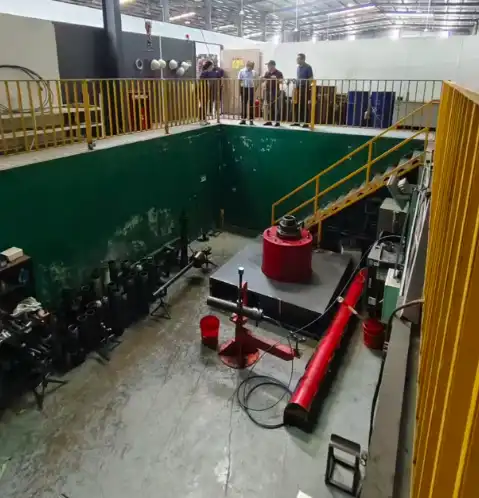
Before relying on quality or testing statements, confirm which entity manufactures the equipment, where the relevant tests are performed, and which records can be supplied for the selected product. If CNAS-accredited testing is proposed, verify the laboratory's accreditation status and scope, including whether the specific test method falls within that scope. Accreditation should not be interpreted as applying automatically to every test or product.
HAGRIEN states that documentation such as a Certificate of Analysis (COA), Certificate of Conformity (COC), and Safety Data Sheet (SDS) is available on request, and that the company holds ISO 9001, ISO 14001, and ISO 45001 certifications. Before publication or procurement, confirm the validity, issuing entity, scope, and applicability of each relevant certificate. Also establish which documents are available for the specific tool and batch.
HAGRIEN's stated service process includes confirming requirements and preparing a quotation and delivery plan, with more complex projects requiring separate confirmation. Any specific response or quotation time should be treated as subject to the completeness of the technical inputs and confirmation by the supplier. OEM/ODM engineering, application support, remote troubleshooting, and regional cooperation should likewise be confirmed for the particular project.
Verification Before Running
Before running the completion string, establish a documented inspection and acceptance process. Depending on the equipment design and approved program, factory inspection may cover critical dimensions, connections and threads, ports, sealing interfaces, activation components, and material identification. Inspection records should identify the applicable acceptance criteria and the configuration inspected.
Pressure testing should use defined procedures, test conditions, and acceptance limits relevant to the intended application. Confirm compatibility with the other completion components, including packers, centralizers, nipples, ball seats, shifting tools, tubing, and casing connections where applicable. The required checks depend on the actual system; not every component is necessarily present in every design.
Field readiness should include the installation sequence, pressure-test schedule, activation procedure, method for confirming activation, and contingency actions if the expected response does not occur. The operator, service company, and supplier should agree on their respective responsibilities before deployment.
After the operation, review the available stimulation and completion records against the original acceptance criteria. Any lessons from the job should be documented and used to update subsequent specifications where justified by evidence. This creates a traceable basis for evaluating performance without assuming that one field result applies to every well.
 Conclusion
Selecting a selective fracturing sleeve for a horizontal well requires more than comparing nominal dimensions or activation methods. The key questions are whether the tool fits the completion string, operates within the required pressure and temperature envelope, provides a verifiable activation process, and meets the intended isolation requirements.
A comparison with plug-and-perf and ball-drop systems should consider the full operating sequence, intervention requirements, stage-count constraints, and future production access. Where dissolvable sealing elements are involved, material behavior and isolation duration must be supported by evidence relevant to the intended downhole environment.
Before placing an order, define the well conditions and acceptance criteria, review configuration-specific drawings and test records, and confirm the supplier's relevant quality documentation. A clear RFQ and a documented pre-run verification process provide a stronger basis for equipment selection than broad performance claims or purchase price alone.

FAQ
1. What is a selective fracturing sleeve?
A selective fracturing sleeve is a completion component installed in the casing string that controls access to a designated treatment interval through engineered ports. Its activation mechanism and available operating sequence depend on the design. Isolation performance depends on the complete completion system, not solely on the sleeve's ability to open.
HAGRIEN describes its sliding sleeves as key-activated. The applicable activation procedure, minimum internal diameter, and tool compatibility should be confirmed using the documentation for the specific configuration.
2. How does it differ from plug-and-perf?
Plug-and-perf generally uses wireline operations to set plugs and perforate the target interval before pumping each stage. A suitable selective fracturing sleeve may allow stage access through the installed completion string and reduce the need for certain intervention operations.
The appropriate choice depends on the well design, required perforation flexibility, intervention availability, activation method, isolation requirements, and production-access plan. Neither method should be considered universally preferable without a project-specific comparison.
3. What should I send for a selective fracturing sleeve recommendation?
Provide the completion type, casing or tubing dimensions and connections, planned stage count and spacing, operating pressure and temperature, treatment fluids, proppant, relevant material exposure, required isolation function, and target delivery schedule.
Also specify the documents required for technical approval, such as drawings, operating limits, pressure-test records, material information, and activation procedures. The supplier can then review the proposed configuration, identify missing information, and confirm what additional testing or documentation is needed.
Request a Selective Fracturing Sleeve Recommendation or Quotation
Share your well layout, completion dimensions, planned stage count, pressure and temperature conditions, fluid details, and activation requirements with HAGRIEN. This information provides a basis for reviewing configuration fit, identifying technical questions, and determining the documentation needed for qualification.
If you are evaluating a selective fracturing sleeve manufacturer for a U.S. program, specify the quality records and test evidence required for your application. The availability and scope of any particular certification or accredited test should be confirmed for the proposed product and test method.
Email cyrus@us-hagrien.com or visit us-hagrien.com for details.
References
1. U.S. Energy Information Administration, Hydraulic Fracturing Accounts for About Half of Current U.S. Crude Oil Production, 2016. Verify the original publication and use it only for the industry statistic it supports; it does not establish the performance of a particular sleeve.
2. Society of Petroleum Engineers, Thirty Years of Gas Shale Fracturing: What Have We Learned? (SPE 133456), 2010. Verify the full publication details and confirm that the cited findings support the specific discussion.
3. Economides and Nolte, Reservoir Stimulation, 3rd Edition, 2000. Verify the edition and relevant sections before citing it for technical claims.
4. ISO 14310, Petroleum and Natural Gas Industries — Downhole Equipment — Packers and Bridge Plugs, 2008. Confirm the applicable edition and scope; do not imply that it directly qualifies a selective fracturing sleeve unless the relevant requirements apply.
5. NACE MR0175/ISO 15156, Petroleum and Natural Gas Industries — Materials for Use in H2S-Containing Environments in Oil and Gas Production. Confirm the applicable edition and material requirements for the actual service conditions.
6. ISO 9001, Quality Management Systems — Requirements. Confirm the applicable edition and the scope and validity of any company certification before making a certification claim.

USER EVALUATE
Here is the customer's evaluation of us