




Why Use a Full-Bore Sliding Sleeve in Horizontal Wells?
A full-bore sliding sleeve can provide selective access to designated intervals while maintaining an internal passage intended to accommodate subsequent downhole operations. This design may be useful in horizontal wells, where lengthy laterals might complicate intervention planning, especially when logging, cleanout, water management, or refracturing is necessary after the original completion.
The practical advantage relies on the actual internal diameter of the sleeve, drift clearance, port geometry, actuation mechanism and compatibility with the rest of the finishing system. Just a big nominal bore is not enough to run any intervention tool through the installed unit.
Therefore, HAGRIEN’s sliding sleeve solution should be assessed according to the well configuration and operating circumstances for which it is designed. This article reviews design, possible applications, performance limits and technical data purchasers should ask for when choosing a full-bore sliding sleeve.
Full-Bore Sliding Sleeve Basics for Horizontal Wells
What Is a Full-Bore Sliding Sleeve?
A full-bore sliding sleeve is a completion tool that uses a movable inner sleeve within an outer housing to open or close designated flow ports. Depending on the design, the ports provide communication between the tubing or casing bore and the surrounding annulus or formation.
Typical parts include housing, moveable sleeve, seals, ports, locking features, changing profile, and end connectors. The precise layout differs every product.
"Full-bore" usually means a design which will retain a rather big, continuous internal passageway. No minimum internal diameter is specified, nor is access in all positions of operation guaranteed. Sleeve location, seals, connectors, shifting profiles and other components in the completion string may alter real flow.
When analyzing a full bore sliding sleeve, check the dimensions design and verify the minimum internal diameter and drift requirements for the applicable configuration. If intervention tools have to pass through the sleeve, exterior dimensions and operating clearances of the tool should be checked against the certified drift profile and not necessarily against the product name.
How Does a Full-Bore Sliding Sleeve Work in a Horizontal Well?
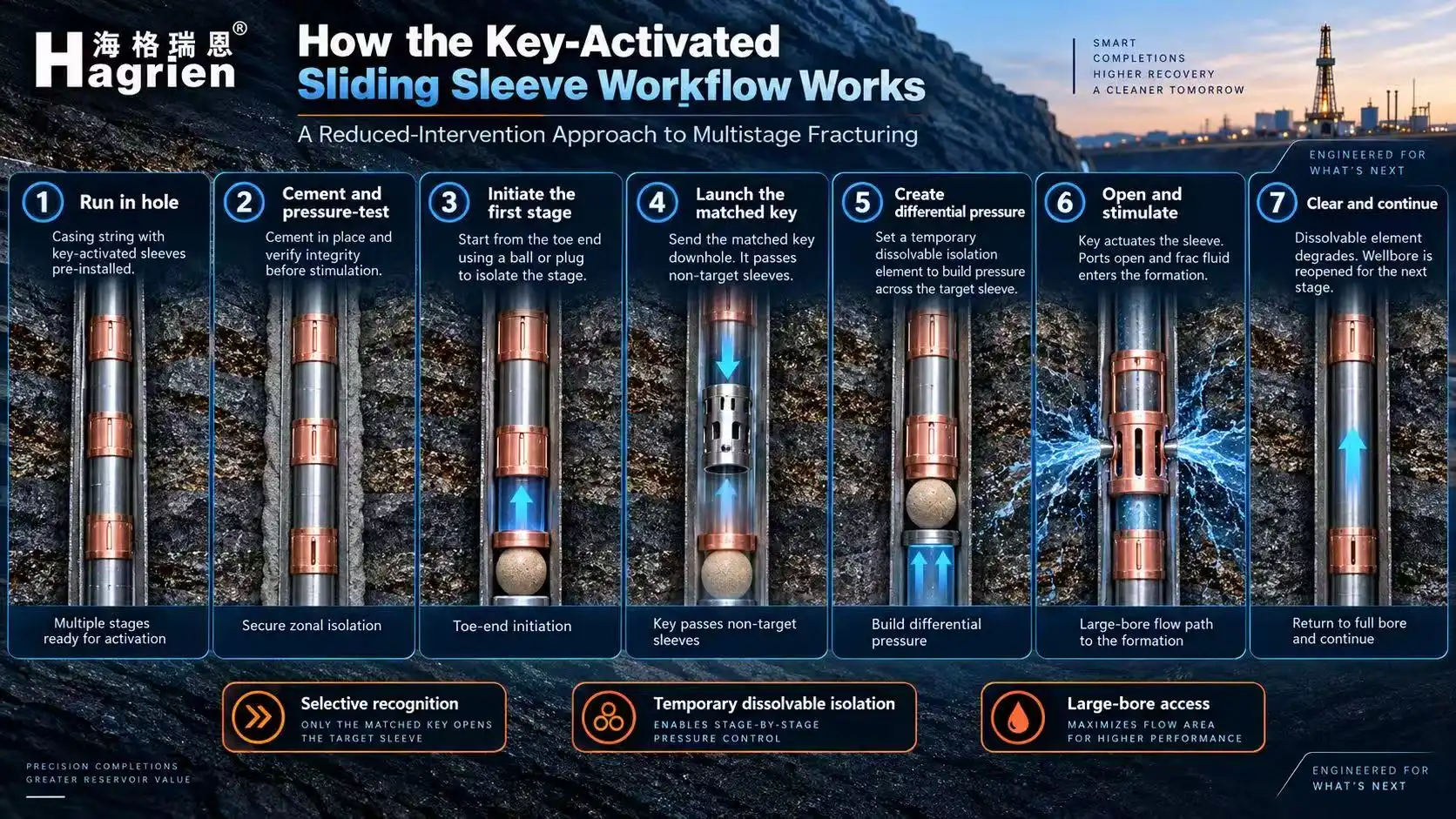
A sliding sleeve is run as part of the completion string and set at the desired interval. It stays closed until the actuation mechanism moves the inner sleeve to open or shut the appropriate ports. (Depending on design.)
Activation techniques may include a shifting key or tool, hydraulic actuation or other mechanism specified for the device. The correct approach relies on sleeve design, operating circumstances and finishing arrangement. The methods are not interchangeable.
Operators must have a clear means of verifying sleeve position. Depending on the system, confirmation may consist of pressure response, tool indication, intervention data or other allowed operating processes. Decide the confirmation method you will use before you launch.
Once opened, the internal tube may be used to run wireline, coiled tubing, logging instruments or cleanout assemblies provided the confirmed drift, profile and completion geometry are consistent with the chosen equipment. All tools in the full intended path must be reviewed for access, including connections and other constraints in the string.
Why Horizontal Wells Need Dependable Zonal Access?
Multiple intervals are possible in a lengthy lateral of a horizontal well. Completion teams may need to isolate or interact with chosen zones during stimulation, analyze output, control undesirable water or gas, or access the well for future intervention.
These constraints make the stage selection/internal access interaction a key component of completion design. A sliding sleeve may be used to provide selected communication at pre-defined intervals and a passage of adequate and validated size to maintain alternatives for following operations.
But the worth of this setup relies on the whole implementation design. The capabilities of the system are limited by the number and spacing of the sleeves, the activation technique, the pressure ratings available, and the size of the other components.
For a planned application, engineers must determine what intervals to access, when communication must take place and what equipment may need to be sent down the well at a later time. This gives a better foundation for selection than assuming each horizontal well needs the same sleeve arrangement.

Full-Bore Sliding Sleeve Benefits, Applications, and Limits
Benefits for Stimulation and Production
A full-bore sliding sleeve may offer selective zonal communication and a relatively large internal passage for subsequent operations. Depending on the completion design, these features can support multistage stimulation, production evaluation, and future intervention planning.
A larger internal diameter would relieve geometric limitations for compatible equipment. This is not always related to lower pressure drop or higher output. Actual hydraulic performance is a function of the effective flow area, port size, flow direction, fluid properties, operating conditions, and shape of the full completion.
The sequence in which the sleeve falls in completion is essential as well. Engineers should compare the smallest drift along the proposed access route to the size of the planned equipment if further logging or cleanout is anticipated. This is even more crucial when other completion components are limited.
A well-designed sliding sleeve might solve some of the drawbacks of ball-drop systems that use seats of increasing size. The genuine comparison will depend on the layout of the rival system, how it opens and the internal measurements that are preserved when it's triggered.
Therefore, the benefit has to be adequately analyzed on the basis of verifiable dimensions and operational data and not on the presumption that one completion design is always preferable.
Full-Bore Sliding Sleeve Applications in Oil and Gas Wells
Applications can include multistage fracturing, selective production, zone assessment, water or gas management, recompletion and workover programs. The suitability is based on the match between the working mechanism, port arrangement, materials and ratings of the sleeve and the intended usage.
HAGRIEN’s sleeve offering covers horizontal shale wells, multistage completion programs, refracturing, toe-stage commencement, and extended-reach or deepwater applications, among other areas. Each application must be reviewed for its intended configuration and the circumstances anticipated during installation and operation.
Other situations, such as injection and geothermal wells, may have differing needs for temperature, pressure, fluid chemistry, corrosion, and erosion. qualifying for one application is not to be considered as qualifying for another application.
For sour service, ISO 15156, also known as NACE MR0175, specifies material requirements for certain H 2 S-containing conditions in oil and gas production. The requirements applicable are related to the service environment, material and relevant section of the standard. Here, a reference to the standard alone is not evidence of qualification of a specific sleeve or whole assembly. Purchasers should ask for material and qualification data applicable to their working circumstances.
Limits to Check Before You Buy
For certain wells, no sliding sleeve design is appropriate. Potential limits include debris buildup, scale, seal deterioration, incomplete shifting, port erosion, pressure or temperature conditions beyond the authorized range, and incompatibility with intervention equipment.
Additional design and verification challenges may be imposed by long laterals, sand production, repetitive operation and corrosive or sour conditions. The relevance of each aspect is dependent on the well and sleeve arrangement.
Note that ‘full-bore’ is not to be read as unlimited access. Think about the least amount of drift in the pertinent operational position, the shifting profile, the connections and the limitations of other finishing components. If a sleeve is anticipated to facilitate future cleaning or logging, check compatibility with equipment to be used during final design.
A full-bore sliding sleeve also may not be acceptable if the application demands a different kind of autonomous inflow control, the needed operating circumstances are beyond the qualifying limits of the product, or its functions do not fit the completion plan. Early evaluation of these limits helps to prevent the selection of a component that is not able to match the real needs of the system.
 HAGRIEN Full-Bore Sliding Sleeve Design and Material Control
Key-Activated Stage Opening
The sliding sleeves are key-activated elements that are run in with the casing string, HAGRIEN says. In a suitable design and completion program, key activation may let chosen stages to be opened without a separate wireline shifting run or perforating gun for the opening operation.
This mode of working is depending on setup. The activation key, the shifting profile, the sleeve dimensions, the arrangement of the casing and the needed operating pressures must be compatible. The completion program should also include the mechanism for recognizing and opening each phase.
The use of a stage that opens with a key activation may minimize the number of intervention steps, but it should not be taken to mean that intervention is not needed at all in the completion. Other processes may still need intervention equipment. The whole sequence will rely on the system architecture.
Before ordering, check the well of application for activation technique, casing sizes that may be used, operational restrictions and dimensional requirements. Compatibility is checked on the basis of a drawing package and the required operational documentation.
Infinite-Stage Capability and Full-Bore ID After Activation
HAGRIEN describes its system as offering infinite-stage capability. In this context, the intended distinction should be clarified: a design may avoid the stage-count limitations associated with a particular sequence of progressively sized ball seats. That does not mean the number of stages is literally unlimited.
The practical stage count remains subject to the complete system design, sleeve configuration, casing and completion length, activation procedure, operating limits, and other project constraints. Buyers should request the applicable system documentation and confirm how the stated stage capability is achieved.
The same care is needed when evaluating internal diameter after activation. A full-bore sliding sleeve may be designed to preserve a relatively large internal passage, but the actual minimum ID and drift must be confirmed for the specified size and operating position. Ports, connections, seals, and adjacent completion components can still influence access and flow.
A verified drift value helps engineers assess whether coiled tubing, logging tools, and cleanout assemblies can pass through the intended route. It does not, on its own, establish hydraulic performance or eliminate every possible flow restriction.
For each proposed configuration, request the dimensional drawing, minimum drift, relevant operating-position dimensions, and port geometry. These data allow the completion team to evaluate the claimed benefits against its actual equipment and operating requirements.
 Dissolvable Sealing Elements and Traceable Verification
If the system chosen employs dissolvable sealing elements, the material behavior and end-of-service condition of these elements must be analyzed independently from the mechanical behavior of the sliding sleeve.
A sealing element that has lost its sealing function is not necessarily fully dissolved. Material loss, fragmentation, residue and recovery of the requisite internal passage are separate results and may need various test techniques and approval criteria.
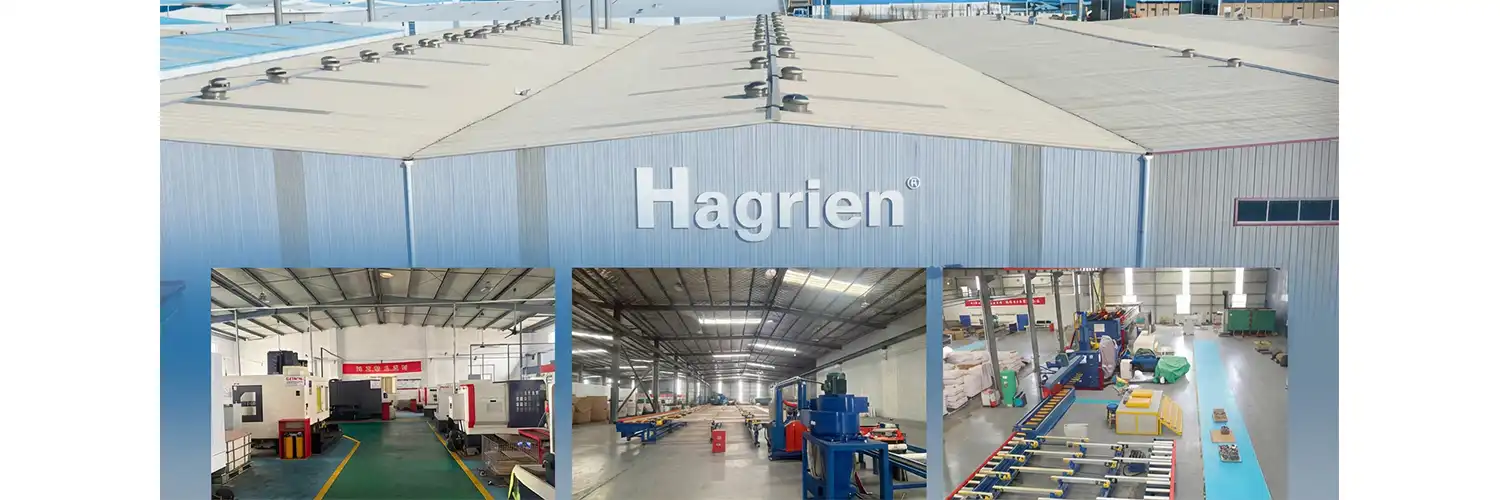
HAGRIEN says it melts, extrudes and manufactures magnesium alloy that dissolves in house. The capabilities described apply to the appropriate metallic materials and components; they are not to be taken as any indication that all sleeves are made of magnesium alloy or that all sealing elements follow the same dissolving process.
HAGRIEN also highlights CNAS-accredited high temperature and high pressure lab testing as part of their validation capacity. Before a test is considered accredited, check that it is accredited at present, who it is accredited by, the scope that applies and if the particular technique is covered.
Supporting documents may comprise material identification, dimensional inspection records, batch traceability, certificates of analysis or compliance and applicable test results, depending on the order requirements. Make sure you have the right docs for this product and this setup.
If residue and drift recovery are important to the completion program, the test fluid, exposure circumstances, measurement technique and acceptability criteria should be established before testing. The established methodology gives a more relevant foundation for assessing the situation after surgery than a blanket declaration that the bore would be clean.
Installation, Ratings, and Performance of a Full-Bore Sliding Sleeve
Installation and Operation Steps
The first step to arranging the installation is to evaluate the complete design and the authorized processes of the manufacturer. Casing or tube sizes, drift requirements, connectors, port orientation, pressure and temperature ratings, material compatibility, sleeve spacing and intended order of intervention.
Before using the tool, competent people should check components and verify necessary assembly and inspection documents. Checks may be seals, shifting profiles, threads, ports, locking features or other design specific items. Any movement or functional inspection should be carried out as per the manufacturer's instructions.
The tool must be constructed, mounted and pressured in accordance with the authorized technique for the particular configuration. The completion program must describe the needed verification methods and records to be kept.
The product dictates the activation technique and operational restrictions for sleeve opening or shutting. Design dependent pressure equalization, shifting force, hydraulic pressure and position confirmation needs cannot be generalized into one process for all sleeves.
Verify needed sleeve position and system integrity by authorized technique after operation. If subsequent intervention is envisaged , validate the available criteria for drift and tool passage . HF1 API Guidance Document may be useful for parts of well design and integrity but should be checked for application against the actual operation. It is not intended to replace the manufacturer's installation instructions or product specific qualification data.
Pressure, Temperature, and Dimension Data to Request
Pressure ratings must be expressed correctly. Request relevant working, test, burst, collapse and differential-pressure limits, if applicable, and operating conditions and sleeve position to which each rating applies. Not all ratings apply to all configurations and a pressure test result should not be confused with a working pressure rating.
Temperature limits should take into account, materials and components used in assembly such as seals, metals and activation parts. If you expect to be doing thermal cycling, ask for the certification data that exists for the temperature range and sequence of operation you specify.
Dimensional data should include nominal casing or tube size, outer diameter, minimum internal diameter, drift diameter, overall length, port dimensions and effective flow area where available, connection data and shifting profile dimensions. If tool passage is required check that the actual intervention equipment is within clearance limits.
Supporting documentation may include: material certificates as applicable, pressure test records, sour service qualification records, inspection reports, factory acceptance test results as necessary for the order. If the APIs or other standards in the industry are specified, a blanket conformity to the standard should not be mentioned. The specific standard and its relevant scope should be indicated.
Confirm in writing the HAGRIEN'S ratings for the specific sleeve size and configuration. Buyers should obtain and review the correct drawing and rating documents before using the product in a finished design.
Performance Factors and Flow-Area Comparison
Sliding sleeve performance depends on the design and manufacturing quality of the sealing interface, repeatability of the activation mechanism, debris tolerance, pressure and temperature exposure, erosion resistance, dimensional tolerances, and the operating environment.
For hydraulic evaluation, compare the effective flow area, port geometry, flow direction, and available pressure-drop data under relevant conditions. Nominal bore size alone is insufficient to establish actual flow performance. A larger internal diameter does not guarantee higher production if the ports, completion architecture, or reservoir inflow are the limiting factors.
Erosion risk should be assessed in relation to the fluid, solids content where relevant, flow conditions, port design, and expected operating duration. Likewise, any claim about repeatable shifting should be supported by applicable functional or qualification evidence.
Total cost of ownership is another useful comparison criterion. Consider purchase price, customization, installation, testing, spare parts, possible intervention, workover exposure, downtime, and delivery risk. The relative importance of these costs depends on the well and the planned operating sequence.
A meaningful comparison therefore combines verified technical data with the likely operating and maintenance requirements. It should not assume that the lowest purchase price or largest nominal bore will produce the best overall result.
How to Select and Buy a Full-Bore Sliding Sleeve
Selection Guide for Horizontal Wells
Start by defining the well and completion scenario. Relevant distinctions include open-hole versus cased-hole design, producer versus injector, conventional versus multistage completion, onshore versus offshore operation, sour versus nonsour service, and new completion versus workover.
Next, establish the technical requirements: minimum drift, internal diameter, flow area, pressure and temperature limits, number of planned stages, activation method, seal design, connection type, operating cycles, and any requirements for retrieval or later intervention.
Compare a full-bore sliding sleeve with perforated completions, hydraulic designs, and permanent or retrievable alternatives according to the functions required by the project. The comparison should account for stage-opening procedures, access for later tools, qualification requirements, and the consequences of component failure or restricted access.
For a new or customized configuration, agree on the review and verification sequence before production. Depending on the application, this may include drawing review, material review, bench testing, system-level verification, and a field trial. Confirm what data the supplier can provide at each stage and what constitutes acceptance.
Procurement Checklist and Common Mistakes
A useful RFQ should provide enough information for the supplier to evaluate the proposed configuration. At a minimum, include:
Well and completion details: Well type, relevant depth and trajectory information, casing or tubing size and weight, completion type, and planned stage count.
Operating conditions: Pressure, temperature, fluid composition, flow conditions where available, operating cycles, and sour-service requirements where applicable.
Dimensional requirements: Required minimum drift, internal and outside diameters, connection type, port dimensions, and shifting-profile compatibility.
Functional requirements: Activation method, required sleeve positions, intended stage-opening sequence, and any anticipated intervention or post-operation access.
Quality and documentation: Applicable material certificates, dimensional inspection records, pressure-test records, qualification evidence, traceability requirements, warranty terms, and spare-parts needs.
Commercial requirements: Quantity, requested delivery date, destination, packaging, and other purchase conditions.
Common mistakes include comparing products by nominal size or price alone, overlooking shifting-tool compatibility, assuming that "full-bore" means unrestricted access, and treating a dissolvable sealing element as proof that the complete bore will be free of residue.
Another risk is applying generic installation procedures to a product whose activation mechanism or pressure limits differ. Training, equalization requirements, shifting parameters, position confirmation, and contingency actions should be addressed through the approved operating procedures for the selected configuration.
Decision Guide and Supplier Support
A full-bore sliding sleeve may be appropriate when selective zonal communication and future internal access are important to the completion plan. The decision should be based on verified dimensions, the activation method, operating ratings, material suitability, qualification records, and the intended intervention program.
Before approval, review the proposed configuration against the completion schematic, well-barrier requirements, pressure and temperature envelope, operating sequence, delivery schedule, and spare-parts plan. A coordinated review involving the operator, completion engineer, service company, and supplier can help identify interface questions before deployment.
HAGRIEN identifies OEM/ODM work, joint material and structure design, and drawing control as part of its support offering. Confirm the scope of these services for the specific project, including responsibility for design approval, qualification, documentation, and changes to the agreed specification.
HAGRIEN's stated delivery information includes a 2–4 week range for dissolvable magnesium alloy bar stock and a 4–8 week range for custom specifications. These figures should not be assumed to represent the delivery time for a finished sliding sleeve. Confirm the applicable product, order quantity, material requirements, machining, testing, and delivery terms in the quotation.
Conclusion
A full-bore sliding sleeve can support selective zonal communication while preserving an internal passage intended for compatible downhole operations. Its value in a horizontal well depends on the completion architecture, the actual minimum drift, port geometry, activation method, and verified pressure and temperature limits.
The design may suit multistage stimulation, production evaluation, and future intervention planning, but these benefits depend on the specific configuration. Key activation does not automatically eliminate every intervention, an infinite-stage claim requires a clear definition of the system's limits, and dissolvable sealing elements do not guarantee complete residue removal.
For a reliable selection, compare the verified dimensions, functional requirements, material and qualification records, and likely lifecycle costs. HAGRIEN's proposed configuration should be reviewed against the customer's well conditions and completion requirements before its ratings, documentation, and delivery schedule are finalized.
FAQ
1. Does a full-bore sliding sleeve replace a perforating run?
Not in every completion program. HAGRIEN describes its key-activated sleeves as a means of opening selected stages without a separate wireline shifting run or perforating gun for that opening operation. Whether this approach is suitable depends on the sleeve configuration, casing and completion design, and the planned operating sequence. Confirm the applicable procedure before assuming that other intervention steps can also be eliminated.
2. Is "full-bore" the same as hydraulic actuation?
No. "Full-bore" describes the intended internal-passage design, while hydraulic actuation is one possible way to operate a tool. A sleeve may use key activation, hydraulic pressure, or another specified mechanism. Confirm both the actuation method and the minimum drift for the relevant operating position in the product documentation.
3. What should I send for sizing?
Start with the casing or tubing size and weight, required minimum drift, pressure and temperature conditions, fluid composition, planned stage count, and intended activation method. Include the completion drawing and connection requirements if available. If later intervention or residue-recovery testing is important, specify the intended tools and the required acceptance criteria. These details help the supplier identify compatibility questions and determine which technical documents or tests are needed.
Request a Full-Bore Sliding Sleeve Configuration Review with HAGRIEN
To evaluate a full-bore sliding sleeve for your horizontal well, send HAGRIEN the available completion drawing, casing or tubing size, required drift, operating pressure and temperature, planned stage count, activation requirements, and intended delivery date.
Email: cyrus@us-hagrien.com
The review should establish the proposed sleeve configuration, relevant dimensional and rating requirements, activation compatibility, and available qualification documentation. If dissolvable sealing elements are included, identify the required post-operation condition and any residue or drift-recovery acceptance criteria.
HAGRIEN's stated laboratory and quality-system credentials should be verified against the applicable documents and scope before being relied upon for procurement approval. Product ratings, supporting records, and delivery schedules should be confirmed for the specific configuration and order.
Visit us-hagrien.com for more details.
References
1. Well Completion Design (Elsevier, 2009). Verify the relevant edition and sections before citing specific design guidance.
2. Reservoir Stimulation (Wiley, 2000). Verify the bibliographic details and relevant sections before publication.
3. Modern Fracturing: Enhancing Natural Gas Production (ET Publishing, 2007). Confirm the exact publication details and relevance to the associated claims.
4. API Guidance Document HF1, Hydraulic Fracturing Operations—Well Construction and Integrity Guidelines. Confirm the applicable edition and scope.
5. U.S. Energy Information Administration, Today in Energy: Hydraulic Fracturing Accounts for About Half of Current U.S. Crude Oil Production (2016). This historical source provides industry context, not evidence of sliding sleeve performance.
6. ISO 15156 / NACE MR0175, Materials for Use in H₂S-Containing Environments in Oil and Gas Production. Confirm the applicable part, edition, and requirements for the intended service.

USER EVALUATE
Here is the customer's evaluation of us