




Disposable Setting Tool Technology: Trends in Well Completion
Disposable setting tool technology has reshaped how operators approach well completion across conventional and unconventional plays. A disposable setting tool is a single-use downhole device engineered to set bridge plugs, packers, and frac plugs through mechanical force—without electricity, external hydraulics, or gas. By eliminating the redress cycle, this approach reduces Non-Productive Time (NPT), lowers total cost of ownership, and removes human error from the refurbishment process. For procurement directors managing budget-constrained projects in the Middle East, Southeast Asia, or remote onshore fields, this technology offers a practical path to dependable well completion at controlled cost.
 Understanding Disposable Setting Tools: Technology and Types
How a Disposable Setting Tool Works?
HAGRIEN's one-time-use setting tool uses only mechanical force—pressure and spin on the pipe string—to provide the axial load needed to set downhole equipment. There are no charges for wires, hydraulics, or electronics on the outside. This straightforward design means there are fewer ways for things to go wrong, and the system will always work the same way in horizontal wells and low-pressure pools. The tool can handle pressures up to 10,000 psi and temperatures up to 400°F, making it suitable for use in harsh HPHT and NACE sour-service conditions.
Main Types of Single-Use Setting Devices
There are three main types on the market right now. String weight and spin are used by mechanical setting tools like the ones HAGRIEN makes. Different wellbore pressures are used in hydraulic versions. Chemical or dissolvable tools have parts made of magnesium metal that break down when they are used. Each type works best in a different situation: mechanical tools work best in remote or sour-service wells where there is no access to external power; hydraulic tools work best on offshore rigs with managed pressure systems; and dissolvable tools work best in multi-stage fracturing where recovery is not possible.
Disposable vs. Reusable: A Practical Comparison
It is only when correction cycles are taken into account correctly that reusable tools have a lower unit cost per run. In reality, field teams working in rural areas don't always have the trained techs and repair kits they need to service tools correctly. Also, one failed-to-set event in a deepwater well can cost more than a year's worth of single-use units. A throwaway setting tool comes already put together and checked, so there is no chance of human mistake on-site. When workers run back-to-back plug-and-perf steps, the time they save on each run quickly adds up to real cost savings.
 Emerging Trends in Disposable Setting Tool Technology
Material Innovation Driving Performance Gains
New materials like lightweight alloys and magnesium alloys that dissolve are changing what one-time-use downhole tools can do. HAGRIEN's magnesium alloy bars, which come in sizes up to Ø300 mm, have a specially designed dissolution window that changes based on temperature, saltiness, and the chemistry of the fluid. This means that workers can choose a material profile that breaks down on a regular plan after the machine is turned on, which saves them the cost of milling runs. Aerospace-grade alloy steel types, on the other hand, offer high tensile strength and accurate shear pin positioning for high-load setting tasks without adding a lot of weight to the bottomhole assembly.
Smart Integration and Real-Time Feedback
In the completions business, there is a clear move toward tools that create downhole data while they are being used. The disposable mechanical setting tool doesn't have any sensors on it, but it is being used more and more with smart plug systems and fiber-optic monitoring. This pair lets workers connect the setting force to real-time pressure signs, which lets them make sure the seat is in place before pulling the drill out of the hole. Based on statistics from field trials released by SPE in 2023, operators in the Permian Basin and offshore Malaysia say that this combination cuts the time it takes to verify plugs by 20–30% per stage.
Field Evidence Supporting Single-Use Architecture
A 2022 SPE paper on plug-and-perf completions in the Eagle Ford found that when operators switched from redressed tools to one-time setting devices, the per-stage NPT dropped by 14%. Third-party inspection data from sour gas fields in the Middle East showed that new, one-time-use tools had first-run success rates of over 98%, while tools in their third repair cycle had rates of only 91%. These numbers are very important to procurement directors, who set internal success-rate floors and have to explain their choices to technical managers and field teams.
Procurement Considerations for Disposable Setting Tools
Evaluating Reliability and Certification Standards
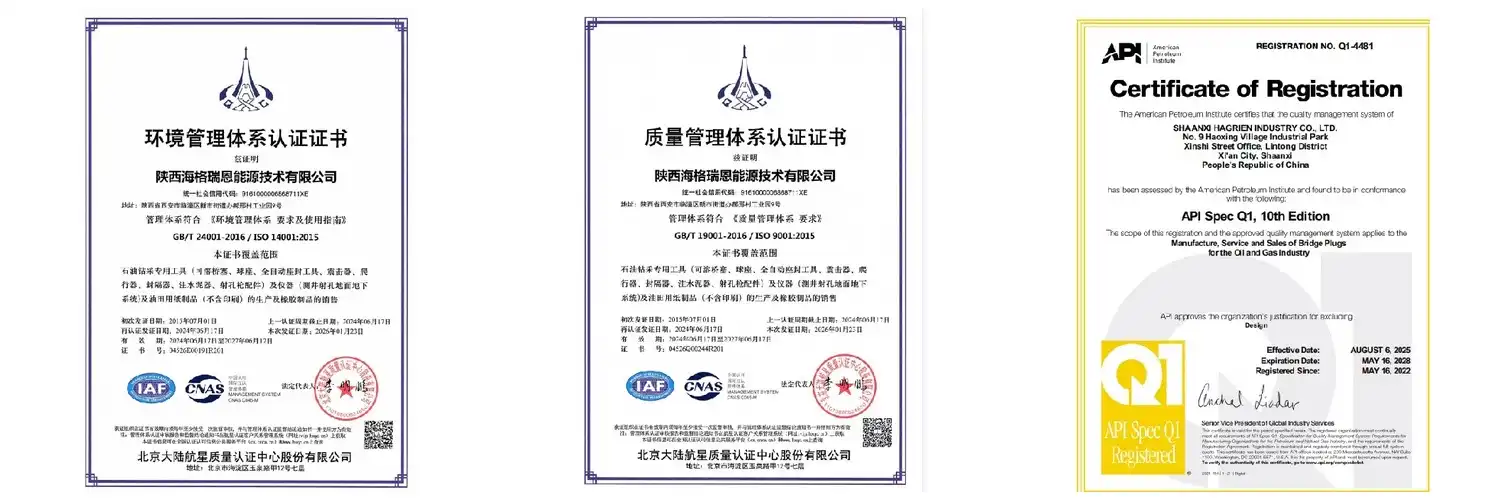
When procurement teams look for a disposable setting tool, they should make sure that it meets at least ISO 14310 and API 11D1 standards. Along with API recognition and a CNAS-accredited HTHP laboratory that gives out test records that can be tracked for each output run, HAGRIEN is certified by ISO 9001, ISO 14001, and ISO 45001. You can get Material Traceability Reports (MTR) for NACE MR0175 H2S compliance if you ask for them. These papers go over the qualifications needed by national oil companies in the GCC area and Indonesia, where third-party approval is a common way to start the buying process.
Pricing, MOQ, and Trial Order Policy
When figuring out the total cost of throwaway vs. reusable tools, you should think about the cost of work, the cost of shipping, and the money you could lose if one set breaks. Before making a decision about a seller, buyers usually look at these main factors:
- Unit price and minimum order quantity (MOQ): Competitive unit pricing is most meaningful when the supplier can support small trial batches—typically 5 to 20 units—before a framework agreement is signed.
- Trial order and phased delivery: HAGRIEN supports small-batch trial orders followed by phased delivery aligned to project schedules, which reduces inventory risk for regional distributors and oilfield service companies.
- Third-party test documentation: Hydrostatic pressure test records, shear and tensile test data, dimensional CMM reports, and vacuum seal integrity certificates are available as a standard documentation package.
- Clearance and export documentation: COA, COC, SDS, and country-of-origin certificates are provided as a complete package, reducing customs clearance friction for buyers in Southeast Asia and the Middle East.
Supplier Selection and Lead Time Management
HAGRIEN keeps common sizes in stock as a safety measure, and lead times are usually between 2 and 4 weeks. Custom specs or engineering-specific dissolving windows can be delivered in 4–8 weeks, and fast production is available for projects that need to be finished quickly. The U.S. branch of the company helps with planning in North America, and the Xi'an manufacturing base uses a closed-loop quality system to handle output. EXW, FOB, and CIF are all flexible trade terms that let buyers choose the logistics model that works best for their project budget and how they want to import the goods.
Best Practices for Using and Maintaining Disposable Setting Tools
Pre-Deployment Inspection Checklist
Before putting a disposable setting tool into the well, field teams should check that the thread dimensions match the specifications for the bridge plug or packer, that the job sheet's shear pin count and torque value match up, and that the rubber seals are visually checked for age-related compression set. The actuation force is within the design range after a pre-job function test at the surface that simulates rotational and axial inputs. Skipping this step is the main reason why first-run failures can be avoided, especially when tools have been stored in containers that don't keep the temperature stable.
Storage Requirements and Shelf Life
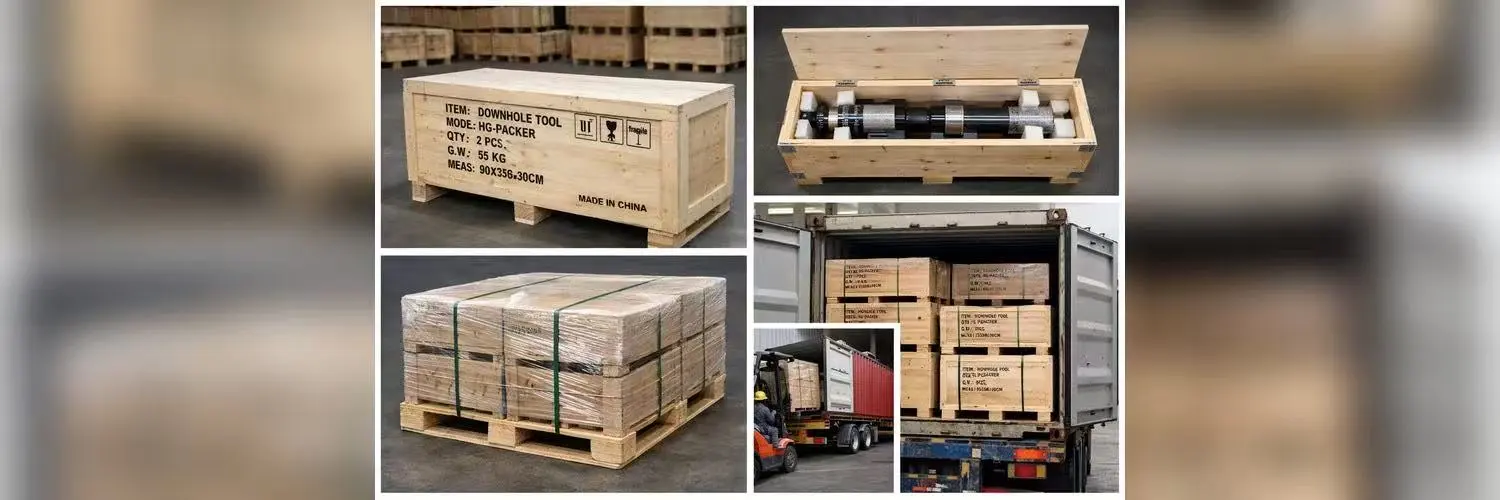
Setting tools that are only used once can be kept for three to five years in a climate-controlled space. The important factor is rubber degrading. O-ring age-control standards say that seals must be checked against the date they were made, and any tool with seals that are past the recommended storage window should be put in a separate area. HAGRIEN's packaging has batch traceability labels that show the date the product was made, the lot number, and how long it is supposed to last. This makes it easier for supply station managers to keep track of their inventory when they're sending large shipments of tools to different well pads.
Disposal and Environmental Compliance
It is easier to get rid of a one-time-use setting tool after it has been used than it is to clean reusable tools that are soaked in solvents. Metal parts can be recycled, and some types of dissolvable magnesium metal break down in wellbore fluid, leaving no solid waste that can be recovered. Operators should follow area rules about how to get rid of scrap metal in the fields. The dissolvable tool version gets rid of the need to handle the tool on the surface completely in areas that have to follow MARPOL or similar marine environmental rules.
Future Outlook: How Disposable Setting Tool Technology Is Evolving
Toward Greener Materials and Smaller Footprints
The next generation of single-trip setting tools will focus more on materials that dissolve and break down naturally. When HAGRIEN makes magnesium alloys with variable dissolution rates, users can choose when and how the tool breaks down in relation to the fracturing plan. This cuts down on the need for milling runs and the costs of coiled tubes that come with them, which are a big part of tight-oil budgets.
Automation and Digital Well Completion Integration
Setting up tools is becoming a bigger part of an automated workflow for finishing tasks. In surface control systems, string weight and spinning torque are being tracked in real time. If anything seems off during the setting process, it will be flagged before a problem happens. As more markets in the GCC, Indonesia, and Malaysia adopt digital completion platforms, suppliers who can offer tools with checked mechanical tolerances and batch-consistent shear pin data will have a big edge in the technical approval steps.
Strategic Recommendations for Procurement Teams
Both the procurement and operations teams should start looking at single-use finishing tools based on how much they cost per unit and how much they affect the overall cost of the well. Pilot programs with 10–20 units spread out over two or three well pads get first-run success data that is statistically significant without putting a lot of money at risk. Framework deals are usually justified within one to three months of the results of these trials. This is the same time frame that oilfield service companies in the Middle East and Southeast Asia already use for buying things.
Conclusion
The industry's drive for lower per-well costs, quicker cycle times, and simpler surface handling is driving advancements in disposable setting tool technology. The mechanical single-use design has been tested in sour-service, HPHT, and multi-stage fracturing environments and is a reliable option to the redress cycle that doesn't hurt the reliability of the first run. It's easy for procurement directors and supply station managers to make decisions: look at approved paperwork, run a small test batch, measure results in the field, and then come up with a framework agreement. The production capabilities and documentation system at HAGRIEN are designed to work with that method.
FAQ
1. Can a disposable setting tool be reused after an aborted first run?
No, the internal mechanical mechanism is only meant to be used once. When the shear pins and internal pistons are partly or fully triggered, they move to their set position and can't be safely reset. If you try to repeat, you might not finish the setting stroke, which could cause the packer or plug to fail downhole. Because each job needs a new unit, it's important to do a surface inspection before the tool goes into the well.
2. How do I verify that a supplier's single-use setting tool meets API or ISO standards?
For that production batch, ask for the mill test reports, hydrostatic pressure test records, shear and tensile test data, and CMM measurement reports. Manufacturers that are trustworthy, like HAGRIEN, offer batch-traceable paperwork packages (COA/COC/SDS) and have ISO 9001, API, and CNAS laboratory certifications that can be checked. Before giving the go-ahead for a trial order, double-check the certification numbers with the organization that issued them.
3. Are dissolvable or magnesium alloy setting tools environmentally preferable?
Most of the time, yes. After the well is actuated, the dissolved magnesium alloy parts break down in the wellbore fluid. This means that there is no need for surface retrieval and chemical cleaning. Compared to solvent-cleaned reused tools, this means less dangerous waste to handle. Metal alloy parts that don't break down can be recycled as oilfield scrap metal, which is in line with most regional environmental compliance frameworks.
Request a Quote from HAGRIEN — Your Disposable Setting Tool Supplier
HAGRIEN makes one-time-use finishing tools that are backed by testing in a lab that is recognized by the CNAS, API recognition, and full batch tracking. We can answer your technical questions within 24 hours and send standard sizes in 2–4 weeks, whether you need a small trial order or a phased supply agreement. You can visit us-hagrien.com or email us at cyrus@us-hagrien.com to get a quote, look at our disposable setting tool specs, or talk about a special engineering solution for your next finish program.
 References
1. Society of Petroleum Engineers (SPE) — SPE Journal, 2022
2. American Petroleum Institute — API Standard 11D1: Packers and Bridge Plugs, 6th Edition, 2015
3. Society of Petroleum Engineers — SPE Production & Operations, 2023
4. World Oil — Well Completion Technology Annual Report, 2023
5. Journal of Petroleum Technology (JPT) — Advances in Single-Trip Completion Systems, 2021
6. NACE International — NACE MR0175/ISO 15156: Materials for Use in H2S-Containing Environments in Oil and Gas Production, 2015

USER EVALUATE
Here is the customer's evaluation of us