




Bridge Plug Setting Tool Buyer's Guide: Key Features
Selecting the right bridge plug setting tool is one of the most consequential decisions an operations manager makes before spudding a completion job. A well-matched tool consolidates plug running and setting into a single trip, cuts wellhead occupation time, and protects first-run success rates. This guide gives purchasing managers, field engineers, and OEM procurement teams a structured framework to screen, compare, and source downhole setting tools—covering design features, material specs, common failure modes, and supplier qualification criteria that matter most in North American and HPHT markets.
 Understanding Bridge Plug Setting Tools: Definition and Key Benefits
What a Bridge Plug Setting Tool Does?
A bridge plug setting tool is a part that moves downhole and changes hydraulic pressure or electrical energy into a controlled axial force. That force pushes the slip system and closing element of a plug against the wall of the casing, making a gas-tight barrier. The tool connects the isolation device to the conveying string, which can be cable, coiled tubing, or jointed pipe. The mechanical accuracy of the tool directly affects whether the plug fits on the first try.
Primary Application Scenarios
In a number of high-stakes situations, operations teams use bridge plug setting tools. In plug-and-perf multi-stage fracturing, tools have to be able to handle being pumped down at high flow rates in horizontal laterals. In workover and wellbore repair, they move around scaled or rusted tubing to find places where water is coming out. When plug-and-abandonment is used, the tool has to confirm a V0-rated gas-tight barrier, even if cement support isn't as important as mechanical isolation.
Why the Right Tool Reduces Total Job Cost?
Most of the time, a mis-set plug requires a full round-trip assistance, which can add rig time that costs more than $50,000 per day in offshore settings. Technical studies from SPE on plug-and-perf efficiency say that single-trip success rates above 98% rely on matched shear values, confirmed seal integrity, and confirmed depth control through integrated collar locators. All of these factors are directly related to the setting tool specification.
Key Features to Consider When Choosing a Bridge Plug Setting Tool
Design Integration and Setting Mode Compatibility
Today's most field-proven tools can do both running and setting in one assembly, so you don't have to make two separate trips downhole. The HAGRIEN bridge plug setting tool can be used in mechanical, hydraulic, cable, and electric modes. This lets service companies work with a variety of well programs without having to carry around a bunch of different tool strings that don't work with each other. Before you place your order, make sure that the mandrel shape and thread profile meet the plug family.
Pressure Rating and Material Specification
For any real HPHT scheme, differential pressure ratings above 10,000 psi are the most important thing. Here are the main points of design that field engineers usually check before accepting a tool:
- Pressure rating: Minimum 10,000 psi differential; 15,000 psi rated assemblies recommended for deep HPHT wells.
- Material: High-strength alloy steel for the load-bearing mandrel; magnesium alloy components for dissolvable elements reduce post-job fishing requirements.
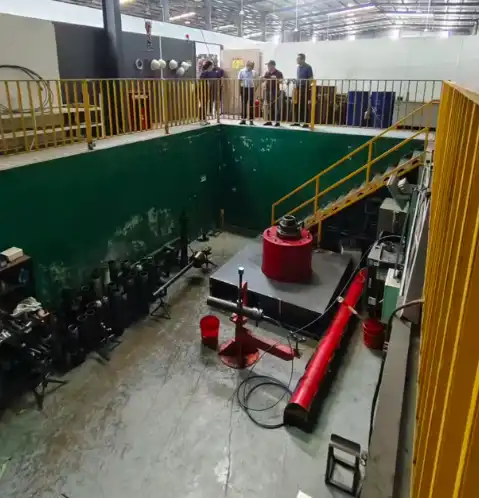
- Seal redress time: Replacement of all elastomeric O-rings and piston inspection should be completable in under 60 minutes to keep rig-side turnaround tight.
- Shear screw calibration: Batch-tested shear pins with published LBF values and temperature derating charts prevent premature activation during pump-down.
Traceability and Quality Documentation
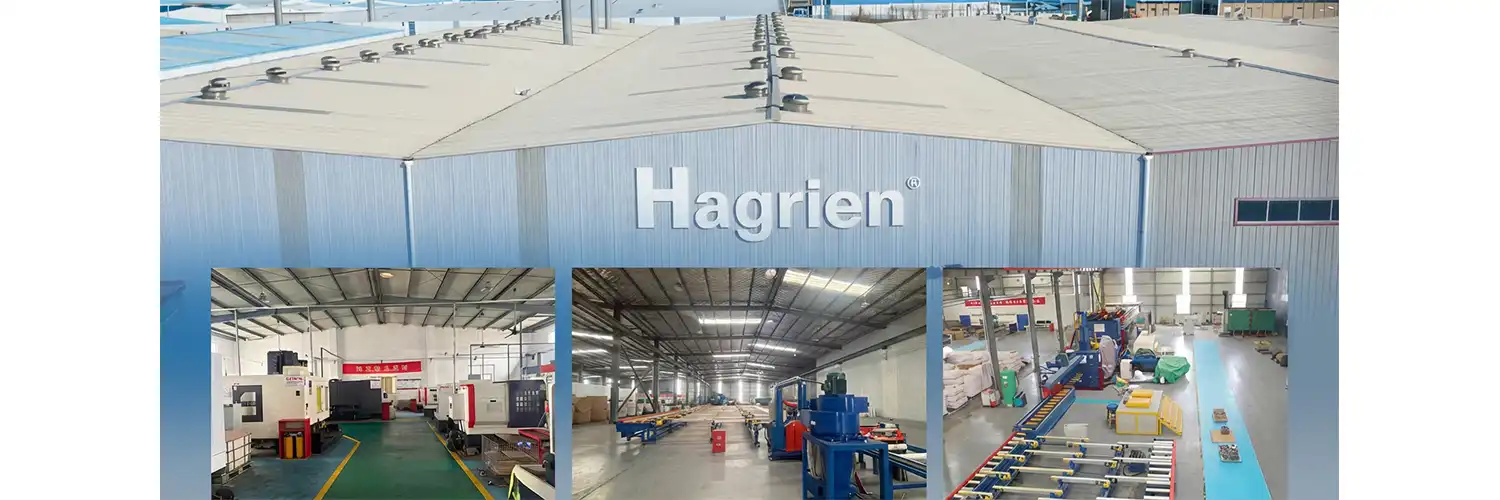
For any real business-to-business purchase, the manufacturer must be ISO 9001-certified and have full material test reports (MTR), measurement inspection records, and hydrostatic pressure test results at 1.5× working pressure. All load-bearing threads are inspected for magnetic particles as the last step in the quality process. HAGRIEN keeps track of batches and ships COA/COC paperwork is included as normal, which meets the audit needs of the user without adding extra time to the lead time.
Comparing Market Options: Bridge Plug Setting Tools in 2026
Mechanical vs. Hydraulic vs. Hybrid Systems
Mechanical setting tools work by direct string weight or rotation. This makes them easy to use in vertical wells but less reliable in laterals with a lot of deviation. Hydraulic tools use pump pressure from the surface or deep underground to provide a steady, repeatable setting force. They work best for horizontal completions where torque transfer isn't always consistent. More and more wireline plug-and-perf programs use hybrid electric-hydraulic systems. These systems offer programmable set confirmation and real-time telemetry, but they need more thorough checks to make sure they work with surface equipment.
How to Build a Comparative Evaluation Matrix?
I think there should be five weighted factors used to compare different setting tool assemblies: setting mode flexibility, pressure rating, recorded first-run success rate from field references, redress time, and wait time for spare parts. Assign weights based on the level of risk in your program. For example, an offshore HPHT operator should put more weight on the pressure rating, while an onshore high-volume fracturing crew should put more weight on the extra part wait time.
HAGRIEN Bridge Plug Setting Tool Positioning
The moving and setting unit from HAGRIEN is made of high-strength alloy steel and can handle a differential pressure of more than 10,000 psi. It has more than one setting mode and comes in normal configurations in two to four weeks. Custom interface configurations take four to eight weeks to deliver. The tool has been tested and approved by ISO 9001 quality systems. Each batch can be tracked back to its source, which meets the reporting standards that are common in North American completion contracts.
Addressing Common Challenges and How to Overcome Them
Mis-Set and Short-Stroke Failures
Short-stroke fails, in which the plug slips into place only partially, are usually caused by dirt in the hydraulic fluid, an internal piston seal bypass, or the tool getting too hot. Before RIH, the hydraulic circuits should be flushed, all seals should be replaced at each repair cycle, and the tool's rated working temperature should be checked against BHT data from offset wells.
Premature Activation During Pump-Down
In horizontal laterals, there is a known risk of setting too soon during high-speed pump-down. When you combine calibrated shear screws with specific shear values—which are proven through batch testing instead of nominal specification—with built-in fluid escape holes to balance annular pressure during run-in, you can be sure that pre-set activation will not happen. Do not just ask for the catalog specification; always ask for the batch shear test report as well.
Dissolvable Component Degradation Timing
If your program uses magnesium alloys that dissolve to get rid of the need to fish after the job is done, make sure that the rate of dissolving is adjusted to the real wellbore temperature, chloride concentration, and job length. If dissolution starts before the plug setting finishes the zone isolation time, the barrier will not be as strong as it should be. A good provider won't just make a single-point claim; they'll give you breakdown rate data across a set range of temperatures and salt levels.
Procurement Tips: Where and How to Buy Bridge Plug Setting Tools
Qualifying a Setting Tool Supplier
Buy from companies that are ISO 9001 certified and can show proof that their products are API-compliant. If you are changing an existing tool, you should get a substitution cross-reference and make sure that the new mandrel thread and profile are actually dimensionally confirmed against your plug family, not just said to be compatible.
 Logistics and Lead Time Planning
It usually takes two to four weeks for standard bridge plug setting tool configurations from qualified manufacturers to arrive. Lead time goes up to 4–8 weeks for custom thread profiles, private-label writing, or changed shear screw configurations. For high-volume projects, make a safety stock plan. One week of tool downtime on an active completion pad can cost more than the cost of a year's worth of safety stock.
Negotiating Volume Agreements
If your business does more than 100 setting rounds a year, you should set up a framework supply deal with agreed-upon wait times and clear prices for spare parts. This method makes sure that deliveries happen on time, sets priorities for production, and gives your purchasing team a clear picture of the budget for a full pad program.
 Conclusion
There are five things that you can be sure of when choosing the right bridge plug setting tool: a design that lets it run and set at the same time, pressure and temperature ratings that match the well program, the ability to track down materials, the speed and predictability of getting spare parts, and the ability to work with your existing plug interface. It's less likely that the first run will fail, and the whole job will cost less if all five are checked. Before making a decision about which setting tool provider to work with, you should ask for written confirmation of a lead time, batch test paperwork, and a cross-reference check.
FAQ
1. What is the difference between a hydraulic and a pyrotechnic bridge plug setting tool?
Hydraulic tools use fluid pressure to deliver a controlled, repeatable setting force. Pyrotechnic tools burn a powder charge to generate rapid gas pressure—typically used for faster wireline deployments. Hydraulic systems offer more predictable force control, which is preferred in HPHT or deviated well programs.
2. How do you prevent premature activation during pump-down?
Calibrated shear screws with batch-verified shear values, paired with integrated bypass ports that equalize annular pressure during run-in-hole, reliably prevent pre-set activation.
3. What maintenance is required after each run?
A full redress cycle covers replacing all elastomeric seals, inspecting piston surfaces for scoring, and re-lubricating with high-temperature rated grease. A qualified technician should complete this in under 60 minutes.
4. Can one setting tool accommodate different plug sizes?
Yes. Cross-over adapter kits and interchangeable adapter sleeves allow a single setting tool mandrel to cover a range of plug diameters without replacing the full assembly.
5. What documentation should I require at delivery?
Request the material test report, dimensional inspection record, hydrostatic test certificate at 1.5× working pressure, batch shear pin test data, and COA/COC documentation. These are standard in ISO 9001-certified manufacture.
Partner with HAGRIEN for Your Next Bridge Plug Setting Tool Order
HAGRIEN makes setting tools and dissolvable bridge plug parts using the ISO 9001, ISO 14001, and ISO 45001 quality systems. Their labs are CNAS-accredited, and they are recognized by the API. Standard configurations are sent out within two to four weeks, and custom interfaces are sent out within four to eight weeks. Full batch traceability and COA/COC documentation are included. We make bridge plug setting tools and have a coordination office in the U.S., so we can help with OEM, private-label, and direct supply projects. To get a detailed review and quote, email our team at cyrus@us-hagrien.com or go to us-hagrien.com.
References
1. Society of Petroleum Engineers (SPE) — SPE Journal, 2022
2. American Petroleum Institute — API RP 19D: Measuring the Properties of Proppants Used in Hydraulic Fracturing, 2020
3. Society of Petroleum Engineers — SPE Drilling & Completion Journal, 2021
4. World Oil — Completions Technology Annual Report, 2023
5. Journal of Petroleum Technology (JPT) — Plug-and-Perf Operational Efficiency, 2022
6. Oil & Gas Journal — Downhole Tool Reliability and Zonal Isolation Standards, 2023

USER EVALUATE
Here is the customer's evaluation of us