_1776908283214.jpg)




Electronic Setting Tool Setting Force: What Buyers Should Know
Setting force defines the mechanical pressure an electronic setting tool applies to deploy downhole packers and bridge plugs during well completions. For oil service contractors and wireline operators, understanding this parameter is essential because it directly affects seal integrity, operational safety, and cost efficiency. An electronic setting tool uses motor-driven systems—without hydraulic complexity—to generate precise axial loads ranging from 60,000 to 120,000 lbs, ensuring reliable activation in horizontal wells, offshore platforms, and restricted zones where pyrotechnics face regulatory limits. Proper force selection prevents tool failure, avoids costly fishing operations, and accelerates project timelines.
 Understanding Electronic Setting Tool Setting Force and Its Impact on Completion Quality
Why Setting Force Matters in Modern Completions
Gravity-assisted deployment doesn't work as well in high-angle and extended-reach wells. For plug activation to work reliably, the tool must be able to provide consistent mechanical force no matter which way the wellbore is facing. Real-time stroke monitoring during the setting cycle gives operators proof that can be checked. This is done by recording data that can be looked at during audits or regulatory inspections after the job is done. This ability to track is especially helpful for activities that take place abroad, where each intervention costs a lot to set up.
Force Range and Tool Selection Criteria
When it comes to plug and packer systems, electronic setting tools usually have force levels of 10 to 32 metric tons, which is about 60,000 to 120,000 lbs. A 76 mm tool that can hold 20 tons is good for standard 4.5-inch completions, while a 96 mm tool that can hold 32 tons is better for 7-inch casing programs. Buyers should make sure that the highest force of the tool matches the plug manufacturer's specs and that the stroke length (often 200 to 254 mm) is long enough to fully compress the element.
Calibration and Verification Standards
Calibration by a third party in a controlled lab environment makes sure that advertized force values match what happens downhole. Tools that have been tried in high-temperature, high-pressure (HTHP) labs that are approved by the CNAS have independent paperwork that goes back to national measurement standards. Certificate of Conformance (COC) and batch traceability records make it easier to check the qualifications of suppliers and show that big companies are following their buying policies.
How to Choose the Right Setting Force for Your Application
Evaluating Well Conditions and Plug Requirements
First, look over the specifications for the bridge plug or packer. Along with temperature and pressure values, each gadget lists the lowest and highest setting forces. Compare these numbers to the measured depth (MD), bottomhole temperature (BHT), and expected differential pressure of your well. Deepwater HPHT wells that are more than 350°F and 20,000 psi need tools made of corrosion-resistant metals that meet NACE MR0175 standards. This keeps the materials strong in sour-gas conditions that are high in H2S and CO2.
When wells are horizontal or deviated, they create frictional drag that can make it hard for wirelines to move. In these cases, a higher setting force makes up for mechanical resistance, making sure that the plug seats all the way in even when the assembly can't rely on gravity. Extended-reach drilling (ERD) projects usually call for tools that can hold up to 120,000 pounds to make sure they work at distances greater than 10,000 feet.
Comparing Motor-Driven Versus Hydraulic Systems
Motor-driven electronic setting tools get rid of hydraulic fluid circuits, which cuts down on leak points and makes pre-job inspections easier. Surface orders are immediately carried out by the direct-drive design, which cuts down on setup time on the rig floor. Hydraulic options are more developed, but they need to have their fluids treated and have more ways for them to fail. More and more, buyers who want dependability and quick return are choosing pure-electric designs that work well with current wireline packages and battery packs.
Interface Compatibility and System Integration
Make sure that the upper and lower contacts on the tool match the ones on your current cable head and plug toolstring. Standard interfaces, like Baker No. 10 and Baker No. 20, make sure that plugs from different manufacturers can work with each other. Single-core shock-resistant connectors can handle the vibrations that happen when wires are deployed and make it easier to check for electrical continuity at the surface. Real-time telemetry tools that use an e-line send data about force and stroke uphole. This lets supervisors watch the setting cycle live and make changes to operations if something seems off.
 Benefits of Optimal Setting Force in Electronic Setting Tools
Enhanced Safety Through Non-Explosive Operation
Usually, controlled explosives are used to set off fireworks. This means that they have to be transported, stored, and handled in a certain way. Offshore platforms and urban drilling sites have to follow strict rules that make it take longer to get ready and cost more to do so. An electronic setting tool gets around all of these problems, making procedures easier and getting rid of the risk of explosions. This benefit of compliance speeds up project schedules, especially in plug-and-abandonment (P&A) campaigns where getting permits on time is very important.
Improved Zonal Isolation and Reduced Intervention Risk
When you give force accurately, the elastomer parts are compressed evenly. This makes a strong barrier that can withstand the stimulation pressures during hydraulic fracturing. For multi-stage plug-and-perf programs to work, each bridge plug must stay in place during repeated pressure cycles. If the setting isn't done all the way, the plug may move, which would require expensive coiled-tubing work to fix or replace the assembly. Real-time force input makes sure that placement went well before moving on to the next step. This lowers the chance of pre-sets and tool movement.
Extended Tool Life and Lower Maintenance Burden
Downtime and spare-part stock are cut down with electronic setting tools that can be used 200 times without needing to be fixed. Even in harsh downhole environments, wear is kept to a minimum by strong motor assemblies and materials that don't rust. Operators say that the redressing processes are faster than on older hydraulic units, which lets them quickly switch between jobs. Because they last longer, the total cost of ownership is lower, especially for wireline fleets that serve unconventional shale plays and have a lot of activity.
Troubleshooting and Maintenance Related to Setting Force
Identifying Common Force-Related Problems
If the stroke doesn't behave normally, like not going all the way or letting go of the load too soon, it's usually a sign of a mechanical problem or a problem with the electrical communication. If the surface monitoring shows low force readings even though the motor is fully turned on, check the mandrel for dirt or mechanical locking. On the other hand, an abnormally high force and a short stroke may mean that the plug isn't lined up right or that the case has deformed. Instead of risking damaging the equipment, operators should stop the setting cycle, get the tool, and do a full check.
Calibration and Verification Procedures
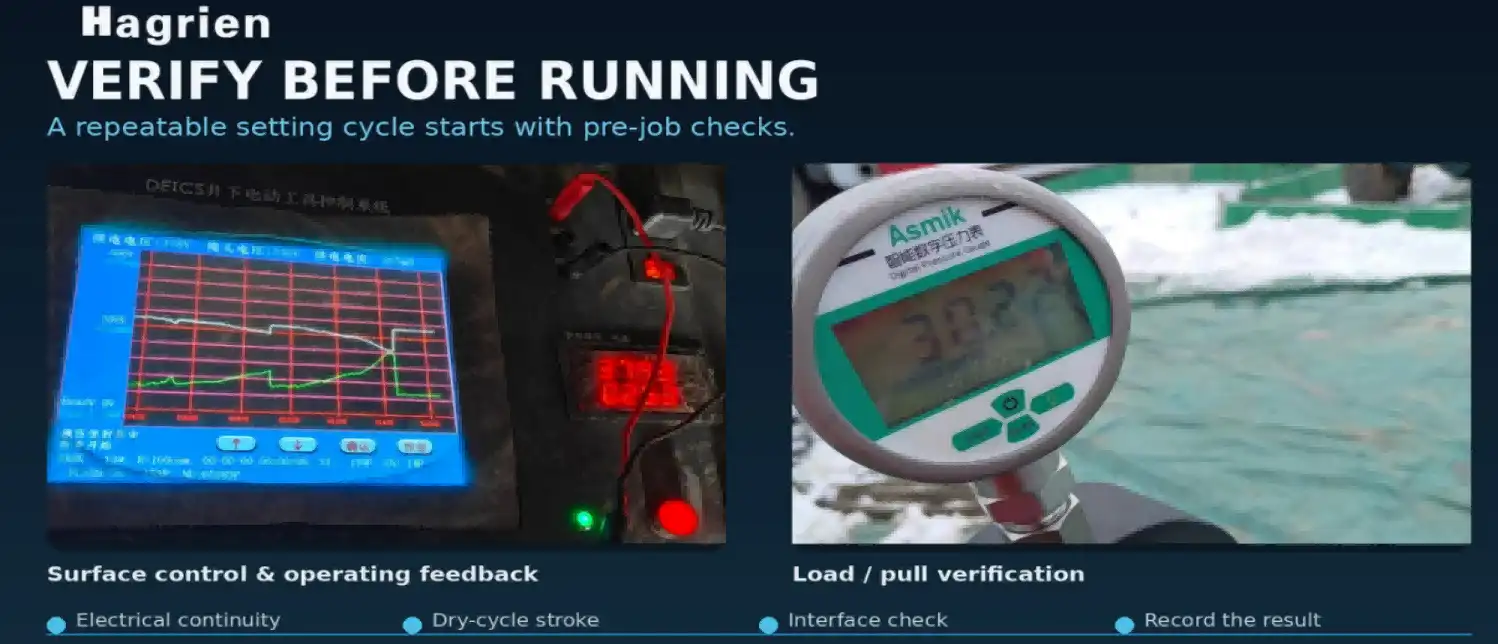
Set up regular calibration checks for the electronic setting tool that match the repair interval recommended by the maker, which is usually every 50 to 100 runs. The tool continues to deliver the rated force within the specified tolerances after being tested in a lab with controlled temperature and pressure. As directed, replace any seals, contacts, or motor brushes that are worn out. Field-portable verification equipment lets you do stroke tests on-site before moving to the wellsite. This lets you find problems early on and keep runs from being aborted.
Pre-Job Checks and Electrical Continuity
Before setting up, use a voltmeter to make sure that all of the connections are electrically connected. Make sure that the smart controller can recognize the tool and shows the right model information. To make sure it works every time, test the one-button automatic recovery function from the surface reset box. Do a dry-cycle stroke test in normal conditions and make sure the mandrel moves the full distance and returns smoothly. Record these checks in the job log so that you can use them as a starting point for comparing runs after the fact.
Purchasing Guide: What Buyers Should Know About Setting Force When Buying Electronic Setting Tools
Evaluating Force Capacity and Stroke Specifications
Match the highest force and stroke of the tool to the plugs you have on hand. If your program has both 4.5-inch and 7-inch completions, you might want to get 56 mm, 76 mm, and 96 mm to cover the whole range. Carefully look over the mandrel stroke length. If the stroke is too short, the element won't be fully compressed, and if it's too long, it loses time and causes more wear. You can guess how something will work in real life by asking for detailed technical datasheets that show force curves at different temperatures.
Assessing Temperature, Pressure, and Material Ratings
Make sure that the temperature rating of the tool is at least 20°F higher than the highest BHT that your well can reach. In the same way, pressure values should be higher than expected difference pressures. Tools made of 17-4PH stainless steel or similar high-strength alloys don't rust in sour-gas environments, so they last longer and don't need to be replaced as often. For operations in H₂S-bearing formations, where material failure can cause terrible safety incidents, NACE MR0175 compliance is a must.
Verifying Supplier Credentials and Quality Systems
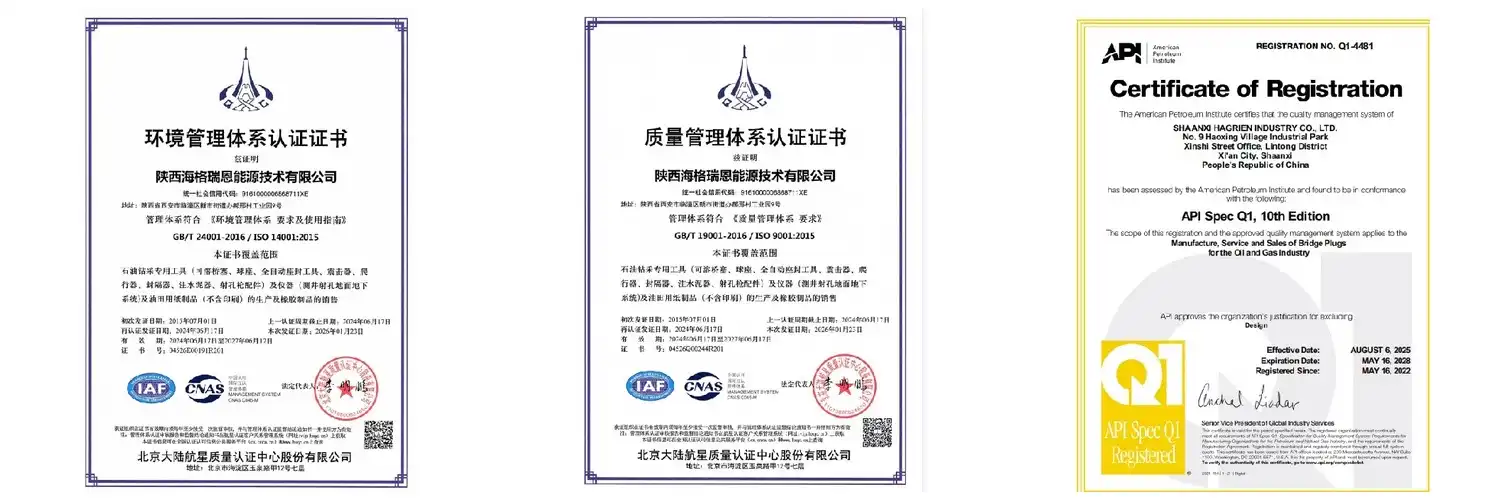
Give more weight to providers who follow the ISO 9001, ISO 14001, and ISO 45001 standards. These certifications show that the company is responsible for quality control, the environment, and managing workers' health. Ask for proof of lab tests that are approved by the CNAS, API recognition, and qualified machine compliance. Full traceability from suppliers, including COA, COC, SDS, and batch records, makes qualification audits easier and gives customers confidence that every unit meets design requirements.
 Conclusion
Setting power is the most important thing to look at when buying an electronic setting tool because it has a direct effect on the integrity of the seal, the safety of operations, and the cost of the project. Buyers can get tools that work consistently in a wide range of well conditions by knowing the force requirements, checking the records of the seller, and putting tracking first. Motor-driven architectures get rid of the need for complicated hydraulics and the dangers of handling explosives. Real-time telemetry and calibrated force output provide documentation that is ready for an audit. Choosing the right setting force is important for handling multi-stage fracking programs, offshore P&A operations, or extended-reach drilling campaigns. It makes sure that zones are properly isolated and reduces the need for expensive intervention.
FAQ
1. What is an electronic setting tool and how does setting force affect completion quality?
A motor-driven downhole tool called an electronic setting tool is used to put in place packers and bridge plugs by applying controlled axial force. Setting force tells you if the elastomer parts of the plug contract evenly and the slips firmly join the casing. If you use too much force, you could damage the plug or case, and not enough force could cause the valve to not fully open. Choosing the right force is important for safe zonal separation, especially in high-angle wells where gravity-assisted deployment doesn't work.
2. How do I match setting force capacity to my well's operational conditions?
Check the bridge plug's manufacturer's datasheet to see what the minimum and maximum force requirements are. Then, compare these with the depth, temperature, and differential pressure of your well. For wireline transport, horizontal and extended-reach wells usually need higher force outputs—up to 120,000 lbs.—to beat frictional drag. Make sure that the temperature and pressure values of the tool are higher than what will happen in your well by a safe amount, and that the material grades meet NACE MR0175 standards for sour-gas settings.
3. What certifications and documentation should I expect from a reputable supplier?
Reliable suppliers offer ISO 9001/14001/45001 certification, lab test reports that are recognized by CNAS, and API compatibility. There should be a Safety Data Sheet (SDS), a Certificate of Conformance (COC), a Certificate of Analysis (COA), and batch tracking records that connect the tool to specific production runs in every package. These papers help with checks of suppliers' qualifications, following rules, and solving problems after the job is done.
Partner with a Proven Electronic Setting Tool Manufacturer for Reliable Completion Solutions
HAGRIEN uses advanced materials engineering and precise manufacturing to make electronic setting tools that can be tracked and are ready for audits. These tools meet the strict requirements of modern completion programs. Our all-electric design creates forces between 60,000 and 120,000 lbs and gives real-time stroke input. This makes sure that bridge plug and packer deployment is stable in HPHT environments up to 350°F and 20,000 psi. Each unit comes with full paperwork, including a COA, a COC, inspection records for the CNAS, and a way to track each batch. This helps suppliers get qualified quickly. We help wireline contractors and oil service companies cut down on lead times, lower procurement risk, and stay in compliance for offshore, horizontal, and urban drilling operations. We have ISO 9001/14001/45001 certification, seven years of continuous production experience, and U.S.-based coordination. You can talk to us about your completion needs by emailing cyrus@us-hagrien.com or visiting us-hagrien.com. Within 48 hours, you will receive a full technical plan.
 References
1. Society of Petroleum Engineers. (2021). Completion Technology for Horizontal Wells. SPE Monograph Series.
2. American Petroleum Institute. (2020). API Specification 11D1: Packers and Bridge Plugs. API Publishing Services.
3. World Oil. (2022). "Advances in Wireline Setting Tools for HPHT Environments." World Oil Magazine, vol. 243, no. 6.
4. National Association of Corrosion Engineers. (2019). NACE MR0175/ISO 15156: Petroleum and Natural Gas Industries—Materials for Use in H₂S-Containing Environments. NACE International.
5. Upstream Oil & Gas. (2023). "Non-Explosive Setting Tools Transform Offshore P&A Operations." Upstream Technology, January issue.
6. International Organization for Standardization. (2018). ISO 9001:2015 Quality Management Systems—Requirements. ISO Standards Catalogue.

USER EVALUATE
Here is the customer's evaluation of us