_1776908283214.jpg)




How Does a Frac Plug Setting Tool Work Downhole?
A frac plug setting tool is a downhole conveyance device that converts hydraulic, mechanical, or electrical energy into controlled linear force to expand and lock a frac plug or bridge plug against the wellbore casing wall. Once the plug seats correctly, it creates a pressure-tight barrier that isolates the treated zone from the next stage. The entire sequence—deployment, activation, setting, and release—happens under conditions that can exceed 400°F and 20,000 psi, which is why material selection and force calibration matter as much as the mechanical design itself.
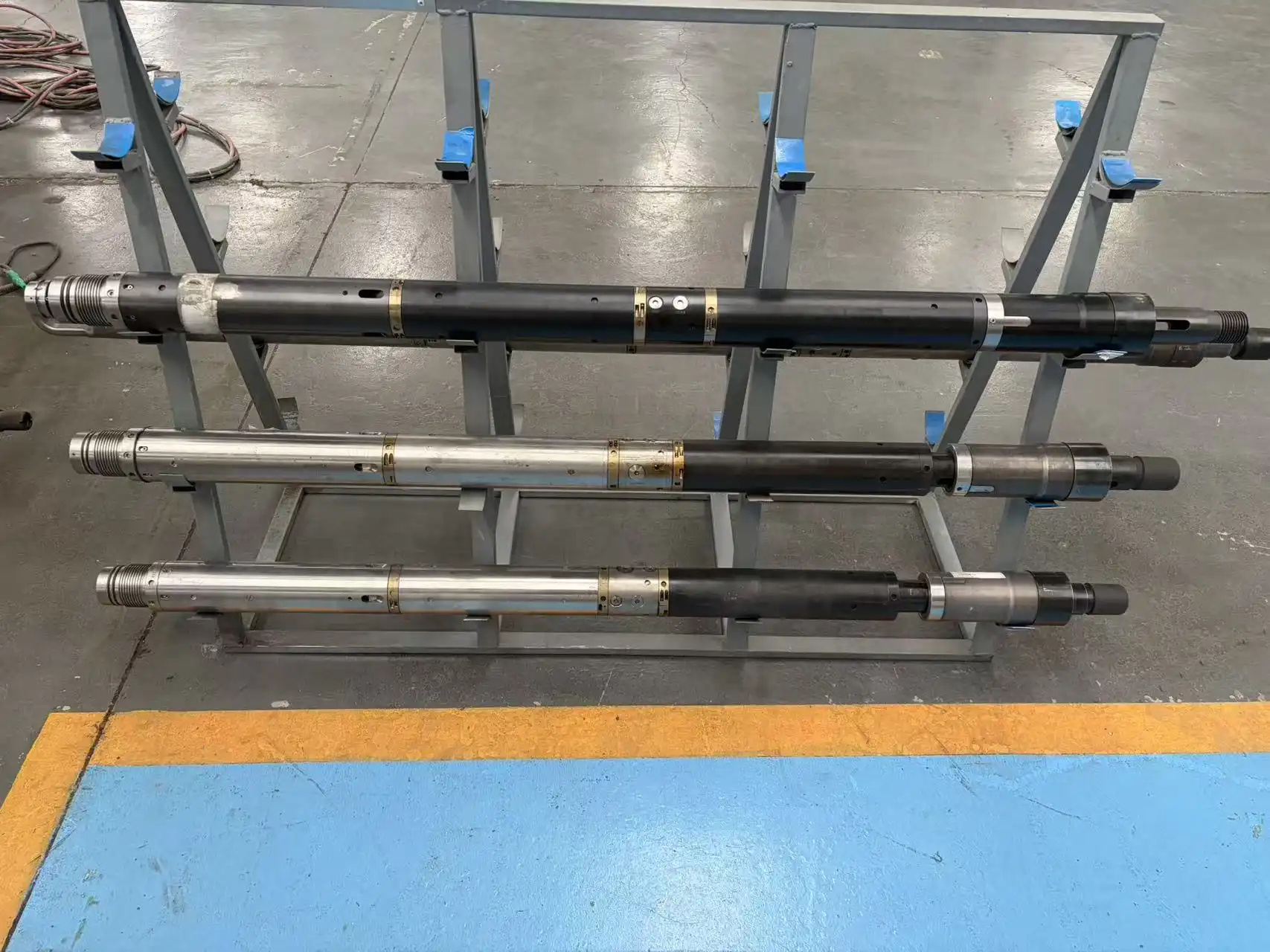
Understanding the Core Function of a Frac Plug Setting Tool
Before you choose a downhole setting device, it's helpful to know exactly what it needs to do and why the operating environment makes that so hard.
What Zonal Isolation Actually Means
Each frac stage must be hydraulically removed from the steps below it during plug-and-perf completions. Slips, elastomeric seals, and metal-to-metal seals are pushed outward by the setting tool until they grip and seal the case hole. If a set fails, the whole string has to be tripped out and run again, which can take hours or days.
Downhole Conditions That Stress the Tool
In deep Permian or Haynesville wells, the temperature at the bottom of the hole usually goes above 300°F. It is possible for pressures to rise above 15,000 psi during fracture. Hydrogen sulfide attacks steel at the grain boundary level in sour-gas fields. This is why NACE MR0175 material compliance is a must for H₂S environments.
Key Performance Criteria to Specify
What are the three most important numbers to include in a purchase specification? They are the minimum confirmed setting force (usually between 60,000 and 120,000 lbf for most plug designs), the working pressure differential that the frac plug setting tool must be able to hold without leaking, and the temperature rating of both the seals and any electronic parts. Field data from similar wells that can be checked is the only proof that can be trusted.
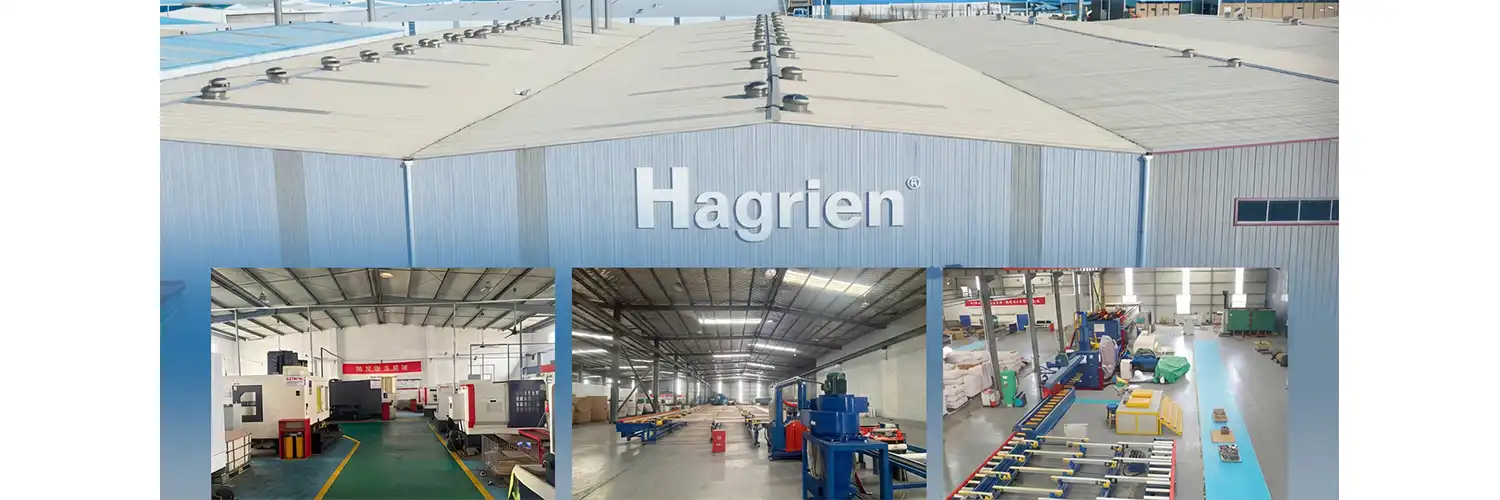
Step-by-Step Process: How Does a Frac Plug Setting Tool Work Downhole?
Over the past ten years, the mechanics have changed a lot. Understanding the routine helps procurement teams ask better questions during expert reviews.
From Pyrotechnic Charges to Electronic Actuation
The gas pressure inside the setting tube was created by a slow-burn power charge in the early setting tools. That method still works, but it comes with extra costs for shipping dangerous goods, storing magazines on-site, and getting permits. With electronic and electric-hydraulic tools, the charge is replaced by a linear motor driven by batteries or a surface-controlled hydraulic circuit. This means that there is no need for explosive handling at all on the job site.
The Downhole Setting Sequence
The wireline cable head, the CCL/gamma-ray collar locator, the setting tool body, and the plug make up the tool string. It is run to depth. When the collar finder confirms the right depth, the operator sends a signal to start the process. The mandrel moves downward as pressure builds inside the setting cylinder. At the same time, this action squeezes the cone, pushes the slips outward into the case, and turns on the sealing element. The preset shear pins will sever when they reach their calibrated load. This will free the tool from the plug and let the string be retrieved.
Confirming a Successful Set
A weight gage and a pressure gage are read by the user on the surface. A clean load spike followed by a drop back to line tension is proof that the shear pin has been released. Real-time tracking on electric-hydraulic tools lets them send time-stamped force curves to a display on the ground. This way, the team can see right away if they were right and not have to guess.
Comparing Types of Frac Plug Setting Tools: Choosing the Optimal Solution
There is no one setup that works for all well programs. The practical trade-offs between common tool architectures are shown below in a table.
Here is a short list of the four main types of tools and where they work best:
- Mechanical setting tools rely on tubing or rod weight to stroke the setting sleeve. They carry no electronics and handle high temperatures well, but they offer limited force feedback and depend heavily on the operator's experience for confirmation.
- Electric-hydraulic setting tools use a battery pack and a small hydraulic pump to generate setting pressure. They deliver real-time force data, accept field-programmable shear values, and ship without hazmat classification—making them the practical replacement for pyrotechnic tools in most North American completions.
- Electronic setting tools integrate sensors and wireline telemetry to log pressure and force curves during the set. This data record supports post-job audits and quality reviews, which is increasingly required by operator approval processes.
- Pyrotechnic setting tools remain the most compact option for high-load, slim-hole applications where battery-powered alternatives cannot generate sufficient force in restricted clearances.
When you look at these differences, they have a direct effect on your first-run success rates, daily well count, and the amount of paperwork your crew has to do on-site.
For instance, 30 or more plug sets may be used every day in a horizontal shale well in the Marcellus. In this situation, an electric-hydraulic tool that doesn't need to be handled with explosives and gives a recorded force curve per plug is well worth the extra money it costs per unit. On the other hand, a narrow sidetrack with a tight dogleg severity may still need a small explosive tool, since the length of the tool string is what holds it together.
Key Considerations for Procurement of Frac Plug Setting Tools
Buying equipment for setting holes in the ground comes with real operational risk, so the criteria for evaluation should reflect that.
Technical Specifications That Drive the Shortlist
This is the bare minimum that most horizontal completions in North America must meet: a differential pressure rating of at least 10,000 psi; a temperature rating of at least 300–400°F; and a setting force range of 60,000–120,000 lbf with a calibrated, verifiable output. Before you do a field trial, you should get written confirmation that the new collar finder and perforating gun systems will work with the old ones.
HAGRIEN Setting Tools: What the Specification Covers
HARGIEN The AISI 4140/4340 high-strength alloy steel used to make frac plug setting tools can withstand temperatures up to 400°F and differential pressures above 10,000 psi. The material meets NACE MR0175 standards for sour-service uses. There are mechanical, electric-hydraulic, electronic, pyrotechnic, and field-adjustable options in the product line. All of them have standard interfaces that let them connect to common wireline tool strings without the need for special adapters. Field-adjustable shear values let the crew change the setting force at the well site to fit the plug design that is being used.
Supplier Evaluation Beyond the Data Sheet
A number on a datasheet is just a starting place. It's not a promise. Ask for records of hydrostatic tests done at 1.5 times the working pressure, Magnetic Particle Inspection (MPI) or Ultrasonic Testing (UT) on the pressure housing, and Rockwell C hardness checks on parts that are likely to wear out quickly. The lead time for delivery of both seal kits and shear pins is very important. For example, a tool that sits idle for three weeks while O-rings are sourced costs more than the difference in two price quotes.
Maintenance, Troubleshooting, and Lifecycle Management of Setting Tools
First-run success rests on both how well you take care of the tool between uses and how well it was designed in the first place.
Routine Inspection and Redress Interval
For every 5–8 runs, or after any run in acidic or high-H2S fluid, you should completely tear down the engine. Replace all the rubber seals, check the shear-pin bores for stretching, look at the thread forms on the mandrel and release sub, and compare the piston stroke to the original drawing of the dimensions. Any housing with holes in the seal bore that are deeper than 0.010 inches should be taken out of service.
Common Field Problems and Root Causes
Most release failures are caused by either a seal leak that keeps the cylinder from reaching setting pressure or debris jammed into the setting sleeve that stops the stroke from working. A rinse after the run, an inspection of the seals, and a function test on the bench before the next run can stop both of them.
Knowing When to Replace Rather Than Redress
Electronic parts in battery-powered tools can only handle so many temperature changes before they break. Replace the battery and sensor module even if there are no faults on the tool if it has been exposed to temperatures above its rated ceiling more than once. What a bad run costs is much more than the cost of a module.
Conclusion
During a completions job, a frac plug setting tool is one of the most important tools. When a set fails, it costs the operation a trip and, most of the time, a full day of rig time. A set that works adds a stage to the production schedule. This risk can be kept to a manageable level by choosing the right tool with a verified setting force, material approval for the well environment, recorded redress intervals, and a provider that can deliver new seals quickly. HAGRIEN's product line includes a wide range of setting architectures and operating conditions. It also comes with quality documentation that can be tracked and quick engineering support.
FAQ
1. What causes a setting tool to fail to release after the plug is set?
Release failures most commonly result from insufficient stroke caused by seal leakage inside the setting cylinder, or from debris that has packed into the sleeve and physically blocked travel. A pre-run bench test and a post-run seal inspection catch most of these issues before they reach the well.
2. Can a setting tool operate in H₂S or sour-gas service?
Yes, provided the tool body, mandrel, and pressure housing are manufactured from materials that meet NACE MR0175. This standard specifies hardness limits and heat-treatment requirements that prevent sulfide stress cracking under sour-service conditions.
3. How do slow-set and fast-set power charges differ in pyrotechnic tools?
Slow-set charges build pressure gradually, which suits metal-to-metal seals that need controlled loading. Fast-set charges generate a sharper pressure spike that works well for composite plugs in shallower wells where a quick, high-force set is preferred.
4. What is a practical redress interval for a multi-run setting tool?
A full teardown—including seal replacement and thread inspection—should happen every 5–8 runs, adjusted downward for wells with aggressive fluid chemistry or elevated H₂S exposure.
5. What field data should I request before approving a new setting tool supplier?
Request hydrostatic test certificates at 1.5× working pressure, MPI or UT inspection reports, Rockwell C hardness records, and documented first-run success rates from comparable wells. Batch-level traceability documentation (COC/COA) also supports your internal approval process.
Talk to HAGRIEN About Your Next Setting Tool Program
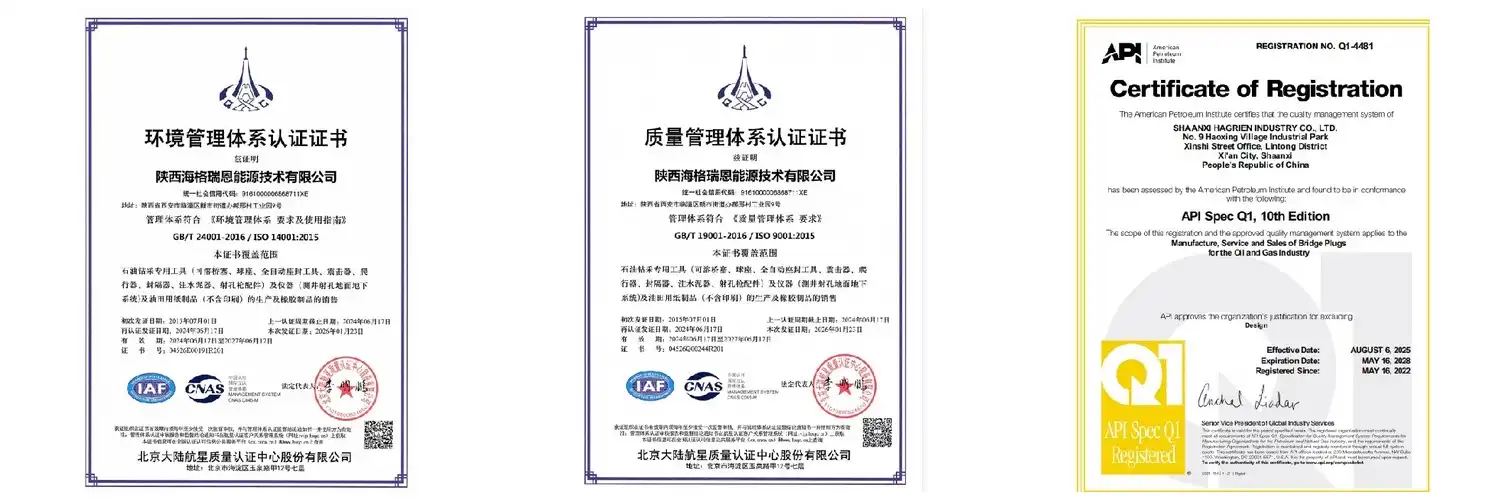
HAGRIEN setting tools come with full COC/COA paperwork, NACE-compliant material certification, and tracked inspection records that meet most operator approval checklists. They can be mechanical or field-adjustable electronic. Our engineering team can make sure that the configuration fits your well conditions and interface needs, whether you are looking at a frac plug setting tool provider for a single test run or making a volume supply deal.
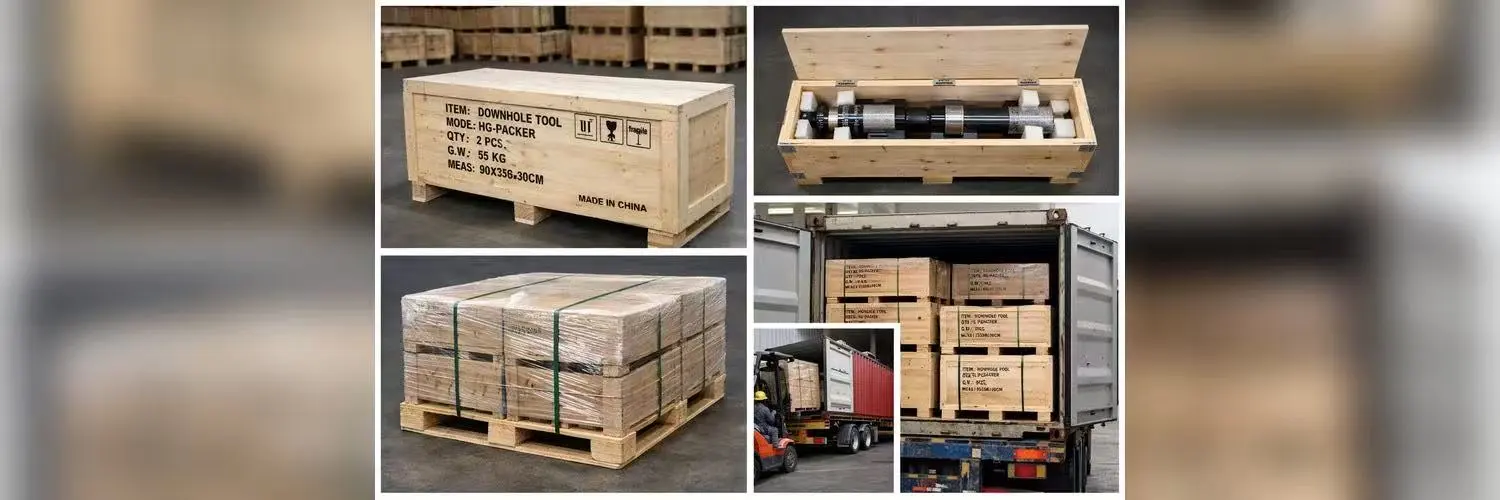
You can find technical datasheets and application guides at us-hagrien.com. You can also email us at cyrus@us-hagrien.com to get a quote, sample specification package, or field trial proposal. It takes 2–4 weeks to ship standard configurations and 4–8 weeks to ship special setups.
References
1. American Petroleum Institute. API 11D1: Packers and Bridge Plugs. 2nd ed. API Publishing Services, 2015.
2. NACE International. MR0175/ISO 15156: Petroleum and Natural Gas Industries — Materials for Use in H₂S-Containing Environments in Oil and Gas Production. NACE International, 2015.
3. Economides, Michael J., and Kenneth G. Nolte. Reservoir Stimulation. 3rd ed. John Wiley & Sons, 2000.
4. Society of Petroleum Engineers. SPE 174912: Advances in Wireline-Conveyed Plug-and-Perf Completion Systems for Unconventional Reservoirs. SPE Annual Technical Conference, 2015.
5. Britt, Larry K., and Martin C. Smith. "Horizontal Well Completion, Stimulation Optimization, and Risk Mitigation." SPE Eastern Regional Meeting, SPE 125526, 2009.
6. King, George E. "Hydraulic Fracturing 101: What Every Representative, Environmentalist, Regulator, Reporter, Investor, University Researcher, Neighbor and Engineer Should Know About Estimating Frac Risk and Improving Frac Performance in Unconventional Gas and Oil Wells." SPE Hydraulic Fracturing Technology Conference, SPE 152596, 2012.

USER EVALUATE
Here is the customer's evaluation of us