_1776908283214.jpg)




Magnesium Alloy Hex Bar: A Guide to Grades and Applications
Magnesium alloy hex bar represents a specialized class of extruded metal profiles combining exceptional strength-to-weight advantages with precision hexagonal geometry. Engineered primarily from magnesium with alloying elements like aluminum, zinc, and manganese, these bars deliver mechanical performance critical for downhole tooling, aerospace components, and advanced manufacturing systems. The hexagonal cross-section provides superior torque transmission and anti-rotation characteristics, making these materials indispensable where lightweight durability meets demanding operational environments. Grades such as AZ31B, AZ61A, and ZK60 address specific performance windows in oil and gas completions, workover operations, and emerging energy applications.
 Understanding Magnesium Alloy Hex Bars: Properties and Composition
What Defines a Magnesium Alloy Hex Bar?
More than just a six-sided profile describes a Magnesium alloy hex bar. Controlled extrusion methods that match grain structures and improve mechanical qualities are used to make these parts. When working with high-torque connections in tight areas, like in downhole tools and hydraulic systems, the hexagonal shape keeps the parts from rotating while they are being put together.
AZ31B has moderate strength and great formability, AZ61A has higher tensile strength and better pressure integrity, and ZK60 has peak mechanical performance for important uses. There are different things that each alloy system has to consider, such as how easy it is to machine, how it reacts to corrosion, how it dissolves in dissolvable tools, and how reliable it is under extreme pressure and temperature.
Core Mechanical Properties That Matter
When you specify hexagonal magnesium profiles, you're looking at a number of parameters that can't be changed:
- Density and Weight Reduction: Magnesium alloy hex bar weighs 33% less than aluminum and 75% less than steel thanks to its density of 1.74–1.80 g/cm3. In offshore and unconventional drilling activities, this directly means less time spent traveling, lower transportation costs, and a wider range of tools.
- Tensile Strength and Yield Performance: The tensile strength can be anywhere from 250 MPa to 310 MPa, depending on the metal grade and the way it was tempered. The yield strength is usually between 160 MPa and 220 MPa, which is strong enough for temporary isolation tools and recompletion hardware that are put under moderate downhole loads.
- Damping Capacity: Magnesium is better at absorbing vibrations than steel or aluminum. This feature lowers NVH (noise, vibration, and harshness) in mechanical assemblies. Steering components and precision instrumentation housings use this benefit.
- Machinability: Magnesium alloy hex bar can be machined at 50% faster speeds than aluminum, and the tools wear out less. CNC turning cycle times are sped up by lower cutting forces and better chip evacuation, which lowers the cost of making each part.
Chemical Composition and Performance Tuning
Alloying factors determine how things behave across operating windows. Adding 3–9% aluminum makes the mix stronger and easier to cast. Zinc (0.5–3%) makes things stronger and less likely to rust at room temperature. Manganese improves the structure of grains and lowers the corrosion caused by iron. Cerium and yttrium are rare earth elements that improve performance at high temperatures and resistant to creep.
We can fine-tune the composition to very close tolerances using closed-loop metallurgical control. This lets us match the behavior of the material to its environment, whether it's high-salinity brine at 150°C or acidic completion fluids in horizontal laterals. Optical Emission Spectroscopy (OES) checks each batch against ASTM B107/B107M and AMS 4350 standards. This makes sure that the process is consistent across all procurement cycles.
| Hagrien Dissolvable Magnesium Alloy Technical Specifications | ||||||
| Serial No. | Tensile Strength/MPa | Yield Strength/MPa | Elongation% | Hardness/HB | /mg/ | Dissolution Condition |
| DissolutionRate(cm2.h) | ||||||
| AML001 | ≥310 | ≥220 | ≥15.0 | ≥60 | 2月10日 | 93℃/3%KCL |
| AML003 | ≥200 | ≥140 | ≥32 | ≥50 | 1月5日 | 93℃/3%KCL |
| AML004 | ≥220 | ≥160 | ≥12.0 | ≥55 | 130-150 | 93℃/3%KCL |
| AML005 | ≥300 | ≥200 | ≥15.0 | ≥60 | 90-140 | 93℃/3%KCL |
| AML006 | ≥270 | ≥190 | ≥13.0 | ≥55 | 40-80 | 50℃/0.84%KCL |
| AML007 | ≥290 | ≥190 | ≥14.0 | ≥60 | 40-80 | 93℃/3%KCL |
| AML009 | ≥190 | ≥120 | ≥30 | ≥50 | 20-70 | 93℃/3%KCL |
| AML010 | ≥220 | ≥170 | ≥14.0 | ≥55 | 30-50 | 50℃/0.84%KCL |
| AML011 | ≥220 | ≥170 | ≥12.0 | ≥55 | 30-60 | 50℃/0.84%KCL |
| AML012 | ≥260 | ≥210 | ≥9.0 | ≥70 | 60-100 | 50℃/0.84%KCL |
| AML013 | ≥370 | ≥260 | ≥2.5 | ≥90 | 50-70 | 93℃/3%KCL |
| AML014 | ≥195 | ≥125 | ≥27 | ≥45 | 15-35 | 93℃/3%KCL |
| AML015 | ≥310 | ≥220 | ≥7.0 | ≥80 | 50-70 | 93℃/3%KCL |
| AML016 | ≥230 | ≥180 | ≥12.0 | ≥55 | 45-65 | 50℃/0.84%KCL |
| AML017 | ≥260 | ≥220 | ≥5 | ≥65 | 50-70 | 43℃/0.05%KCL |
| AML018 | ≥400 | ≥280 | ≥4.0 | ≥100 | 40-60 | 93℃/3%KCL |
| AML020 | ≥100 | ≥60 | ≥7.0 | ≥42.0 | 50-100 | 93℃/3%KCL |
| AML021 | ≥400 | ≥300 | ≥3.0 | ≥100 | 40-60 | 93℃/3%KCL |
| AML022 | ≥275 | ≥200 | ≥12 | ≥65 | 90-110 | 50℃/0.84%KCL |
| AML023 | ≥450 | ≥340 | ≥3.0 | ≥100 | 10月30日 | 93℃/3%KCL |
| AML024 | ≥270 | ≥220 | ≥5.0 | ≥70 | 60-120 | 50℃/0.84%KCL |
| AML025 | ≥360 | ≥260 | ≥3.0 | ≥100 | 40-70 | 50℃/0.84%KCL |
| AML026 | ≥310 | ≥220 | ≥8.0 | ≥60 | 0-5 | 93℃/3%KCL |
Comparing Magnesium Alloy Hex Bars with Other Metal Hex Bars
Weight Versus Strength Trade-Offs
To pick the right hex bar material, you have to weigh the needs of the structure against the needs of the process. Steel hex bars are very strong, but they are also very heavy. This is a problem when the weight of the tool string is limited by the intervention rig or when every kilogram affects the cost of helicopter lifts offshore.
Hex bars made of aluminum save some weight and don't rust in normal conditions, but they don't have magnesium's damping properties or specific strength edge. Aluminum's density of about 2.7 g/cm³ is still about 50% higher than magnesium's, which is a big difference when you're putting together thousands of feet of tool string parts.
Titanium alloy hex bars offer unrivaled strength and rust protection, but they are expensive—often 5–10 times as much as Magnesium alloy hex bar. Titanium is better for long-term projects or harsh conditions, while magnesium is better when you need something temporary, want to control how it dissolves, or want to save money.
Corrosion Behavior and Surface Protection
The electrochemical activity of magnesium brings both problems and chances. In salty environments, magnesium that isn't protected corrodes quickly. This is bad for long-lasting structures but good for dissolvable bridge plugs and temporary isolation tools. When non-dissolvable materials need long-term protection, surface processes like Micro-Arc Oxidation (MAO), anodizing, or special coats make them last longer.
When working downhole, steel needs to be constantly protected from rust. Aluminum, on the other hand, makes protective oxide layers but gets pitted in fluids that are high in chloride. Engineered magnesium dissolution is no longer a flaw but a feature, allowing drill-out-free completions and shorter intervention times.
Cost and Supply Chain Considerations
The price of a Magnesium alloy hex bar reflects the cost of raw materials, the difficulty of the extrusion process, and the quantity of orders placed. Most of the time, standard types of steel like AZ31B cost less per kilogram than titanium or unique stainless steels, but they are stronger. Lead times run from 2 to 4 weeks for standard sizes and from 4 to 8 weeks for custom orders. These times are about the same as those for aluminum sources and a lot shorter than those for getting titanium.
Aluminum is still easy to find because there are established supply chains for it. But when looking for magnesium, you need to be careful about the supplier's capabilities, especially for large-diameter extrusions (up to Ø300 mm), which need precise process control and consistent batch quality.
Applications of Magnesium Alloy Hex Bars in Industry
Oil and Gas Completion and Intervention
Hexagonal magnesium profiles are used to make dissolvable bridge plugs, stage isolation tools, and parts for setting tools. The hex shape stops rotation when torque is applied, which keeps the seal intact and the connection reliable while setting and unsetting.
These materials are used by completion service companies to lower the prices of post-frac intervention. The need for mill-out operations for coiled tubing is eliminated by dissolvable Magnesium alloy hex bar components, which reduces the risk of wellbore damage and saves rig time. Tools stay structurally sound during fracturing operations because their dissolving rates are controlled and tuned to the chemistry and temperature of the formation brine. The tools will then dissolve predictably within days or weeks after treatment.
Workover companies use magnesium hex bars in temporary plugs, production isolation assemblies, and recompletion hardware. When working within the limits of hydraulic horsepower or trying to keep tool strings from breaking in high-deviation wells, losing weight is important.
Aerospace and Defense Platforms
Magnesium's lighter weight is used in aviation for non-structural and semi-structural parts. Less unsprung mass and electromagnetic shielding qualities are good for exhaust valve actuators, fuel system fittings, and electronics mounting hardware. During operational lifetimes measured in decades, every gram saved in aerospace systems leads to better fuel efficiency or more payload capacity.
Defense platforms use hexagonal magnesium profiles in ruggedized electronics cases, portable communication systems, and light structural assemblies that need to be strong enough to withstand vibration and impact while also being light enough to meet strict weight requirements.
Automotive and High-Performance Vehicles
Racing uses push the limits of how well materials work. Magnesium alloy hex bar is used to make suspension links, steering components, and hydraulic system parts that can withstand high-frequency vibrations and corrosive road conditions while also helping to reduce total weight. More and more, magnesium is being used in production electric cars to increase their range. Every kilogram of weight taken off the chassis directly helps efficiency and driving dynamics.
Emerging Energy and Specialty Projects
For carbon capture, utilization, and storage (CCUS) to work, temporary isolation tools that can handle high-pressure CO₂ conditions are needed. High-temperature, mineralized fluids present similar difficulties for geothermal developers, but dissolvable Magnesium alloy hex bar components allow for efficient completion designs without long-term hardware liabilities.
These uses need material solutions that can be designed: breakdown windows that can be predicted, mechanical performance that can be checked in harsh conditions, and records that can be tracked to help with regulatory compliance and project risk management.
Procurement Guide: How to Buy and Source Magnesium Alloy Hex Bars
Evaluating Supplier Capabilities
It's not just the price per kilogram that affects sourcing choices. Teams that buy things should think about:
- Manufacturing Integration: Does the provider manage the heating, extrusion, melting, and cooling of the alloy? Integrated manufacturers make sure that the microstructure and mechanical properties are the same from batch to batch, which cuts down on waste and rework further down the line.
- Large-Diameter Capability: Magnesium alloy hex bar up to 300 mm in diameter is available from suppliers with controlled straightness and dimensional error (0.05 mm flat-to-flat), allowing for more design freedom and less material waste during cutting.
- Quality Documentation: Look for suppliers who offer Certificates of Analysis (COA), Certificates of Conformance (COC), and Safety Data Sheets (SDS) that are specific to each batch. Lab tests that are recognized by the CNAS and API recognition show that a company is committed to quality that can be checked.
- Responsive Engineering Support: Getting technical help when choosing materials, building prototypes, and doing Factory Acceptance Testing (FAT) speeds up the testing process and lowers the cost of making mistakes.
Understanding Lead Times and Minimum Orders
Standard sizes of hex bars that are kept on hand as backups usually ship within two to four weeks. For non-standard sizes, engineered alloy systems, or custom dissolution windows, it takes 4–8 weeks, which includes validating the process and making the paperwork. There are faster options for important projects, but they depend on the availability of raw materials and the schedule for production.
The minimum order quantity changes based on the metal grade and size. Established sellers can accommodate different prototype numbers and can easily scale up to production amounts. Their prices are stable and depend on the size of the order and how often it is delivered.
Cost Optimization Strategies
Making a commitment to buy a lot of something lowers the cost per unit, especially for custom alloys or shapes that aren't standard. Framework agreements with predictable order patterns let suppliers make the best use of their production schedules and raw material purchases, which saves buyers money.
When material specs are combined with tool design needs, OEM and ODM partnerships add more value. Collaborative engineering, where material qualities are matched to working windows and dimensional standards are linked with machining processes, cuts down on waste and speeds up the time it takes to get a product to market.
Trade Terms and Logistics Coordination
Different supply chain tactics can be used with trade words like EXW, FOB, and CIF. Buyers in North America gain when suppliers keep U.S. companies for coordination, contact, and to make sure they follow the rules. Procurement schedules stay in sync with rig operations and completion campaigns thanks to weekly project updates and progress reports based on milestones.
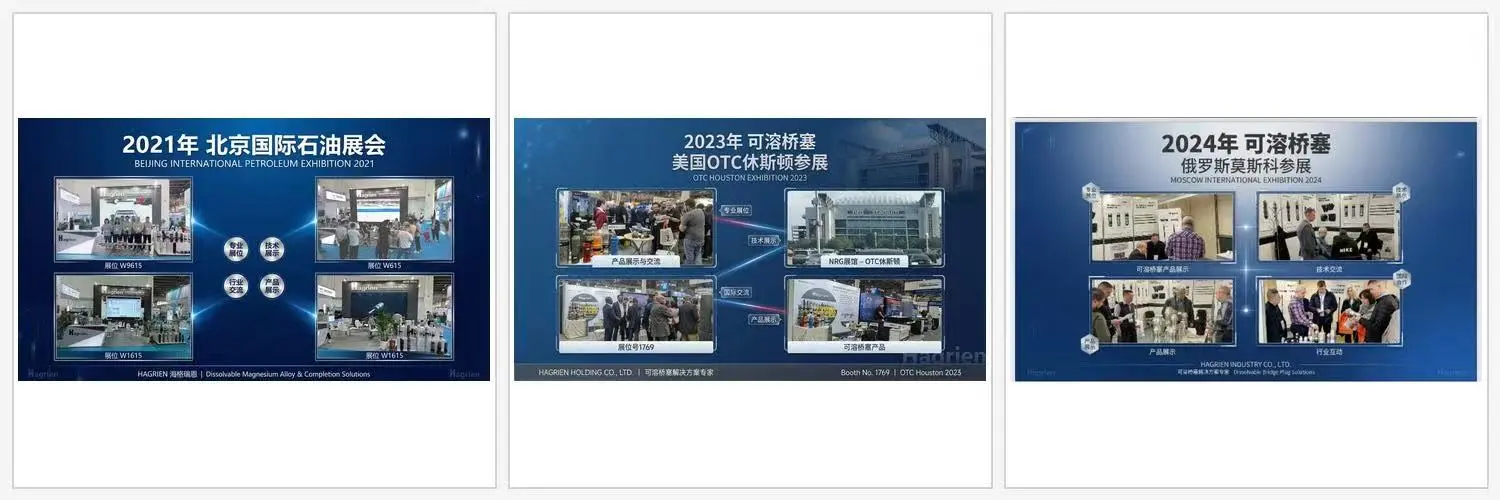
Why Choose HAGRIEN Magnesium Alloy Hex Bars – Trusted Quality and Support
Closed-Loop Manufacturing Control
At HAGRIEN, we are in charge of the whole process, from making the metal to checking it for quality. Our in-house capabilities, which include 3,600-ton and 5,600-ton extrusion presses, precision machining centers, and CNAS-accredited testing labs, get rid of the need to point fingers and make the supply chain more complicated. When you buy Magnesium alloy hex bar from us, you're working with a company that is responsible for ensuring the quality of the material, the accuracy of the measurements, and the timely delivery of your order.
This integration is important for operations. Machine variation is lessened when the microstructure is the same across big extrusions. The mechanical qualities are always the same from batch to batch because the grain size and aggregate distribution are controlled. Traceability starts with receiving the raw materials and ends with shipping the finished product. This helps with supplier qualification audits and corrective action protocols.
Engineering-to-Specification Capabilities
Standard goods meet most needs, while unique solutions are made to solve particular problems. Our engineering team works with yours to fine-tune alloy systems and process parameters so that the behavior of the material fits your operating windows. We change the recipe and heat treatment to meet your needs, whether you need a certain rate of dissolution in high-salinity brine, better machinability for complicated shapes, or the best mix of strength and ductility for setting tool parts.
Drawing-based production and prototype development help shortens the time it takes to get qualified. Factory Acceptance Testing makes sure that performance is good before full orders are placed, which lowers the risk of release. With this method, buying things stops being a one-time exchange and turns into a strategic partnership.
Certifications and Compliance Assurance
We keep our ISO 9001, ISO 14001, and ISO 45001 standards, as well as our API recognition and a full HSE system. Our lab is approved by CNAS and follows international standards for mechanical testing, chemical analysis, and non-destructive examination. There are documentation packages in every shipment to help with internal reviews, third-party audits, and project milestone approvals.
Safety Production Licenses and Processing Safety Standardization qualifications show that a business is run in a disciplined way. These aren't just marketing claims; they're real promises backed up by regular audits and programs for ongoing growth.
Predictable Delivery and Responsive Communication
Responses to RFQs come in 24 hours or less. In one to three business days, you'll get formal quotes with delivery dates. Weekly project updates are in line with North American time zones, and our U.S. entity handles coordination, so there are no problems with time zones or communication.
Having safety stock for common specs makes sure you're not left without what you need when you need it quickly. Custom orders are produced according to strict schedules, and arrival times are guaranteed. For important projects, there are also choices to speed up the process. This certainty lowers the risk of missing a deadline and helps just-in-time inventory tactics work.
 Conclusion
When choosing the right Magnesium alloy hex bar, you have to think about how well it works mechanically, how it fits into your operations, and how reliable the supply chain is. Hexagonal profiles have many benefits, including better strength-to-weight ratios, ease of machining, and design freedom due to designed dissolution properties. These materials are used more and more in oil and gas completions, aircraft systems, lightening up cars, and new energy projects to solve problems with weight, cost, and efficiency. To be successful in procurement, providers must show that they can integrate manufacturing, work with big diameters, provide responsive engineering support, and have quality systems that can be checked. These qualities are provided by HAGRIEN thru closed-loop production, thorough certifications, and collaborative technical engagement. This makes us a reliable partner for important material needs.
 FAQ
FAQ
1.How does magnesium alloy hex bar compare to aluminum in machining efficiency?
It is possible to machine Magnesium alloy hex bar profiles about 50% faster than aluminum profiles, with lower cutting forces and longer tool life. To deal with magnesium's sensitivity during high-speed operations, however, workers must follow Class D fire safety rules. These rules include chip management systems and choosing the right coolant.
2.What standard tolerances apply to extruded magnesium alloy hex bars?
Tolerances for dimensions are based on ASTM B107/B107M standards and are usually between ±0.008 and ±0.020 inches flat-to-flat, depending on the hex size. Large-diameter extrusions (above Ø200 mm) need strict process control to keep them straight and in good shape, which is something that not all providers can do.
3.Can magnesium alloy hex bar perform in high-salinity downhole environments?
If you choose the right metal and treat the surface properly, magnesium profiles will work consistently in corrosive circumstances. Controlled corrosion is used on purpose in dissolvable applications, while Micro-Arc Oxidation or epoxy primer coatings are needed for non-dissolvable applications to stop galvanic degradation. When choosing a material, you need to think about the temperature, acidity, fluid chemistry, and length of service.
4.Why specify AZ61A over AZ31B for hydraulic applications?
Because it has more aluminum, AZ61A has higher tensile strength and better pressure tightness, which makes it better for parts that are under pressure or that are loaded and unloaded many times. AZ31B is still a good value for general structural uses where moderate strength is enough.
5.Are hexagonal magnesium profiles weldable?
Magnesium alloy hex bar can be easily welded using either the TIG (GTAW) or MIG (GMAW) processes and filler rods that fit, such as ER-AZ61A. Using the right shielding gas (argon or mixtures of argon and helium) stops oxidation, and preheating controls thermal stress in thick parts. When done right, welded parts usually reach 70–90% of the strength of the base metal.
Partner with HAGRIEN for Your Magnesium Alloy Hex Bar Needs
Sourcing choices have an effect on the results of a project long after the purchase orders are closed. Magnesium alloy hex bar solutions from HAGRIEN that meet your needs, timelines, and quality expectations are made possible by their manufacturing depth and engineering responsiveness. Our integrated production, which includes developing alloys and precision extrusion up to Ø300 mm, makes sure that each batch is the same and that the dimensions are controlled, which is important for downhole tools, aerospace parts, and advanced manufacturing. We offer audit-ready traceability and reliable delivery (2–4 weeks standard, 4–8 weeks custom) thanks to our ISO 9001/14001/45001 certifications, CNAS-accredited testing, and seven years of continuous production experience. Our expert team is ready to work with you whether you're a completion service provider trying to lower the cost of involvement, an OEM maker making the next generation of tools, or a procurement team trying to make the best use of supply chains. You can talk to our technical and sales experts about your material needs, ask for samples, or set up a meeting with a reliable Magnesium alloy hex bar maker by emailing cyrus@us-hagrien.com.
 References
1. Davis, J.R. (Editor). Magnesium Alloys: Properties, Processing, and Applications. ASM International, Materials Park, OH, 2003.
2. American Society for Testing and Materials. ASTM B107/B107M-13: Standard Specification for Magnesium-Alloy Extruded Bars, Rods, Profiles, Tubes, and Wire. ASTM International, West Conshohocken, PA, 2013.
3. Aghion, E. and Bronfin, B. "Magnesium Alloys Development towards the 21st Century." Materials Science Forum, Vol. 350-351, 2000, pp. 19-30.
4. Mordike, B.L. and Ebert, T. "Magnesium: Properties – Applications – Potential." Materials Science and Engineering: A, Vol. 302, Issue 1, 2001, pp. 37-45.
5. Society of Automotive Engineers. AMS 4350: Magnesium Alloy, Sheet, Plate, Bar, Rod, and Tube, AZ31B. SAE International, Warrendale, PA, 2018.
6. Friedrich, H.E. and Mordike, B.L. Magnesium Technology: Metallurgy, Design Data, Applications. Springer-Verlag, Berlin Heidelberg, 2006.

USER EVALUATE
Here is the customer's evaluation of us