_1776908283214.jpg)




Multistage Completion System: How It Works in Horizontal Wells
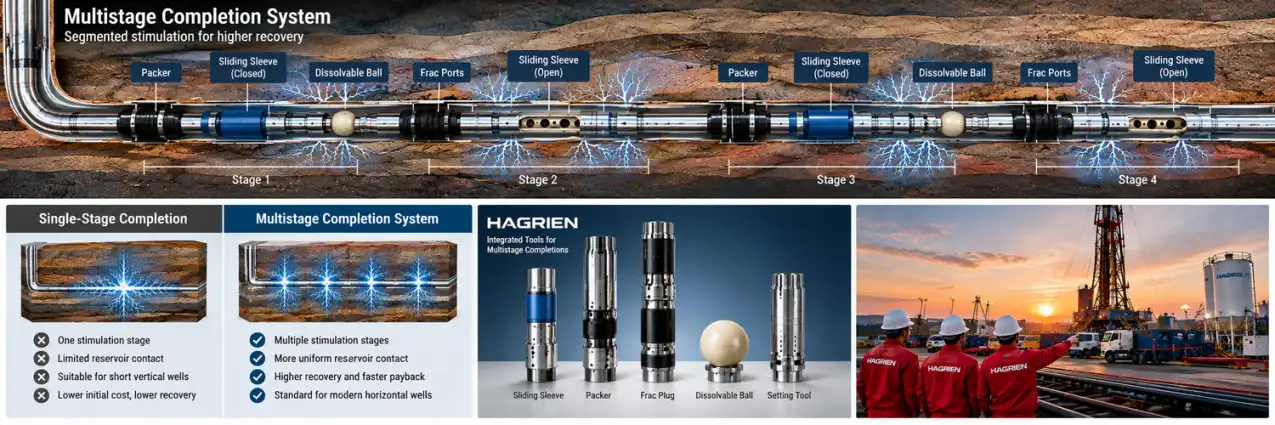
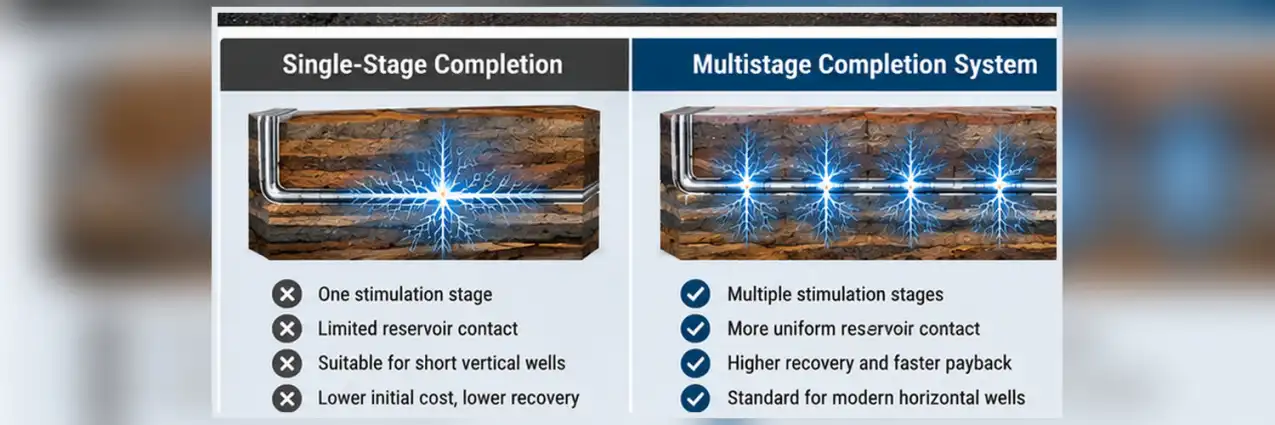
A multistage completion system segments a horizontal wellbore into discrete zones, allowing operators to stimulate each interval independently through hydraulic fracturing or acidizing. Rather than treating the entire lateral as one unit, this architecture places packers, sliding sleeves, and frac ports at calculated intervals along the casing string. The result is precise zonal isolation, more uniform reservoir contact, and measurably higher hydrocarbon recovery per well. For procurement teams and completion engineers sourcing integrated tool packages, understanding how the system functions is the first step toward confident supplier selection.
Understanding the Challenges in Horizontal Well Completions
Uneven Production Across the Lateral
The permeability of a pond rarely stays the same over a long straight section. Without staged separation, the fracture fluid takes the easiest route, which means it over-stimulates high-perm zones and skips over tighter intervals. Because of this, the production profile is focused in a very small part of the lengthwise direction.
Zonal Isolation Failures and Their Costs
If the stages aren't properly separated, pressure can move between them, which changes the shape of the fracture and wastes the treating fluid. According to SPE studies on unconventional wells, bad zonal isolation can lower the effective stimulated reservoir volume by 20–35%. This lowers well productivity and makes cost-per-BOE numbers go up.
The Limits of Single-Stage Completions
A normal single-stage design can't handle heterogeneity in the reservoir in a lateral that's longer than 5,000 feet. Damage to the formation near the wellbore, changing rock minerals, and differences in pore pressure all need separate treatment windows. A well-designed multi-zone completion system is the only way to meet these needs.
What Is a Multistage Completion System?
Core Components and Their Roles
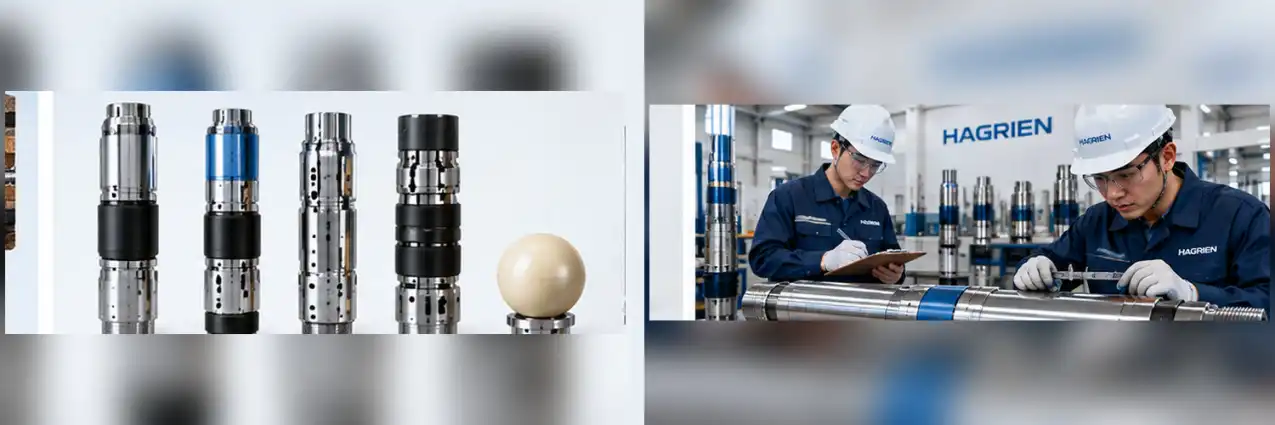
A multistage completion system is made up of several designed parts. These include mechanical or swellable packers to separate the annulus, moving sleeves to make entry to the ports easier, frac plugs to temporarily separate the stages, and sealing elements to keep the pressure barriers in place during treatment. Each part does a certain job, and all of them work together to make a full downhole assembly.
Open-Hole vs. Cased-Hole Designs
In open-hole systems, packers that can swell or inflate are pressed directly against the formation. These are often used in carbonate acidizing programs. In North American shale plays, the most common method is cased-hole designs, which use cement-filled cases with holes in them and mechanical separation tools. The decision is based on the formation's ability, the chemistry of the fluid, and the number of stages on target.
Activation Methods: From Ball-Drop to Key-Activated Sleeves
Ball-drop systems open sleeves one at a time as balls that are bigger and bigger hit features that match. HAGRIEN's key-activated sliding sleeves are different. Each sleeve is installed with the case string and opens when told to, so there is no need for cable runs or perforating guns. This design lets workers use an endless number of stages and has a full-bore internal diameter after activation, which supports production flow and any re-entry tools that come out in the future.
How the Multistage Completion System Works in Horizontal Wells?
Stage Design and Well Preparation
The completion team looks at log data (porosity, natural fractures, clay content, and stress orientation) to set stage boundaries before running any tools. The spacing between clusters and the number of holes in each one are set so that fracture initiation is equal in each interval. Our HAGRIEN experts help with this process by making sure that the placing of the sleeves is right for the client's geomechanical model.
Sequential Fracturing and Zonal Isolation in Practice
Fracturing starts at the toe once the casing string with built-in sliding bands is set and sealed. Each stage is opened on its own, treated, and then left alone before the next one begins. Because HAGRIEN's key-activated sleeves don't need wireline intervention between stages, the crew pumps continuously from toe to heel, which cuts days off the time it takes to finish and makes a big difference in the amount of time that isn't being used for work.
Dissolvable Sealing Elements for Temporary Isolation
The multistage completion system from HAGRIEN includes dissolvable frac balls and sealing parts made from engineered magnesium alloy. These elements keep the pressure up during the frac job. After the job is done, they break down normally in the wellbore brine at the temperature of the reservoir, returning the full bore without the need for a flowback. Lab tests approved by the CNAS show that the rate of dissolution is adjusted to fit the specific chemistry of the brine and temperature range of each project.
Benefits of Using Multistage Completion Systems for B2B Clients
Before making a commitment to a seller, procurement teams that are in charge of combined tool packages need to have a clear picture of where the value is. In real life, these are the main benefits this system brings:
- Reduced intervention cost: Because HAGRIEN's key-activated sleeve design runs all frac stages without repeated wireline trips, rig-day savings on a 30-stage well can reach several hundred thousand dollars per lateral. This is directly relevant to completion programs in the Permian, Marcellus, and DJ basins where intervention cost is a primary budget driver.
- Full-bore flow path after activation: Once sleeves are opened and dissolvable elements degrade, the wellbore ID is unobstructed. This matters for long-term artificial lift design and future re-fracturing programs, both of which require unrestricted access through the completion.
- CNAS-accredited testing and full batch traceability: Every component ships with a documented quality package — MTRs, dimensional inspection records, and hydrostatic test data — supporting supplier qualification audits and reducing the documentation risk that procurement directors consistently flag as a top concern.
 For owners who run 30 or more wells a year or more, these benefits directly lead to lower costs per well, faster time to first production, and an easier supply chain.
At HAGRIEN, the closed-loop production approach includes melting alloys, extruding them, precision machining, and CNAS-lab proof. This means that materials, tools, and sealing elements are all taken care of by the same provider. This lowers the risk of dealing with different sources of parts and gives the project manager a single quality record that can be used to track the whole assembly.
Selecting the Right Multistage Completion System for Your Project
Matching System Design to Reservoir Conditions
The casing OD, the temperature of the reservoir, the salinity of the brine, the concentration of H₂S, and the target stage all affect the choice of components. NACE MR0175/ISO 15156 says that systems that work in sour service need alloys made of L80, 13Cr, or nickel. During the RFQ stage, HAGRIEN's engineering team looks at the well's operating window and suggests a configuration that is known to work with the materials.
Evaluating Supplier Qualification Criteria
Large oilfield service companies with integrated finishing programs usually need suppliers to be registered with API Spec Q1, have ISO 9001/14001/45001 certification, and be accredited by the CNAS laboratory. These certifications are held by HAGRIEN, and the company keeps a structured qualification documentation package with COA, COC, and batch traceability reports to support the 4–10 month vendor approval cycle that is common in buying major oilfield services.
Delivery Models That Match Project Cadence
When you order based on a project, you need a provider that can stick to the wait times they agreed to, keep safety stock for regular configurations, and offer fast production for when you need to restock quickly. Standard sizes of HAGRIEN ship in two to four weeks. Custom configurations with specific dissolution windows ship in four to eight weeks, but there are ways to get them faster for important project deadlines.
Conclusion
A well-thought-out multistage completion system gives horizontal well operators exact control over stimulation, expected zonal isolation, and a cost reduction that can be seen per well. Switching from traditional plug-and-perf designs to continuous-pumping sleeve-based ones cuts down on the time it takes to finish and saves a lot of money on repair costs. When procurement directors and completion engineers look at suppliers, they have certain concerns that HAGRIEN's combined approach tackles. This method includes key-activated sliding sleeves, dissolvable sealing elements, and closed-loop quality paperwork. The design explained here is worth taking a close look at if your next project needs a verified, traceable, and project-ready finishing tool package.
FAQ
1. What is the main difference between plug-and-perf and sliding sleeve systems?
Plug-and-perf gives you a lot of options for where to put the stages, but you need a wireline crew between each one. Sliding sleeve systems, like HAGRIEN's key-activated design, let you keep pumping from the toe to the heel without having to use wirelines. This cuts the total time needed to finish a typical 30-stage program by several days.
2. Can this system handle H₂S environments?
Yes. To stop sulfur stress cracking in sour wells, parts are made of L80, 13Cr, or nickel-based alloys according to NACE MR0175/ISO 15156.
3. How are dissolvable frac balls validated?
Each batch goes through CNAS-approved lab tests that mimic the well's brine chemistry, temperature, and pressure exposure to make sure the ball can withstand the rated pressure for the necessary frac time before breaking down.
4. What causes zonal isolation failure?
The most common reasons are incorrect packer setting load, rubber not working with finishing fluids, and tiny holes leaking in the cement sheath. This risk is greatly reduced by using ISO 14310 V0 certified equipment and checking the elastomer chemistry against the fluid data sheet.
5. Is re-fracturing possible with an existing sleeve-based completion?
Yes, HAGRIEN's re-closable sleeve options let operators re-stimulate certain zones without doing a full workover. This is especially useful for older wells that are losing production at certain intervals.
Partner With HAGRIEN for Your Next Multistage Completion Program
As part of its complete multistage completion system package, HAGRIEN offers key-activated sliding sleeves, dissolvable sealing elements, packers, and setting tools. These products are backed by API certification, ISO 9001/14001/45001 certification, and CNAS-accredited testing. We are a reliable company that has been making multistage completion systems for seven years and have production records to back this up. We can help you with the whole approval process by providing traceable batch paperwork and promised project lead times. Get in touch with our U.S. team to get a basic quote package or set up a technical review for your next well program.
Email address: cyrus@us-hagrien.com Website address: us-hagrien.com
References
1. Society of Petroleum Engineers (SPE) — SPE Journal, 2021
2. Journal of Petroleum Technology — Multistage Fracturing Optimization in Unconventional Reservoirs, 2020
3. SPE Production & Operations — Zonal Isolation Evaluation in Horizontal Completions, 2019
4. World Oil — Completion Technology Review: Sliding Sleeve vs. Plug-and-Perf, 2022
5. Journal of Natural Gas Science and Engineering — Dissolvable Frac Plug Performance in HTHP Wells, 2021
6. Oil & Gas Journal — Advances in Horizontal Well Completion Design for Shale Plays, 2023

USER EVALUATE
Here is the customer's evaluation of us