




Sliding Sleeve With Dissolvable Sealing Elements: Is It Worth It?
For a completion program with numerous phases, lengthy laterals or expensive intervention, a sliding sleeve with soluble sealing materials may be considered . The potential value is derived from the combination of selective stage access and temporary sealing, if the system is suitable with the well conditions and planned operating sequence.
An infinite-stage sliding sleeve is generally intended to avoid the stage-count constraints associated with certain graduated ball-seat systems. In a suitable architecture, key activation may also obviate certain wireline operations or other stage-opening stages. But the real advantages come from the whole finishing design, not just the sleeve.
This brings up another issue: the dissolvable sealing components must provide the appropriate seal for the defined duration and then be in an acceptable state after operation. Degradation, dissolution, fragmentation and residue removal are not interchangeable results. The material mechanism and acceptability criteria must be specified prior to deployment .
This manual will assist you to analyze the technology, compare it to traditional finishing choices, review supporting evidence and decide whether it is right for your project.
How an Infinite-Stage Sliding Sleeve With Dissolvable Sealing Elements Works
The assessment begins with two different functions: the opening of a specified stage by the sleeve and the temporary isolation maintenance by the sealing parts. Interfaces between these functions must be verified as part of the whole system.
Sleeve Body, Key Activation, and Full-Bore Access
A sliding sleeve typically consists of an outer body, a movable inner sleeve, flow ports, seals, and end connections. Depending on the design, a shifting profile or locking mechanism helps control sleeve movement.
HAGRIEN describes key-activated sleeve configurations for selective fracturing-stage access. In a compatible system, a matching key or shifting tool moves the sleeve to the required position. The exact activation method, key profile, operating force, and opening sequence should be confirmed for the selected model.
The term "infinite-stage sliding sleeve" generally distinguishes a design from systems whose stage count is constrained by a sequence of graduated ball seats. It should not be interpreted as proof that every well can accommodate an unlimited number of stages. The practical stage count depends on the completion layout, sleeve spacing, activation system, operating limits, and project design.
Full bore access also needs dimensional checks. The internal route must be inspected for the confirmed minimum I.D. and drift in the applicable service position. The sleeve is said to be full-bore, however other finishing elements such as connections, seals, changing profiles etc. may be subject to limitations.
Ask for the dimensions design and verify that the intervention instruments planned to be used can fit via the scheduled access route before choosing. Also, check that the activation method is consistent with the sleeve sequence and operating process.
Where Dissolvable Sealing Elements Fit
Temporary isolation may be provided during a stimulation stage using dissolvable sealing materials. They are designed to provide the necessary sealing function for a certain amount of time and then to enable the material behavior of the completion to fulfilll its post-operation needs.
The order of anticipated events depends on the design of completion. A program may include executing the completion string, setting isolation, testing the appropriate pressure boundary, opening a chosen stage, pumping the treatment and going through the scheduled stage sequence. This is a conceptual overview only, not a universal operating process. Installation and operation must be governed by the authorized protocol for the individual instrument.
Special attention should be paid to the end-of-service condition of the sealing element. A component that loses its ability to seal may nonetheless leave behind pieces or residue. The phrase “dissolvable” does not mean that the bore is clear enough for further work and adequate testing must be done to determine whether the bore is clear enough for later treatment.
HAGRIEN says their in-house melting, extrusion and machining of dissolvable magnesium alloy includes bar stock up to 300 mm Ø. These skills are relevant to metallic materials and components. They may not always describe the material composition or behavior of all sealing components employed in a sleeve system.
Check the metallic and elastomeric components for a proposed application and what is the anticipated behavior of each component under the given well conditions. This separation avoids confusion between the physical capabilities and the performance of the built finishing tool.
Dissolution Predictability and Acceptance Testing
The dissolving behavior is dependent on material, temperature, fluid chemistry, salinity, pH, exposure length and the exposed surface area and form of the components. The pressure and flow characteristics may also change the environment in which the substance is exposed. The relative importance of each item is dictated by the relative importance of the given drug and test set-up.
Research on magnesium corrosion may help explain why magnesium alloy behavior is different in different situations. However, general corrosion studies are not a replacement for assessing the specific alloy, component form and fluid conditions proposed for a well. A test on a metal component is not a proof of the dissolving behavior of an elastomeric sealing part either.
Intended sealing time, exposure conditions and required post-operation state should be defined prior to qualification. The test plan should specify the composition of the fluid, temperature, pressure where applicable, length of exposure, measurement method and acceptance criteria. Indicate how each will be monitored if residue or drift recovery is essential.
HAGRIEN has a CNAS approved high temperature and high pressure laboratory for testing. Before you use a test that is certified and to make sure that the test you want to use is in scope, check the accredited body, the current scope and the procedure that applies. The true test approach and the available conditions are to be agreed upon before the exam.
For an infinite-stage sliding sleeve program, useful evidence may include pressure-test records, material identification, dissolution or degradation results, dimensional checks, and post-exposure inspection. These records should identify the tested configuration and conditions so that the results are not applied beyond their demonstrated scope.
Infinite-Stage Sliding Sleeve vs. Conventional Completion Solutions
The comparison should focus on how each completion system opens stages, maintains isolation, preserves internal access, and manages the end of the operation. Different designs can solve similar problems through different mechanisms, so the complete system is the appropriate basis for evaluation.
Stage Count and Activation Method
Some ball-drop sleeve systems employ graded seats where the allowable activation sequence is dependent on ball and seat sizes. Seat geometry may limit the number of stages and the size of internal passages in these designs.
Plug-and-perf systems have a varied working sequence, often including perforating and isolating procedures at various phases. The equipment, the procedures of the intervention and the drill out needs after that rely on the program.
A key-activated infinite-stage sliding sleeve is intended to avoid the stage-count limitation associated with a particular graduated ball-seat sequence. Its actual stage capacity still depends on the complete system configuration and operating plan. Similarly, key activation may reduce the need for certain wireline operations, but it should not be assumed to eliminate every intervention or perforating step in every completion.
A key technical question is whether each activation tool operates the intended sleeve under the planned conditions. Ask for the mechanism drawing, activation procedure, and relevant functional-test records. Confirm how the system prevents unintended activation and how the operator verifies the position of each sleeve.
Intervention, Sealing, and Familiarity
Some plug and perf designs need wireline deployment, perforating equipment, isolation plugs and a drill out operation. Other sleeve systems may decrease or alter some of these processes, but the operating procedures and remaining intervention needs must be addressed.
A key actuated sleeve and dissolvable sealing parts may eliminate the requirement for selective intervention or removal activities when components are performing as intended. The magnitude of any decrease relies on system design, isolation method, material behavior, and completion program.
Operational familiarity is important too. Crews must know how to activate, what the allowed operating limits are, how to verify, and how to respond if the sleeve does not move or seal as intended. Training and written procedures should state who is accountable for each decision and what contingency steps are in place.
If a well has few stages or requires little intervention, a conventional completion may still be competitive. The number of stages alone does not determine which is optimal; the planned operation sequence, technical certification, personnel preparedness and overall lifetime cost are all factors.
Compare Mechanisms, Not Product Names
Two products described as infinite-stage sliding sleeves may differ in activation method, internal dimensions, pressure ratings, sealing arrangement, and qualification evidence. Compare the documented design and its intended operating conditions rather than relying on the product category.
HAGRIEN’s product site cites partner-sourced reference numbers of over 10,000 m of total horizontal section, 347 sleeves utilized, and a fastest recorded single-stage duration of 59 minutes at a pumping rate of 8-10 m³/min. The numbers are for reference only for this project and are not a guarantee of the outcomes for other wells or set-ups.
Please validate original data, project background, reporting period, definition of cumulative horizontal section, number and type of sleeves depicted and technique used to compute stage time, before publishing or utilizing these numbers for procurement decisions. The correlation between the observed stage time and reported pump rate should also be established.
If the data are verified, they may provide useful context for technical discussions. They do not replace qualification testing or demonstrate that a proposed infinite-stage sliding sleeve will deliver the same result under different well conditions.
Is a Sliding Sleeve With Dissolvable Sealing Elements Worth It?
The economic decision should compare the complete cost and risk of each completion option. A lower component price does not necessarily produce a lower-cost well, but savings from reduced intervention should also be demonstrated rather than assumed.
Look Beyond Purchase Price
The life expectancy comparison should take into account the equipment, the installation, the opening of stage, the isolation elements, the operating term, the need for removal or drill-out, and any planned intervention after stimulation. Depending on the design, other relevant costs may include additional equipment, people work, testing, contingency operations, and downtime.
If the selected technology does really minimize certain steps in the preferred approach, then less participation may be useful. The magnitude of this benefit is conditioned by the local operating environment, the cost of services, the sequence of the phases and the activities to be carried out.
Develop cost models at stage and well level for a fair comparison. “Document what to expect in terms of duration of operations, expenses for service, consumables and contingency work.” If any logging, cleanout or re-entry is necessary later, indicate the predicted access requirements and likely intervention costs for the intended well life.
Full bore access may leave possibilities for later work, but the economic benefit relies on actual tool compatibility and planned intervention . A larger nominal bore does not indicate future operating costs will automatically be cheaper.
Industry-wide statistics on hydraulic fracturing may provide perspective on the size of the market but may not validate the economics of a specific sleeve. The best commercial argument is made by comparing the projected end date against a feasible alternative, using assumptions and facts particular to the project.
Where the Value Is Strongest
Think of the technology for long horizontal wells, multi-stage shale or tight oil programs, extended reach laterals and projects where intervention is very expensive. It may also be significant when completion requires selective stage access and the design has to retain a path for suitable future operations.
Suitability relies on the whole operational envelope. You have to deal with temperature, pressure, fluid chemistry, how long it will be sealed, how certain you are it will activate, and how to get to it after the fact. Packers, isolation tools, cementing design, gages and other downhole components also have to be interacted with.
The 59-minute stage time found in the partner-sourced data is only to be used as a historical reference when the circumstances and measurement technique are validated. It should not be construed as a prediction for another well.” The pumping rate, treatment design, proppant loading, equipment, crew practices, and operational limits might impact the length of the stage.
If evidence is not available, a tiered assessment may be useful: start with technical and drawing review, set up bench-test acceptability criteria and assess if a controlled field experiment is warranted. The trial has to be designed with the capacity to assess the results of interest to the project , activation reliability , pressure integrity , operating time , condition of the bore post operation .
When a Conventional Sleeve Wins
A conventional sleeve may be preferable when the well has relatively few stages, the existing completion design already meets operational needs, or the team has a qualified procedure that offers a clear advantage in the specific application.
A dissolvable design may be unsuitable if the fluid, temperature, or exposure time causes the sealing element to lose function too early or remain in place longer than the program permits. The relevant limits must be established for the actual material and component geometry rather than inferred from generic material descriptions.
The comparison should consider lifecycle cost, qualification evidence, operating risk, crew familiarity, and supplier support. If important uncertainties remain, additional testing or a limited field evaluation may be more appropriate than committing an entire pad to an unverified configuration.
An infinite-stage sliding sleeve is worth selecting only when the documented performance and operating method match the well's requirements. The label alone is not enough to establish suitability.
 Technical Specifications, Installation, and Maintenance
Selection becomes more reliable when the supplier receives complete technical inputs and the buyer defines how the proposed system will be accepted. The following information helps identify fit, material, operating, and documentation requirements before a quotation is finalized.
Data to Collect Before You Select
Specify sizes of casing and tubing, needed drift, internal clearance, connection type, port shape and any pertinent completion drawings. These information are used to determine whether the sleeve will fit the desired string and if the necessary tools will be able to pass via the planned access route.
Operating information should include working and differential pressure, appropriate burst and collapse requirements, temperature range, pressure cycles, fluid composition, brine content, H 2 S and CO 2 exposure when applicable, and the predicted fracturing-fluid environment. Define the sealing time for any dissolvable component necessary. Define the desired state of any dissolvable component after operation.
Also the activation mechanism and instruments involved need to be specified. Confirm the sequence of stages, the pressure-testing technique, the method of position verification, and the contingency requirements for failed or partial activation.
For OEM or application-specific work, further discussion can include dimensions, connections, porting, material grade, sealing-element design, labeling, packing and documentation. When requesting a bespoke version of any of these features, please specify the applicable technical limitations and approval criteria.
The provider may use this data to discover missing information, evaluate the proposed configuration, and decide if any more testing or documentation is required before approval.
Pressure and Integrity Evidence
Pressure test records are of little use unless it is obvious what circumstances and scope the tests included. HAGRIEN's product-page material allegedly references a partner's input of an insert bump pressure of 43 MPa, a casing pressure test of 20.2 MPa, a 30-minute hold and a recorded pressure decrease of 0.2 MPa.
Until the original documentation is examined, these values should be labeled as project specific data. Before the findings may be used as the basis for a technical conclusion, the test object, pressure boundary, configuration, temperature, test technique, measurement accuracy and acceptance criteria must all be checked.
The record of the pressure test should include the test pressure, the length of the pressure hold, the beginning and end readings, the relevant circumstances and the acceptance criteria. Where appropriate it should additionally identify the assembly being tested, and the test facility responsible.
Do not assume that the result of a pressure test represents the working-pressure rating of the product unless the appropriate qualification basis supports such a conclusion. Request rating documentation and associated test records for the configuration being considered. The appropriate standards and procedures should be specified by title, edition and scope.
Installation, Operation, and Maintenance Controls
Review and inspect allowed designs and components in accordance with manufacturer's standards prior to installation. The inspections to be performed may include measures, threads, seals, sealing elements, material identification, cleanliness and compliance with the completion string.
Handling, make-up, installation and pressure testing should be in accordance with the procedures permitted for the actual tool. The completion plan should include detail operating limits, required hold points, methods of verifying sleeve position and response to abnormal pressure behavior or partial activation.
Store and treat dissolvable components as recommended by the provider of the substance. If there is any chance that moisture or chemical exposure may affect the product, state a particular storage environment, packaging and handling limits, not simply a general direction.
The operating method should include detail potential problems, such as a sleeve not moving, leaks occurring during pressure testing, loss of sealing before or beyond the planned period, unintentional communication across zones, and residue blocking further access. The answer is " it depends " . It is contingent upon the final design . But it must be decided before deployment .
Training of the crew should include the actual activation mechanism, acceptance criteria, documentation requirements and escalation obligations. A stated approach eliminates ambiguity, but does not remove the need to qualify the product or check the tool good compatibility.
How to Choose a Dependable Infinite-Stage Sliding Sleeve Supplier
Supplier evaluation should focus on the ability to provide a configuration that meets the specified requirements and to support that configuration with relevant documentation. Manufacturing capacity and general credentials are useful considerations, but they do not substitute for product-specific evidence.
What a Dependable Supplier Shows You
Evaluate the supplier's manufacturing experience, quality controls, material traceability, testing capabilities, technical support, export arrangements, and ability to manage design changes. Ask how these capabilities apply to the actual product being quoted.
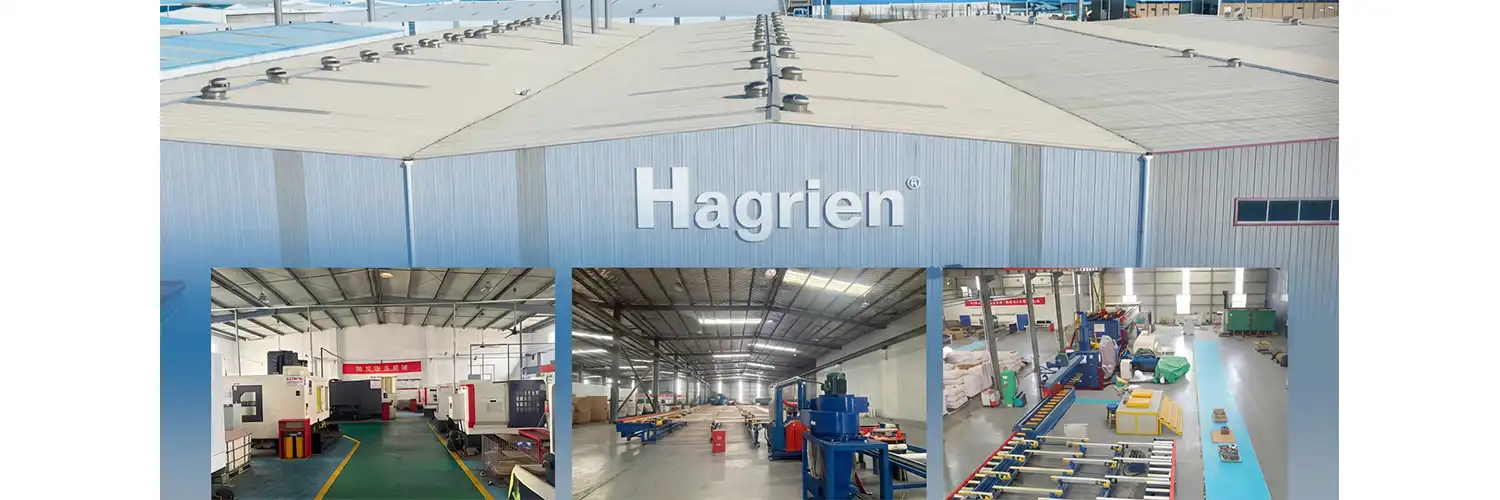
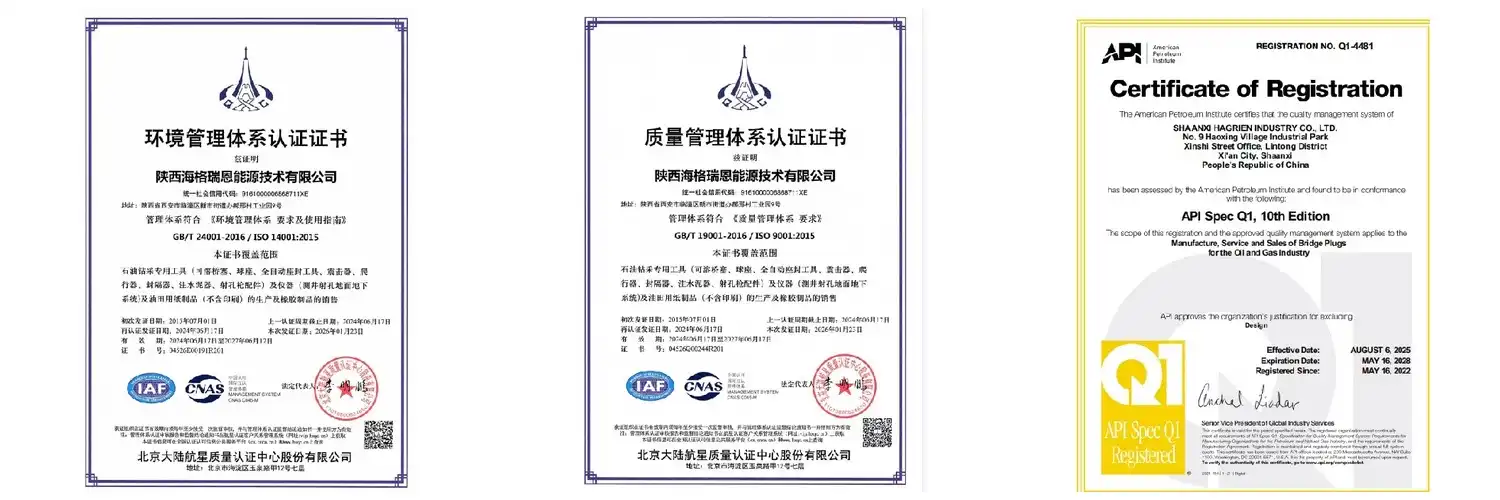
HAGRIEN states that it holds ISO 9001, ISO 14001, and ISO 45001 certifications, has API-related recognition, and operates a CNAS-accredited high-temperature, high-pressure laboratory. It also reports continuous production and validation experience since 2019, extrusion presses rated at 3,600 and 5,600 tons, and a U.S. entity supporting North American coordination.
Before relying on these statements in procurement, verify the relevant certificates, issuing or accrediting bodies, certificate holders, current validity, and scope. Clarify what is meant by "API recognition" and which product, facility, or activity it covers. Confirm whether the proposed test method falls within the laboratory's accredited scope.
For the specific infinite-stage sliding sleeve, request the datasheet, dimensional drawings, material identification, applicable certificates, pressure-test records, inspection documentation, operating instructions, and relevant qualification reports. If dissolvable sealing elements are included, request the applicable material and exposure-test records as well.
HAGRIEN states that certificates of analysis, certificates of conformance, and safety data sheets can be provided on request. Confirm which documents apply to the quoted configuration and whether additional records are required by the customer's quality system.
Verification Before Field Use
The qualification should be as representative as possible of the expected operating environment. The test strategy may have to cope with pressure, temperature, fluid chemistry, exposure period, activation behavior, dimensional stability and sealing function. The level of analysis relies on the design and the failure modes of interest to the application.
For the full sleeve assembly, define needed tests for sealing, pressure integrity, activation compatibility, and the anticipated post-operation state. If a key-matching system is used, explain how accurate engagement and desired sleeve movement will be checked.
Before going out into the field, review the factory acceptance criteria, installation paperwork, operator training and contingency plan. Do not compare pressure ratings or dissolution outcomes achieved under fundamentally different circumstances without considering the changes.
The purchase specification should contain the acceptance criteria, the necessary documents and the supplier’s and buyer’s duties. A bench test or field trial should have a clear goal and quantifiable results; it should not be used as a replacement for demonstrating the fundamental appropriateness of the product.
A phased qualification approach might be acceptable for a novel or unique application, but the timeframe will rely on the engineering, testing and operational needs of the project. Any claim that the journey from review to wider deployment would take six to twelve months should be seen as a project-planning assumption, not a uniform schedule.
Final Decision Steps
A practical selection process starts by defining the well conditions and completion objectives. Establish the minimum technical requirements, identify compatible configurations, and shortlist suppliers that can provide the relevant drawings and supporting evidence.
Next, compare lifecycle costs, operating procedures, technical risks, documentation, delivery terms, and post-sale support. Complete the necessary engineering review and agree on any bench testing or field evaluation before authorizing deployment.
For private-label or OEM programs, define design responsibilities, drawing revision control, serial or batch identification, manuals, packaging, and approval requirements. These details should be agreed upon in writing so that changes to the product or process can be managed appropriately.
HAGRIEN reports typical lead times of two to four weeks for standard dissolvable magnesium alloy bar stock and four to eight weeks for customized work. These ranges should not be assumed to apply to a finished infinite-stage sliding sleeve. Confirm the lead time for the actual product, order quantity, material, machining, testing, documentation, and shipping requirements.
HAGRIEN also states that it confirms requirements within 24 hours and provides quotations within one to three business days. Confirm these response and quotation timelines for the particular request. A purchase should proceed only after the technical scope, acceptance criteria, warranty, delivery schedule, and contingency terms have been agreed.
Conclusion
A sliding sleeve with dissolvable sealing elements may be worthwhile for a completion program that needs selective stage access, temporary isolation, and a suitable internal passage for future operations. The strongest case occurs when the design matches the well's pressure, temperature, fluid chemistry, operating sequence, and post-operation requirements.
An infinite-stage sliding sleeve is intended to avoid the stage-count constraints associated with certain graduated ball-seat systems, but the practical stage count still depends on the complete completion design. Key activation may reduce selected intervention steps, while dissolvable sealing elements may simplify removal requirements when their behavior has been properly qualified.
The main decision factors are activation reliability, pressure integrity, sealing duration, material behavior, drift clearance, crew readiness, and lifecycle cost. Historical project figures and supplier credentials should be checked against their original records and applicable scope before being used as evidence.
For a sound decision, define the required performance, request configuration-specific drawings and test reports, and agree on acceptance criteria before field use. A conventional completion may remain the better option for simpler wells or where the proposed system does not meet the required operating envelope.
FAQ
1. What is an infinite-stage sliding sleeve?
An infinite-stage sliding sleeve is designed to avoid the stage-count constraints associated with certain graduated ball-seat systems. The actual number of stages remains dependent on the complete completion configuration, activation method, and project requirements. Confirm the applicable stage capability in the system documentation.
2. How do dissolvable sealing elements work?
Dissolvable sealing elements are intended to maintain a sealing function for a specified period and then change or lose that function through a material-specific process. The exact behavior depends on the material, geometry, temperature, fluid chemistry, and exposure time. Ask for test results that distinguish sealing duration from residue removal and post-operation drift recovery.
3. Does it suit shale and horizontal wells?
It may suit multistage shale and horizontal-well programs where selective access and intervention planning are important. Suitability depends on the completion architecture, pressure and temperature limits, fluid chemistry, activation method, and qualification evidence. A stage count of 30 or more is not, by itself, proof that the design is appropriate.
4. What do you need for a quotation?
Provide the well and completion type, casing dimensions, required drift, pressure and temperature conditions, fluid chemistry, planned stage count, target sealing duration, and required post-operation condition. Include quantity, delivery expectations, customization needs, and any documentation or inspection requirements. These details help establish whether the proposed configuration is suitable and what further information is needed for a quotation.
 Request an Infinite-Stage Sliding Sleeve Technical Evaluation or Quotation from HAGRIEN
If you are evaluating an infinite-stage sliding sleeve for a horizontal completion, send HAGRIEN the available completion drawing, casing dimensions, required drift, operating pressure and temperature, fluid chemistry, planned stage count, and target sealing duration.
For applications using dissolvable sealing elements, also specify the required post-operation condition and any acceptance criteria for residue or drift recovery. These details help establish the technical scope before selecting a configuration or planning validation tests.
Email: cyrus@us-hagrien.com
You can request a configuration review, relevant product documentation, or a project quotation. Product ratings, testing scope, available records, and delivery schedules should be confirmed for the specific configuration and order.
Visit us-hagrien.com for more details.
References
1. U.S. Energy Information Administration, Hydraulic Fracturing Accounts for About Half of Current U.S. Crude Oil Production (2016). This source provides historical industry context and does not demonstrate the performance or cost savings of a particular sleeve system.
2. King, G. E., Thirty Years of Gas Shale Fracturing: What Have We Learned? (SPE 133456, 2010). Verify the bibliographic details and the specific relevance of any cited claims before publication.
3. Economides, M. J., and Nolte, K. G., Reservoir Stimulation, 3rd Edition (2000). Use as general technical background; it does not establish product-specific qualification.
4. Song, G., and Atrens, A., Understanding Magnesium Corrosion, Advanced Engineering Materials (2003). This is general corrosion background and should not be used as direct proof of the dissolution behavior of a specific component.
5. ISO 14310, Petroleum and Natural Gas Industries—Downhole Equipment—Packers and Bridge Plugs. Verify the applicable edition and determine whether its scope is relevant to the particular assembly and qualification claim.
6. American Petroleum Institute, API Guidance Document HF1, Hydraulic Fracturing Operations—Well Construction and Integrity Guidelines. Verify the applicable edition and scope before citing it as guidance for a specific procedure.

USER EVALUATE
Here is the customer's evaluation of us