_1776908283214.jpg)




Why Use a Sliding Sleeve in Multistage Well Completions?
A sliding sleeve is a downhole flow control device installed within the casing string that selectively opens individual fracturing stages on command—without requiring wireline runs or perforating guns. In multistage horizontal well completions, this means engineers can initiate each frac stage by dropping a coded key, eliminating the rig-up time and logistics associated with conventional bridge plug and perforating gun assemblies. The result is a measurable reduction in non-productive time, a preserved full-bore internal diameter for post-frac production, and a cleaner wellbore path for any future intervention.
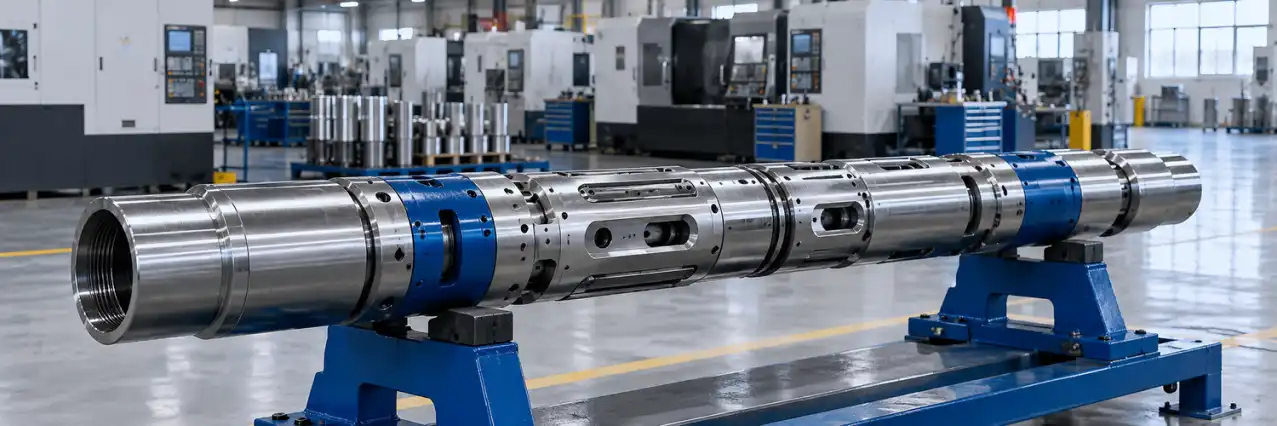
Introduction to Sliding Sleeves in Multistage Well Completions
What Is a Sliding Sleeve?
A sliding sleeve has an outer housing with ports and an inner sleeve that can move axially to let or stop contact between the tube hole and the annular formation face. A sliding gate valve controls flow in a direction perpendicular to the wellbore axis. A sliding sleeve, on the other hand, moves along with the casing string. This keeps the flow path straight and the bore geometry intact after it is activated.
The Role of Zonal Isolation
Controlling which zone gets stimulation fluid and in what order in a horizontal shale well with 20 to 60 fracturing stages directly affects whether each stage contributes to production. Sliding sleeves accomplish this by functioning as addressable ports: each sleeve opens only when its corresponding shifting key arrives, allowing operators to stimulate one zone at a time without contaminating adjacent intervals.
Why Engineers Prefer Them Over Conventional Perforating
For wireline perforating, you need a cable truck, a perforating gun string, help with explosives, and a clean-up run after the shot. It takes hours longer to rig for each round trip. SPE 195930 says that operators who switched from traditional plug-and-perf completions to sleeve-based ones on Eagle Ford laterals saw 30–45% faster cycle times from stage to stage. That number alone makes sleeve technology worth looking into for any project that keeps track of NPT costs by stage.
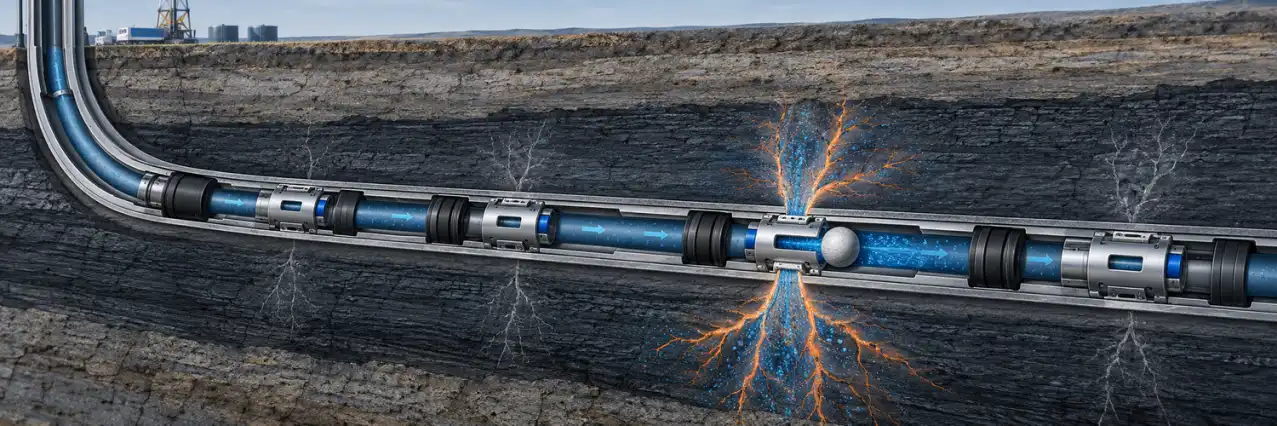
How Sliding Sleeves Work and Their Types?
Mechanical vs. Hydraulic Activation
For mechanical activation, a wireline-conveyed tool or a ball-drop key is used as a shifting tool. This tool locks into a matched shape machined inside the sleeve and opens or closes it. The tube moves when a ball sits and the annular pressure builds up above a shear barrier. This is how hydraulic activation works. Key-activated designs, like those from HAGRIEN, use coded profiles to make sure that only the right key engages the right sleeve. This stops openings that aren't supposed to happen by accident.
Profile Compatibility and Selectivity
Which shifting tool or plug can fit inside each sliding sleeve is based on its own shape, which is usually labeled X, R, XD, or a proprietary variation. One of the most common mistakes in multi-sleeve strings is choosing patterns that don't match. The HAGRIEN infinite-stage key-activated system gives each position in the casing string its own unique profile. This way, completion engineers can match the key to the sleeve exactly, no matter how many stages there are.
Dissolvable Sealing Elements
For temporary zone isolation during fracture, you need a ball or seat to hold the pressure while the stage is pumped. That part must go away after activation. Engineered magnesium alloys are used to make dissolved balls and chairs that dissolve in created brine at a rate determined by temperature, salinity, and fluid chemistry. As planned, HAGRIEN makes dissolution windows that match the real conditions of the well. This way, the wellbore returns to its full width within the planned post-frac production window, without any debris that could block flow or get in the way of a future coiled tubing run.
Benefits of Using Sliding Sleeves in Multistage Well Completions
Completion engineers who have worked with both plug-and-perf and sleeve-based systems always find three ways to make things better: time, wellbore geometry, and program flexibility. Here are the main operating advantages of a sliding sleeve that make it the best choice for horizontal plans with a lot of stages.
- Elimination of wireline runs per stage: As the key is delivered through the pumping stream, each stage opens. This eliminates the need to rig down the frac tree, run wireline, set a bridge plug, perforate, get the wireline, and rig back up. On a 40-stage well, this can save 4–6 hours per stage by itself.
- Full-bore internal diameter after activation: The post-frac bore stays clear because the sleeve moves instead of becoming permanently blocked. This keeps the output flow coefficients the same and makes any future re-fracturing or plug-milling scheme easier.
- Dissolvable element compatibility: Temporary seats break down on a set plan, getting rid of any leftover waste that could make the skin effect worse or require a cleanout trip.
- Infinite-stage scalability: A well-designed key-activated system can handle any number of addressable stages in a single lateral. This is important because operators are using more than 60 stages per well in basins like the Permian and Montney.
Cost per stage and post-frac production deliverability are the two metrics that completion program managers keep an eye on the most. These benefits directly address those two metrics. When four wireline runs are taken out of a 40-stage program by a sleeve system, the savings in explosive handling, wireline crew hours, and wait time add up to a big program-level saving.

Key Considerations When Choosing Sliding Sleeves
Selectivity and Reliability of the Identification Mechanism
The key-to-sliding sleeve match must hold up in the field. This is the most important test of reliability. How well a shifting key contacts its target profile is affected by debris, scale, and variation. Before you agree to a technical qualification program, make sure that the suppliers you're considering have complete records of the stages they've worked on. These should not be case study claims, but total sleeve activations across verified lateral footage.
Pressure Rating, Full-Bore Maintenance, and Material Spec
Most of the time, 10,000 to 15,000 psi is the recommended working pressure for fracturing service. The sleeve housing and mandrel must be made from materials that meet NACE MR0175 standards for sour service. For settings with H2S, 13Cr or higher-grade metals are usually used. Seals that are rated to ISO 14310 V0 keep out gas in the temperature range that is typical for deep horizontal laterals, which is up to 200°C (392°F).
Certifications, Traceability, and Lead Time
When looking for a sliding sleeve provider, procurement teams should make sure that the supplier has ISO 9001 quality management certification, batch-level traceability paperwork (COA/COC), and access to test data that has been approved by a third party or CNAS. Predictable lead times are just as important. An 8-week qualification program doesn't work if the provider can't promise to delivery dates. Check to see if the maker handles important parts of the production process themselves or if they use multi-tier subcontracting. Multi-tier supply chains can make it harder to track down parts and increase the risk of missing deadlines.
Installation, Maintenance, and Troubleshooting Best Practices
Pre-Installation Checks and Running Procedure
Make sure that each sliding sleeve position fits the planned stage order in the finishing design before starting the casing string. Check the profile IDs against the collection of moving tools that are already there. Before they are sent out, torque-to-yield tests should be done on premium connections to make sure they are structurally stable in wellbores that aren't straight. If there is a difference between the sleeve profile chart and the real tool string, it needs to be fixed before the string goes into the hole.
Maintenance and Cycling in Production
In places where scale can build up, like carbonate-hosted reservoirs or produced water with a lot of calcium, operators should cycle each sleeve at least once every 12 to 18 months to keep debris from building up around the port. Regular cycling also makes sure that the sleeve mechanism will still work if a future re-fracturing program needs to separate certain stages again.
Troubleshooting Stuck or Non-Responsive Sleeves
If a moving key doesn't work or the sleeve doesn't react to the expected pressure signature, the first thing that needs to be checked is that the right key profile was used in the right order. Most well-made shifting tools have an emergency shear-release device that lets the tool come back out smoothly even if debris gets stuck in the sleeve. It is illegal to try to force an out-of-sequence key against a profile that doesn't fit, because doing so can damage both the key and the sleeve seat.
Conclusion
With a sliding sleeve, completion engineers can directly and selectively control each stage of the fracturing process, without having to make multiple wireline runs, which takes time and space. Key-activated designs get rid of openings that aren't in the right place, full-bore geometry keeps deliverability after frac, and dissolvable sealing elements get rid of temporary isolation materials at regular times. When the identification system works properly and the dissolution window matches the real well conditions, sleeve-based programs always cut down on stage cycle time, per-stage costs, and leave the wellbore cleaner for long-term production. Not just marketing claims, the right provider should back up these technical claims with cumulative application records that can be checked, CNAS-accredited test data, and recorded batch traceability.
FAQ
1. What is the difference between a key-activated and a ball-drop sliding sleeve?
A key-activated sleeve opens when a moving key with a mechanical code engages an internal profile that matches. When a ball with a certain diameter sits in place and builds up pressure above a shear barrier, a ball-drop sliding sleeve opens. When it comes to long lateral strings, key-activated systems are more selective because each position has its own profile. This is in contrast to ball-drop systems, which can only use the number of ball sizes that can fit inside a given casing diameter.
2. Can a sliding sleeve operate in a deviated or horizontal wellbore?
Yes. Most of the time, coiled tubing or hydraulic moving tools are needed to move the sleeve in highly deviated wells instead of normal slickline. This is something that the wellsite team needs to plan for; it's not a basic problem with the design of the sleeve itself.
3. How do dissolvable sealing elements work with a sliding sleeve system?
Dissolvable balls and seats, which are usually made from engineered magnesium alloy, keep the pressure off for a short time while the rock breaks. After activation, the elements break down in the created brine at a rate that depends on the temperature, the saltiness of the fluid, and the make-up of the alloy. If the dissolution window is designed correctly, it will return the bore to its full diameter on time for production.
4. What certifications should I verify when sourcing a sliding sleeve?
Check that the company has ISO 9001 quality management certification, NACE MR0175 material compliance for sour service, ISO 14310 V0 seal ratings for gas service, and third-party test documentation from a CNAS-accredited lab that verifies the dissolution rate and pressure cycle.
Partner with HAGRIEN for Proven Sliding Sleeve Solutions
HAGRIEN uses a closed-loop production method to make key-activated sliding sleeves and dissolvable sealing parts. This process includes alloy design, precision machining, and CNAS-accredited HTHP testing with full batch tracking. As a reliable sliding sleeve maker and provider, we offer OEM/ODM plans, unique dissolution windows, and wait times that are tailored to each project. Get in touch with our expert team right away at cyrus@us-hagrien.com or us-hagrien.com to talk about your program's needs.
References
1. Society of Petroleum Engineers — SPE 195930, Reducing Non-Productive Time in Eagle Ford Completions Through Sleeve-Based Stage Activation, SPE Journal, 2019.
2. Bybee, K. — Multistage Fracturing Technology for Horizontal Wells, Journal of Petroleum Technology, SPE, 2010.
3. King, G. E. — Hydraulic Fracturing 101: What Every Representative, Environmentalist, Regulator, Reporter, Investor, University Researcher, Neighbor and Engineer Should Know About Estimating Frac Risk and Improving Frac Performance in Unconventional Gas and Oil Wells, SPE 152596, 2012.
4. Economides, M. J. & Nolte, K. G. — Reservoir Stimulation, 3rd Edition, Wiley, 2000.
5. Ely, J. W. — Stimulation Engineering Handbook, PennWell Publishing, 1994.
6. API Specification 19AC — Specifications for Wellbore Plugs Used in Oil and Gas Well Completions, American Petroleum Institute, 2020.

USER EVALUATE
Here is the customer's evaluation of us