_1776908283214.jpg)




INTERNAL REVIEW - HAGRIEN Dissolvable Frac Plug
A dissolvable frac plug is a temporary barrier with two seemingly opposing assignments: hold a defined differential pressure during stimulation, then progressively lose its obstructing structure within an agreed post-job window. The challenge is not simply to choose a magnesium alloy that corrodes. It is to make the mandrel, anchoring system, seal, ball or seat interface and setting tool work together under the same well conditions. HAGRIEN’s company technical archives describe dissolvable magnesium materials, bridge-plug product families, sealing components, CNC manufacturing and setting-tool support. This guide turns those source materials into a practical qualification approach for completion engineers and procurement teams—without presenting catalog spans or historical reference records as universal performance guarantees.
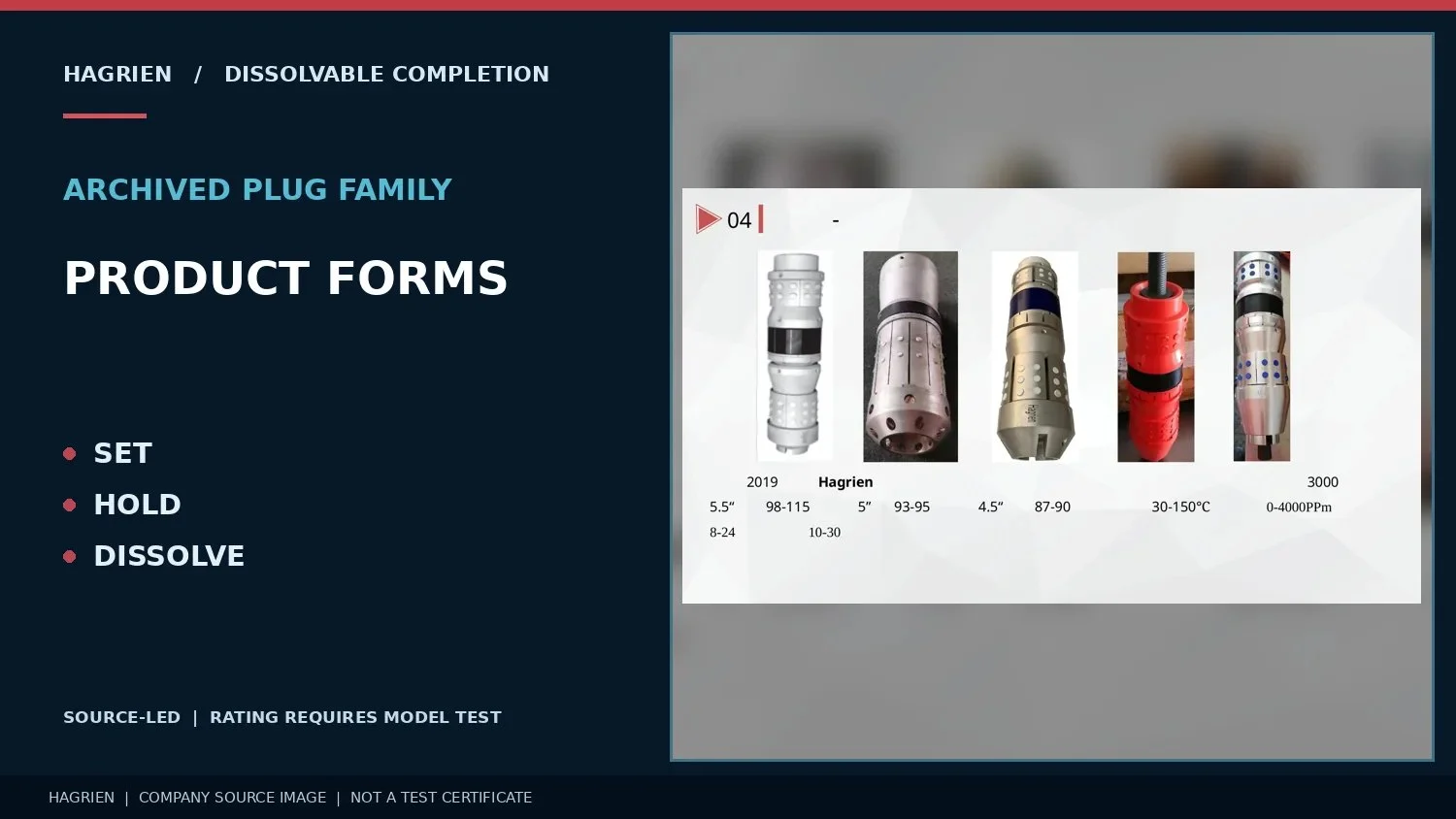
Article Overview
- Learn why plug reliability follows the full set–hold–dissolve sequence rather than material dissolution rate alone.
- Review the roles of dissolvable magnesium components, anchoring slips, seal elements and setting interfaces.
- Use a project-specific RFQ checklist for casing, temperature, differential pressure, fluid chemistry and traceability.
- Understand the difference between HAGRIEN source examples, series-level references and qualified project ratings.
The core challenge: set, hold and dissolve are one engineering sequence
A conventional frac plug creates zonal isolation, but a plug left in the casing may require a subsequent intervention. A dissolvable design is intended to reduce that post-frac burden when the selected material and operating envelope allow the components to clear as planned. For the buyer, the critical question is what happens before dissolution begins. The plug must be conveyed through the actual casing, withstand deployment loads, set at the intended interval, anchor without damaging the relevant casing interface, and retain its seal throughout the pressure and time profile. If corrosion begins too early, pressure integrity may be lost before the treatment is complete. If the system does not degrade as expected, restricted access or residual debris may remain after stimulation.
Reliable plug qualification requires balancing mechanical performance during stimulation with controlled material removal afterward. Dissolution windows must be validated for the specific product configuration, fluid chemistry, temperature, exposure history and acceptance criterion. A statement such as “dissolves in seven days” is not a complete procurement specification without those conditions.
The material is only one part of the temporary barrier
HAGRIEN’s technical materials describe dissolvable magnesium alloy bodies and selected mechanical parts, together with sealing elastomers and other interfaces. Depending on the approved tool design, the component set may include a mandrel, slips, cones or wedges, retaining parts, a seal assembly, and a ball or seat. Under applied setting force, relative axial movement creates radial engagement and sealing contact with the casing. The exact hardware arrangement is model-specific and must be confirmed against the current approved drawing.
Material selection has at least three linked dimensions. First, mechanical properties must support conveying, anchoring, setting and the required pressure hold. Second, the alloy’s dissolution response must be evaluated at the relevant fluid chemistry and temperature—not taken from a test at another salinity or temperature. Third, the manufacturing route must hold critical dimensions and surface features within agreed tolerances. HAGRIEN’s material portfolio contains alloy-grade test references, but a coupon dissolution rate in mg/(cm²·h) is not the same thing as complete disappearance of an assembled bridge plug. Surface-to-volume ratio, geometry, coatings, dissimilar parts and fluid renewal affect the outcome.
Sealing: why the elastomer and slips cannot be assessed separately
The setting tool introduces controlled axial force and stroke. Slips and cones translate part of that motion into radial anchoring, while the elastomer or alternative sealing geometry develops contact stress against the casing ID. These responses are coupled. Too little stroke may leave insufficient seal compression; too much local load can damage a component or alter its intended contact. A material that passes a tensile test is not automatically a reliable full-size seal under pressure cycling and elevated temperature.
HAGRIEN maintains dissolvable-rubber grade references with different laboratory dissolution and physical-property conditions. Those records demonstrate a product-development range, not a blanket promise that a specific grade is qualified for every plug assembly. The project must agree the seal material, installation interference, pressure direction, pressure cycling, hold duration, salinity and temperature; then verify the assembled system. For an elastomer intended to disappear after service, the acceptance criteria should address both the hold period and the post-job residue or passage requirement.
Setting-tool compatibility: a practical interface review
A dissolvable plug cannot be separated from its deployment hardware. A supplier may quote a plug OD and pressure expectation, but field execution also depends on adapter geometry, release mechanism, available setting force, effective stroke and the electrical or hydraulic power path of the selected tool. HAGRIEN’s technical materials describe pure-electric and electric-hydraulic setting-tool families. The appropriate combination must be established by a controlled interface drawing, not merely by matching a familiar nominal tool designation.
For a proposed casing size, engineers should verify actual casing drift, qualified plug outside diameter, bore, tool-adapter geometry, available setting stroke, release load and pressure-hold requirement against the latest model-specific drawing. Nominal interface labels alone do not establish compatibility: the plug and its intended setting tool must be verified as a matched system. Specific dimensions and ratings should be confirmed in the applicable approved datasheet.
Why the specified dissolution window needs a test method
Dissolution is highly sensitive to the actual exposure history. Fluid composition, chloride concentration, temperature, pressure, circulation, coatings, geometry and elapsed time can all influence corrosion or degradation. The engineering requirement should therefore state both the operational survival window and the desired post-job clearance condition. “Full dissolution” should be defined with an observable acceptance criterion, such as a qualified pass-through diameter or maximum residual obstruction under a controlled test procedure. It should not be inferred simply from the appearance of a small coupon or ball.
Catalog information may describe several configurations and operating conditions. For a particular well program, request the selected model’s current datasheet, approved drawing, full-assembly test record and measurable post-job clearance criterion. Link the alloy batch, seal configuration and dissolution test fluid to a controlled model revision. Broad terms such as “fast dissolving” and “high strength” are not substitutes for documented pressure-hold and clearance performance.
Manufacturing evidence: from alloy batch to finished assembly
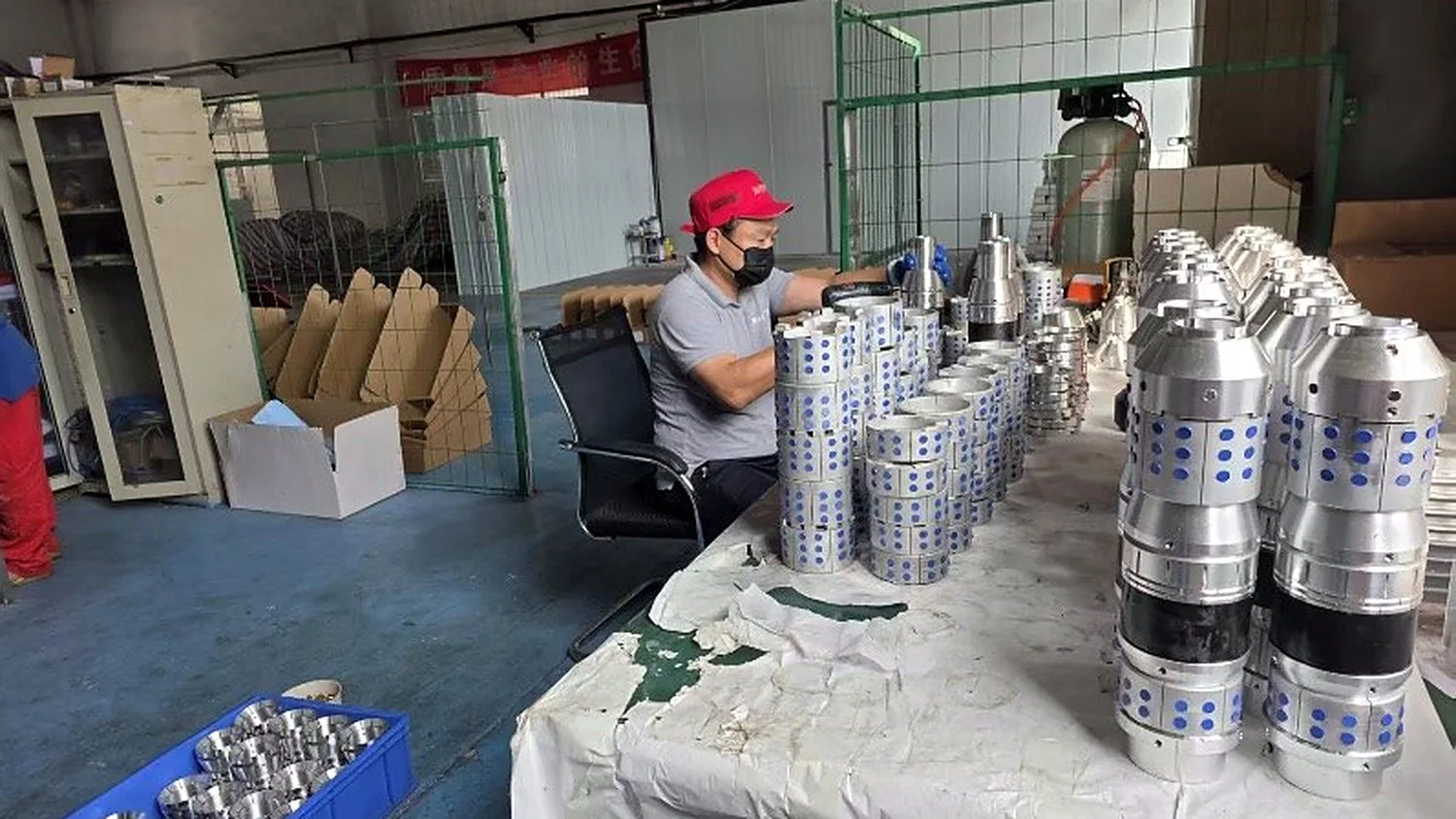
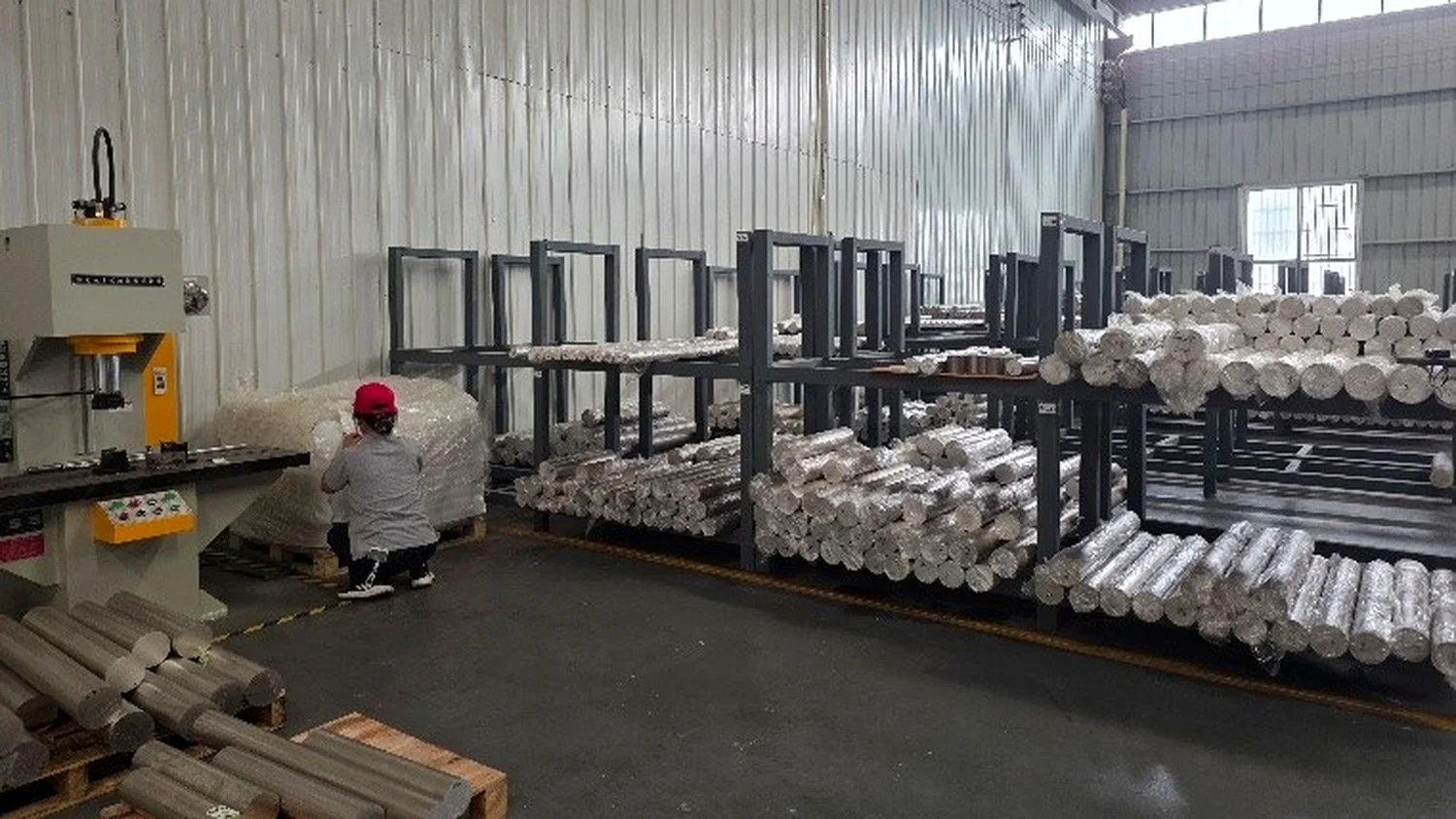
A defensible plug qualification package connects manufacturing information to field acceptance. HAGRIEN’s company materials describe alloy development, forming and extrusion, CNC processing, assembly activities, dimensional checks and batch traceability, supported by COA/COC documentation. Those categories matter because a component-level material certificate does not itself certify the completed plug. Manufacturing records should identify the approved model revision and the critical features controlling slip engagement, seal compression, connection fit and setting-tool transfer.
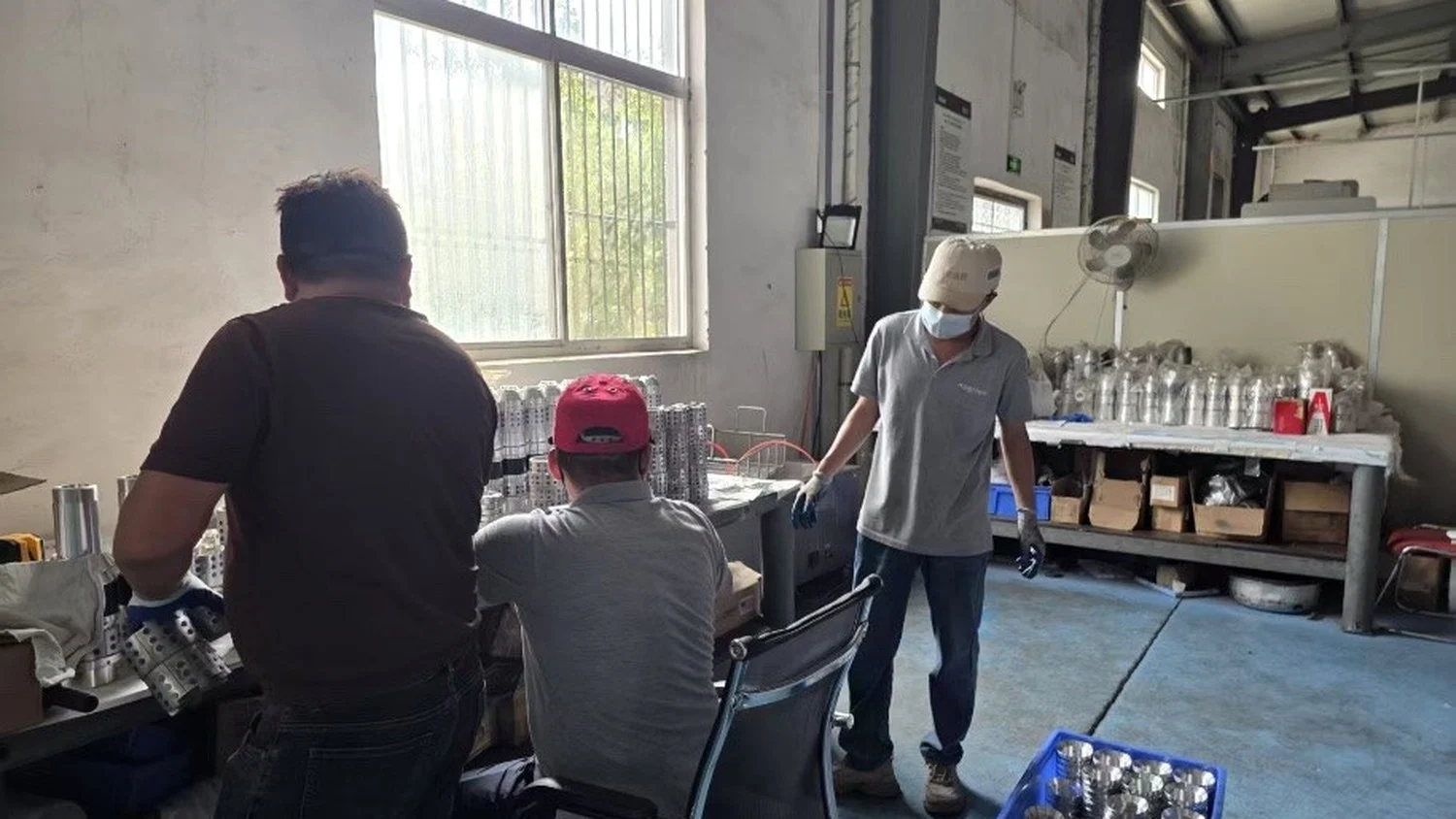
A useful evidence path has four levels: (1) chemical and mechanical verification for the material batch; (2) dimensional and surface inspection for critical machined components; (3) assembly-level function, setting and pressure-hold evidence; and (4) post-hold dissolution or clearance results under a recorded fluid and temperature program. If a customer requests a new envelope, such as a different brine or higher thermal exposure, the supplier should identify the missing tests and agree the qualification plan before promising a field rating.
An RFQ checklist that actually reduces rework
The most productive initial inquiry is not “Can you supply a 4.5-inch dissolvable plug?” It is a short, controlled operating-envelope document. Provide the casing size, weight and actual drift/ID; the intended deployment and setting assembly; anticipated temperature and differential-pressure profile; treatment hold time and pressure direction; fluid chemistry including salinity and relevant additives; the target clearance or dissolution window; ball/seat and release-interface requirements; quantity, destination, inspection documentation and any post-frac access constraint.
For a sourcing decision, request an explicit response separating available catalog references from approved model drawings, existing test evidence, customization work and items not yet qualified. A supplier evaluation should be based on whether those gaps are closed with auditable evidence rather than on a single headline pressure value. HAGRIEN can use its material and precision-manufacturing resources to support an engineering discussion, but every proposed plug assembly still requires a project-specific verification and commercial confirmation.
Frequently Asked Questions
What is the purpose of a dissolvable frac plug?
It is designed to isolate a completion interval during stimulation and then degrade or dissolve under specified conditions so that the post-job wellbore is less obstructed. The actual result depends on the whole assembly, well fluid and time-temperature history.
Can the dissolution time of a magnesium coupon be used as the plug dissolution time?
No. Coupon or material-grade rates are measured under stated laboratory conditions. Assembly geometry, coatings, seals, fluid exchange and the mechanical loading history can change the plug-level clearance behavior.
Does HAGRIEN offer a single pressure or temperature rating across all bridge plugs?
No. The company source set contains model-specific datasheets and series-level information with differing conditions. A current controlled drawing and signed test evidence are needed for the selected model and well program.
What should be checked when matching a plug to a setting tool?
Confirm the adapter and release interface, available setting force, effective stroke, load transfer, deployment constraints, casing clearance and the planned verification method. A nominal tool-interface name alone is insufficient.
What documents should be requested before qualification?
Request a model-revision datasheet, approved drawing, material and batch records, relevant COA/COC, dimensional checks, assembly pressure-hold tests, dissolution/clearance protocol and the scope of any applicable field reference.
Discuss your bridge-plug RFQ with HAGRIEN
Send your casing and downhole operating envelope, intended setting-tool interface, fluid chemistry, hold duration, post-job clearance target and documentation requirements. HAGRIEN can review the fit between dissolvable materials, precision-manufactured components and the proposed tool assembly. Final configuration and performance require approved drawings, test evidence and a project-specific agreement. Contact: cyrus@us-hagrien.com.
Technical evidence note: Product-family descriptions and example applications are not universal design ratings. Confirm model-specific pressure-hold and post-job clearance requirements against the selected configuration, intended well conditions, approved drawings and qualification evidence.

USER EVALUATE
Here is the customer's evaluation of us