




Downhole Completion Tools: A Complete Buyer’s Guide
If you're sourcing components for bridge plugs, packers, or frac plugs, you already know how much rides on getting your downhole completion tools right. The wrong choice can mean costly interventions, failed zonal isolation, or pressure losses that cut into production. This guide walks through what matters most—from basics to procurement—so you can make informed decisions and find a supplier worth trusting.
 Understanding Downhole Completion Tools: Basics and Applications
What Are Downhole Completion Tools?
Downhole completion tools are specialized groups that are put in place once the well has reached its target depth. During the whole production process, they keep the wellbore intact, control the flow of fluids, and separate storage zones. A drilled well can't work as a controllable production asset without them. The American Petroleum Institute says that the quality of the well completion has a direct effect on both output rates and the long-term control of the reservoir.
Main Tool Types and How They Work
Packers, bridge plugs, frac plugs, setting tools, and elastomer seals are the main types. Packers build walls between zones that keep pressure out. During multi-stage fracturing, bridge plugs separate sections. Setting tools use hydraulic or mechanical action to place these parts at exact depths. Each type has a certain range of pressure and temperature that must be met in the wellbore.
Application Environments
The tools you can use depend a lot on the type of well. In shale plays, miners use plug-and-perf methods and frac plugs that dissolve to avoid having to do retrieval work. Offshore wells need safety valves and fixed packers that are approved for use at sea. Materials that can handle more than 10,000 psi and 300°F are needed in HPHT environments. The most important thing to do in any completion program is to match the tool specs to the working window.
 Comparing Downhole Completion Tools: Performance, Cost, and Quality
Major Suppliers and Their Strengths
The large-operator group is led by Schlumberger (SLB), Halliburton, and Baker Hughes, all of which have a wide range of products and global field service networks. Their downhole completion tools have a lot of field checking data and are compliant with API 11D1, API 14A, and ISO 14310. Their pricing and minimum order amounts, on the other hand, often make them impractical for mid-sized makers who use low-volume, multi-spec production models.
Performance Metrics That Drive Procurement
Differential pressure grade, temperature protection, and seal classification are some of the most important standards. Gas-tight performance levels are set by ISO 14310 grades, which range from V0 to V3. Zero bubble gastight sealing is shown by V0, and minor leakage is shown by V3 in liquid test settings. Before being used, components must also go through Material Test Reports (MTRs), Ultrasonic Testing (UT), and Magnetic Particle Inspection (MPI) to make sure they are completely flawless below the surface.
Cost vs. Long-Term Value
The cost up front isn't always the best way to choose. A cheaper part that changes size between runs causes extra work to be done on the assembly, delays, and the chance of failure in the field, all of which cost a lot more than the initial savings. Manufacturers with high-mix, low-volume programs need suppliers whose unit prices are competitive and whose batches can be tracked. That balance is where decisions about buying things should be based.
How to Choose the Right Downhole Completion Tools for Your Project?
Assess Well Environment Parameters First
Before sending out an RFQ, you should set your working window, which should include the highest differential pressure, the bottomhole temperature, the fluid chemistry (H₂S, CO₂, and chloride content), and the dissolving timeline if there are components that can dissolve. When choosing materials for bad service, they must meet the requirements of NACE MR0175/ISO 15156 and be resistant to sulfur stress cracking (SSC).
Set Clear Procurement Criteria
Dimensional interchangeability, batch traceability, full paperwork (COA, COC, and SDS), and first-article lead time are some of the things that protect your program. As companies switch from traditional to dissolvable parts—replacing solid mandrels, connectors, and slips with magnesium alloy alternatives—the provider must show that the dissolution behavior stays the same across production amounts, not just trial runs.
Match Tools to Well Type and Customization Needs
Here are the main factors that must be taken into account when procuring common well categories:
- Horizontal shale wells: Multi-stage frac plugs rated to 10,000–15,000 psi, dissolvable options to eliminate plug retrieval and reduce intervention cost.
- HPHT completions: Components rated to 15,000 psi differential pressure and 350°F, manufactured from high-grade alloy steels or corrosion-resistant magnesium alloys.
- Conventional vertical wells: Retrievable packers with certified elastomer replacement cycles and full API re-certification after teardown.
 Procurement and Ordering Process for Downhole Completion Tools
Sourcing Channels and Their Trade-offs
You have the most control over specifications, wait time, and paperwork when you work directly with downhole completion tools manufacturers. Although distributors make things easier, they often take a cut and make it harder to see where things come from. Working directly with a manufacturer who controls both material and machining for custom-machined parts, especially those made from dissolvable magnesium alloy bar stock, eliminates the risk of dimensional mismatch that comes up when material and processing come from different sources.
Pricing, Lead Times, and Order Minimums
Safety stock standard-size parts usually ship in two to four weeks. Custom-engineered specs, such as new alloy windows, non-standard OD/ID pairs, or unique dissolution rates, take 4–8 weeks to make. For important program goals, there are choices to speed up the process. For mixed-spec orders, the minimum order quantity should be flexible. A provider that punishes small batches of multiple part numbers is not set up to support high-mix production.
After-Sales Documentation and Support
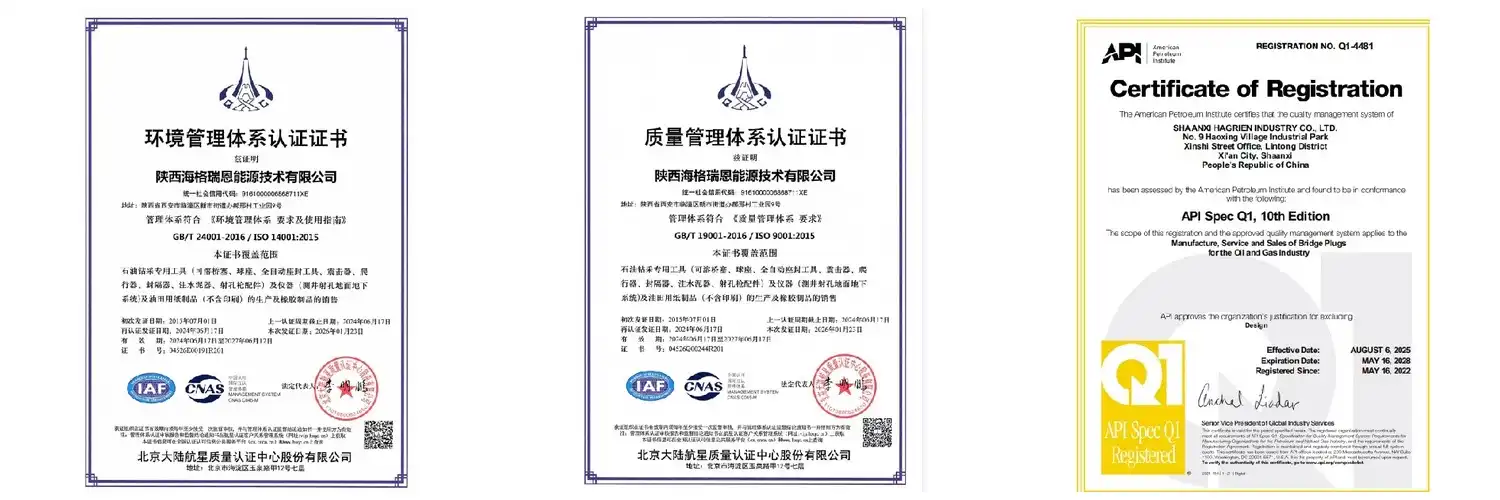
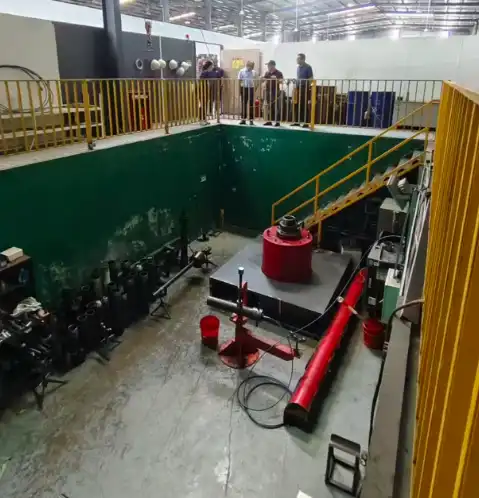
Traceability documentation is necessary for audits and can't be skipped. As standard deliverables, suppliers should include COA, COC, SDS, batch inspection records, and dimensional reports. These should not be extras that customers pay extra for. Having a CNAS-accredited HTHP laboratory at a facility adds another level of proof that helps with customer acceptance and internal quality review.
Ensuring Safety and Efficiency with Downhole Completion Tools
Safety Features and Pressure Control
Every part of a completion string has to deal with pressure that can instantly be higher than the yield strength of weaker materials. Safety standards that can't be lowered include emergency shut-offs, hydrostatic shell testing at 1.5× maximum working pressure, and gas-tested sealing systems (ISO 14310 V0 grade for important uses). If any of these checks are skipped, the wellbore takes on all the risk.
Installation Best Practices
Specifications for torque, how to handle elastomers, and choosing the right thread compound all affect how well the final assembly works. Running dissolvable parts with regular parts needs careful scheduling to keep wellbore fluids from activating them too early. Assembling workers can use process advice from the supplier that covers things like how to store the parts, how much temperature they can be exposed to, and how much fluid they can touch before setting.
Maintenance, Inspection, and Failure Prevention
After being completely disassembled, having the elastomer replaced, and being re-certified to the original API standards, retrievable packers can be used again. Permanent packers and dissolvable elements only need to be inspected once, when they are retrieved or when they are confirmed to have dissolved. Keeping an organized inspection log linked to batch and serial numbers helps with both reporting compliance and figuring out why performance isn't as expected.
Conclusion
It takes more than looking at a spec sheet to find well finishing components. It means matching the properties of the materials, the consistency of the work, the amount of documentation, and the responsiveness of the suppliers to your actual production schedule. Whether you're choosing a new downhole completion tools supplier for bridge plug parts or changing traditional mandrels to ones that dissolve, the criteria you use are always the same: traceable materials, proven repeatability of dimensions, and documentation that can stand up to customer review.
FAQ
1. What is the difference between V0 and V3 rated completion tools?
V0 indicates a validated gas-tight seal with zero bubbles under ISO 14310 gas test conditions. V3 is a liquid-test standard that permits minimal leakage under defined conditions. Critical zonal isolation applications require V0-rated sealing systems.
2. How are tools selected for sour service environments?
Selection follows NACE MR0175/ISO 15156, focusing on sulfide stress cracking (SSC) resistance and chloride stress corrosion cracking (SCC) mitigation. Alloy selection—13-Chrome, Super Chrome, or Inconel—depends on H₂S partial pressure and temperature.
3. Can retrievable packers be reused?
Yes, provided they undergo a full teardown, elastomer replacement, and re-certification to original API specifications. Skipping any step voids the performance guarantee.
4. What makes dissolvable components preferable in plug-and-perf operations?
Dissolvable bridge plugs eliminate mechanical retrieval runs, reducing intervention cost and rig time. HAGRIEN's dissolvable components are engineered with controlled dissolution windows matched to wellbore temperature, salinity, and fluid chemistry.
5. What documentation should accompany each shipment?
At minimum: COA, COC, SDS, batch inspection records, and dimensional reports. CNAS-accredited laboratory validation records add qualification-grade traceability.
Partner With HAGRIEN for Your Next Completion Component Program
HAGRIEN offers precisely made downhole finishing tools and dissolvable magnesium alloy parts, such as bridge plugs, frac plugs, mandrels, connectors, and slips, that can withstand up to 15,000 psi and 350°F. All of their products can be fully tracked by batch and recognized by API. As a verified maker of downhole completion tools, we can take special orders based on drawings and send the first item in two to four weeks. You can send your RFQ to our technical team at cyrus@us-hagrien.com or by going to us-hagrien.com.
References
1. American Petroleum Institute. API 11D1: Packers and Bridge Plugs. API Publishing Services, 2015.
2. American Petroleum Institute. API 14A: Subsurface Safety Valve Equipment. API Publishing Services, 2015.
3. NACE International. NACE MR0175/ISO 15156: Petroleum and Natural Gas Industries—Materials for Use in H₂S-Containing Environments in Oil and Gas Production. NACE International, 2015.
4. International Organization for Standardization. ISO 14310: Petroleum and Natural Gas Industries—Downhole Equipment—Packers and Bridge Plugs. ISO, 2008.
5. Society of Petroleum Engineers. SPE 174906: Dissolvable Plug Technology for Plug-and-Perf Completions in Horizontal Wells. SPE, 2015.
6. World Oil. Completion Technology Report: Multi-Stage Fracturing and Zonal Isolation Advances. Gulf Publishing Company, 2022.

USER EVALUATE
Here is the customer's evaluation of us