




How Does a Plug-and-Perf Alternative Eliminate Drill-Out?
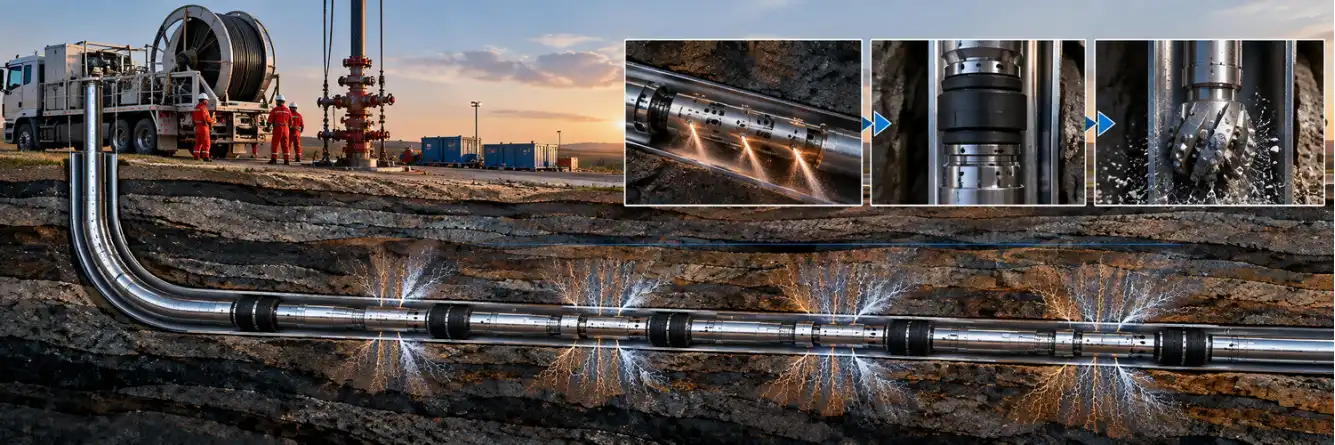
A plug-and-perf alternative eliminates drill-out by removing the permanent isolation hardware that must be milled out after stimulation. The technology utilizes dissolvable bridge plugs and sliding sleeves instead of placing composite bridge plugs, running wireline, and bringing in coiled tubing to grind everything out. The sleeves open each step for treatment and the plugs deteriorate on a set timetable in the wellbore fluid. Operators may pump stages back-to-back and then flow the well without a milling campaign. HAGRIEN provides this solution as a dissolvable bridge plug + key-activated sliding sleeve system. I compare it with a standard task line by line below.
What Is a Plug-and-Perf Alternative?
Definition and Scope
A plug-and-perf alternative is a multistage completion technique that substitutes, or significantly decreases, the normal cycle of perforating, placing a bridge plug, fracturing and milling out. Some designs avoid the plugs altogether by using sleeves in the casing string. Others will maintain a plug for isolation but have it break down. If a provider uses the word, I recommend asking them which one they mean: a complete replacement or a reduced-intervention system. Your cost model changes with the response. Other related searches are plug-and-perf replacement, multistage fracturing completion system, and drill-out-free completion. In all cases the aim is the same, that every step is dealt with and put into production without a mill-out trip.
The Six Cost Points It Targets
Six pain areas are recognised with the classic plug-and-perf process: wireline visits, perforating gun logistics, bridge plugs and milling, declining ball-seat bores, uncertainty of tool positions, and bore diameter constraints late in the life of the well. Each adds time or operational risk . Each may have its own expenses . I would be looking at a plug and perf option line by line rather than basing it on a sales pitch. Wireline activities need staff and lubricants. Explosive handling and storage is required for perforating weapons. Milling demands higher amounts of fluid and coiled tubing. After you’ve priced each item, the contrast to a sleeve-based completion plan is evident.
How Dissolvable Plugs and Sliding Sleeves Work Together
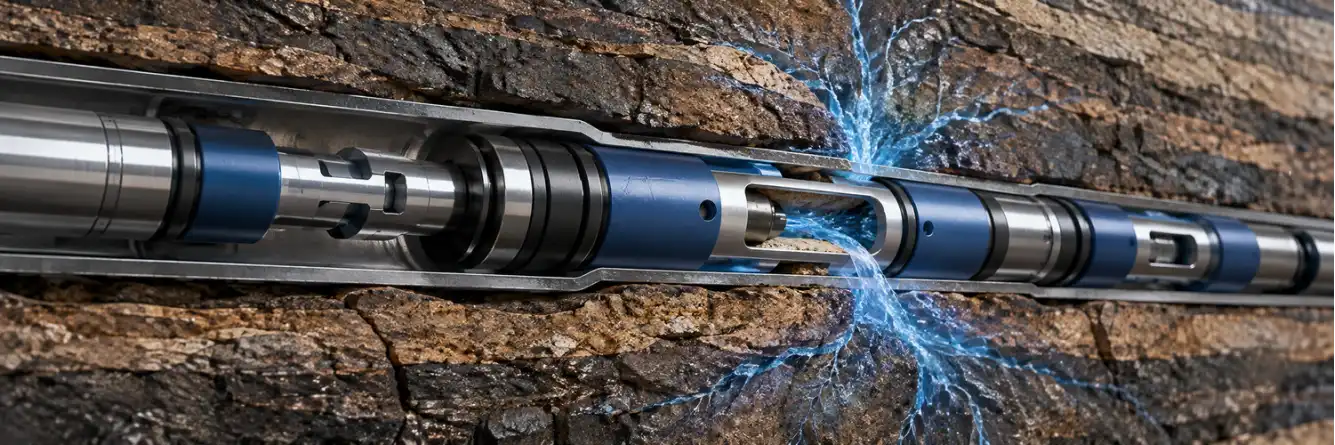
This is a plug and perf option with 2 components performing the job. A dissolvable bridge plug is run to isolate a stage for pumping. The key-operated sliding sleeve is opened for the treatment of the level coming after. It is made from a magnesium alloy that is dissolvable, meaning that instead of becoming a restriction, it dissolves in the wellbore brine. In chloride containing water, magnesium corrodes, the rate of corrosion is dependent on temperature and salinity (ASM Handbook, Corrosion). We customize the alloy and process to the customer’s temperature, salinity, fluid chemistry and desired time line. That tuning is critical because a plug that dissolves too soon loses its isolation and one that dissolves too late retards flowback.
How Does a Plug-and-Perf Alternative Eliminate Drill-Out?
Removing the Plug That Needs Milling
Drill-out exists because conventional bridge plugs stay in the well after the treatment. Operators then run coiled tubing with a mill to remove them, circulate debris out, and only then open the well. A plug-and-perf alternative built on dissolvable plugs changes that last step. The plug is designed to degrade in wellbore fluid, so the plan includes no mill, no motor, and no debris-circulation trip for plug removal. The sleeves stay in the string as part of the completion, and the bore opens as the plugs dissolve. This is why operators can call the design drill-out-free, as long as the dissolution window matches the well.
Removing Wireline Runs and Perforating Logistics
Plug-and-perf requires a separate wireline run for each stage. After the plug is set, the wireline team pulls out of the wellbore before the perforating guns are run in. In contrast, the sleeve-based approach eliminates the need for repeated wireline runs and associated perforating logistics, as each stage is opened directly by activating the sleeve. That implies fewer handoffs of explosive goods, less personnel handoffs and fewer pauses in pumping. HAGRIEN's architecture allows operators to pump all phases continuously. This is where I think the scheduling gain begins. You get rid of all the stage-to-stage delay before you even think about drill-out. Access to treatment then hinges on the sleeve activating appropriately which is why I advocate activation testing before any pilot. A plug-and-perf alternative relies on that form of evidence for confidence.
What Happens to the Bore Afterward?
Full gauge bore is essential for production logging, future interventions and artificial lift operations. Ball-drop sleeves often feature seats that taper to the toe that might limit the internal bore diameter. This reduces the diameter . Keyed sleeves prevent this diameter decrease , so the string may retain a more consistent internal diameter . In addition, there are no milling cuttings or composite particles from drilled-out plugs to remove, thereby decreasing the likelihood of debris accumulating in the lateral. We suggest, however, to verify that each design is suitable for ultimate bore diameter and fluid compatibility for your operation. If you are considering plug-and-perf options, ask the supplier to show you drawings of the interior diameter at each level, rather than just going off a headline statistic.
Conventional Plug-and-Perf vs. Drill-Out-Free Completion Alternatives
Item-by-Item Cost and Time Comparison
Here’s how I map the two paths. In wireline conventional, you require a run per stage and a sleeve plan eliminates that. Perforating, sleeves open phases need firearms and explosive logistics, traditional work doesn't have it. For plugs and milling, the typical work requires a mill-out and dissolvable plugs are designed to obviate this need. The ball-drop designs lower the bore on ball seats at each step and keyed activation addresses that problem. Sleeves are also placed at established depths in the string, so there is no confusion as to where each tool is. Design your own plug and perf alternative model with your rates and we will provide you the equipment side figures. Real numbers provide a more reliable basis for comparison than percentages in a brochure.
Sleeve, Open-Hole, and Dissolvable Options Compared
Most assessments include four choices. Ball triggered sleeves provide sequential access but rely on seat size. Open-hole multistage methods avoid perforating and drill-out, but need reliable packer sealing and stable formation. Perforating and wireline are still used with standalone dissolvable frac plugs, thus only the milling stage is eliminated. Wireline, perforating and milling combined are designed for keyed sleeves with soluble plugs. There is no choice that wins everyplace. The proper plug and perf option relies on what kind of completion, number of stages, pressure, and how your team likes to do the work. I would rather you to go away with a small list that fits your wells than one response that does not.
Where the Alternative Fits by Stage Count and Well Type
HAGRIEN positions this system for unconventional shale wells with 20 to 50 or more frac stages, deepwater and extended-reach laterals, re-fracturing of legacy wells, and programs where intervention cost dominates well economics. The rationale is straightforward. The more stages, the more wireline trips, and the more plugs to grind. The longer the laterals the tougher it is to mill using coiled tubing. Legacy wells create ambiguity regarding the borehole. I would model them individually since a plug-and-perf option does not gain as much on wells with fewer stages. Your design team should provide limits for stage count, rate and variance. Our experts provide tool data for your particular instance .
What Are the Main Benefits of Eliminating Drill-Out?
A Faster Path to Production
Without a milling campaign, the gap between the last stage and flowback can shrink. HAGRIEN describes the outcome as production weeks earlier, because stages are pumped continuously and plugs degrade on plan. A plug-and-perf alternative can save money on several lines: milling services, coiled tubing, crew time, fuel, water, and logistics. Earlier startup also moves revenue forward. The size of the gain depends on your current drill-out duration, so I recommend starting from your own last ten wells. Record the days from final stage to flowback, then compare. That baseline makes a pilot result credible to finance and to your own team.
Lower Exposure and Fewer Unknowns
Every intervention step puts people and equipment near risk. Fewer wireline runs mean fewer personnel moves around live wellheads. No perforating guns on location lowers explosive handling. No mill-out removes the chance of a stuck mill or a debris-packed lateral. These changes also cut non-productive time and the uncertainty about downhole events that comes with each trip. This plug-and-perf alternative will not erase all risk, since sleeves must still activate and plugs must still dissolve on schedule. But the failure modes shift from many field-driven steps to a smaller group that you can test before the job.
Limits You Should Hear About Up Front
Any plug-and-perf alternative brings its own risks: sleeve activation failure, erosion at high proppant rates, seat restrictions, and incomplete or early dissolution. Dissolvable plugs do not degrade at one rate in every well, because temperature, brine chemistry, exposure time, and pressure all change the result. Eliminating drill-out also does not remove every intervention, since contingency work may remain. A higher stage count does not guarantee better production either, because reservoir quality and cluster efficiency still decide that.
How to Select the Best Plug-and-Perf Alternative
Match the System to the Well
Start with the well, not the product.” Gather casing size, lateral length, deviation, tortuosity, stage count, formation pressure, bottomhole temperature, and fluid chemistry. Then examine the time of isolation, pumping rate, proppant loading and the hole you require. Price each route as total cost: hardware, operating time, activation, intervention, contingency and delay to production. The price of equipment alone is deceptive. A cheaper tool that requires a mill-out might cost you more in the long run. A good plug-and-perf option has a well-stated window of operation it will cover, in your well’s statistics, not in generic terms.

Verify the Material and the Supplier
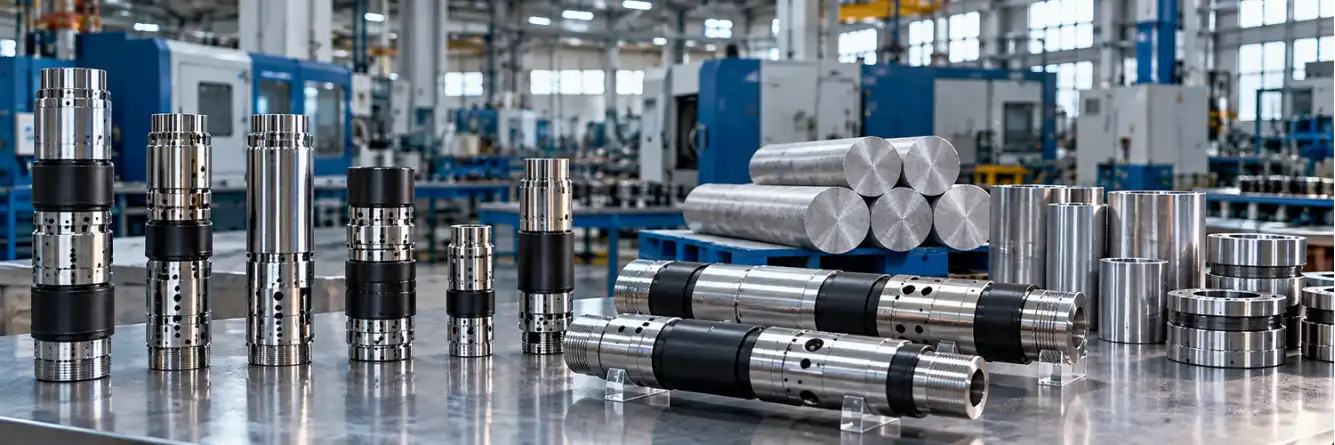
For soluble portions, performance is dictated by material. HAGRIEN has been producing and validating dissolvable magnesium alloy since 2019. We are doing extrusion on 3.600 tons and 5.600 tons presses and we deliver bars up to Ø300 mm. We are ISO 9001, ISO 14001 and ISO 45001 certified, API recognized and have a CNAS qualified high temperature, high pressure laboratory for traceable validation. We have COA, COC, SDS, batch traceability and inspection records in our documents. Industry standards, such as API 11D1 and ISO 14310, also address packers and bridge plugs. These records may be used by consultants and engineers to develop models, and you can audit them. Ask every provider for the original test data and the circumstances underlying it.
Run a Pilot Well Your Team Can Defend
Pilot wells have reputations, so prepare well. Choose a well inside the validated window of the system, establish pass criteria before the task and agree on who performs what. HAGRIEN delivers application engineering, remote troubleshooting, process advice and training for field execution. Standard sizes normally ship in 2 to 4 weeks and special requirements 4 to 8 weeks, falling within a 6 to 12 month assessment cycle. Your present service businesses may remain engaged in pumping and logistics, so it offers an alternative without disturbing those ties. After job, analyze time to flowback, intervention hours and cost per stage and choose next well group.
 Conclusion
A plug-and-perf alternative removes drill-out by taking away the hardware that needs milling. Dissolvable bridge plugs degrade in wellbore fluid, and key-activated sliding sleeves open each stage, which also removes wireline runs and perforating logistics. Compared line by line with conventional work, the savings come from fewer trips, less milling, a cleaner bore, and an earlier flowback date. These benefits have limits, because activation, erosion, and dissolution timing must match the well's temperature, salinity, and pressure. Selection therefore starts with well data, continues with material and test verification, and is confirmed through a pilot with defined pass criteria. The case is strongest in wells with high stage counts, long laterals, or intervention-heavy economics.
FAQ
1. Can a plug-and-perf alternative remove drill-out completely?
Dissolvable plugs paired with sliding sleeves are designed to remove the mill-out step. Contingency work can still arise, and results depend on the temperature, salinity, and fluid chemistry in your well.
2. Does this system suit high-stage shale wells?
HAGRIEN positions it for 20 to 50 or more stages, extended-reach laterals, and re-fracturing. Limits for stage count, rate, and deviation should be confirmed in a design review.
3. Which documents can I request?
We can provide COA, COC, SDS, batch traceability, and inspection records, plus validation data from our CNAS-accredited laboratory where applicable.
4. How quickly will I get a response?
We confirm technical requirements within 24 hours and send a formal quotation and delivery plan within 1 to 3 business days. Complex projects need separate confirmation.
Request a Plug-and-Perf Alternative Evaluation from HAGRIEN
Need a plug-and-perf alternative manufacturer that shares test data openly? HAGRIEN supplies a dissolvable bridge plug and key-activated sliding sleeve system, backed by ISO certifications and a CNAS-accredited laboratory. Send your well profile, stage count, temperature, and fluid chemistry to cyrus@us-hagrien.com, and we will confirm requirements within 24 hours and quote within 1 to 3 business days. Details are at us-hagrien.com.
References
1. American Petroleum Institute, API Specification 11D1: Packers and Bridge Plugs, 2009
2. International Organization for Standardization, ISO 14310: Petroleum and Natural Gas Industries – Downhole Equipment – Packers and Bridge Plugs, 2008
3. Society of Petroleum Engineers, SPE 133456: Thirty Years of Gas Shale Fracturing: What Have We Learned? (G.E. King), 2010
4. Wiley, Reservoir Stimulation, 3rd Edition (M.J. Economides and K.G. Nolte), 2000
5. ASM International, ASM Handbook, Volume 13B: Corrosion: Materials, 2005
6. U.S. Energy Information Administration, Hydraulic Fracturing Accounts for About Half of Current U.S. Crude Oil Production (Today in Energy), 2016

USER EVALUATE
Here is the customer's evaluation of us