




High-Expansion Rubber Element: How Compression Set Affects Sealing
A high-expansion rubber element seals well only if it springs back after it is squeezed. The compression set is the residual deformation following compression. Typically, a lower value signifies greater recovery and consistent contact pressure. High expansion rubber elements with high compression set require a long time to lose their sealing force. It may stay distorted, leaving a tiny leak channel and fail due to changes in temperature or pressure. In this article I discuss how compression set works, what impacts it, and how to pick and test parts before they go to the field.
 Understanding Compression Set in a High-Expansion Rubber Element
What Is a High-Expansion Rubber Element?
The elastomer sleeve is squeezed and stretched until it touches the casing or wall of the wellbore. This is termed a high expansion rubber element. The setting force compresses the element along its length and bulges it outward to fill the gap between the tiny tool body and the larger inner diameter. That gap may be significant if the walls of the well are not straight, the hole is washed out, or the casing is too large. When the pressures are not the same , several designs feature backup rings or other pieces that prevent the rubber from extruding through the gaps . Rubber seals of a similar expanding kind are also employed in maritime equipment, pumps and pipe systems, albeit the designs and working circumstances may be different from oil and gas downhole tools. If I can check the case ID and that the element is still in contact after the load changes, I know I did a decent job. This is a key issue in the selection of sealing components for downhole tools.
What Is Compression Set?
If you press rubber for a period of time then release it, it may not return to its previous shape fully. This is called compression set. It is expressed as a percent using test techniques defined in ASTM D395. If the result is around 0%, the rubber is practically totally recovered. 100% in this scenario indicates that it did not recover at all. It’s the manner the tests are executed that counts. Depending on the technique, temperature and time of testing, the outcome will be different. Compression set is not the same as tensile strength, elongation, or tear resistance, however. A strong compound can still distort and a soft compound can still recover. The compression set is a measure of the amount of elastic recovery the rubber part has after being compressed under strong expansion. This section has to expand, remain in position and regain form enough to maintain sealing contact.
How Compression Set Affects Sealing Performance
The sealing begins with the contact pressure . When the setting tool squeezes the element the rubber takes the shape of the surface roughness and fills the gap. Elastic recovery continues to press it against the wall as circumstances change. High compression set undermines that second stage. The rubber remains somewhat distorted so contact pressure decreases after temperature fluctuations, pressure pulses or string movement. Over-compression may seal effectively in the near term but it accelerates permanent deformation. When I inspect a bench-tested high-expansion rubber element, I look for flattened shoulders, uneven contact marks, cracking, and leakage after thermal cycling. A seal that passes day one but leaks on cycle three is usually indicative of compression set rather than a fundamental design problem.
What Increases Compression Set and How Materials Compare
Main Factors That Increase Compression Set
A variety of things will shorten the life of a high-expansion rubber part. Heat is one of the first suspects, since high temperatures make polymers relax quicker and repeated heating and cooling may amplify the damage. Fluid exposure is also present. Oils, solvents, acids, brines and finishing chemicals may cause the rubber to swell, soften or harden. This has consequences for the recovery. The most popular test to determine the effects of liquids on rubber is ASTM D471. Then there are mechanical reasons that cause the rubber to surpass its intended deformation range. These include over-compression, twisting, misalignment, unequal loads and improper clearances. All these things function together, pressure, vibration, external stresses. I don't judge any of them. Finally, it is crucial to be consistent. One batch may come out fine, the next not, depending on how it was combined, cured or metered.
EPDM, NBR, Silicone, and Neoprene Compared
Not every material is appropriate for every task. EPDM is good with water, steam (in the correct grades) and ozone, but not so good with many petroleum based lubricants and fuels. NBR offers good resistance to oils, fuels and hydraulic fluids but low resistance to ozone, heat and certain chemicals. Silicone is flexible throughout a broad temperature range, however some varieties are less resistant to tearing and wear. Neoprene is ideal for general purpose or maritime application. It has weather resistance, and mild oil resistance. HNBR or FKM are typically used for downhole packer components with heat and aggressive fluids. But whatever you choose, the compression set will be dictated by the particular formulation, durometer, cure method and test circumstances, so be careful to collect data relevant to the compound. Just the name of the polymer is insufficient to identify whether a high-expansion rubber part is acceptable for your application.
High-Expansion Rubber Element vs. Standard Element and Expansion Joint
A conventional rubber element works if there is little movement and the seal is mostly stationary. If the material and design can not allow the movement, and you push and release it repeatedly, it may become permanently deformed. For small tools, unique geometries and OEM assemblies, a high expansion rubber element is employed when recovery, extrusion resistance and form are particularly crucial. But it’s not the same as a rubber expansion joint. An expansion joint is a length of pipe that is intended to absorb pipe movement, vibration and pressure pressures. It often has a strengthened body and supporting hardware. An element is usually a part that seals in a tool or housing. You should not replace them with one that looks similar or only by size name. First, consider maximal expansion and recovery, maximum pressure, chemical compatibility and fitting circumstances. Use a joint or bellows suitable for the application if considerable pipe movement or movement in more than one direction is needed.
 Selecting and Testing a High-Expansion Rubber Element
Define the Application and Operating Window
Choosing a high-expansion rubber element begins with the application, not the catalog. I enquire about tool kind, casing or hole condition, spacing between tool body and wall, setup process, and hold time needed. Then I’ll ask for operational data: peak and continuous temperature, differential pressure from each direction, wellbore fluid, number of pressure or heat cycles. Include startup, shutdown and test pressures since these activities can put more stress on the seal than steady operation. Diagrams, used component photos, and failure histories are highly helpful. With this information the supplier may determine if the gap needs a bigger expansion ratio, a different shape or an anti-extrusion design. If we omit this phase we are only selecting by maximum expansion which tells us nothing about how a rubber part with high expansion recovers under pressure.
Evaluate Compression Set Data and Test Plans
Interpretation of compression set findings is only proper if you know the temperature, time, and degree of compression, the geometry of the specimens, and the technique (e.g., ASTM D395 or ISO 815-1). Do not compare two values acquired under different test circumstances. However, a low value at room temperature does not guarantee that the rubber will recover effectively as the temperature decreases. Then, test the application under the applicable operating circumstances. Both the pressure and leakage tests should be performed at temperatures and pressures typical of those likely to be experienced in service. The tests should be performed on the whole assembly, not simply the rubber. Repeated heating and cooling are used to check the stability of the sealing force. Fluid immersion tests can tell us how much the rubber swells, gains or loses mass or changes in hardness. It is crucial to establish acceptable boundaries for things like leakage rate and permanent deformation before starting testing. What I want to test is how a high expansion rubber part reacts to extrusion at the maximum projected differential pressure. This is because extrusion resistance and a high expansion ratio may entail conflicting design requirements.
Installation, Handling, and Common Mistakes
You may choose the appropriate high expansion rubber part, but if you beat on it, it won’t function. Before you start assembling check sure that none of the parts are broken or have any holes or cuts in them. The touch surfaces must be clean and devoid of sharp edges. When assembling it, use only lubricants that will not harm the rubber. Don't put heavy weights on the component or twist or bend it. ISO 2230 recommends that rubber goods be stored in a cold, dark and dry environment, away from sources of heat and ozone. Use a first in first out stock control system to assist you manage your inventory and minimise excessive storage degradation. What are the improper methods to choose? selecting based solely on the name of the material, selecting based only on the biggest expansion, comparing the compression set values from various test settings, and picking based only on the unit price are the bad ways to select. A cheap item that breaks might cost you extra in replacement work, wasted rig time and warranty claims. Check the supplier’s capabilities and batch records before you make the purchase, not after the first failure.
HAGRIEN High-Expansion Rubber Elements for Downhole Sealing
Product Specifications and Validation
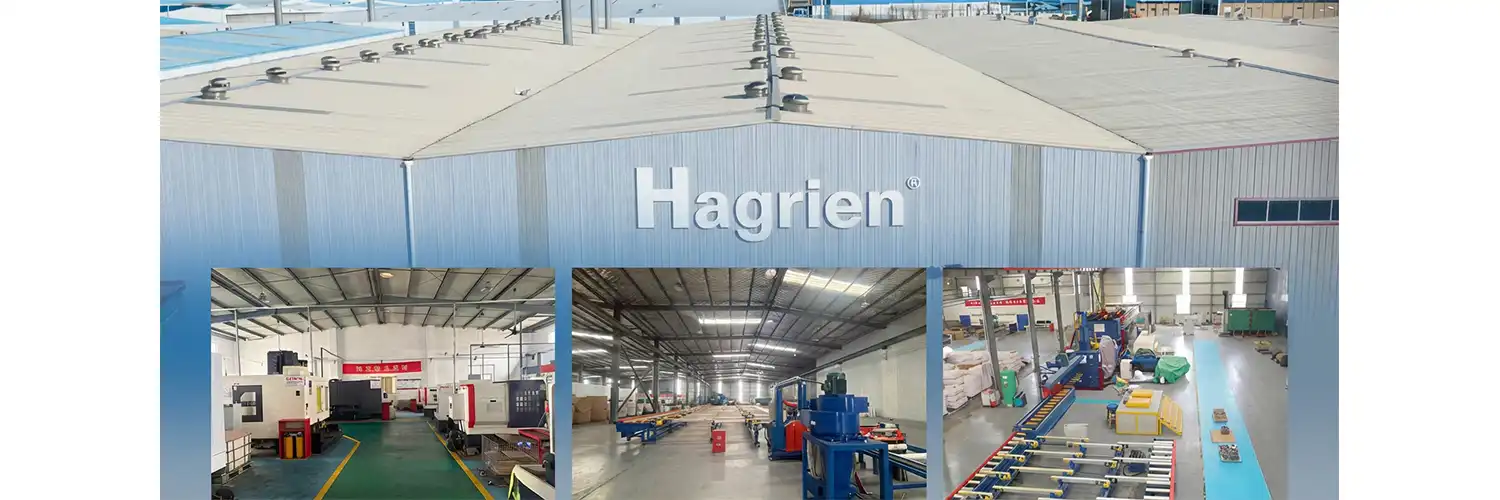
The HAGRIEN high-expansion rubber element is built from an elastic substance intended to expand when squeezed downhole. This is helpful in making sealing contact in wellbores with non-uniform geometry. The working range specified is -40°C to +200°C with pressure ratings of over 10,000 psi. We conduct compression set testing to ASTM D395 and our CNAS approved HTHP lab checks chemical compatibility. This offers your team with data to assess pressure performance, fluid response and elastic recovery under certain situations. Each high expansion rubber element is backed by COA, COC and SDS certification. HAGRIEN has been producing sealing components and downhole tools for over seven years. The items are provided to tool makers and OEM customers, rather than to end users directly.
Where These Elements Work
Our expanding rubber elements may be utilised as packer elements, bridge plug seals, frac plug sealing elements and components of zonal isolation tools, depending on the needs of the application. They are often employed in HPHT wells and unconventional horizontal shale wells. The housing ID contact should be maintained in case of changing pressure and temperature. If R&D teams are working on tools for wide annular gaps or sidetracks in mature wells, compression set and extrusion resistance need to be considered jointly. If you know the gap size and well conditions up front, it will assist you decide on the right design. Manufacturers of packers and bridge plugs may need several different sizes. We may talk about the availability of samples, the small batch needs and dimensional customisation in the initial technical call. Not all applications are the same, but our website has solutions for large-ID applications, small-OD configurations and long-lateral bridge plugs that might be a starting point to discuss project needs.
Working With a High-Expansion Rubber Element Manufacturer
A good high-expansion rubber element manufacturer asks questions before quoting. Send your design or sample, gap dimensions, temperature, differential pressure, fluid, setting technique and cycle count, certification required, yearly quantity and delivery timeline. If you have any, provide pictures of prior failures. Within 24 hours, HAGRIEN will confirm the project requirements and technical parameters. For most projects, the firm aims to provide a formal price and delivery schedule within one to three business days. For more complex projects there may be extra technical evaluation and an independently certified deadline. We are a U.S. corporation that does projects in North America. We can do EXW, FOB, CIF. We also provide weekly updates on project progress. When comparing vendors go beyond simply pricing. Also check test standards, sample cost, lead time, inspection scope, tooling ownership and technical support. Having a clear approval procedure with specified acceptance criteria avoids surprises before mass manufacturing begins.
 Conclusion
Compression set helps determine whether a high-expansion rubber element can maintain contact with the casing after being heated and compressed. In general, a low number represents better elastic recovery under the given test circumstances , a high value represents a higher risk of persistent deformation and lower sealing pressure. Fluid exposure, high compression, misalignment, temperature effects or batch-to-batch fluctuations may increase compression set. Select EPDM, NBR, silicone and neoprene according on the working medium and temperature. HNBR or FKM may be suited for more severe downhole situations. Compare outcomes of tests under same settings. Define first the operating window, then undertake the tests for fluid compatibility, pressure resistance, recovery and extrusion. Good handling and verifiable records further lower the likelihood of early failure. Reliable sealing is based on the combined performance of the material, the design of the component and the full tool assembly.
FAQ
1. What is a good compression set value?
There is no one value that works everywhere. Acceptable results depend on the kind of compound, its hardness, temperature, degree of compression, period of test and desired service life. If you are comparing numbers, do so only when the test circumstances are the same, and ask for recovery or cycle data to examine how the rubber performs repeated loading and release.
2. Can a standard rubber element replace a high-expansion rubber element?
Not always. The replacement must have the same size, expansion range, recovery capability, pressure rating, fluid compatibility and temperature range. Conduct an engineering review and application test before any modifications. Repeated movement might cause a similar looking item to become permanently deformed or leak.
3. What does HAGRIEN provide with each high-expansion rubber element?
Our HTHP lab is CNAS-accredited to test for chemical compatibility and compression set according to ASTM D395. Our elements are rated for a working range of -40°C to +200°C and for pressures in excess of 10,000 psi. We also provide COA, COC and SDS documents. Please ask us for data related to your well conditions.
Request a High-Expansion Rubber Element Quotation from HAGRIEN
Send your drawing and well conditions to HAGRIEN, and our engineers will review the gap size, temperature, pressure, and fluid requirements with you. If you want a high-expansion rubber element manufacturer backed by CNAS-accredited testing and more than seven years of production experience, email cyrus@us-hagrien.com or visit us-hagrien.com. We aim to confirm requirements within 24 hours and provide a quotation within one to three business days for standard projects, subject to technical review and project complexity.
 References
1. ASTM D395, Standard Test Methods for Rubber Property—Compression Set, 2018
2. ISO 815-1, Rubber, Vulcanized or Thermoplastic—Determination of Compression Set, Part 1: At Ambient or Elevated Temperatures, 2019
3. API Specification 11D1, Packers and Bridge Plugs, 2009
4. ASTM D471, Standard Test Method for Rubber Property—Effect of Liquids, 2016
5. Engineering with Rubber: How to Design Rubber Components, Hanser Publications, 2012
6. ISO 2230, Rubber Products—Guidelines for Storage, 2002

USER EVALUATE
Here is the customer's evaluation of us