




High-Expansion Rubber Element: What Limits Radial Expansion?
A high-expansion rubber element is a sealing component designed to move outward under axial compression or pressure loading and close an annular gap. Several things affect how much expansion is usable, including the properties of the compound, the shape of the element, the hardware around it, the differential pressure, the temperature, the amount of fluid exposure, and the service life that is needed. In a lot of systems, performance might be limited before the rubber reaches its theoretical limit because of the space behind the element and how well the backup device works.
When engineers pick a high-expansion rubber element for irregular boreholes, casing, packers, or bridge plugs, the most important thing they look at is not how far the rubber can expand, but how far it will expand. The element must also be able to keep its closing touch, avoid being extruded, and return to or keep its required shape under the conditions that it will be used in. This guide talks about the main limitations and the information needed to evaluate a design.
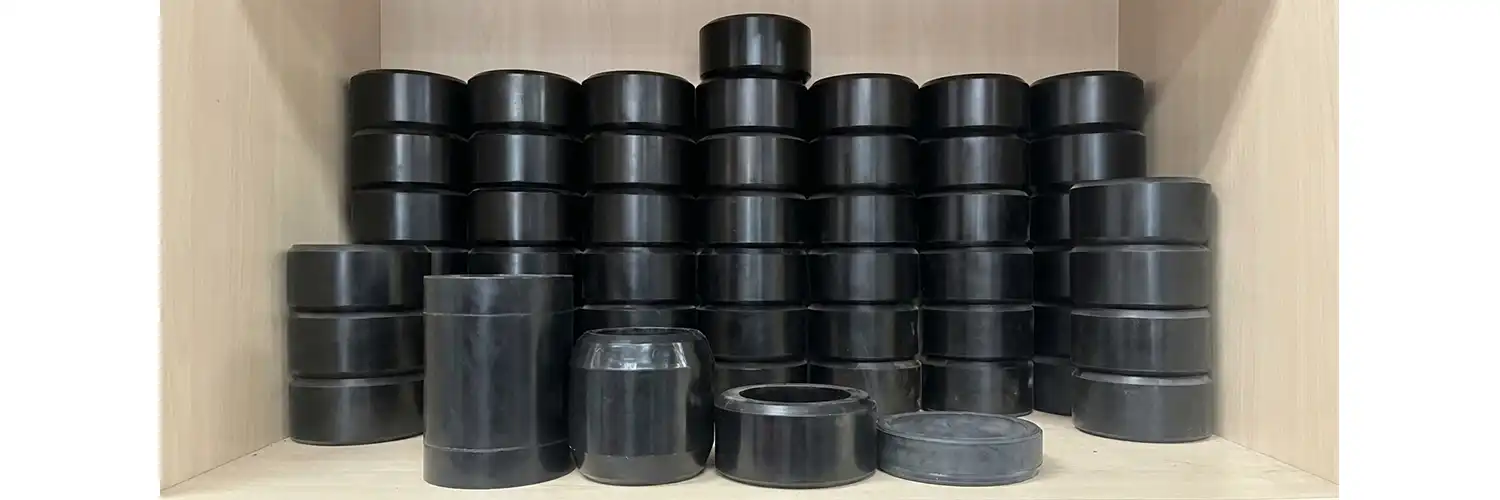
How a High-Expansion Rubber Element Produces Radial Expansion?
Polymer Network and Compound Design
Rubber is made up of polymer chains that are joined by cross-links. Elastomers are almost incompressible across a wide range of actual loading conditions, therefore axial compression of the elastomer may cause the material to flow outwards if the tool shape constrains the flow in other directions. Such action allows a high-expansion rubber element to bridge the gap between the tool body and the casing wall.
The basic polymer, fillers, plasticizers, curing procedure and age resistant additives, determine the stiffness, tensile strength, tear resistance, recovery and chemical compatibility. A softer composite may bend more freely, but be more prone to creep, irreversible deformation or extrusion under severe conditions. A tougher compound may provide better resistance to deformation but may need more setting power and may not conform to the same gap in the same shape.
These encounters are not governed only by severity. The compound has to be evaluated in terms of stress-strain behavior, tear properties, operating temperature, fluid exposure and projected deformation range. Therefore, the choice of materials is the starting point for design, not a substitute for the assessment of the whole sealing system.
Setting Force and Downhole Compression
The setting mechanism of a packer or plug may press a cone, sleeve or other component against the rubber element. This axial compression that follows changes the shape of the element driving material radially outward. The element extends to the casing’s inside diameter. Further expansion is limited by available stroke and surrounding and friction limits imposed by geometry.
The movement needed depends on the beginning tool OD, the case ID and the element profile. A larger annular gap may need a different stroke, cross section or support system.It may also result in increased local strain, particularly near element edges or other geometry changes.
A high-expansion rubber element should thus be evaluated with the anticipated setting mechanism and the installed dimensions. The assessment must examine the ability of the element to reach the casing wall and the ability of the assembly to retain sealing performance after setting and during the stipulated pressure and temperature exposure.
HAGRIEN offers high expansion rubber parts for downhole applications. The final appropriateness has to be checked against the required tool design, casing dimensions, setup circumstances and service requirements.
Why Expansion Is Never Uniform
The radial expansion is rarely uniform throughout the complete element. Rubber movement is influenced by friction at the mandrel, end rings and other contact surfaces. The deformation pattern may also be influenced by wall thickness, profile geometry, alignment, pressure distribution and casing ovality.
Depending on the shape of the item and its confinement, the center component might bulge out before the ends are all in place. The ends may be folded or rolled or shifted into neighboring areas. In an irregular borehole, the local variation of the surrounding surface may also impact the contact pressure around the circle.
Therefore, two parts that have the same nominal exterior dimension may seal differently when assembled. All these factors may be important: profile discrepancies, compound properties, surface condition, support geometry.
For a high-expansion rubber element, free-state dimensions alone are not sufficient to establish performance. Bench testing should reproduce the intended installed geometry as closely as practical and record the element's movement, contact behavior, and sealing performance under defined conditions.
The Main Factors That Limit Radial Expansion
Hardness, Modulus, and Tear Strength
Hardness and elastic modulus are measurements of the resistance of a compound to deformation . They are not the same thing and should not be confused . Further information on the behavior of the material under stress and under local stress concentrations is obtained from the tensile strength, the elongation at break and the tear resistance.
If the material is too stiff for the given geometry, it may take too much setup effort or may not tolerate the correct gap. If a combination is too readily deformed, it may be more susceptible to extrusion, creep or permanent deformation if not properly managed. Increased local strain and tearing may be caused by sharp edges and abrupt changes in cross section.
For a high-expansion rubber element, material selection should balance the required radial travel with the need to maintain sealing integrity under the specified load. No single hardness value can establish suitability across different casing sizes, element profiles, temperatures, and pressure conditions.
When comparing candidate compounds, review hardness alongside modulus or stress-strain data, tensile properties, tear resistance, compression set, and relevant fluid compatibility results. Where possible, evaluate these properties at temperatures representative of the intended service conditions.
Geometry, Confinement, and the Extrusion Gap
The shape of the element dictates the radial movement resulting from axial compression. The strain distribution and the available material to fill the annular gap depend on the wall thickness, aspect ratio, ribs, grooves and other profile elements. The surrounding hardware also helps movement by controlling distortion and directing the rubber into place.
Extrusion creates an especially crucial gap between the piece and its supporting hardware. Rubber may be pressed into an unsupported clearing under differential pressure . The danger is a function of the gap size, characteristics of the compound, pressure, temperature, length of loading, and support provided at that site.
This movement may be controlled by backup rings, segmented supports, anti-extrusion shoulders or other features, depending on the design of the tool. However, a support solution acceptable for one expansion range may not be sufficient for a broader gap. The support system must be evaluated along with the element and not picked separately.
Thus a big annulus high expansion rubber element demands a coordinated design study of rubber profile, available setting travel, surrounding hardware and extrusion clearances. The aim is regulated growth with enough support, not maximal movement at any price.
Pressure, Speed, and Cycling
Differential pressure creates a force on the seal and may drive the rubber into an unsupported clearance on the low pressure side. The risk of extrusion is a function of the geometry of the element, the compound, the arrangement of the support, the temperature and the magnitude and duration of the pressure differential.
Speed setting might also affect performance. Rapid loading may change the distribution of deformation and may produce additional heat depending on the material and the assembly. Fatigue or progressive degradation may be caused by repeated cycles of stress, especially if local strain is high, or the element is exposed to insufficient fluids and temperatures.
With some designs, increased radial motion might lead to increased strain or loss of support. There is no general correlation between pressure capacity and growth. It should be established for the specific element and assembly under defined conditions.
Before selecting a high-expansion rubber element, specify the intended expansion range, setting conditions, maximum differential pressure, temperature, and required cycle performance. Testing should include the most demanding relevant combination of these factors rather than relying on a pressure rating without its associated conditions.
Any HAGRIEN pressure-capacity claim should be checked against the applicable product documentation and test conditions. A stated rating should not be assumed to apply to every casing ID, expansion range, compound, or tool configuration.
Temperature, Chemical Exposure, and Aging Limits
Heat and Cold
The temperature influences the deformation and the recovery of the elastomers. Some materials may become less stiff or strong at higher temperatures and be more susceptible to extrusion or permanent deformation. Some materials get harder, return slower or simply aren't as adept at taking the motion required at low temperatures. These effects depend on the polymer, the formulation, the conditions of loading and the length of exposure.
The usable temperature range of a high expansion rubber element is determined by its specific composition and use. A temperature on a material datasheet does not guarantee it is acceptable for simultaneous compression, differential pressure and long term downhole exposure.
Choose on the basis of the expected bottomhole temperature, the amount of time it will be at that temperature, pressure conditions, and any temperature cycling it may undergo. If the operating envelope approaches material limitations, seek out test data to confirm the suggested chemical and design.
The temperature capabilities listed for HAGRIEN should be confirmed using the data sheet of the specific element and compound. Don't assume one temperature range suits all product designs or fluid conditions.
Fluids, Gas, and Chemical Compatibility
Elastomers may be attacked by oil-based muds, brines, completion fluids, and formation fluids in many different ways. The effect of a fluid may be to expand, shrink, soften, harden or otherwise modify the mechanical qualities depending upon the formulation and the conditions of exposure. The dimensional increase owing to fluid absorption should not be confused with useful radial expansion under setup stress.
ASTM D471 is a standard test method for the properties of rubber following immersion in liquids. The results of the test should be related to the composition of the real fluid, to the temperature, to the period of exposure and to the properties that are important for the intended application.
Another worry is exposure to gas. Depending upon the composition of the gas, the pressure, the temperature and the circumstances of decompression, gas absorption and rapid reduction in pressure may cause blistering or other damage. One should not presume a polymer family is suitable in settings like H2S or CO2, but rather examine the specific chemical and service situations.
ISO 23936-2, Petroleum, Petrochemical and Natural Gas Industries—Non-metallic Materials in Contact with Media Related to Oil and Gas Production—Part 2: Elastomers, specifies requirements and guidance for evaluating elastomeric materials used in contact with oil and gas production media. Its relevance should be determined according to the demands of the application and the amount of any supporting testing.
For a high-expansion rubber element, request compatibility data that matches the intended fluid and exposure conditions. The chemical-compatibility testing capabilities and laboratory accreditation claimed by HAGRIEN should be confirmed with the laboratory paperwork, test methodology and accreditation scope before being used as proof of product appropriateness.
Aging, Creep, and Compression Set
Over time, elastomers can change when they are loaded continuously, heated, oxidized, or exposed to fluids. Creep is the deformation that happens when stress is applied for a long time, and compression set is the amount of deformation that is still there after a certain amount of compression and recovery time.
ASTM D395 talks about different ways to find out how much compression set a rubber has. Results depend on the test method, the sample, the temperature, the conditions of compression, and the recovery process. They shouldn't be taken as a general prediction of downhole service life, but should be understood in the context of the application they're meant for.
If a high-expansion rubber element deforms too much over time, it might not be able to keep the right shape after being unloaded or when the pressure changes again. But compression-set results don't tell you everything you need to know about how well a fitted tool seals.
Ask for test conditions and results that are relevant to the compound and use you want to use it for. If the material is going to be exposed to fluids and high temperatures, trying it at room temperature in air might not show how it will behave in real life. Along with recovery, mechanical properties, fluid compatibility, and assembly-level sealing tests, compression set should be thought about.
Any claim that HAGRIEN products have been tested and found to meet ASTM D395 should be backed up by proof that lists the material or product that was tested, the method that was used, and the conditions that applied.
High-Expansion Rubber Element Performance and Selection
Comparing Elastomer Families
Selecting a high-expansion rubber element requires more than comparing nominal hardness or choosing a polymer by name. Common elastomer families differ in their typical resistance to oils, water, heat, low temperatures, and particular chemicals, but performance varies with the specific formulation and exposure conditions.
As a general rule, NBR is associated with oil. However, its chemical and temperature limits need to be checked to make sure they work in real life. There are different kinds of HNBR that might be better at resisting heat and moving around. There are many chemical and high-temperature jobs that need FKM to do well. It might be stiff and work with cold things, but this depends on the grade and how it will be used.
EPDM is usually good for water, steam, and normal wear and tear, but it's not great for many chemical fluids. Silicone can be used in very hot or very cold weather as long as it is still good shape. But because of how it deals wear and tear, it might not be a good choice for closing systems that are very heavy.
Following these guidelines does not guarantee a specific performance grade. If you want to use the material downhole, you should find out how it works at different temperatures, how it reacts to water, and how it ages. Take into account how often the tool needs to be changed, its shape, and what will happen if the seal breaks when you figure out the total cost.
Matching the Element to the Tool
How much expansion is needed and what other performance requirements matter depend on the tool that will be used and the conditions of the well. When designing tools that need to fit a certain range of casing IDs or annular gaps, high-expansion rubber elements may be used for packers, bridge plugs, frac plug sealing elements, and zonal isolation.
In a sidetrack or older well, the relationship between the outside diameter of the tool and the inside diameter of the casing may mean that more radial travel is needed. The design review should also look at the condition of the casing, the tolerances for size, the setting load, the extrusion support, and what happens when the contact isn't even.
The case ID range is an important input for plug makers that work with different casing sizes or weights because it changes the amount of space that can be used. You shouldn't assume that one element shape will work for all sizes until you know its working range through proper design analysis and testing.
When choosing HAGRIEN high-expansion rubber elements, you should think about what they will be used for, how the tool will be set up, and how the rubber will be used. Instead of relying on a general product description, the relevant drawings, specifications, and test documentation should be used to confirm that the product is suitable.
Data to Define Before You Select
A useful selection process starts with a complete application data sheet. At a minimum, record:
- Tool outside diameter and casing ID range, including relevant tolerances.
- Required radial travel and available setting stroke.
- Expected bottomhole temperature and exposure duration.
- Maximum differential pressure and anticipated pressure cycles.
- Fluid composition and any relevant gas exposure.
- Element profile, backup arrangement, and extrusion-gap dimensions.
- Surface condition, dimensional tolerances, and allowable permanent deformation.
- Required service life, quantity, and any applicable acceptance criteria.
These inputs help a supplier assess whether a proposed compound and geometry are appropriate for the intended conditions. Missing data may lead to an element that fits nominal dimensions but does not perform as required under load.
For non-standard applications, clarify which aspects of the design are established and which require engineering review or testing. Prototype evaluation, tooling capability, dimensional control, material traceability, and production documentation can all affect whether the design can be reproduced reliably.
A high-expansion rubber element should be selected on the basis of defined operating requirements and supporting evidence, not a general claim that a material can stretch far enough.
Testing, Common Mistakes, and Sourcing
Testing That Reproduces Service
A useful test program should answer specific design questions. Dimensional inspection establishes the element's initial geometry. Expansion testing records how the profile changes with setting stroke and, where relevant, pressure and temperature. Sealing tests evaluate leakage under defined conditions, while extrusion assessments examine whether the rubber moves into unsupported clearances.
Fluid immersion, thermal aging, and compression-set testing address different aspects of material behavior. They should be selected according to the expected service environment and interpreted within the limits of each method. No single material test can replace evaluation of the complete assembly when the application depends on tool geometry and mechanical support.
ISO 14310 and API 11D1 are relevant to qualification of packers and bridge plugs, within their respective scopes and applicable requirements. They should not be presented as automatic evidence that an individual rubber element has been qualified or that every assembly using it meets the relevant requirements. The applicable standard, edition, tool category, and qualification scope should be confirmed for the project.
For a high-expansion rubber element, document the test specimen or assembly, material batch, dimensions, setting procedure, temperature, pressure, test fluid, exposure time, and acceptance criteria. Record the element's dimensions before and after testing and note any leakage, tearing, extrusion, or other damage. Where repeatability matters, test results should be linked to the relevant production batch.
HAGRIEN's stated ASTM D395 validation and chemical-compatibility testing should be supported by reports that identify the tested product or compound, methods, and conditions. These documents allow engineering and procurement teams to assess what the evidence establishes—and what still requires validation.
Common Design and Procurement Mistakes
One common mistake is treating high expansion as unlimited expansion. Every element has design limits, and exceeding them may cause tearing, extrusion, excessive permanent deformation, or loss of sealing performance. The actual limit depends on the compound, profile, support system, and operating conditions.
Another mistake is selecting a material before defining the well environment. A polymer that performs well in one fluid or temperature range may not be appropriate for another. Ignoring the extrusion gap, backup geometry, sharp edges, or casing condition can also undermine an otherwise suitable compound.
Testing only the element in its free state creates another gap in the evaluation. The installed assembly may deform differently because of confinement, friction, setting force, and pressure. Testing should therefore reflect the intended configuration and the most relevant operating conditions.
Procurement decisions can also become unreliable when suppliers are compared only by unit price. Material traceability, inspection records, production consistency, test documentation, lead time, and engineering support may all affect project risk. A component without sufficient batch and inspection records can be difficult to assess after a failure.
Before placing an order, define the required documents, acceptance criteria, and approval process. Confirm which tests have already been completed, which are proposed for the project, and which claims are supported by product-specific evidence.
Sourcing from HAGRIEN
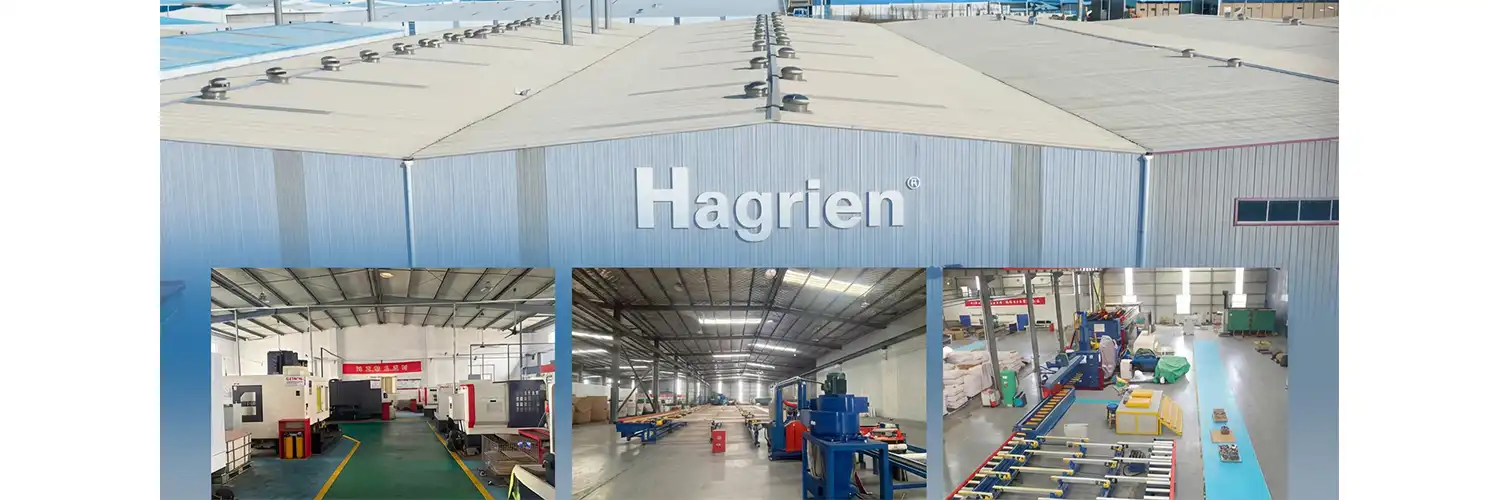
HAGRIEN supplies elastomer parts for downhole applications and traces its manufacturing expertise back to 2019. Supplier qualification must verify the company's current production history, scope of manufacturing and the supporting paperwork that is critical to the project.
Procurement paperwork may comprise certificate of analysis (COA), certificate of conformity (COC) and safety data sheet (SDS), depending on the order and agreed upon scope, when applicable. Look at what documentation are available for the particular product, what information they include and if further examination or testing is necessary.
For OEM or ODM conversations please include drawings or 3D models including tool outer diameter, casing ID range, goal expansion, temperature, differential pressure, service fluids, back-up arrangement, prototype quantity and projected annual volume. If any of these aspects are not yet set in stone make the assumptions known so they may be examined before the design is finished.
The practical procedures of sourcing are fourfold: submit the application data, assess the technical requirements, agree on any prototype or validation work, and finalize the commercial quote and delivery schedule. If the design is complex or non-standard, then it may need further engineering evaluation prior to confirmation of time and acceptance requirements.
Please validate HAGRIEN's stated response and quote timeframes, North American coordination procedures, and possible shipping conditions for this particular order. EXW, FOB and CIF might be regarded as suitable according to the specified transport route, responsibilities and contract conditions.
For a high-expansion rubber element order, the most useful quotation is one that clearly identifies the proposed specification, applicable documents, validation requirements, delivery assumptions, and any unresolved technical questions.
 Conclusion
The radial expansion of a high-expansion rubber element results from the interaction between elastomer deformation, element geometry, setting force, and mechanical confinement. Its practical limit depends on the compound's mechanical properties, the required radial travel, extrusion clearance, backup support, differential pressure, temperature, fluid exposure, and expected service life.
No single hardness value, material family, or nominal expansion dimension can establish suitability across all downhole applications. The element must be assessed as part of the complete tool, with particular attention to the installed gap, setting conditions, and the operating envelope.
A reliable selection process defines the casing ID range, tool dimensions, available stroke, pressure, temperature, fluids, and support arrangement before finalizing the design. Testing should then address the relevant risks through dimensional inspection, expansion and sealing tests, extrusion assessment, fluid compatibility, and aging or compression-set evaluation where appropriate.
The best design is not necessarily the softest compound or the element with the greatest nominal travel. It is the design that meets the required expansion and sealing conditions with documented evidence and acceptable performance margins.
FAQ
1. Is there a maximum radial expansion for a high-expansion rubber element?
There is no single maximum that applies to every design. The usable expansion depends on the compound, element profile, available setting stroke, support geometry, extrusion gap, pressure, temperature, and required service life. To assess feasibility, provide the tool outside diameter, casing ID range, target radial travel, and expected operating conditions.
2. How do I control over-expansion and extrusion?
Start by defining the required expansion range and the maximum allowable deformation for the specific design. Review the element profile, setting stroke, backup system, extrusion clearances, and mating-surface condition. Testing should reproduce the intended configuration and relevant pressure and temperature conditions to evaluate whether the design maintains its required sealing performance.
3. What should I send with a quotation request?
Provide drawings or 3D models, tool outside diameter, casing ID range, required expansion, setting stroke, differential pressure, bottomhole temperature, service fluids, backup arrangement, order quantity, and delivery requirements. If the design is still being developed, identify the unknowns and assumptions. HAGRIEN can then review the available information and clarify what further technical data or testing may be needed.
Request Your High-Expansion Rubber Element Quote from HAGRIEN
To request a quotation, send HAGRIEN your drawings or 3D models, casing ID range, tool outside diameter, target expansion, pressure, temperature, fluid data, and expected quantity. Include the backup arrangement and any relevant test or documentation requirements so the initial review can focus on the actual application.
Whether you are evaluating prototypes or planning repeat orders, the proposed specification and delivery plan should be confirmed against the technical requirements and order scope. Email cyrus@us-hagrien.com or visit us-hagrien.com to discuss your high-expansion rubber element requirements.
 References
1. ISO 14310, Petroleum and Natural Gas Industries — Downhole Equipment — Packers and Bridge Plugs. Confirm the applicable edition and requirements for the intended tool.
2. ASTM D395, Standard Test Methods for Rubber Property—Compression Set. Confirm the method and test conditions relevant to the material.
3. ASTM D471, Standard Test Method for Rubber Property—Effect of Liquids. Use the applicable procedure and exposure conditions for the intended fluid.
4. ISO 23936-2, Petroleum, Petrochemical and Natural Gas Industries—Non-metallic Materials in Contact with Media Related to Oil and Gas Production—Part 2: Elastomers. Confirm the applicable edition and scope.
5. Engineering with Rubber: How to Design Rubber Components. Verify the author, edition, publisher, and publication details before final publication.
6. Physical Testing of Rubber. Verify the author, edition, publisher, and publication details before final publication.

USER EVALUATE
Here is the customer's evaluation of us