_1776908283214.jpg)




How Does a frac sleeve Work in Multistage Fracturing?
A frac sleeve is a downhole completion tool installed in the casing string to allow selective stimulation of individual zones during multistage hydraulic fracturing. When a matching activation key or ball reaches the sleeve seat, it shifts the sleeve open, exposing flow ports to the target formation. After fracturing, the sleeve remains open for production, while dissolvable sealing elements dissolve in wellbore fluids, restoring full-bore internal diameter. This sequence eliminates the need for wireline plug-and-perf runs, compresses stage-to-stage cycle time, and reduces post-frac intervention requirements—making the frac sleeve one of the most operationally efficient tools in modern unconventional completions.
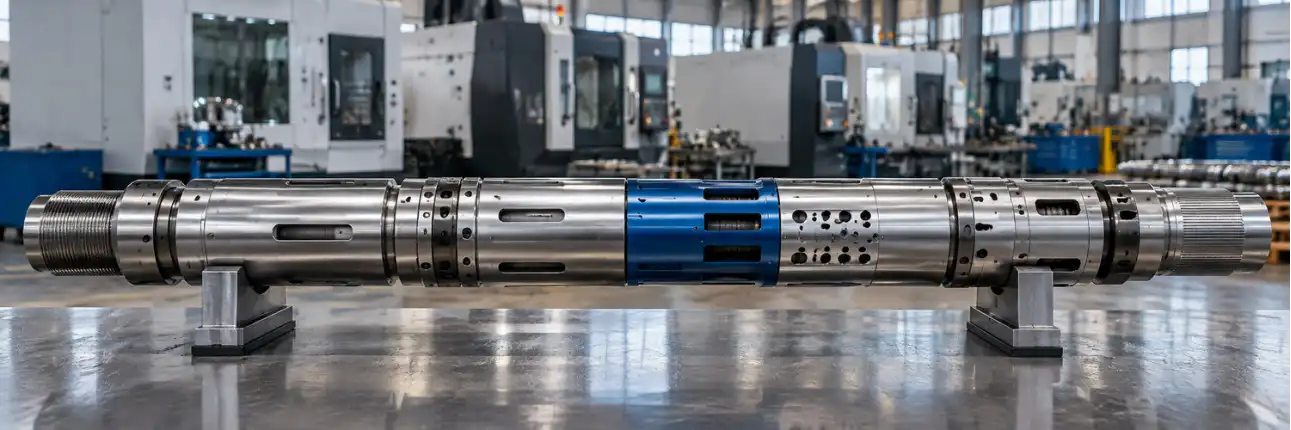
Understanding the Core Purpose and Working Principle of a Frac Sleeve
What Role Does a Frac Sleeve Play in the Completion String?
In the core string, a frac sleeve works as a selective valve. It doesn't need wireline conveyance for each stage like perforating guns or bridge plugs do. The sleeve is put in place by operators during case run-in, and it stays closed until it is activated. This method cuts down on time spent not working on long horizontal laterals where friction makes it hard for tools to move, and it also keeps the wellbore clear between stages.
How Does the Activation Mechanism Work?
HAGRIEN sliding sleeves have a mechanism that is activated by a key. A moving key with a unique code is pumped downhole and only fits its own sleeve seat. This opens that stage without affecting stages that are next to it. This one-to-one matched connection solves a major engineering problem: opening too early during fracturing without meaning to. Ball-drop systems use different-sized balls to set the stages in order from the toe to the heel, and coiled-tubing-activated designs let you set as many stages as you want.
What Happens After the Fracture Job?
Once the fracture is complete, HAGRIEN's own magnesium alloy material technology can be used with dissolvable sealing elements that dissolve in wellbore fluids based on temperature, salinity, and fluid chemistry. As a result, the full-bore internal diameter was fixed without any cutting. Because the behavior of dissolution is tailored to a certain working window, operators get accurate performance data instead of having to guess what will happen in the field.
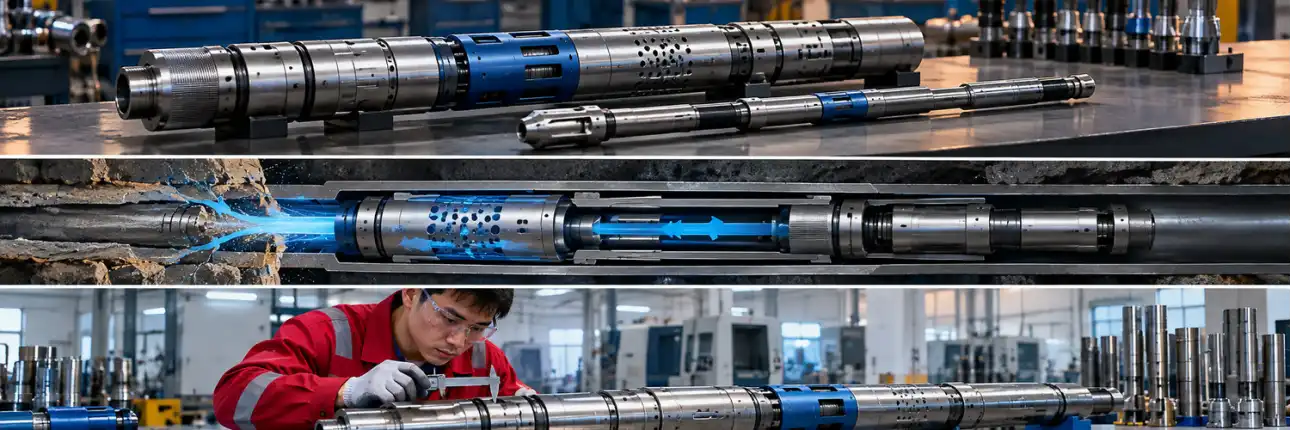
Technical Insights: Installation, Pressure Ratings, and Failure Modes
Installation and Compatibility Considerations
The frac sleeve is attached to the core string before it is glued down. It is very important to get the right size to meet the internal diameters of the casing and output tubes. HAGRIEN parts are made with dimensional stability checked by a CNAS-accredited lab, and each batch comes with full material traceability documentation, such as COA/COC records, so completion engineers can make sure the parts work together before the casing shoe touches the bottom.
Pressure Ratings and Material Specifications
Burst values of more than 10,000 to 15,000 psi are possible with high-strength metal construction, usually in the AISI 4140 or P110/Q125 grades. It can handle temperatures up to 200°C (400°F), which is high enough for most shale and tight-oil sources in North America. Calibration of the shear pin is tried in groups to make sure it works within ±5% of the goal pressure. The standards for quality are the same as those in API 11D1 and ISO 14310, and HAGRIEN's closed-loop quality control includes testing for hydraulic pressure at 1.5 times the maximum working pressure.
Common Failure Modes and How to Address Them
Three types of failure worry finishing engineers the most. Here are the failure modes and real-world ways to fix them:
- Erosion at flow ports: High-velocity sand slurries during high-proppant-loading stages wear port edges. Tungsten carbide or hardened alloy inserts on the flow ports significantly reduce this abrasion without restricting flow area.
- Premature opening: Hydrostatic pressure surges during run-in can actuate insufficiently rated shear pins. Atmospheric chamber designs and precision-calibrated shear screws prevent accidental activation before the intended stage.
- Incomplete seal dissolution: Dissolvable elements that do not fully dissolve leave flow restrictions. HAGRIEN's engineered dissolution window—matched to wellbore temperature, salinity, and fluid chemistry—is validated by in-house HTHP laboratory data before field deployment.
If these three failure places are taken care of during the design stage, they won't need expensive repairs later on in the well's life.
Comparing Frac Sleeves with Alternative Completion Tools
Frac Sleeves vs. Plug-and-Perf Systems
Plug-and-perf is still the most common way to finish unusual wells in North America, but each step needs a wireline run. That's 60 different runs on a 60-stage lateral. A frac sleeve method gets rid of those cable trips, which cuts the time it takes to finish by days and protects the crew on-site. The upfront cost of each stage's tools is a trade-off that operators make up for by cutting down on service rig time.
Frac Sleeves vs. Open-Hole Packers
External packers seal the gap in open-hole packer systems, which separate steps without cement. They work well in formations where cemented liners wouldn't work. Cemented frac tubes, on the other hand, separate zones better and can handle uneven formations better. When re-fracturing old wells or starting the toe-stage in offshore laterals, cemented sliding tubes provide safe hydraulic separation where packer-to-formation sealing may not.
Matching Tool Selection to Completion Design
Every program needs a different set of tools. Some practical selection factors are the length of the lateral, the number of stages, the temperature of the reservoir, the salinity of the fluid, and the budget for post-frac intervention. The HAGRIEN key-activated frac sleeve system can handle infinite-stage configurations, full-bore restoration through dissolvable elements, and compatibility with existing stage-spacing plans. This means that it can be used for programs with 50 to 500 stages per year without having to redesign the completion architecture.

Procurement and Market Considerations for Frac Sleeves
Key Evaluation Criteria for Engineering Teams
Downhole completion tool purchases have effects on the well's life, so engineering teams usually use a structured evaluation. When buying a frac sleeve, the most important things to look at are the pressure number, the material grade tracking, the dissolution validation data, and the supplier's ability to deliver a whole tool string, not just individual parts. When suppliers only sell one type of tool and don't include matched shifting keys, dissolvable seat assemblies, and setting adapters, operators have to work with more than one seller, which can be risky during tight deadlines.
HAGRIEN's Position in the Supply Chain
HAGRIEN is a supplier of frac sleeves that is focused on manufacturing and has a material-to-tool capability built in. We have our own metal melting, extrusion (3,600-ton and 5,600-ton presses), and precision machining facilities, so we can create both the sleeve body and the dissolvable sealing element at the same time. With this closed-loop method, material chemistry, tool shape, and dissolution behavior are all controlled by a single source. This eliminates the risk of material and tool mismatch, which is what most finishing engineers are worried about.
From safety stock, standard sizes ship in two to four weeks. In 4–8 weeks, you can get custom specs, such as designed dissolution windows for certain temperature and salinity conditions. Regional distributors who need branded goods for local owners can use OEM/ODM and private labeling choices. It is normal to have export paperwork (COA, COC, SDS) and open trade terms (EXW, FOB, and CIF).
Supplier Qualification Process
Most operators in North America have a qualification process that lasts between 4 and 8 months. This includes a technical review, sample and lab testing, a field trial, and then joining the finishing program. HAGRIEN helps at every step by providing documentation that is ready for qualification, records of batch traceability, and HTHP test data that has been approved by CNAS. Our U.S.-based coordination body speeds up contact for North American projects and encourages people to take part in audits.

Future Trends in Completion Tool Technology
Dissolvable Materials as a Standard Specification
The change from millable to dissolvable seat technology is getting faster and faster. SPE data shows that between 2019 and 2023, dissolvable ball and seat systems cut post-frac milling runs on several large Permian Basin projects by more than 80%. As alloy chemistry gets better, it becomes easier to predict how components will dissolve in settings with changing salinity. This means that parts that dissolve are going from the trial stage to the normal finishing stage.
Sensor Integration and Real-Time Stage Monitoring
Smart finishing tools that put temperature and pressure monitors inside the sleeve body are going from the prototype stage to being used in the field. Real-time data on stage performance lets engineers change pumping settings during the job instead of waiting for pressure analysis after the work is done. As part of our product plan, HAGRIEN's engineering team keeps an eye on these changes. This is especially important for systems that use dissolvable elements and need to confirm the time of dissolution.
Material Science Driving Next Tool Generations
Improvements in the metallurgy of magnesium alloys, such as better control of the grain in large-diameter billets, are making dissolvable parts that are harder and easier to machine. Batch consistency in Ø300 mm bars cuts down on waste and rework further down the line, which lowers the cost per tool directly. Because the materials are better, the tools will work better downhole and workers will only have to go through shorter qualification processes when they use new designs.
Conclusion
A frac sleeve improves operations by switching from multiple trips with wirelines to a single casing-run system that opens only the necessary stages when told to and returns the bore to full after the fracture. Key-activated opening, engineered dissolvable sealing, and full batch traceability all work together to address the main concerns that completion engineers have during technical evaluation. These include matching activation, full-bore recovery, predictable dissolution, and getting all the tools from a single qualified source. The time and money saved add up quickly for teams that run 50 to 500 rounds a year. HAGRIEN's ability to make both materials and tools at the same time is designed to help with that evaluation-to-deployment cycle.
FAQ
1. What is the maximum stage count for a key-activated frac sleeve system?
Key-activated systems support infinite stage counts because each sleeve responds only to its uniquely coded shifting key. There is no incremental sizing limit, unlike ball-drop systems capped at roughly 60 stages.
2. How do I confirm that dissolution will complete in my well conditions?
Request HTHP dissolution test data from the supplier, matched to your well's temperature, salinity, and fluid chemistry. HAGRIEN provides CNAS-accredited laboratory test records for each alloy batch.
3. Will the frac sleeve work with my existing stage-spacing plan?
HAGRIEN sleeves are manufactured to customer casing specifications and can be spaced to match existing perforation cluster designs, so no stage-spacing redesign is required.
4. What documentation comes with each tool shipment?
Standard documentation includes COA, COC, SDS, shear-pin calibration records, hydrostatic test reports, and full batch traceability. Custom documentation packages are available for operator qualification programs.
5. What is the lead time for a custom dissolution window specification?
Custom specifications, including engineered dissolution windows, typically deliver in 4–8 weeks. Expedited options are available for critical project timelines.
Partner with HAGRIEN for Your Next Frac Sleeve Program
HAGRIEN is a confirmed company that makes frac sleeves and supplies dissolvable magnesium alloy. They have API approval, CNAS-accredited testing, and have been making products nonstop for seven years. With our closed-loop material-to-tool capability, you can get the sleeve body, the dissolvable seating element, and the approval paperwork all from the same responsible provider. To get a detailed data package or project quote, email our engineering team at cyrus@us-hagrien.com or go to us-hagrien.com.
References
1. Society of Petroleum Engineers (SPE) — SPE Journal, 2022
2. Society of Petroleum Engineers — SPE Drilling & Completion, 2021
3. Journal of Petroleum Technology — JPT, 2023
4. American Petroleum Institute — API 11D1: Packers and Bridge Plugs, 2015
5. Society of Petroleum Engineers — SPE Annual Technical Conference and Exhibition Proceedings, 2020
6. World Oil Magazine — Completions Technology Report, 2023

USER EVALUATE
Here is the customer's evaluation of us