_1776908283214.jpg)




What Makes a Single-Use Frac Plug Setting Tool Reliable?
A single-use frac plug setting tool earns its place on a job site by delivering consistent, measurable performance on the first and only run. Reliability in this context means the tool sets the frac plug at the correct depth, with the correct force, without mechanical hesitation — every single time. For wireline service companies running hundreds of stages per year, a failure rate above 2% translates directly into non-productive time (NPT), rig costs, and client trust erosion. The factors that define reliability include material integrity, dimensional consistency, seal freshness, actuation precision, and full batch traceability from the manufacturer.
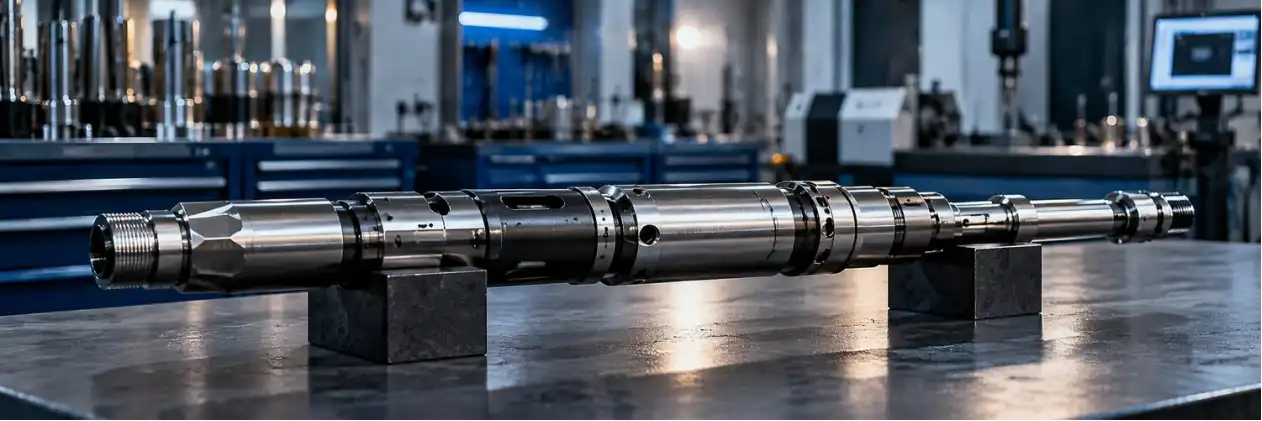
Understanding the Reliability of Single-Use Frac Plug Setting Tools
What the Tool Actually Does Downhole
A single-use frac plug setting tool is a one-time-use downhole intervention device made to use hydraulic or explosive force to place and set bridge plugs or frac plugs during plug-and-perf operations. Unlike most reusable tools, which need to be cleaned, have their seals replaced, and be inspected again between uses, this design is thrown away after just one use. Each stage gets a brand-new tool from the factory, so the amount of wear and tear on the old tools is no longer a part in the durability equation.
Common Failure Modes That Reliability Design Must Address
Field data reliably shows that most setting tool failures are caused by old internal seals that let pre-sets happen, elastomers that have been broken down by previous heat cycles, and thread galling from removing the crossover adapter too many times. In high-temperature/high-pressure (HTHP) wells, where temps below the wellbore are higher than 300°F and pressures are higher than 10,000 PSI, even a small problem with the seal can lead to a missed set. A single-use design stops cumulative decline by making sure that the internal shape is used in every release without being changed.
Key Performance Indicators Procurement Teams Track
Three key performance indicators (KPIs) that procurement managers and equipment engineers use to judge disposable setting tools are the first-run success rate (which should be above 98%), the consistency of setting force across a batch (which is usually between 5,000 and 30,000 lbf depending on plug size), and the repeatability of the adapter threads' dimensions as shown by a Coordinate Measuring Machine (CMM). These numbers are not just claims made on ads; they can be found in batch-level inspection records and hydraulic shell test certificates that reputable companies that make single-use frac plug setting tools include as standard.
Core Factors That Make a Single-Use Frac Plug Setting Tool Dependable
Material Selection and Metallurgical Control
A reliable throwaway setting tool is made of high-strength alloy steels that meet API 11D1 and NACE MR0175 (for sour H2S service) standards. For each load-bearing part, a full Material Test Report (MTR) shows that the steel's chemical and heat treatment meet the required mechanical qualities. People who want to buy a tool can't be sure that it can handle the highest burst and collapse pressures in a long-reach lateral without MTR paperwork.
Manufacturing Precision and Quality Control Protocols
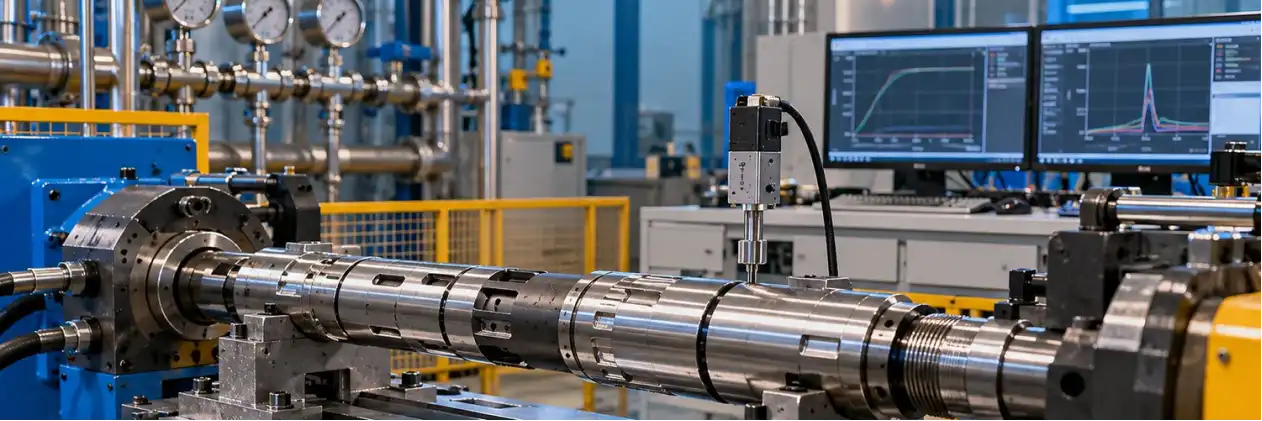
Five areas of quality control for a one-time use frac plug setting tool are looked at to make sure it works well during deployment. These are the checks that trustworthy makers make on every batch:
- Hydrostatic shell testing — verifying the tool body withstands maximum burst and collapse pressures before shipment.
- Seal integrity testing — nitrogen or hydraulic pressure testing of internal chambers to confirm no pre-set risk.
- Dimensional inspection via CMM — precise measurement of adapter threads and piston stroke length to guarantee compatibility across composite, dissolvable, and cast-iron plug brands.
- Material traceability — full MTR documentation for all load-bearing components, linked to the specific batch serial number.
- Tensile testing — validating axial load capacity for high pump-down speeds in extended laterals.
All of these rules work together to lower batch-to-batch difference, which is the main issue for service companies that buy 200 to 5,000 units a year.
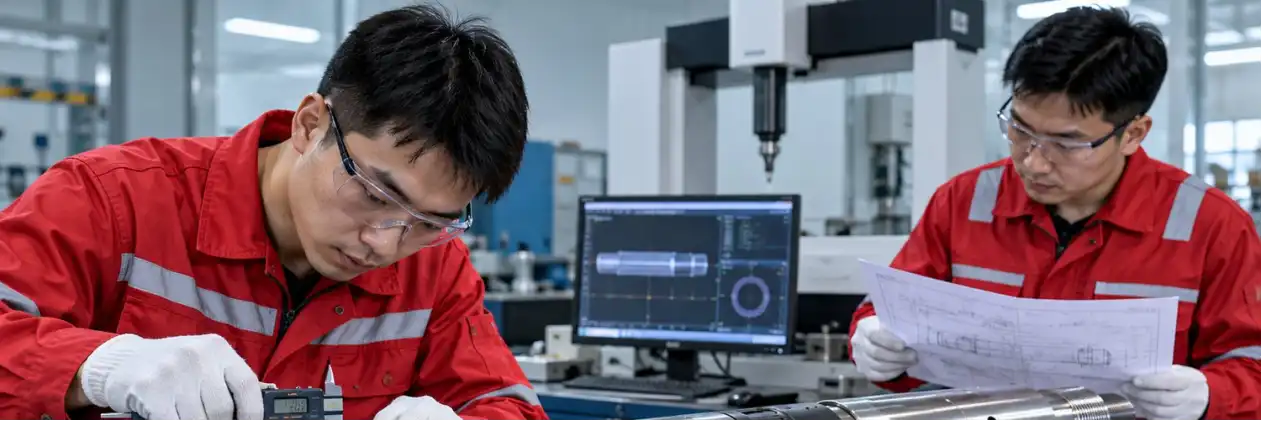
Design Features That Reduce Field Failure Risk
A built-in calming system inside the setting tool body takes in the mechanical shock that is created when it is used, which keeps the cable string from getting damaged by impulses. The precisely machined piston stroke makes sure that the plug is always compressed, no matter who is working on the site. When you use universal crossover adapters that have already been tried for thread fit, you don't have to make any changes in the field, which is what usually goes wrong when setting.
Comparing Single-Use vs. Multi-Use Frac Plug Setting Tools — Which Is More Reliable?
Technical Performance Comparison
Each stage starts with a setting tool that has been used before and has worn seals, micro-cracked threads, and elastomers that have been weakened by heat. A throwaway fixing tool, on the other hand, goes into each stage exactly as it was made. This difference has a direct effect on the success rates of isolation in HTHP well settings, where elastomer breakdown speeds up sharply. Data from multi-stage shale completions that has been made public shows that first-run success rates for single-use designs are always 2–4 percentage points higher than those for redressed reusable tools.
Total Cost of Ownership vs. Per-Unit Price
A frac plug setting tool that is only used once costs more per unit than a repair kit for a tool that can be used more than once. But the total cost per well changes a lot when you add in the cost of getting to and from a service center, fixing tools, downtime while waiting for them to be fixed, and the cost of a single failed stage, which can be anywhere from $50,000 to $150,000 in NPT on a horizontal well with multiple stages. If a service company switches to per-well consumable cost accounting, they save between 15% and 30% compared to fleets of tools that can be used more than once.
Selecting the Right Tool for Specific Well Conditions
Disposable setting tools are most useful for underwater activities and remote offshore sites where getting used parts would be too expensive. The shorter cycle time is good for high-volume horizontal shale completions because there is no need for a nearby tool technician between steps. In wells where H2S is known to be present, NACE-compliant disposable tools get rid of the risk of sour-service embrittlement that builds up over time in a used tool body.
Procurement Considerations for Reliable Single-Use Frac Plug Setting Tools
Certifications and Documentation Standards to Require
When looking at a company that makes single-use frac plug setting tool, the bare minimum of paperwork that should be shown is ISO 9001 certification for the quality management system, API 11D1 compliance for downhole tool design, NACE MR0175 material certification for sour service, and full batch traceability through COA/COC records. An HTHP laboratory that is accredited by the CNAS for in-house validation testing adds an extra level of verification that can't be done as quickly by third-party test facilities.
Supplier Capacity and Delivery Reliability
A real operational risk is batch consistency across big sales. A production risk exists when a supplier can keep tight tolerances on a trial order of 50 units but loses control of dimensions at 500 units. Buyers should ask for batch inspection data instead of just first-article reports and make sure they know how much the maker can make during times of expected high demand.
HAGRIEN's Single-Use Setting Tool Offering
HAGRIEN makes one-time-use frac plug setting tools that can be used only once. These tools have setting forces ranging from 5,000 to 30,000 lbf and have been shown to be more than 98% reliable in HTHP situations. The small, non-recoverable form gets rid of the need for expensive recovery and surface handling. It is made under the rules of ISO 9001, ISO 14001, and ISO 45001 certifications, and every order comes with full batch traceability documentation. Standard shipping takes two to four weeks for most sizes, but faster choices are available for busy projects.

Future Trends in Frac Plug Setting Tool Technology
Dissolvable and Degradable Material Integration
The next step in the development of plug setting tools is to add parts made of a magnesium metal that dissolves into the tool body. This method lowers the cost of milling after the job is done because the tool breaks down in the wellbore fluids instead of having to be removed by hand. HAGRIEN can extrude dissolvable magnesium alloys in-house, including bars up to Ø300 mm. This means that this is more of a near-term product path than an idea.
Smart Diagnostics and Actuation Monitoring
Downhole pressure signature logging and real-time confirmation of piston stroke during setting operations are becoming normal needs for wells that are very difficult to work on. These tests tell the surface team right away if the set went well, so they don't have to wait as long for pressure verification holds between steps.
Sustainability and Recyclability
High-grade alloy steel tools that are only used once can be recycled in their entirety when they reach the end of their useful life. Getting rid of the need to make multiple trips to deliver and fix tools lowers the amount of carbon dioxide released during each completion, which is something that is being looked at more and more in operator ESG reports.
Conclusion
A one-time use frac plug setting tool is reliable because it has material integrity, dimensional control, a fresh seal when it is used, and single-use frac plug setting tool manufacturer documentation that can be used to check all of these things. If service companies stick to per-well consumable cost models, moving away from fleets of reusable tools lowers their NPT risk and makes field operations easier. The choice comes down to picking a manufacturer whose quality system, documentation for traceability, and production capacity are all right for the size and speed of your program. For shale, deepwater, and remote wellsite applications, the technical and economic case for single-use design is the same.
FAQ
1. Is a single-use frac plug setting tool compatible with different plug types?
Yes. These tools are designed with universal crossover adapters that fit most composite, dissolvable, and cast-iron bridge plugs available in the market. Dimensional verification via CMM inspection confirms thread compatibility before shipment.
2. Does switching to disposable setting tools increase total completion cost?
The per-unit price is higher than a redress kit, but total per-well cost is typically lower once you account for reduced labor, eliminated logistics, and significantly lower NPT exposure from a failed stage.
3. How do these tools perform in H2S environments?
Single-use frac plug setting tools are available in NACE MR0175-compliant materials, specifically rated for sour service. Material test reports confirm metallurgical compliance for each batch.
4. Can these tools be triggered by both wireline and hydraulic actuation?
Yes. Models are available for both E-line (explosive power charge) and slickline or tubing-conveyed hydraulic actuation, depending on well configuration and operator preference.
5. What happens to the tool after use?
The tool is non-recoverable by design. High-grade steel components are 100% recyclable, and the reduction in round-trip logistics for refurbishment lowers the overall transportation footprint of the completion operation.
Get a Quote on HAGRIEN Single-Use Frac Plug Setting Tools Today
HAGRIEN has ISO-certified frac plug setting tools that can only be used once. These single-use frac plug setting tool are made for offshore operations, high-volume shale completions, and deployment from afar. Our tools help you with your per-well cost model because they have setting forces from 5,000 to 30,000 lbf, above-98% HTHP reliability, and full batch traceability. If you'd like a price or a trial order, please email cyrus@us-hagrien.com or visit us-hagrien.com.
References
1. American Petroleum Institute. API 11D1: Packers and Bridge Plugs. American Petroleum Institute, 2015.
2. NACE International. MR0175/ISO 15156: Petroleum and Natural Gas Industries — Materials for Use in H2S-Containing Environments. NACE International, 2015.
3. Snyder, R., & Melancon, J. "Reducing Non-Productive Time in Multi-Stage Fracturing Through Disposable Setting Tool Deployment." SPE Production & Operations, Society of Petroleum Engineers, 2019.
4. King, G. E. "Hydraulic Fracturing 101: What Every Representative, Environmentalist, Regulator, Reporter, Investor, University Researcher, Neighbor and Engineer Should Know About Estimating Frac Risk and Improving Frac Performance in Unconventional Gas and Oil Wells." SPE 152596, Society of Petroleum Engineers, 2012.
5. International Organization for Standardization. ISO 9001:2015 Quality Management Systems — Requirements. ISO, 2015.
6. Cameron, J., & Talbot, M. "Downhole Tool Failure Analysis in HTHP Horizontal Wells: Patterns and Cost Implications." Journal of Petroleum Technology, SPE, 2021.

USER EVALUATE
Here is the customer's evaluation of us