




How Does an Interventionless Sliding Sleeve Reduce Well Intervention?
By altering how fracturing stages are opened, an interventionless sliding sleeve can decrease certain well intervention needs. A key-activated system may remove the need for separate wireline runs and perforating guns to open stages, depending on the completion design. HAGRIEN's infinite-stage sliding sleeve is built on selective key-based activation, with the selected configuration dictating the intended stage sequence and operating limitations. Internal clearance and compatibility with dissolvable sealing elements post-activation also need model-specific verification. This guide explores how the technology can reduce intervention steps, what field records can demonstrate, and which technical details completion teams should verify before a pilot or full-pad deployment.
Why Well Intervention Slows Multistage Completions
Where the Time and Cost Go
Each new intervention needs the mobilization of equipment, rig-up, pressure-control procedures, operating time and service-team coordination. In a conventional plug and perf operation, wireline operations, perforating equipment, plug setting and removal may all affect the overall schedule. The actual sequence will depend on the completion design.
For a multistage lateral, the influence of consecutive operations may be enormous. But the result should be measured by the actual job program and not simply by the number of stages. Relevant cost categories might include servicing time, lease of equipment, people, non-productive time, pressure-control demands and any required grinding or corrective work.
The first step is to track the time and cost of each operation including handoffs and wait periods. That baseline might be compared against another completion system to assess which phases of intervention could be removed and which would still be required.
Limits of Conventional Approaches
Plug-and-perf often needs stage-specific methods of perforating and plugs to separate time periods during stimulation. Depending on design, the plugs may have to be machined or otherwise removed at a subsequent phase. The number of operations and time required depends on the well program, the equipment and the field conditions.
The ball-drop sleeves are driven by the sleeves with balls and mating seats. In graded seat size systems the seat arrangement may impact on stage sequencing, internal clearance and practical stage capacity. These constraints should be considered in light of the unique system requirements, and not extrapolated to all ball-actuated systems.
Sliding sleeves also require adequate activating conditions and a working shifting mechanism. Depending on the design the tool might be impacted by debris, scale, incorrect setup or poor operating conditions.
The non-intervention technique is designed to reduce the number of individual downhole runs needed for stage opening. It is a leg up depending on the sort of activation, verification required, contingency protocols, and access demands for follow-on ops.
Why Operators Are Testing Interventionless Options
Longer horizontal laterals and multistage stimulation programs have made efficiency of individual operations an inherent aspect of completion planning. In a 2016 estimate, the U.S. Energy Information Administration claimed hydraulic fracturing accounted for almost two-thirds of U.S. natural gas production and nearly half of U.S. crude oil production. These data are indicative of the industry at that time and should not be taken as current production estimates.
The key issue that operators encounter when contemplating other completion techniques is whether the system will be able to eliminate some intervention stages, while still observing the required stage access, isolation strategy and future well access.
And that issue may be addressed when a pilot program establishes up front quantitative criteria. Useful indicators include number of interventions, time per stage, successful opening records, pressure test results, equipment demands and total cost for a well-scoped process. Then the results need to be compared to a baseline. You have to utilize the same measurement procedures.

What Is an Interventionless Infinite-Stage Sliding Sleeve?
A Sleeve You Open From Surface
A sliding sleeve is a downhole completion component that adjusts the flow channel by means of ports in its housing. An internal sleeve moves with the tool’s trigger mechanism to open or shut the ports as specified.
Stage opening is designed to be performed in an interventionless arrangement without a separate wireline or coiled-tubing shifting run for the procedure. The way to commence and verify movement is product and completion system specific.
HAGRIEN describes its infinite-stage sliding sleeve as a key-activated design installed with the casing string. The claimed operational benefit is selective sleeve activation without a separate wireline-run opening operation or conventional perforating guns for each stage. These claims should be confirmed against the applicable product documentation and operating procedure.
Avoiding a separate opening run does not necessarily eliminate every intervention associated with a completion. Installation, verification, troubleshooting, and other downhole operations may still be required, depending on the well and the selected system.
What "Infinite-Stage" Means
The concept is called “infinite-stage” to stress its advantage over systems with limited capacity of stages due to a graded ball-seat structure. This is not to be interpreted as proof that any number of stages may be put and operated under any well settings.
The practical meaning of the claim for HAGRIEN's design must be derived from the relevant technical requirements. Check the activation technique, the arrangement of the sleeves, the installation requirements, the internal clearance constraints and any restrictions given for the expected completion.
Horizontal wells with 30 or more stages may be candidates for examination however stage count alone does not qualify a well. Other parameters include pressure and temperature as well as fluid properties, completion geometry and operation rules.
Before the design is finalized, ask the supplier to define “infinite-stage” for the actual product, and any constraints that may limit the proposed configuration. This means the claim is useful for engineering assessment and not an absolute operational assurance.
Where It Fits
Potential applications for a key-activated sliding sleeve include multistage fracturing in horizontal wells and other completion programs requiring selective access to downhole intervals. Consideration may also be given to re-fracturing of legacy wells, toe-stage initiation, extended-reach laterals and deepwater projects when tool and completion architecture are appropriate.
Each application needs a separate technical review. Re-fracturing may rely on existing casing sizes, integrity and constraints. Extended-reach wells may provide extra operational and access difficulties. Specific requirements may exist for certification, installation, intervention planning, and service support for deepwater projects.
A realistic screening procedure begins with the candidate well list. Document the number of stages, intended intervention procedures, needed internal clearance, operational circumstances and the anticipated requirement for future access. The project team may then select wells where the benefit of minimizing a certain intervention is quantifiable.
The selection of a pilot should be based on technical appropriateness and a well defined assessment process, not just on the anticipation of reduced operating time.
How an Interventionless Sliding Sleeve Works
Key-Activated Stage Selection
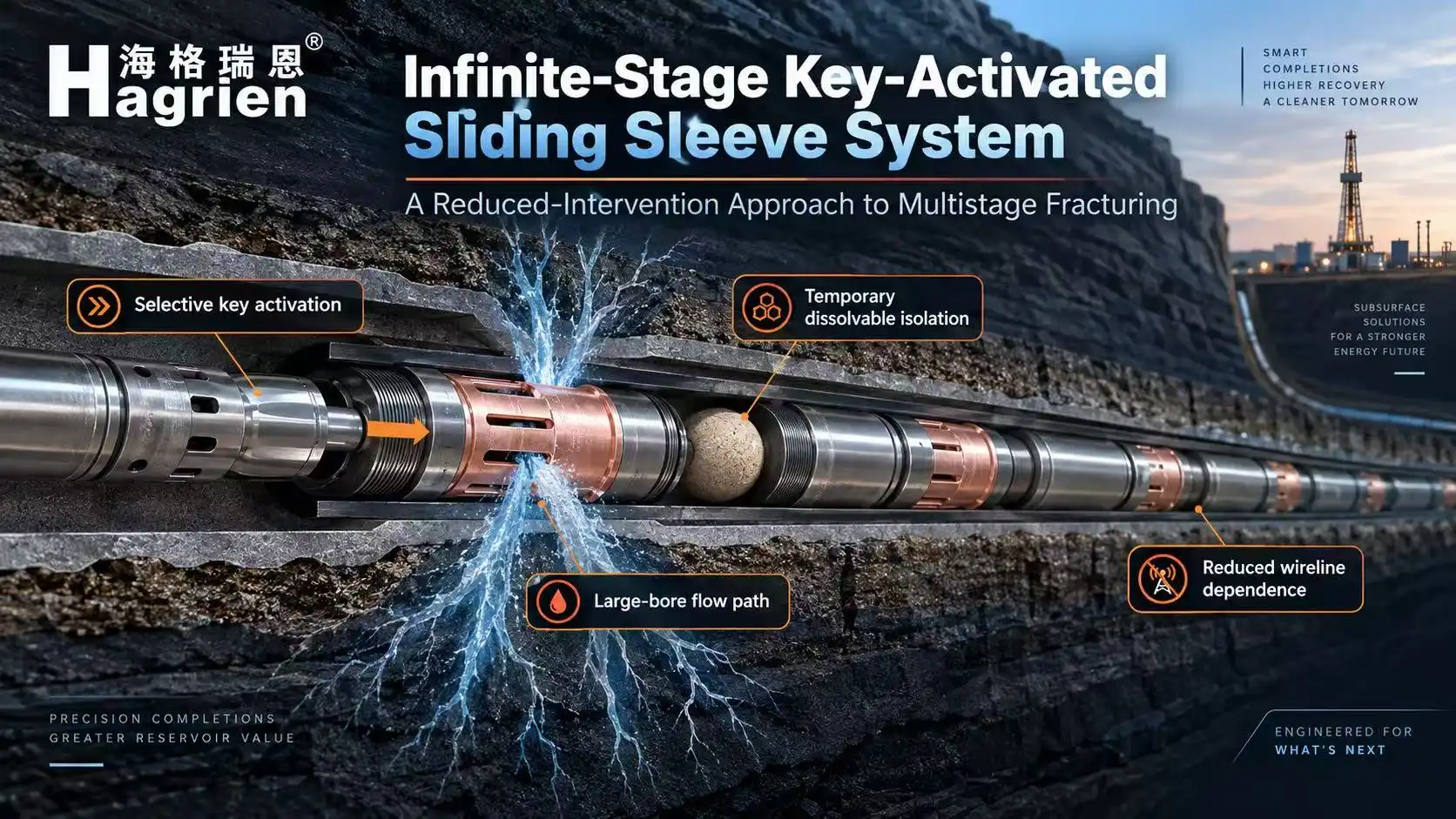
A key-activated sliding sleeve uses a selective activation mechanism to engage the intended sleeve. The activation key has to be the one that matches the sleeve it is supposed to function on. If you use the key in the manufacturer's procedure, it should run the sleeve you want and not other sleeves.
The product design specifies the method of actual identification, the order of allowable openings and the verification steps. Therefore, it is necessary that the completion teams check the associated drawings, activation instructions and configuration records before approving the system.
Useful evidence may include records of bench tests, profile match papers, inspection records and field records indicating the number of sleeves deployed and the effectiveness of opening operations. How much does each record cover? A successful test on one configuration does not prove that the configuration will function well on other configurations.
Before you start a single-well experiment, you need to agree on the criteria for opening, the data to be collected and what to do if the expected opening event is not validated.
Sleeve Shift and Full-Bore Access
When the activation mechanism engages the chosen sleeve, the inner portion moves to change the flow channel via the ports. The resulting internal clearance depends on the particular form of the tool and final place of operation.
The completion team should check the full-bore claim against the correct drawing and minimum internal diameter requirements. It will additionally check that the proposed wireline, coiled tubing, logging or re-entry equipment will run through the whole completion string including any other limitations.
The port form, sealing arrangements, materials and erosion associated design challenges should be investigated for the predicted service conditions. These characteristics may become relevant under high rate slurry, but flow rate alone cannot predict performance.
HAGRIEN's product description specifies a reference pump-rate range of 8 to 10 cubic meters a minute, or around 50 to 63 barrels a minute. The source record, related settings and conditions under which the rate was achieved should be verified before using this information in a design decision. The rate specified is neither a performance guarantee nor a general operating limit.
Dissolvable Sealing Elements and Temporary Isolation
If the completion design enables the selected element, temporary zonal isolation may be accomplished by the use of dissolvable sealing elements. The suitability depends on the choice of material, the geometry, the required isolation performance, the conditions of exposure and the expected dissolving behavior.
The dissolution is influenced by temperature, fluid chemistry, salinity, exposure duration and other material-specific characteristics. The dissolution target must thus be supported by adequate test findings in settings representative of the planned application. Describing an element as dissolvable does not establish a guaranteed dissolution time or indicate that every remnant will be eliminated.
According to HAGRIEN, they produce magnesium alloy bars up to Ø300 mm in-house, and they are able to modify the alloy and processing conditions. Manufacturing claims should be confirmed with suitable production documentation. The capability of making bars does not ensure that a final sealing element will function or that it will be acceptable for a specific sliding sleeve configuration.
For technical evaluation, provide the bottom-hole temperature, fluid composition, salinity information and target operating window. The material specification and dissolution test results of the actual element under evaluation should also be provided. Any claim for residual or future access must be supported by facts pertaining to that application and element.
How an Infinite-Stage Sliding Sleeve Reduces Well Intervention
Removing Runs From the Stage Cycle
A conventional plug-and-perf program typically includes wireline operations, plug deployment, perforating, and other stage-specific steps before or during fracturing. A compatible key-activated sleeve system may remove the separate wireline-run opening operation and perforating guns from the relevant stage-opening process.
This can change the sequence of operations and may reduce certain equipment mobilizations, waiting periods, or pressure-control rig-ups. However, the overall reduction depends on the original completion design and the operating steps that remain necessary.
A full-bore design may also reduce certain restrictions associated with graduated ball seats, but it does not automatically eliminate all later milling, intervention, or remedial work. Those outcomes depend on the complete completion configuration and the tools required for subsequent operations.
To evaluate the economic case, compare the proposed system with the current completion program using the same stage count and cost boundaries. Record the number of avoided operations, remaining interventions, stage-opening time, equipment costs, and any additional qualification or verification requirements. Treat projected savings as estimates until they are supported by comparable field results.
What the Field Record Shows
HAGRIEN's product information refers to reference records from a partner source. The figures cited include more than 10,000 meters of cumulative horizontal section, 347 sleeves used, and a fastest reported single-stage time of 59 minutes. These figures may help establish the scope of the reported application, but they do not independently establish average stage time, long-term reliability, or performance across all well conditions.
The same reference information cites an insert bump pressure of 43 MPa, a casing test pressure of 20.2 MPa, and a 30-minute hold during which pressure reportedly dropped by 0.2 MPa. The exact test setup, measured location, acceptance criteria, and tested component or assembly should be verified from the underlying records.
These values should not be treated as interchangeable with a product's rated working pressure or as universal acceptance criteria. A test result is meaningful only in relation to its test conditions, configuration, and purpose.
Before using the figures for procurement or qualification, request the underlying project records and confirm the relevant model, test method, operating conditions, and data scope. Where possible, compare the records with the requirements and acceptance criteria for the intended well.
Keeping the Bore Open for Later Work
Internal clearance after sleeve activation can be important when later diagnostic, logging, intervention, or re-entry operations are planned. The relevant question is whether the minimum internal diameter of the complete system meets the requirements of the equipment intended to pass through it.
HAGRIEN's full-bore claim should be checked against model-specific drawings and the dimensions of subsequent tools. Other components in the completion may impose restrictions even if the sleeve itself meets the required clearance.
Dissolvable sealing elements may support temporary isolation without requiring the same removal procedure as a non-dissolvable component, depending on the system design. However, dissolution performance and the amount of residual material must be assessed using relevant evidence rather than assumed from the material category.
The technical review should also cover contingency planning. Ask the supplier to describe the specified response if a sleeve does not shift, including the available diagnostic information, operating limits, and approved recovery procedures. A contingency plan should be consistent with the actual tool design and the completion program.
 Infinite-Stage Sliding Sleeve Compared With Other Completion Solutions
Versus Plug-and-Perf
Plug-and-perf is an established completion method, and crew familiarity may be an important factor in project planning. The method generally involves wireline-run perforating operations and stage isolation with plugs. Depending on the design, plug removal or milling may also be required.
A key-activated infinite-stage sliding sleeve may avoid separate wireline opening runs and perforating guns for stages accessed through the sleeve system. That can change the operating workflow, but it does not establish that the sleeve approach will always be faster or less expensive.
Plug-and-perf may remain appropriate where the existing workflow suits the well design, the required perforation arrangement, and the available service capability. A sleeve-based approach may be worth evaluating when stage count, planned opening sequence, internal-clearance requirements, and intervention costs support the alternative.
For a fair comparison, use the same stage count and include equipment, personnel, time, pressure-control operations, verification, contingency work, and any later removal or intervention requirements. The result should be based on project-specific estimates or comparable field data rather than assumed savings.
Versus Ball-Drop and Conventional Sleeves
Ball-drop sleeves use balls and seats to initiate actuation. In systems with graduated seats, the sequence and geometry may constrain stage arrangement or internal clearance. The actual limits depend on the specific design.
Other sliding sleeves may require a separate shifting tool or intervention to change position. A key-activated system uses its designated activation mechanism to engage the intended sleeve. Where non-sequential operation is supported, this may offer a different approach to stage selection.
Dissolvable frac plugs and dissolvable bridge plugs serve different functions and should not be treated as direct substitutes for every sliding-sleeve application. Their suitability depends on the completion architecture, isolation requirements, operating conditions, and the procedures needed before subsequent operations.
HAGRIEN describes offering dissolvable bridge plugs as well as sliding sleeves. Buyers should compare the proposed systems against the same well requirements, including trajectory, stage count, fluid conditions, temperature, internal clearance, activation or removal procedures, and risk-management needs.
Lifecycle cost should include installation, operation, verification, potential intervention, and future access—not only the purchase price of the individual tool.
Where It Pays Back Most
An interventionless sliding sleeve may warrant closer evaluation when a well has a high stage count, significant costs associated with stage-opening interventions, and a clear requirement for later internal access. These factors can make the potential benefit easier to measure.
Candidate applications may include multistage horizontal shale wells, selected extended-reach laterals, toe-stage initiation programs, and some re-fracturing projects. Deepwater applications require particular attention to project-specific qualification and operational requirements.
Potential constraints include unsuitable dimensions, operating conditions outside the available qualification evidence, incompatible fluids or materials, and debris-related risks. These issues should be evaluated against the actual product and well conditions rather than used as universal exclusions.
A candidate-well assessment should record stage count, current intervention steps, internal-clearance requirements, operating conditions, required isolation, and planned future operations. The project team can then compare the expected intervention reduction with the technical and commercial requirements of a pilot.
Installation, Operation, and Supplier Selection
Running and Function Checks
Installation and function checks should follow the approved product documentation and completion program. Before running the tool, inspect the components and verify their identity, dimensions, connections, ports, seals, and associated records as required by the inspection plan.
During installation, follow the manufacturer's handling, make-up, and running procedures. Record the tool positions and relevant identifiers so the installed configuration can be compared with the approved completion design.
Pressure testing must follow the procedure and acceptance criteria specified for the actual assembly. A partner record that cites a 20.2 MPa casing test and a 30-minute hold may be useful as a reference, but it should not be assumed to define the required test for another configuration or well.
If the expected sleeve movement cannot be confirmed, the crew should follow the approved diagnostic and contingency procedure. The review may consider available pressure and volume records, operating conditions, fluid properties, surface equipment, and possible obstructions. No single observation should be treated as a definitive diagnosis without considering the tool design and the available evidence.
Crew training and a pre-job review can help ensure that the activation procedure, verification criteria, recordkeeping, and contingency steps are understood before the operation begins.
Questions to Ask a Supplier
A technical review should establish how the activation key corresponds to its sleeve, which configurations are covered by the available field records, and what the records actually demonstrate. Ask for the measured stage-time data and its definition, the applicable pressure-test reports, and the documentation supporting the proposed operating envelope.
For dissolvable sealing elements, request the relevant material information and test records for the intended temperature and fluid conditions. Also clarify what evidence is available for post-dissolution access and what operating limitations remain.
HAGRIEN states that it uses quality-control procedures, CNAS-accredited testing, and batch traceability, and that COA, COC, and SDS documents can be supplied on request. These claims should be confirmed against the documents available for the specific product and order. Verify the relevant laboratory's accreditation scope before treating a test as covered by CNAS accreditation.
The document types serve different purposes: a certificate of analysis reports specified analytical results, a certificate of conformity addresses conformity to stated requirements, and a safety data sheet provides relevant safety and handling information. Confirm which documents apply to the product and configuration being purchased.
Lead Time, Customization, and Support
Lead time should be assessed for the actual product being ordered. The availability of dissolvable magnesium alloy bars does not establish the availability or production time of a finished sliding sleeve. Standard products, custom configurations, testing requirements, order quantities, and delivery arrangements may affect the schedule.
HAGRIEN's published lead-time and response-time claims should be confirmed for the specific order. Request a written quotation that identifies the product configuration, required documentation, production or stock status, delivery estimate, and any assumptions or dependencies.
For North American projects, confirm the contracting entity, technical-support arrangements, delivery responsibilities, and communication process relevant to the order. A pilot-to-pad program may also require agreed progress reporting and technical review milestones.
For an infinite-stage sliding sleeve project, the RFQ should include the casing program, connection and clearance requirements, stage count, operating conditions, fluid information, intended activation sequence, and available completion drawings. The supplier can then identify missing information, confirm the proposed configuration, and establish a project-specific quotation and delivery schedule.
Conclusion
An interventionless sliding sleeve may reduce well intervention by changing how stages are opened and removing certain separate wireline-run operations from the stage-opening process. The practical benefit depends on the selected activation mechanism, completion architecture, required verification, and the operations that remain necessary.
An infinite-stage sliding sleeve is intended to address stage-capacity constraints associated with certain conventional designs, but the term should be defined against the actual product and operating envelope. Internal clearance, dissolvable sealing-element performance, pressure-test results, and field opening records must likewise be assessed within their documented scope.
HAGRIEN's cited partner records—including cumulative horizontal footage, sleeve count, reported stage time, and pressure-test figures—can provide starting points for technical review if the underlying records are available. They should not be treated as universal performance guarantees or substituted for product-specific qualification.
Before adopting the system, compare the proposed configuration with the existing completion workflow, agree on measurable pilot criteria, and verify the applicable drawings, test reports, material information, and operating procedures. This provides a more defensible basis for deciding whether reducing specific intervention steps will deliver value in the intended well.
FAQ
1. How does an infinite-stage sliding sleeve cut well intervention?
A key-activated sliding sleeve may allow a stage to be opened without a separate wireline-run opening operation or conventional perforating guns for that stage. The extent of intervention reduction depends on the complete completion design and operating procedure. A pilot with a defined baseline can help quantify the actual difference.
2. Does the bore stay open after activation?
HAGRIEN describes its design as providing full-bore access after activation. Confirm the minimum internal diameter from the applicable product drawing and check it against the tools planned for later operations. If dissolvable sealing elements are used, request relevant dissolution data for the intended temperature and fluid conditions.
3. How many stages can one well use?
The term “infinite-stage” describes the design's intended advantage over certain stage-count constraints associated with graduated ball-seat systems. The practical number of stages must still be confirmed against the selected configuration, completion design, operating conditions, and installation procedure. A stated 30+ stage application should be supported by relevant product and field documentation.
4. What data should I request before a trial?
Request the applicable product drawings, activation instructions, field records showing the number of sleeves deployed and opening outcomes, relevant stage-time records, pressure-test documentation, and available material and batch records. For dissolvable elements, ask for test evidence relevant to the expected temperature and fluid conditions. Confirm that each document applies to the proposed configuration and intended well.
Discuss Your Interventionless Completion Requirements with HAGRIEN
If you are evaluating an infinite-stage sliding sleeve for a multistage completion, contact HAGRIEN at cyrus@us-hagrien.com. Include your casing program, connection and internal-clearance requirements, stage count, operating pressure and temperature, fluid information, and available completion drawings.
The technical review can then identify the relevant sleeve configuration, any missing design inputs, and the supporting documentation available for review. Request applicable product drawings, test reports, and batch records, and confirm the product-specific quotation and delivery schedule before committing to a pilot or full-pad deployment.
Visit us-hagrien.com for product information and further technical discussion.
References
1. U.S. Energy Information Administration, Today in Energy: Hydraulic Fracturing Accounts for About Two-Thirds of U.S. Natural Gas Production, 2016.
2. Bellarby, J., Well Completion Design, Elsevier, 2009.
3. Economides, M. J. and Nolte, K. G., Reservoir Stimulation, Wiley, 2000.
4. International Organization for Standardization, ISO 14998, Petroleum and Natural Gas Industries—Downhole Equipment—Completion Accessories, 2013. Verify the title, edition, and applicability before publication.
5. International Organization for Standardization, ISO 14310, Petroleum and Natural Gas Industries—Downhole Equipment—Packers and Bridge Plugs, 2008. Verify the applicable edition and use only within its relevant scope.
6. Society of Petroleum Engineers, Petroleum Engineering Handbook, Volume IV: Production Operations Engineering, 2007.

USER EVALUATE
Here is the customer's evaluation of us