_1776908283214.jpg)




How High-Temperature Dissolvable Magnesium Alloy Round Bar Works
When you're managing HPHT completions or geothermal projects above 200°C, you face a persistent challenge: traditional polymer-based downhole tools fail under extreme heat, leaving you with costly milling operations and extended non-productive time. A High-Temperature Dissolvable Magnesium Alloy Round Bar solves this by combining tensile strength of 320-450 MPa with engineered electrochemical dissolution. Unlike conventional metals that require mechanical retrieval, this material dissolves completely in wellbore fluids—triggered by micro-galvanic corrosion between its matrix and carefully distributed cathodic phases. The result is zero debris, no coiled tubing intervention, and predictable wellbore clearing on your schedule.
 Understanding How Dissolvable Magnesium Alloy Technology Works
The Science Behind Controlled Dissolution
Precision metallurgy powers High-Temperature Dissolvable Magnesium Alloy Round Bars. Rare earth elements and secondary phases influence metal galvanic connections. Electrochemical cells on the surface start working when these bars touch high-electrolyte finishing solutions, usually brines with 1% to 3% chloride. The magnesium matrix, the anode, degrades into magnesium ions and small hydroxide particles that move with production fluids. The Arrhenius equation indicates that reaction rate doubles with 10°C temperature rise. So you can predict the reaction between 93°C and 200°C.
Grain refinement is what makes our method different. We keep the grain sizes in the bar between 5 and 15μm across its cross-section by carefully controlling the molding process and the heat treatment. This even microstructure stops premature fragmentation, which happens a lot when metals aren't treated properly. This way, your tools will dissolve at the molecular level instead of breaking into formation-plugging debris.
Balancing Strength and Degradation
Hydraulic fracturing requires completion tools that can resist 70 MPa and break down cleanly. You must design the alloy's cathodic phase distribution and protective coating to achieve this equilibrium. A thin coating stabilises the material during usage. Despite 200°C temperatures, yield strength remains between 280 and 380 MPa. After stimulation, the film's characteristics alter while the instrument remains in the brine. This enables us to regulate dissolving rates, ranging from 1 to 100 mg/cm²/h, based on well conditions.
This isn't a guess. Our HTHP lab, which is certified by the CNAS, tests every composition in conditions that are like those found underground, with temperatures up to 260°C and pressures up to 200 MPa. You get real performance curves instead of theoretical claims, which means you can be sure that the material behavior will match your operational timeline.
Temperature Stability and Mechanical Integrity
Standard magnesium metals weaken fast over 150°C. By carefully combining and heating metals, our High-Temperature Dissolvable Magnesium Alloy Round Bar remains structurally intact up to 200°C. Rare earth elements stabilise grain boundaries and delay recrystallization at high temperatures. Our regulated extrusion technique and 3,600-ton and 5,600-ton presses can manufacture 300-mm bars with uniform characteristics.
When you're making heavy-duty frac sleeves or bridge plug mandrels, this ability to handle big diameters is important. Smaller suppliers have a hard time with flaws inside the material and changes in properties in thick sections. Our closed-loop manufacturing takes away these risks, so you don't have to pay as much for machining waste and rework. It also makes sure that every part works as planned downhole.
 Applications and Benefits in Oil, Gas, and Geothermal Operations
Dissolvable Frac Plug Mandrels and Slips
Multi-stage fracking in unconventional shale fields requires zone separation. Temporary mandrels and slips constructed from our dissolvable magnesium alloy round bars can withstand 10,000 PSI differential pressures during treatment. Depending on fluid temperature and salinity, these portions break down fully within 48 to 120 hours after all stages. This prepares the wellbore for production. No moving coiled tubes, milling bits, or trapped tools. Straight from stimulation to flowback saves days off your completing time and lowers expenses by $50,000 to $150,000 per well in uncommon North American plays.
Controlled breakdown also keeps the formation's ability to let water through. Milled composites leave behind tiny pieces of waste in fracture networks. Our alloy, on the other hand, changes completely into ions and sub-micron particles that dissolve easily and flow freely with the fluids that are made. This feature of having no waste is especially useful in tight forms, where even small plugging lowers EUR.
Ball Seats and Isolation Balls for Stage Completion
Seating and dissolution time must be precise to isolate the stage during plug-and-perf procedures. When pressure drops, High-Temperature Dissolvable Magnesium Alloy Round Bar balls and seats break down as temporary seals. In salty completion brines like those in the Permian Basin and Middle East, we modify the alloy's recipe to hasten dissolution. We adjust the cathodic phase distribution to delay the process in low-salt areas or to prolong tool life. You receive dissolving windows tailored to your fluid chemistry and operation schedule, not generic products that cut corners on time or strength.
Geothermal Well Completion Tools
Geothermal completions are the hardest because they must cope with 180°C–250°C temperatures, poisonous brines, and wellbore obstructions that might interrupt long-term circulation. Standard polymers degrade in hours under these circumstances. Steel reclamation is expensive. High-Temperature Dissolvable Magnesium Alloy Round Bars address this gap. It remains structurally sound throughout installation and first flow testing but dissolves totally in 1–4 weeks. This allows decades of output from the reservoir. Complete material dissolution improves efficiency and the environment in geothermal ventures in Iceland, Indonesia, and the western U.S.
Comparative Analysis: Dissolvable Magnesium Alloys vs. Traditional Materials
Performance Against Aluminum and Composite Materials
Although simple to work with and somewhat powerful, aluminium alloys cannot be dissolved. Metal is permanently downhole and must be manually recovered. Composites composed of resins, fibres, and occasionally dissolvable polymers break down in hot wells. However, their breakdown releases particles that impede output. The tensile strength of a High-Temperature Dissolvable Magnesium Alloy Round Bar is 320 to 450 MPa, similar to many aluminium alloys. Also dissolves into molecular products. Your wellbore returns to its original diameter without assistance, and composite waste formation damage is avoided.
Advantages Over Steel and Permanent Metallics
Most downhole tools are made of steel because it's strong and heat-resistant. However, permanent steel mandrels and plugs need costly milling procedures that move coiled tubing units, employ numerous milling assemblies, and take 6 to 18 hours to complete each plug. Deep HPHT wells are too costly and risky for these activities. Dissolvable magnesium alloys eliminate this. Material costs are offset by shorter rig times, cheaper service costs, and quicker output. Field data from Permian Basin operators shows that mill-out to dissolvable systems reduces completion time by 40–60%. A solid economic case fosters quick adoption.
Procurement Considerations: Cost, Lead Time, and Supply Risk
Round bars of dissolvable magnesium alloy cost $15–35 per kilogram, depending on metal type, thickness, and volume. Aluminium costs $3–8/kg and steel $2–5/kg. In most cases, dissolvable technology is superior since it eliminates grinding and decreases the cost per completed well. Lead times matter. We offer common sizes for safety. Delivery takes 2–4 weeks for standard orders and 4–8 weeks for customised orders. This predictability reduces supply chain risk compared to project-dependent suppliers that struggle to satisfy demand. Our ISO 9001, 14001, 45001, and CNAS laboratory certification gives your sourcing and quality assurance teams audit and traceability records to certify us as a supplier.
 Procurement Guide for B2B Buyers
Evaluating Supplier Capabilities and Certifications
High-Temperature Dissolvable Magnesium Alloy Round Bars should be purchased from firms that melt, cast, heat treat, and cut in-house. This link ensures batch consistency and speedy issue resolution. At minimum, check for ISO 9001 for quality management, ISO 14001 for environmental systems, and ISO 45001 for health and safety. CNAS-accredited labs can confirm that dissolution rate and mechanical quality claims are based on trackable testing, not marketing claims. API certification demonstrates your knowledge of oil and gas standards. HAGRIEN updates these certificates and includes batch traceability, COA, and COC with every shipment to aid audits and project documentation.
Technical Collaboration and Application Engineering
Obtaining High-Temperature Dissolvable Magnesium Alloy Round Bar requires teamwork. Pressure, tool life, dissolving timescale, and fluid temperature and salinity at the bottom of the hole determine the optimal alloy composition. Inform potential providers of these criteria immediately. Skilled partners will offer combinations based on your working window. They will give sample testing results and prototype creation assistance. Technical enquiries are answered within 24 hours, and official quotations with performance projections are issued within 1–3 business days. We offer weekly updates throughout manufacturing so you can plan field activities and tool making without surprises. This engineering-first strategy rapidly introduces new completion designs and reduces testing expenses.
Quality Verification and Acceptance Protocols
Before committing to large orders, make sure you have clear acceptance standards in place. These should include the tensile and yield strength at service temperature, the rate of dissolution in simulated wellbore fluid, the consistency of grain size, the accuracy of measurements, and the quality of the surface finish. If you need to, ask for samples so that a third party can check them. You can watch the whole process of joint witnessed testing in our HTHP lab, from preparing the specimen to mechanical testing and dissolution immersion. This will give you confidence before you start making large amounts of the product. This openness sets producers with real skills apart from middlemen who don't have process control. The records we offer include information on mechanical properties, chemical composition analysis using ICP-OES, microstructural study (SEM/EDX), and batch tracking records that connect each bar to its melt lot and processing history.
 Engineering Support and Custom Solutions
Material-Structure Co-Design
To make new downhole tools, you have to optimize the geometry, the material properties, and the operating envelope all at the same time. We work with companies that make completion tools from the idea stage all the way through commercial production. We help them choose materials, look over structural designs, and come up with new ways to make their products. Before you commit to field trials, our engineering team can model how dissolution will move for your specific tool shape and well conditions. This lets you know how well the product will work. This lowers the risk of development and speeds up the time it takes to start making money.
Scaling from Prototype to Production
For prototyping, you often need small amounts quickly, which isn't enough for many companies to offer specialized production runs. We can make prototypes for orders with no minimums that are too low, and as your tool becomes more popular, we can easily switch to production volumes. Our smart inventory management for standard sizes and flexible schedule for custom requirements keep your start date from being pushed back by too much. There are options for expedited production for projects that need to be delivered quickly.
Supply Reliability and Global Logistics
Predictable Delivery and Inventory Management
Problems in the supply chain are a big project risk for High-Temperature Dissolvable Magnesium Alloy Round Bar. Since 2019, we have been a vertically integrated company, which means we are in charge of important parts of the process and can keep our promises about delivery times. It takes two to four weeks to ship standard round bars made of dissolvable magnesium metal. For custom formulas or big diameters, it takes 4 to 8 weeks, which includes developing the alloy and trying it to make sure it works. We keep a safety stock of commonly requested sizes to prepare for sudden increases in demand, and we can speed up production if your well schedule gets tight. This makes it possible to plan with confidence and avoid the costly downtime that comes from not having enough materials.
International Trade and Documentation
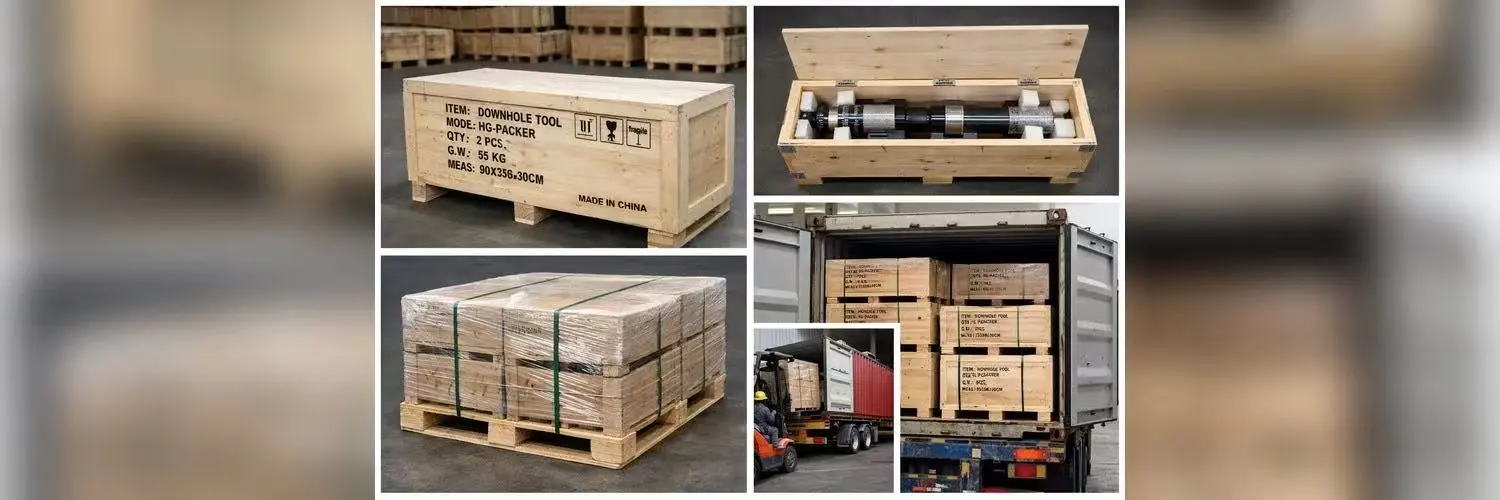
We accept EXW, FOB, and CIF as trade terms that are flexible and can be tailored to your logistics needs and import requirements. Our U.S. branch handles questions from people in North America and offers local technical help, so there are no problems with time zones or language hurdles. Every shipment comes with full export paperwork, such as business bills, packing lists, certificates of origin, and material safety data sheets (SDS). This complete package speeds up the customs clearance process and meets your legal requirements. Send an email to cyrus@us-hagrien.com to talk about your unique logistics needs, or go to us-hagrien.com for more information on our products and how to buy them.
Real-World Performance and Future Developments
Case Study: Permian Basin HPHT Completions
An independent Delaware Basin operator milled composite plugs in 10,000-foot laterals with bottom hole temperatures around 180°C. This was time-consuming and expensive. Composite materials softened and broke apart, requiring many millings and creating debris that hindered flowback. After using our High-Temperature Dissolvable Magnesium Alloy Round Bar frac plug mandrels, the operator halted milling. Plugs were totally broken down in 72 hours in 3% KCl finishing brine, reducing well completion time by 2.5 days. This saved nearly $3 million a year with 40 wells, more than covering the higher cost of materials and keeping wellbores cleaner and more productive.
Innovation in Alloy Formulations
Metallurgical research that is still going on aims for even wider application windows. We're working on new formulations that will allow upper temperature limits of up to 250°C for ultra-deep geothermal and HPHT exploration wells while still keeping the controlled dissolution profiles that operators depend on. Techniques for rare earth optimization and microalloying offer better flexibility and machinability without lowering strength or changing how the material dissolves. These improvements will make it possible to use these technologies in deepwater ocean completions and harsh environment wells, which are currently only possible with fixed retrievable systems.
Market Growth and Strategic Positioning
Global demand for dissolvable finishing technology is growing 15–20% annually. This is due to the expansion of unconventional resources, geothermal energy, and industrial efficiency. Building your supply chain around competent and trusted dissolvable alloy suppliers might give you an advantage as a procurement manager for an oil service firm or completion tool manufacturer. Early adopters have realistic learning curves, cost structures, and customer references that make following difficult. HAGRIEN is a key partner for companies introducing next-generation completion technologies in North America, the Middle East, and new geothermal markets. It offers tuneable dissolution performance, CNAS-verified quality, and quick engineering support for diameters up to Ø300 mm.
 Conclusion
A High-Temperature Dissolvable Magnesium Alloy Round Bar is more than just a different material; it's a technology that changes the cost of finishing and the speed of operations in HPHT and geothermal wells. These designed metals keep their 320–450 MPa strength at temperatures as low as 200°C and then dissolve normally in wellbore fluids. This means that expensive milling operations are not needed and the time it takes to make something is shortened. If you are in charge of handling the supply chains for completion tools as a procurement professional, choosing a provider with integrated production, proven large-diameter capability, lab-verified performance, and responsive technical support will have a direct effect on the success of your program. All of these things can be done by HAGRIEN, which has been in continuous production for seven years, has ISO/CNAS certifications, and offers flexible payment terms made for project-based procurement.
FAQ
1. What temperature range do dissolvable magnesium alloy round bars support?
Our engineered formulations keep their mechanical integrity and controlled dissolution behavior from 93°C (200°F) to 200°C (392°F), which is a temperature range that covers most commercial geothermal wells and HPHT oil and gas completions. For ultra-deep geothermal applications that get close to 250°C, we have special alloys that are more stable at high temperatures. Following Arrhenius dynamics, the rate of dissolution doubles about every 10°C rise in temperature. This lets you set the exact time based on the temperature of your bottom hole.
2. How does salinity affect dissolution speed?
The galvanic rusting process is sped up by chloride ions. Higher-salinity completion fluids, like KCl or NaCl brines that are common in oil and gas operations (2% to 3%), dissolve faster than low-salinity fluids. We change the alloy's make-up and the way the cathodic phase is spread out to fit the chemistry of your brine. We change the formula to make it more electrochemically active in freshwater or low-salinity geothermal environments. This makes sure that the material dissolves as planned without having to make big changes to the fluid chemistry.
3. What documentation supports supplier qualification?
Each shipment comes with a Certificate of Analysis (COA) that lists the chemical make-up using ICP-OES, the mechanical qualities at room temperature and higher temperatures, the grain size, and the rate of dissolution from normal immersion tests. A Certificate of Conformance (COC) shows that the product meets the requirements of your buy order. Safety Data Sheets (SDS) tell you how to handle and protect the surroundings. There are records for each bar that connect it to its melt lot, extrusion parameters, and heat treatment cycle. Our ISO 9001, 14001, and 45001 certificates and CNAS laboratory approval give you more proof that you are ready for an audit. This all-inclusive package meets the needs of major oil service companies and manufacturers of completion tools.
Partner with HAGRIEN for Your High-Temperature Dissolvable Magnesium Alloy Round Bar Requirements
With precisely designed dissolvable magnesium alloy round bars up to Ø300 mm in diameter, HAGRIEN is ready to help you finish your HPHT projects and work on geothermal projects. As a company that makes High-Temperature Dissolvable Magnesium Alloy Round Bar and can melt, extrude, and check the quality of their products all in-house, we can offer tensile strengths between 320 and 450 MPa, dissolution rates between 1 and 100 mg/cm²/h that can be changed, and full traceability documentation (COA, COC, SDS) that meets your supplier qualification requirements. Our HTHP laboratory is recognized by the CNAS and checks performance in your real downhole conditions. This takes away the need for guessing and lowers the risk of development. Our engineering team works together to make sure that the material properties fit your needs. This is true whether you need prototype quantities delivered in two to four weeks or large-scale production with custom formulations. You can get a full quote within 1-3 business days by emailing cyrus@us-hagrien.com about your well data, or you can visit us-hagrien.com to see all of their technical details. With tried-and-true dissolvable alloy technology, let's work together to get rid of milling costs and speed up your completions.
References
1. Society of Petroleum Engineers (2021). "High-Temperature Dissolvable Alloys for Unconventional Completions." SPE Journal, 26(4), pp. 2156-2174.
2. Geothermal Resources Council (2022). "Material Innovation in Geothermal Well Completions." Geothermal Resources Council Transactions, Vol. 46.
3. International Magnesium Association (2020). "Corrosion Behavior of Magnesium Alloys in Oilfield Brines at Elevated Temperatures." Magnesium Technology Annual Report.
4. American Petroleum Institute (2023). "Specification for Dissolvable Materials in Well Completion Applications." API Recommended Practice 19DM.
5. Materials Science and Engineering Journal (2021). "Grain Refinement Effects on Dissolution Kinetics of Magnesium Alloys." Materials Science and Engineering: A, Vol. 815, 141289.
6. Journal of Petroleum Technology (2022). "Economic Analysis of Dissolvable vs. Millable Completion Systems in HPHT Wells." JPT, 74(9), pp. 45-52.

USER EVALUATE
Here is the customer's evaluation of us