_1776908283214.jpg)




How to Select a frac sleeve for High-Pressure Wells
Selecting the right frac sleeve for a high-pressure well comes down to five core questions: Does the activation mechanism match your stage count? Can the sleeve hold differential pressure without leaking? Will the dissolvable sealing elements clear the bore completely after stimulation? Does the tool reach full bore after opening? And can the supplier back every claim with traceable test data? Answer those questions rigorously, and you build a completion program that runs fewer intervention runs, tighter stage cycles, and more predictable production results.
 Understanding Frac Sleeves and Their Role in High-Pressure Wells
A frac sleeve is inside the casing or lining string and works as a selective valve. It only opens when the right activation signal is sent, letting compressed fluid reach the target area. If you get the basics right before you write a specification, you won't have to go back and look it over for weeks.
How a Frac Sleeve Differs from a Conventional Sliding Sleeve?
Most moving sleeves can be opened or closed by applying direct mechanical or hydraulic force from the surface. A frac sleeve, on the other hand, has a built-in way to recognize things, like ball-seat sizes, coded keys, or radio-frequency identifiers, so each stage opens on its own and in the right order without having to run wires.
Why Material Grade Drives Pressure Rating
Burst and fall resistance are directly related to the grade of the alloy. Tools made from AISI 4140 or P110/Q125 steel usually have burst values above 10,000 psi. The body also has to be able to handle the erosive slurry that is used for high-proppant pumping. When there is more than 2 lb/gal of sand, tungsten carbide or hardened alloy inserts on the flow ports make them last longer.
The Role of Dissolvable Sealing Elements
The temporary seals that kept each stage separate must leave a clear bore after stimulation. This is possible with dissolved magnesium alloy seals as long as the alloy system is right for the temperature, salt, and fluid chemistry downhole. Field teams can be sure that the bore will open on time because there is a planned dissolution window instead of a vague "will dissolve" claim.
Critical Criteria for Selecting Frac Sleeves in High-Pressure Wells
The pressure number and material grade are important places to start, but a good technical review goes much further than that. When experienced completion engineers write down their selection criteria, they use the five points listed below.
Pressure Rating and Seal Integrity
The body and closing sides of the sleeve must be able to handle differential pressure at all stages, even when the isolation element in the previous step lets go. Ask for hydrostatic test results at the rated working pressure of 1.5× and shear-pin calibration records that show actuation is within ±5% of target.
Activation Mechanism Uniqueness
There are 30 to 60 stages in a lateral, and each frac tube must only react to its own signal. When it comes to stage count, pump rate, and intervention risk, each of incremental ball size, coded-key systems, and coiled-tubing-activated designs has pros and cons. Make sure that the supplier's system stops cross-stage action when the wellbore is actually working.
Compatibility with Well Architecture and Stage Plan
A horizontal shale lateral with close-spaced clusters needs smaller OD tools and a port geometry that can handle high pump rates without damage from erosion. Check that the sleeve's internal diameter hits full bore after activation, which means it matches the drift ID of the casing string. This will allow post-frac output logging and coiled tubing to go through without any problems.
Comparing Frac Sleeve Solutions: Making an Informed Decision
There are hybrid configurations, open-hole packer systems, and cemented-casing sleeves on the market. Each works best with a different type of rock and well design. Before you ask for quotes, here is a useful way to make the comparison.
Cemented vs. Open-Hole Configurations
Cement-filled frac sleeves are part of the casing cement job and use shear-out ports to keep each stage separate. In open-hole systems, the sleeve is paired with external packers, so there is no cement at all. In heterogeneous shale, cemented designs usually give better zone control. Open-hole designs work well in competent carbonates where mechanical separation is stable.
Steel vs. Composite Body Trade-offs
Higher burst rates and a wider temperature range (up to 200 °C or 400 °F) make high-strength steel sleeves the usual choice for HPHT formations. Composite frames are lighter and don't rust in sour gas conditions, where hydrogen sulfide breaks down carbon steel. Which option is best relies on the temperature of the bottomhole, how aggressive the fluid is, and how much the operation costs.
Evaluating Supplier Credentials
Certification doesn't tell you if a supplier can deliver traceable tools that are consistent from batch to batch on a large scale. Ask for API 11D1 and ISO 14310 compliance records, lab test results that have been approved by CNAS, and full material traceability documents (MTR, COA/COC). If your supplier manages alloy melting, extrusion, and precision machining all in one closed loop, you'll have fewer hand-offs and a better idea of who is responsible when a question comes up in the middle of a campaign.
Installation, Maintenance, and Troubleshooting Best Practices
Even a well-designed frac sleeve can fail if the right steps are not taken when handling and installing it. The steps below are based on what we've learned from stage-count campaigns in North American shale plays.
Pre-Installation Quality Checks
Check the drift ID, group calibration certificates for shear pins, and NDT results (MPI or UT) on all load-bearing threads before running in the hole. Make sure that the activation level for each tool matches the proper stage number in your stage-sequencing plan. In projects with more than one stage, a lot of NPT events happen because tools are mislabeled or arranged incorrectly.
Monitoring During the Frac Job
Port erosion speeds up when the pump rate goes above the design range or when the size of the proppant mesh changes in the middle of a campaign. Keep an eye on the pressure used to treat the surface against the expected shape for each stage. If the pressure drops faster than expected compared to the model, it could mean that the port seal has failed or that the sleeve opened too soon. In either case, the next stage should not be pumped until the problem has been fixed.
Post-Frac Wellbore Clearance
Full-bore ID after activation is not just a nice-to-have, it's necessary for production. It's possible for production logging runs and coiled tube interventions to fail if dissolvable ball seats or temporary seals don't clear within the time window that was planned. Before putting the tool into a live well, ask the supplier for dissolution test data that matches the temperature and salinity of the formation water at the bottom of the hole.
Procurement Guide: Buying and Sourcing Frac Sleeves for High-Pressure Wells
There's more to finding a frac sleeve for a multi-stage campaign than just comparing prices per unit. The outcome of a program is affected by lead time, the completeness of the documentation, and the level of engineering knowledge of the supplier.
Pricing Factors and Lead Times
Driven by material grade, port shape, dissolvable component complexity, and stage count, unit cost is what it is. When a company has safety stock, standard-size tools usually ship in two to four weeks. Custom specs like engineered dissolution windows, non-standard ODs, or extended-reach lateral setups usually take four to eight weeks. For jobs that need to be done quickly, accelerated production is possible.
When asking for a written quote, these are the most important things to make sure of:
- Pressure and temperature rating documentation: Body burst at 1.5× WP, seal integrity at maximum differential, and temperature derating curves.
- Activation mechanism data: Shear-pin batch calibration records, ball-seat sizing schedule, or key-code assignment matrix.
- Dissolution performance data: Laboratory dissolution rate curves matched to your target temperature (°C) and brine salinity (g/L).
- Full batch traceability package: MTR, COA/COC, heat-treatment hardness (HRC), and dimensional inspection records per API Spec 5CT.
- OEM/ODM support: Confirm whether the supplier can co-design to your completion engineer's specification and scale from prototype to campaign volume.
All of these things affect whether a seller fits into a four- to eight-month evaluation-to-field-trial cycle or turns into a delayed risk. Most completion managers say that putting documentation and technical detail ahead of the lowest unit price was the right choice in reviews done after the campaign.
Supplier Qualification Checklist
Ask each possible supplier three things: a cross-reference to a comparable tool you've already ruled out; a standard quote package with quality paperwork that can be tracked; and a clear answer to the question of whether they make both the dissolvable material and the mechanical tool in-house. Suppliers who get the dissolvable element from a different company add a secret variable to the performance of dissolving.
 Conclusion
Picking the correct frac sleeve for a high-pressure well is an organized engineering choice, not a catalog task. The activation mechanism must be stage-specific, the pressure rating must be backed up by calibrated test data, the dissolvable sealing elements must be compatible with the conditions downhole, and the supplier must show closed-loop control from the design of the alloy to the final inspection. Completion teams cut down on intervention runs, shorten stage cycle times, and leave a clear production bore without milling when all four requirements are met.
 FAQ
FAQ
1. What is the difference between a cemented and an open-hole frac sleeve?
Cemented arms are made to stay in place even if the cement moves, and they have holes that shear open when pressure is put on them. For stage separation without cement, external packers and open-hole plates work together. Different types of shale plays work best with cemented designs, while good formations with stable mechanical isolation work best with open-hole setups.
2. How do you prevent a frac sleeve from opening prematurely during run-in?
Hydrostatic pressure surges during run-in can't accidentally turn on the valves because of high-precision shear screws and atmospheric chambers. Make sure the supplier gives you batch calibration records for the shear pins that show they work within ±5% of the target pressure.
3. Can the ball seats be removed after the frac job?
Yes. These days, the seats can be milled or they can be dissolvable ball seats that clear the hole when they come into touch with formation fluids. To be sure of the clearance timeline, ask the lab for dissolution data that is specific to your temperature and salinity.
4. How does erosion affect the sleeve during high-proppant loading?
When the pump rate or proppant concentration goes beyond what was planned, high-velocity sand slurries wear away at flow ports. When working with aggressive slurry, sleeves that have tungsten carbide or hardened-alloy port inserts last a lot longer.
5. What documentation should I request before a field trial?
Ask for hydrostatic pressure test results, shear-pin calibration certificates, NDT inspection records, dissolution rate curves that are matched to the conditions downhole, and full batch tracking documents (COA/COC/MTR).
Request a Frac Sleeve Quote from HAGRIEN — Manufacturer with Full Batch Traceability
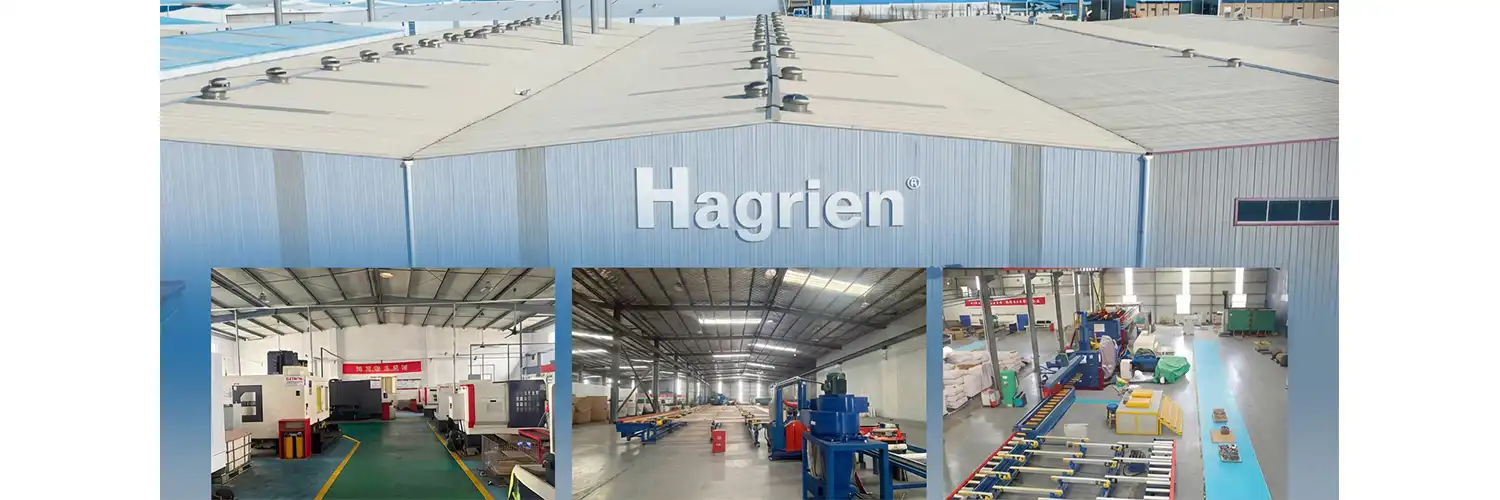
Key-activated frac sleeves and dissolvable closing parts are designed and made by HAGRIEN under a closed-loop quality system that is backed by CNAS-accredited lab testing and API recognition. As a maker that only makes frac sleeves, we offer COA/COC paperwork, dissolution performance data that is tailored to your well conditions, and OEM engineering help from the first sample to the full campaign. For a traceable quote package, please email our North America team at cyrus@us-hagrien.com or visit us-hagrien.com.
References
1. Society of Petroleum Engineers — SPE Journal, 2021
2. API Specification 11D1, Downhole Tools for Hydraulic Fracturing, 3rd Edition — American Petroleum Institute, 2015
3. ISO 14310, Petroleum and Natural Gas Industries — Downhole Equipment — Packers and Bridge Plugs — International Organization for Standardization, 2008
4. Reinicke, A., et al., "Hydraulic Fracturing Stimulation Techniques and Formation Damage Mechanisms" — Chemie der Erde, 2010
5. Montgomery, C.T., and Smith, M.B., "Hydraulic Fracturing: History of an Enduring Technology" — Journal of Petroleum Technology, SPE, 2010
6. King, G.E., "Hydraulic Fracturing 101: What Every Representative, Environmentalist, Regulator, Reporter, Investor, University Researcher, Neighbor, and Engineer Should Know About Estimating Frac Risk and Improving Frac Performance in Unconventional Gas and Oil Wells" — SPE Hydraulic Fracturing Technology Conference, SPE 152596, 2012

USER EVALUATE
Here is the customer's evaluation of us