_1776908283214.jpg)




How to Choose a Dissolvable Magnesium Alloy Cast Ingot Manufacturer
Choosing the right Dissolvable Magnesium Alloy Cast Ingot manufacturer isn't just a matter of buying something; it's a strategic choice that impacts how quickly and cheaply wells are completed, as well as project timelines and costs. Your downhole tools will only work effectively if they are made of good dissolvable materials that can withstand high temperatures and pressures. They will also dissolve easily without the need for expensive milling processes. When procurement teams look at possible suppliers, they have to weigh technical requirements, consistency in production, certification standards, and the likelihood of on-time delivery. This guide goes over the most important things that make a maker reliable or dangerous. It will help you protect your investment and make the most of your supply chain.
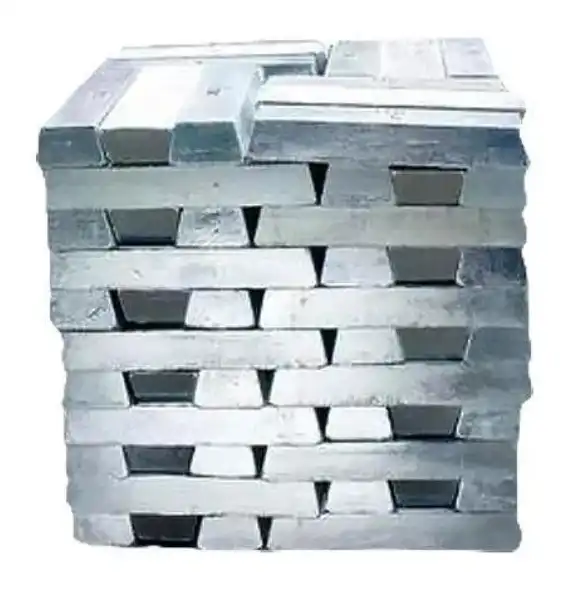
Understanding Dissolvable Magnesium Alloy Cast Ingots
A special type of metal called "Dissolvable Magnesium Alloy Cast Ingots" is designed to break down slowly in electrolytic settings. Unlike most magnesium alloys that are made to resist corrosion, these ingots are made with exact amounts of alloying elements like aluminium, zinc, nickel, and rare earth elements like gadolinium or yttrium so that they dissolve at predictable rates when they come into contact with brine or completion fluids.
The main value proposition is getting rid of intervention after fractures. Mechanical milling is needed for traditional steel or composite bridge plugs, which increases rig time, increases the risk of casing damage, and adds a lot to the cost of doing business. Parts made from Dissolvable Magnesium Alloy Cast Ingots, on the other hand, break down on their own after hydraulic fracturing, leaving the wellbore clear of debris and allowing production to begin right away.
These materials are made to withstand temperatures between 25°C and 150°C and compressive loads of more than 70–100 MPa. They keep their structure intact during the fracturing stage before starting controlled degradation. In 3% NaCl solutions at 90°C, the typical dissolution rates are between 10 mg/cm³·h and 150 mg/cm³·h. These rates depend on the alloy's composition and microstructural design.
When procurement professionals know these basic technical terms, they can figure out if a manufacturer's material specifications match your specific downhole conditions, such as the salinity, temperature profile, pressure differential, and tool lifespan needs. With this information, you can check achievement records and evaluate what suppliers say they can do.
 Core Criteria for Choosing a Manufacturer
Quality Control and Meeting Certification Requirements
Manufacturers that work with the oil and gas industry have to show that they follow strict international rules. With ISO 9001 certification, you can be sure that your quality management is systematic. ISO 14001 and ISO 45001, on the other hand, cover environmental responsibility and health and safety at work. In addition to basic certificates, you should look for API recognition, which shows that the company knows how to meet the needs of the oil business.
Advanced suppliers of Dissolvable Magnesium Alloy Cast Ingot keep CNAS-accredited labs that can test at high temperatures and pressures. This lets them prove that the way the material dissolves in real-life downhole conditions can be tracked. This testing equipment should be able to do chemical composition analysis with ICP-OES, ultrasonic testing for internal defects (per ASTM E114), static dissolution testing in standard brines, metallographic examination for even grain structure, and mechanical load testing to make sure it works well under stress and strain.
Manufacturing Skills and the Ability to Grow
Your production skills have a direct effect on how big projects can get without losing quality. Big extrusion presses, like 3,600-ton and 5,600-ton machines, let manufacturers make big extruded bars (up to Ø300 mm) that are more stable in terms of their dimensions and microstructure. This feature lowers the chances of downstream machining waste and rework, which can happen when working with materials that aren't perfectly round or have been processed inconsistently.
Check to see if the company that makes the product does important parts of the process itself, like melting the material, controlling the metallurgy, extruding the metal, and finely machining it. Vertical integration reduces variation and speeds up the time it takes to respond to requests for customisation. If a manufacturer can do everything in a closed loop, from designing the material to optimising the heat treatment and validating the process, you can be more sure that the performance will be the same from one production batch to the next.
Help with technology and working together in engineering
Better makers are more than just suppliers of materials; they also act as professional partners. They should offer application engineering support to help you match the alloy composition and dissolution kinetics to your specific operating window, which includes temperature range, fluid chemistry, salinity, and the time frame you want the alloy to dissolve. This feature of the engineering specification cuts down on the costs of trial and error and speeds up the qualification process.
It is best to find suppliers who offer full batch traceability along with detailed documentation packages that include Certificates of Analysis (COA), Certificates of Conformance (COC), and Safety Data Sheets (SDS). This paperwork helps with internal qualification processes, following the rules, and fixing problems that might come up in the field.
Comparing Dissolvable Magnesium Alloy Ingot Options and Suppliers
Performance Advantages Over Conventional Materials
Unlike temporary tools made of steel or aluminium, Dissolvable Magnesium Alloy Cast Ingots have clear advantages in the workplace. The material is easy to handle and transport because it has a low density of about 1.8 g/cm³. It is also very easy to machine, which cuts down on production time and tooling costs. Most importantly, the controlled dissolution gets rid of the need for retrieval operations. This lowers the cost of intervention and shortens the time that the wellbore is exposed.
The environmental benefits are just as strong. When downhole fluids completely break down, there is no more trash, no need for mechanical help, and less waste on the surface. This is in line with stricter environmental laws and company's promises to be more environmentally friendly.
Evaluating Supplier Differentiation
Not every provider has the same range of services. Some important differences are:
• Engineerable Dissolution Windows: You can make sure that the alloy systems and processing parameters work well by adjusting them to the conditions downhole. Suppliers who can do this can change the amounts of magnesium, aluminium, zinc, nickel, and rare earths to give you the exact mix of strength, toughness, machinability, and dissolution rate that you need for your purpose.
• Large-Diameter Extrusion Competence: To make Ø300 mm extruded bars with precise measurements, you need high-tech tools and process knowledge. Your manufacturing risk is lower if your suppliers always send you large-diameter materials with a uniform grain structure, controlled surface quality, and few holes inside them.
• Traceability and Audit Readiness: Full documentation, such as batch traceability, inspection records, and qualification-ready packages, helps with internal reviews, supplier audits, and keeping track of project milestones. This openness boosts trust and speeds up the approval process.
Value-Added Services and Logistics
International logistics skills are important, especially when shipping goods between continents. Manufacturers who offer flexible trade terms (EXW, FOB, and CIF) and keep coordination support through regional entities make it easier for goods to get through customs and cut down on transportation delays. Export packaging made for long-distance shipping and full paperwork helps make sure that materials arrive on time and in line with import rules.
 Procurement Considerations for Global B2B Buyers
Ordering Procedures and MOQs
For budget planning, it's important to know about minimum order quantities (MOQs) and how prices work. A lot of companies keep extra standard sizes (with common diameters and alloy compositions) on hand in case they need to quickly sample or restock. The lead times and minimum order quantities for these in-stock items are usually shorter.
Custom specs, such as non-standard sizes, dissolution rates that are specific to engineering, or changes to the metal, usually need project-based production. For custom orders, MOQs are usually higher to cover setup costs and make sure the process works. Make these limits clear early on to avoid delays in the buying process.
Lead Times and Delivery Logistics
Standard-sized Dissolvable Magnesium Alloy Cast Ingots usually ship in two to four weeks, but this depends on the number of orders, the scope of the inspection, and the paperwork that needs to be filled out. Lead times can be extended to 4–8 weeks for custom specs or engineering-matched materials. This includes making the metal, improving the process, and testing it to make sure it works.
Manufacturers who have been in business for a long time, like those who have been in business nonstop since 2019, are more likely to keep their delivery dates. For important jobs, ask about choices for faster production, which can shorten timelines depending on capacity and raw material availability.
Cost-Efficiency and Supply Chain Reliability
It's important to be competitive on price, but the lowest price doesn't always mean the best value. Total cost of ownership includes the price of materials, how well they are machined, the number of defects, the quality of the paperwork, and how reliable the delivery is. When you buy from suppliers with reliable lead times, consistent batches, and strong traceability, you can avoid the hidden costs that come with production delays, rework, and last-minute sourcing.
Procurement cycles can be sped up by working with manufacturers who offer quick technical support, like confirming needs within 24 hours and sending formal quotes within 1–3 business days. Weekly reports on progress and contact based on milestones are common in North American project management, which makes it easier for everyone to work together.
Ensuring Long-Term Partnership and Product Success
Post-Purchase Support and Warranty Coverage
Manufacturers you can trust back up their products with clear warranty terms, protocols for handling defects, and regular quality checks. After the product is delivered, customers should be able to get technical help with problems, process guidance for machining tasks, and follow-up to make sure the product is working well in the field.
Strong ties are more than just business deals. Manufacturers who offer training programs, remote troubleshooting, and (if possible) on-site support show that they want you to succeed. This collaborative method cuts down on downtime, speeds up the solving of problems, and builds your organization's institutional knowledge.
R&D Collaboration and Innovation
The most forward-thinking suppliers spend money on research and development to keep improving things like alloy compositions, extrusion processes, and dissolution kinetics to keep up with changes in the industry. You can make sure that the solutions you get are exactly what you need by working with manufacturers who are open to collaborative design projects like material-structure co-design, drawing control, and acceptance testing programs.
This willingness to try new things is very helpful as the industry explores new areas like CCUS (carbon capture, utilisation, and storage), geothermal energy development, and other high-pressure, high-temperature underground settings where materials that dissolve offer clear benefits.
Environmental Sustainability and Responsible Practices
Sustainability factors are becoming more and more important in purchasing decisions. Manufacturers who follow ISO 14001 environmental management systems, HSE (Health, Safety, and Environment) guidelines, and have safety production licenses show that they are committed to running responsible businesses.
Look for providers who put an emphasis on recycling, reducing waste, and using production methods that use less energy. These efforts to care for the environment are in line with ESG (Environmental, Social, and Governance) goals for businesses and improve the image of your organization with stakeholders.
 Conclusion
To pick the best Dissolvable Magnesium Alloy Cast Ingot manufacturer, you need to think about their technical skills, quality control, delivery reliability, and ability to work with you. Give more weight to providers who can show they follow ISO standards, keep their own testing facilities, meet technical specifications, and provide detailed records that can be used for tracking. Check to see if they can be scaled up by looking at their large-diameter extrusion capacity, vertical integration, and production history. Cost-effectiveness is more than just the price per unit; it also includes batch uniformity, predictable wait times, and quick support. By consistently using these criteria, procurement teams can find high-performance materials that lower operational costs, lower the risk of intervention, and support long-term project success in tough downhole environments.
FAQ
1. What factors influence the dissolution rate of dissolvable magnesium alloy cast ingots?
The amount of aluminium, zinc, nickel, and rare earth elements in a metal determines how quickly it dissolves. This is called controlled galvanic corrosion. The temperature, salinity, and chemistry of the fluids in the downhole environment also have a big effect on how fast things break down. Manufacturers who can handle engineering specifications can adjust these factors to fit your unique working window. This makes sure that the performance is always predictable.
2. How can I verify a supplier's compliance with industry standards?
Ask for copies of the ISO 9001, ISO 14001, and ISO 45001 certifications, as well as proof that the lab is recognised by API and is accredited by CNAS. Ask for examples of documentation packages (COA, COC, SDS) and records of how each batch was made from recent production runs. Manufacturers with a good reputation welcome audits and make the quality management processes easy to see.
3. Is it feasible to customize dissolvable magnesium alloy cast ingots for unique applications?
Of course. Advanced manufacturers offer OEM/ODM services, which let you work together to design materials that meet your exact needs. This includes changing the make-up of the metal, finding the best ways to heat treat it, and going from testing to mass production. Customisation times are usually between 4 and 8 weeks, but this depends on how complicated the specs are and how many tests need to be done to make sure they are correct.
Contact HAGRIEN for Reliable Dissolvable Magnesium Alloy Cast Ingot Supply
HAGRIEN gives your projects the engineering precision, manufacturing scale, and quality assurance they need. As a technology-driven company that makes Dissolvable Magnesium Alloy Cast Ingots, we melt the alloys in-house, extrude them on a big scale (up to Ø300 mm), and are certified by ISO 9001, 14001, and 45001. Our lab tests are recognised by API and approved by CNAS. Our closed-loop capability, which includes designing the materials and making sure they work, makes sure that each batch is the same, that all the paperwork can be tracked, and that delivery is always within 2–8 weeks. Since 2019, we have been in production nonstop for about seven years. We help completion service providers, E&P operators, and downhole tool manufacturers cut down on intervention costs and speed up project timelines. Get in touch with cyrus@us-hagrien.com right away to talk about your specific needs and get a quote that is tailored to your business.
 References
1. American Society for Testing and Materials. (2020). Standard Practice for Ultrasonic Testing by the Contact Method: Wrought Products. ASTM E114-20.
2. International Organization for Standardization. (2015). Quality Management Systems — Requirements. ISO 9001:2015.
3. Cao, F., Shi, Z., Song, G. L., Liu, M., & Atrens, A. (2013). Corrosion behavior of magnesium and its alloys. Corrosion Science, 68, 1-5.
4. Xu, D., Han, E. H., & Xu, Y. (2016). Effect of long-period stacking ordered phase on microstructure and mechanical properties of Mg-Y-Zn alloys. Journal of Alloys and Compounds, 688, 619-626.
5. Song, G. L., & Atrens, A. (2003). Understanding magnesium corrosion—a framework for improved alloy performance. Advanced Engineering Materials, 5(12), 837-858.
6. Kirkland, N. T., Birbilis, N., & Staiger, M. P. (2012). Assessing the corrosion of biodegradable magnesium implants: A critical review of current methodologies. Acta Biomaterialia, 8(3), 925-936.

USER EVALUATE
Here is the customer's evaluation of us