




How to Choose a Full-Bore Sliding Sleeve Completion System
Choosing a full-bore sliding sleeve completion system starts with the well objective and the operating requirements of the complete assembly. Define internal clearance, pressure and temperature envelope, actuation method, materials, and verification records before comparing suppliers. The examination should also determine which instruments need to be transported through the sleeve during manufacturing, logging, cleaning or a future intervention.
“Full-bore” is a design goal, not an assurance that 100% of all downhole tools will pass. Actual compatibility will be determined by minimum internal diameter, drift requirements, connections, internal geometry and dimensions of the tools required for the well. HAGRIEN delivers so called key triggered sliding sleeve systems. The proper setup and operating procedure must be validated with the manufacturer’s instructions.
This article will teach you how to identify design fit, compare activation methods, verify qualification proof, and evaluate suppliers based on common technical and commercial criteria.
Start With the Completion Scenario and Operating Objective
Define the Downhole Job Before You Compare Products
Before comparing items, find out the function of the sleeve. Depending on the completion design, a sleeve may provide access for stimulation, control communication between the tubing and the annulus, aid circulation or perform some other specialized downhole function. The way the tool is to be used is important: a sleeve that will only be used once during fracturing will have different requirements than a tool that has to open and close multiple times over the life of the well.
3.8.1. Record the architecture and operating circumstances on a project data sheet. Include trajectory, casing or liner size, completion type, depth of installation, pressure, temperature, fluid composition and any relevant environmental exposure. Describe the suggested intervention tools and the internal clearance that is required.
This information gives the supplier a basis for verifying dimensional conformance and identifying lacking technical inputs. It also allows the completion engineer, production team and procurement group to look at the same configuration rather than comparing items on the basis of nominal size alone.
Understand How a Full-Bore Sliding Sleeve Works
A sliding sleeve usually has a housing, a sliding internal member, flow openings, sealing elements and features for actuation and position retention. The internal part is moved and the available flow channel is changed in accordance with the design. The exact function and sequence of operation rely on the tool setup.
A full bore sliding sleeve is designed to give a broad internal passage, but the actual useable clearance must be determined from the manufacturer's dimensional drawings. The open and closed positions may have differing interior geometries and connections or other components in the assembly may impose further limits. Before presuming that a given logging instrument, cleanout assembly or intervention string will pass, verify minimum internal diameter and any related drift requirement.
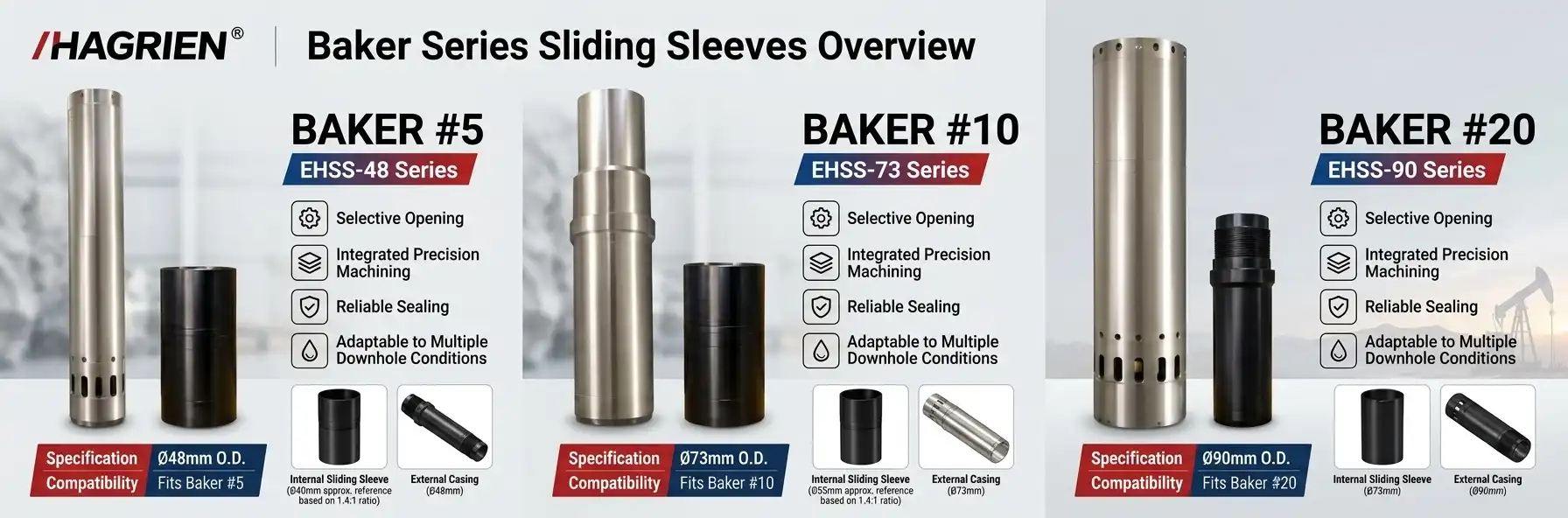
HAGRIEN says its sliding sleeves are key-activated components that are run with the casing string and are designed to open chosen fracturing stages without the need for wireline runs or perforating guns. Check the activation mechanism, installation layout, stage selection technique and operation process for the offered product. Don’t assume that these functionalities are included in all configurations until documentation is provided to support them.
Plan for Production and Re-Entry From Day One
The technique of selection should take into account the stimulation and the procedures intended after stimulation. State if there is any anticipated future production logging, cleanout, water-control work or other intervention. Then figure out the minimum clearance and working access needed to accomplish those activities.
Check for any internal components that are still in the flow path after activation. Is the sleeve re-activatable if needed? Will dissolvable materials or pieces affect downstream equipment? The answers rely on the actual design and have to be validated by drawings, operating instructions and pertinent test results.
A large internal channel may circumvent a geometrical barrier, but is not sufficient in itself to guaranty a successful re-entry. Other completion components, scale, deposits, deformation and changes in the wellbore may also impact the passage of tools. Do not use the sleeve nominal bore as the clearance requirement. Take these considerations into account in the finishing design.
According to the U.S. Energy Information Administration, hydraulic fracturing is extensively used in U.S. oil production. This industrial backdrop underlines the need to finalize the design, but does not indicate the performance or economic worth of any single sliding sleeve. Choose products depending on the demands of the application and evidence.
Establish the Core Selection Criteria
Check Dimensions and Actual Drift Diameter
The dimensional compatibility of the complete assembly has to be verified. Confirm needed casing or tube size and weight, grade, connection, sleeve OD, overall length, minimum ID and applicable drift requirement. Compare the intended dimensions with the casing or tubing connections and all other components in the planned string.
Nominal size is not the sole factor that determines the clearance for a tool to travel through the well. Request dimensional drawings with required inside measurements and whether those measurements are in the open position, closed position or both. Set reasonable limitations and reasoning for stated size of drift.
Compare the minimal clearance that has been recorded with the dimensions of the intended logging tools, cleanout equipment, coiled tubing assemblies and other intervention equipment. If you require full completeness for passage, then you have to examine the entire flow path, not just the sleeve.
For a full-bore sliding sleeve, dimensional evidence is especially important because the intended clearance must remain compatible with the work planned after installation and activation.
Match Pressure, Temperature, and Materials to the Well
Set the pressure and temperature for the particular sequence of operations needed. The design may need to consider internal and external pressure, differential pressure, burst and collapse constraints, and required open and closed positions based on the design. Require the vendor to submit the relevant ratings for the proposed configuration, test conditions, and acceptance criteria.
Temperature and fluid chemistry may affect seals, metallic materials and other components. Identify potential exposure to H2S, CO2, brine, stimulation chemicals and other fluids of concern from the well. NACE MR0175 is covered in ISO 15156. It covers the selection of materials for sour service in H2S containing environments in oil and gas production. The applicability should be judged according to the actual service conditions and materials and a wide reference to the standard does not guarantee conformance of a full assembly.
Provide material specifications, limits of operation and test findings required. If the evidence provided does not cover the expected circumstances, identify the gap before accepting the configuration.
Compare Full-Bore Sliding Sleeve Design Options
Compare activation methods according to the required operating sequence and the constraints of the well. Mechanical shifting, hydraulic actuation, ball-drop arrangements, and key-activated designs use different mechanisms. Their suitability depends on access, pressure control, stage identification, internal clearance, and the required degree of operating flexibility.
Ball-drop systems that use graduated seats may be constrained by seat dimensions and the sequence in which balls reach their corresponding seats. The effect on stage count and internal passage depends on the specific architecture. Other activation methods may avoid some ball-seat constraints, but they still have their own identification, activation, and verification requirements.
HAGRIEN describes its key-activated full-bore sliding sleeve as offering infinite-stage capability. Before using this claim as a design criterion, establish exactly what "infinite-stage" means for the product and how it differs from a graduated ball-seat system. It should not be interpreted as eliminating practical limits on sleeve count, identification, installation, or downhole operation.
Compare the options using the same criteria: minimum internal diameter, flow-path geometry, activation method, stage-selection logic, pressure and temperature limits, isolation requirements, intervention needs, and expected operating cycles. Include unit price and lifecycle costs after confirming that each candidate meets the essential technical requirements.
 Match the Full-Bore Sliding Sleeve to Specific Completion Applications
Multistage Fracturing in Horizontal Wells
Multistage horizontal completions need a defined stage design, an activation sequence and a way of verifying the state of each intended flow channel. The sleeve design must also be suitable to the completion string and suggested treatment conditions .
Review port form, pressure limitations, fluid compatibility and potential erosion exposure for fracturing applications. The documentation for the suggested configuration must be able to cover the required operating envelope. The installation requirements for long laterals should be examined together with activation performance since they may provide further challenges in running, conveying and debris disposal.
HAGRIEN claims that its sliding sleeves are activated by casing run and a key to access selected stages without wireline runs or perforating guns. Check the capabilities, e.g. the activation sequence, the means to decide the stage, the contingency plan in case the anticipated opening cannot be confirmed, etc. for the actual model.
If they say the design has limitless stage capacity, ask them to clearly define that phrase, and define the practical limits of it. Don't only glance at the description in the catalog.Consider the sleeve in terms of predicted lateral length, number of stages, treatment fluids, pressure conditions and operating sequence.
Re-Fracturing, Toe-Stage Initiation, and Extended-Reach Laterals
Re-fracturing takes special care for the current completion. Confirm the internal clearance, condition of the present equipment and if the proposed tool can be installed and operated within the existing well design. The viability of a re-entry isn’t simply determined by the nominal diameter of a new sleeve, but by the full wellbore.
Define the method of opening the target flow channel for toe-stage start. Define the confirmation of the event. Define contingencies if the planned activation does not occur. The appropriateness of a given mechanism is a function of the completed design and permitted operating method.
In extended-reach and offshore wells, more focus may be placed on intervention logistics, material selection, documentation, and contingency planning. A configuration specific assessment of operating limitations and material appropriateness is required for HPHT and sour-service applications. Request traceable documents identifying the appropriate product or batch. Verify that the evidence relates to the proposed service conditions.
A full-bore sliding sleeve may be appropriate where its operating method and internal clearance meet these requirements. Its suitability should be demonstrated through engineering review and supporting documentation rather than inferred from the application category alone.
Verify Installation, Operation, and Maintenance Steps
Before running the device, installation and operating protocols must be provided. Depending on the design, pre-run inspections might comprise part number, dimensions, connections, sealing components, cleanliness, material identification and inspection status. Document the appropriate acceptance criteria. Document any variances.
During installation, run the allowed process with the completion string. This information may include equipment identification, depth of installation, connections and other relevant operational data. Wherever the procedure does not apply to the actual component and installation method, operations such as recording torque or orientation should not be included.
The activation approach should include the identification of the sleeve, the action which initiates the movement, the operating parameters which are required and how the resulting position or opening is confirmed. The contingency plan should include failure or uncertainty of activation, leakage, debris and any other failure modes identified in the design review.
The after work inspection and maintenance requirements depend on whether the equipment is to be reused, left downhole or requires a specific post operation assessment. Refer to operator’s well program and manufacturer’s approved guidelines for required inspections and documentation.
Evaluate Full-Bore Sliding Sleeve Quality, Testing, and Compliance
Request Documentation That Matches the Exact Configuration
Ask the supplier for the exact model and configuration quoted. The documentation package should contain appropriate dimensional drawings, minimum internal diameter and drift data, pressure and temperature constraints, material specifications, seal data, operating instructions and inspection records.
Find out what each exam / certificate covers. Determine whether the evidence is for an individual unit, manufacturing batch, representative sample or design certification program. Confirm that acceptance criteria are met and that the test circumstances are suitable for the intended use.
Traceability is no good if the records can track the specified equipment to the material, production and inspection information. Define the scope. Request required traceability documents.
HAGRIEN’s quality process includes: closed-loop quality control, CNAS authorized testing and batch traceability. Copies of COA, COC and SDS are available upon request. Check the required quality records, the laboratory’s accreditation, the issuing authority and the existence of the paperwork for the specific product before publishing or purchasing. Do not assume that every test or product is within an accreditation scope unless you check the relevant paperwork.
Testing Items Worth Asking About
The test program should be selected according to the design and its intended use. Potentially relevant checks include dimensional inspection, drift verification, pressure testing, seal evaluation, temperature exposure, functional opening and closing tests, and pressure cycling where repeated operation is required.
For each test, request the test method, sample or unit identification, pressure and temperature conditions, duration or cycle count where applicable, acceptance criteria, and result. A pass statement without the conditions behind it may not establish suitability for a different operating environment.
The supplier should explain how functional testing relates to the expected downhole load and operating sequence. If the minimum internal diameter is a key requirement, confirm whether drift or dimensional verification was performed at the relevant manufacturing or testing stage and what the record establishes.
ISO 14310 and API Specification 11D1 address packers and bridge plugs. Their requirements should not be treated as automatically applicable to a full-bore sliding sleeve, nor should their validation grades be used to imply that a sleeve has been qualified under those standards. If a project specification calls for a particular standard or test method, confirm its scope and applicability to the equipment being evaluated.
Address Dissolvable Components and Residue Questions
Dissolvable components may be used in certain completion designs to provide temporary isolation or avoid some mechanical removal operations. Their suitability depends on the component's material, geometry, function, and exposure to downhole conditions.
Request dissolution data obtained under conditions relevant to the intended temperature, salinity, fluid chemistry, and exposure period. Confirm what the data measures, whether the test used the actual component or a representative material sample, and whether the results establish the required functional performance. Ask about remaining material, fragments, or residue where these could affect downstream equipment or future tool passage.
HAGRIEN states that it produces dissolvable magnesium alloy bars using in-house alloy melting, extrusion, and machining processes, and describes bar sizes up to Ø300 mm and extrusion presses rated at 3,600 and 5,600 tons. These are specific manufacturing claims that should be verified against company records before publication. More importantly, the ability to produce alloy bars does not, by itself, establish that a particular sealing element has been qualified for a given downhole application.
If HAGRIEN proposes dissolvable components for the selected sleeve, request the material specification, component drawings, relevant testing records, and the evidence connecting those materials to the intended sealing function. If high-temperature or high-pressure laboratory testing is cited, confirm the laboratory's accreditation scope and the specific tests covered. Alloy-processing capability and component-level qualification should be assessed separately.

Build a Supplier Evaluation and Decision Matrix
Look Beyond Unit Price
Supplier evaluation should begin with technical suitability and then consider evidence, delivery, and support. Relevant factors include manufacturing scope, engineering assistance, applicable testing, quality documentation, delivery capability, spare parts where needed, warranty terms, and field support.
HAGRIEN describes itself as having production and validation experience dating from 2019, ISO 9001, ISO 14001, and ISO 45001 certifications, and a U.S. entity supporting North American projects. Before relying on these statements, verify the relevant company records, certification validity and scope, manufacturing responsibilities, and the relationship between the entity named in the contract and the entity supplying the product.
For long-duration projects, establish what support is included in the quotation and what requires a separate agreement. This may include technical review, sample evaluation, field-trial planning, troubleshooting, and replacement parts. OEM and ODM requirements should be discussed in terms of drawing ownership and revision control, design responsibilities, change approval, and inspection requirements.
If multiple vendors provide different parts of the assembly, assess the interfaces between them. A single supplier may simplify coordination, but this should not be treated as proof of lower technical risk without reviewing the actual design, quality controls, and contractual responsibilities.
Write a Complete RFQ
A complete request for quotation (RFQ) gives suppliers the information needed to assess fit and identify missing requirements. Include:
- Well and completion data: Casing or tubing dimensions, grade, connections, trajectory, depth, completion architecture, and planned installation arrangement.
- Operating conditions: Pressure, temperature, fluid composition, relevant H₂S or CO₂ exposure, treatment fluids, proppant where applicable, and the required operating sequence.
- Functional requirements: Minimum internal diameter, drift requirement, planned tool passage, activation method, stage count, isolation requirements, and expected operating cycles.
- Quality and documentation: Required drawings, material information, inspection records, applicable test procedures, acceptance criteria, and traceability requirements.
- Commercial requirements: Quantity, destination, target delivery schedule, packaging, warranty expectations, spare parts, and any OEM or ODM needs.
Ask the supplier to identify assumptions, exclusions, and deviations from the specification in writing. Require the quotation to distinguish confirmed specifications from items that still need engineering review or testing.
HAGRIEN states that its process includes confirming requirements and preparing a quotation and delivery plan, with complex projects requiring separate confirmation. Confirm any specific response or quotation deadline directly with the supplier, particularly when the request involves custom engineering, qualification testing, or incomplete well data.
Compare the quotations only after confirming that the proposed configurations meet the required technical criteria. The comparison should include any additional testing, tooling, logistics, documentation, and support costs that affect the complete procurement decision.
Score Options With a Decision Matrix
A decision matrix helps document the reasons for selecting a supplier. Use three evaluation groups, but apply mandatory technical requirements before assigning commercial scores.
- Technical fit: Check dimensional compatibility, minimum internal diameter, pressure and temperature limits, material suitability, activation requirements, and relevant erosion or cycle-life considerations. Exclude configurations that fail mandatory requirements or lack the evidence needed to establish compliance. Adjust the relative importance of individual criteria to the well's actual operating conditions.
- Evidence and compliance: Review the applicable drawings, test conditions, material records, certificate scope, and traceability information. Where dissolvable components are proposed, include the relevant dissolution and functional-performance evidence. Require each claim to be supported by documentation appropriate to its scope.
- Supply and support: Compare confirmed lead times, delivery conditions, technical support, spare parts where relevant, warranty terms, and the division of responsibilities during installation and troubleshooting. Include lifecycle costs when reliable information is available, and identify assumptions where costs cannot yet be quantified.
Define the scoring method and mandatory acceptance criteria before evaluating suppliers. This prevents a low quotation or a high overall score from compensating for a critical technical gap. Record unresolved issues and make the final decision conditional on closing any mandatory documentation or qualification gaps.
Conclusion
Choosing a full-bore sliding sleeve requires a clear definition of the well objective, confirmation of the actual internal clearance, and a review of pressure, temperature, materials, and activation requirements. The term "full-bore" should be verified against the minimum internal diameter and the tools expected to pass through the completion, rather than treated as a guarantee of unrestricted access.
Compare mechanical, hydraulic, ball-drop, and key-activated designs according to their actual operating principles and constraints. For fracturing, re-fracturing, and extended-reach applications, confirm the installation sequence, activation verification method, and relevant operating limits. Where dissolvable components are involved, evaluate the component's actual material and functional evidence rather than relying on general material-processing claims.
Before procurement, request configuration-specific drawings, test conditions, material information, inspection records, and applicable quality documentation. Evaluate suppliers against mandatory technical criteria first, then compare evidence, delivery, and support. This approach creates a documented basis for selecting a completion system that matches the well's requirements without relying on unverified performance or certification claims.

FAQ
1. What is a full-bore sliding sleeve?
A full-bore sliding sleeve is a completion component designed to provide a large internal passage while controlling communication through flow ports. Its actual usable clearance depends on the specific design and must be confirmed from dimensional drawings and drift requirements.
2. How do I confirm the right size and pressure rating?
Check the specified casing or tubing dimensions, connections, minimum internal diameter, drift requirement, and planned tool dimensions. Review the applicable pressure and temperature limits, including the relevant test conditions and acceptance criteria for the proposed configuration.
3. Do mechanical or hydraulic designs suit horizontal wells better?
Neither is universally preferable. The choice depends on the completion architecture, intervention access, activation requirements, pressure-control method, and required operating sequence. Compare the documented capabilities and limitations of each design against the actual well conditions.
4. Which documents should I request?
Request configuration-specific drawings, internal and drift dimensions, pressure and temperature limits, material and seal specifications, operating instructions, relevant test reports, inspection records, and applicable traceability documents. Confirm the scope of any certificate or laboratory accreditation before relying on it.
5. Can HAGRIEN support private labeling?
HAGRIEN describes its services as including OEM and ODM support. Confirm the available scope for the proposed project, including design responsibilities, drawing control, revision approval, inspection requirements, and documentation ownership.
Request a Full-Bore Sliding Sleeve Recommendation or Quotation From HAGRIEN
Send your casing or tubing specifications, required minimum internal diameter, planned tool passage, pressure and temperature conditions, fluid information, activation requirements, and order quantity to HAGRIEN at cyrus@us-hagrien.com.
This information will help establish the basis for a configuration review and identify any missing technical inputs. If your project requires particular testing, certification, or traceability records, list those requirements in the RFQ so their applicability and availability can be confirmed before procurement.
For full-bore sliding sleeve involving custom configurations or dissolvable components, include the relevant operating conditions and qualification requirements. Confirm the proposed product specifications, supporting records, and delivery plan with HAGRIEN before final approval.
Visit us-hagrien.com for further information.
References
1. ISO 15156, Petroleum and Natural Gas Industries — Materials for Use in H₂S-Containing Environments in Oil and Gas Production. Confirm the applicable edition and requirements for the intended service conditions.
2. ISO 14310, Petroleum and Natural Gas Industries — Downhole Equipment — Packers and Bridge Plugs. This standard concerns packers and bridge plugs; do not treat it as a general qualification standard for sliding sleeves.
3. Economides and Nolte, Reservoir Stimulation, 3rd Edition, 2000. Verify the publication details and relevant sections before using it to support a technical statement.
4. Society of Petroleum Engineers, Petroleum Engineering Handbook, Volume IV: Production Operations Engineering, 2007. Verify the relevant chapter and publication details for any specific claim.
5. Bellarby, Well Completion Design, Elsevier, 2009. Verify the relevant section before citing it for a specific completion-design recommendation.
6. U.S. Energy Information Administration, Hydraulic Fracturing Accounts for About Half of Current U.S. Crude Oil Production, 2016. Use this source for the industry statistic it reports, not as evidence of the performance or economic benefits of a particular sliding sleeve.

USER EVALUATE
Here is the customer's evaluation of us