




How to Use a Sliding Sleeve for Multi-Stage Fracturing?
For multistage fracturing with a sliding sleeve, operators prepare the sleeve positions and activation sequence, run the completion string, test the needed barriers, activate the appropriate sleeve and pump the treatment following the authorized process . This cycle is repeated for successive stages with pressure and operating data being captured throughout the work.
We have developed an infinite-stage sliding sleeve to eliminate the stage-count limitation of traditional systems that depend on increasingly bigger or smaller ball seats. The key activation architecture of HAGRIEN enables operators to pick sleeves that have the same activation key, possibly eliminating the requirement for wireline-based stage initiation and perforating guns. Performance will depend on the configuration you pick, the condition of the well and how it is used.
This guide describes how the system works, how to design and run a completion, what technical hazards to consider and what proof to seek a manufacturer for, before a field trial.
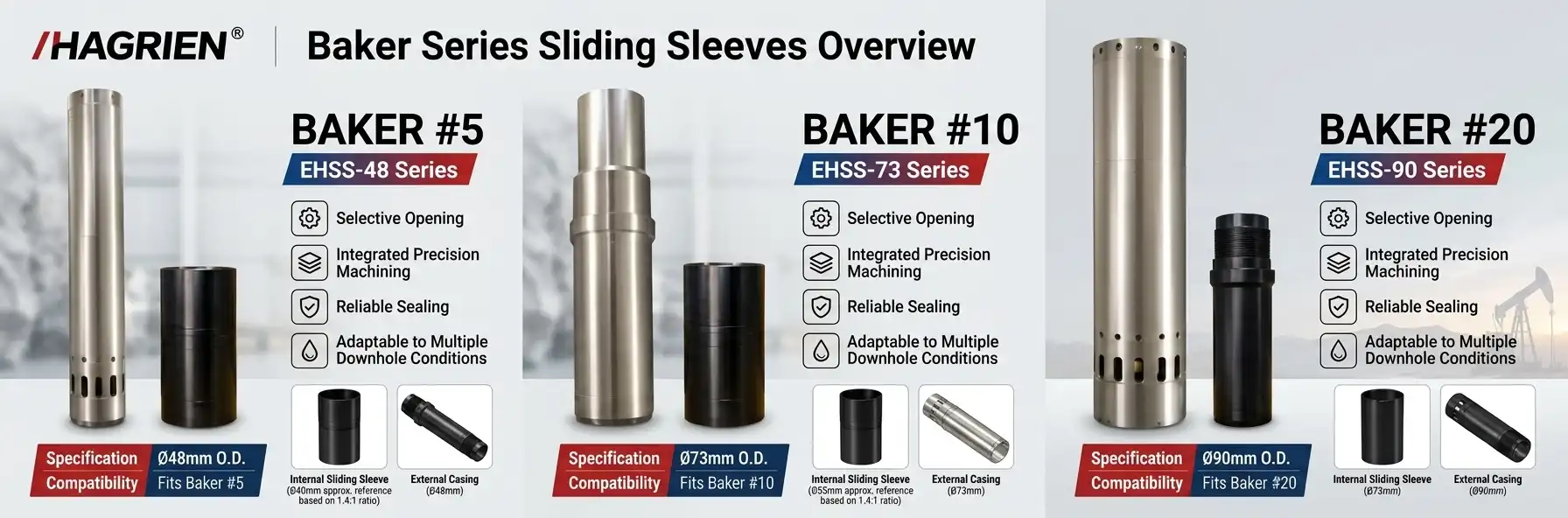
What an Infinite-Stage Sliding Sleeve Is and Where It Fits
What Is an Infinite-Stage Sliding Sleeve?
An infinite stage sliding sleeve is a downhole completion component that controls communication between the wellbore and selected intervals in multi-stage fracturing procedures. Depending on the design the assembly might have sleeve body, flow ports, sealing elements, shifting profile and casing connections.
The term “infinite-stage” often refers to a device that does not have the stage-count constraint of conventional ball-drop systems that use a succession of graded ball seats. That does not mean that a completion may work without restrictions on pressure, temperature, mechanical cycles or the number of stages supported by the overall design.
The sleeve designated in the system is identified and moved by a key of the relevant kind, once the system is started by a key. This technology disconnects the stage selection from the continually changing sizes of the ball and seat in previous systems. The number of steps is still a function of the completion architecture, tool size, activation mechanism and demands for that well.
Before deciding on an infinite-stage sliding sleeve you should have reviewed the manufacturer’s designs, operational limits, activation method and validation data. With these documents, it may be decided whether the design is appropriate for the casing, the treatment circumstances and the sequence of phases which are required.
How a Key-Activated Sleeve Works?
HAGRIEN’s key-activated sliding sleeve design employs a matching key to pick the desired sleeve in the completion string. The idea is to provide selective access to particular stages without using a regular graded ball-seat sequence. This strategy may lessen the demand for wireline runs and perforating guns during stage commencement depending on system setup.
The complete design must specify how each sleeve is recognized, activated and confirmed. Prior to deployment, operators must check the changing profile, casing connections, internal dimensions, sealing arrangement and compatibility with neighboring downhole tools. The “full-bore” word should not be read as the actual post activation drift diameter and should be checked against the product drawing and future well operations requirements.
HAGRIEN also handles magnesium alloy parts via dissolution. Where dissolvable sealing elements are included in the complete design, their behavior has to be analyzed independent of the mechanical activation function of the sleeve. The dissolution is dependent on temperature, salinity, fluid chemistry and the shape of the substance and components. Therefore the estimated dissolution window should be based on appropriate material data and testing under typical circumstances.
When Operators Should Use One
An infinite-stage sliding sleeve may be worth evaluating when a completion requires numerous stages, selective stage activation, or reduced reliance on intervention-based operations. Potential applications include horizontal shale wells, selected re-fracturing programs, toe-stage initiation, and other multi-stage completion designs where the activation sequence and isolation requirements are compatible with the tool.
In 2016, about half of U.S. crude oil production came from hydraulic fracturing, according to the U.S. Energy Information Administration. This historical industry data provides insight into the importance of hydraulic fracturing, but does not validate the suitability or efficacy of any particular sleeve design.
High stage numbers should not be the only reason for changing the ending method. The evaluation should take into account the whole stage cycle from activation, pumping treatment, verification, possible intervention and any further milling or other remedial procedures. • When picking a system, operating environment and validation proof for high temperature, high rate, high pressure or erosion-prone applications.

How to Plan and Run an Infinite-Stage Sliding Sleeve Completion
Plan the Completion Architecture
Start with the well design and figure out what information you need to choose the finishing system.” Key inputs include casing or liner size and connections, anticipated number of stages, sleeve spacing, needed internal clearance, predicted pressure and temperature, treatment fluids, proppant conditions, and the desired activation sequence.
Then, verify that the chosen sleeve matches the other components in the complete string. Check dimensional fit, drift requirements, shift profiles, seal arrangement and any constraints from neighboring equipment. • If dissolvable elements are used, assess their material characteristics and projected performance under the intended downhole circumstances.
A planning matrix for each step may assist organize the design. It should define the goal range for each, the anticipated activation mechanism, the treatment needs, the expected verification indications and the authorized contingency process for a failed opening or other anomaly.
Review manufacturer documentation and develop a suitable validation strategy prior to field deployment. This might comprise dimensional inspection, testing with representative fluid, bench validation and controlled field trial, depending on the project risk and approval requirements. The scope and time should be set by the operator’s engineering review and approval procedure, not a one-size-fits-all schedule.
Operate Each Stage in Sequence
Field execution shall be carried out in accordance with the approved completion and fracturing procedures for the tool configuration. Before executing the string, make sure that relevant components are free of any obvious damage. Check orientation and part #’s. Make that the necessary connections and shift profiles correspond to the finished design.
Correlate depth of completion to anticipated stage locations after installation. Carry out required casing and barrier tests within acceptable limits. Record the test conditions and results to compare against the acceptance criteria that apply.
At each stage, turn on the relevant sleeve according to manufacturer's specifications. See the specified signs of available surface pressure, pumping rate, returns etc. to see whether the expected response has occured. Unless the approach defines it as a confirmed indicator, don’t use a single pressure shift as definite evidence of effective activation.
Check required opening and isolation conditions and pump planned treatment as per allowed program.
After the treatment sequence verify the actual operational records against the completion plan. Deviations:None. "Open Issues: None. Corrective action: None. These data provide for the following engineering review, and assist determine if the design is appropriate for future wells.
Manage Pressure at Every Step
However, for pressure management, it is important to differentiate clearly between the ratings of the separate components and the limitations of the integrated finish. Relevant values include working pressure, burst and collapse ratings, test pressure and the pressure at which a sleeve activates. These values represent various circumstances and are not interchangeable.
Define the permitted operating environment according to the applicable engineering design and to the limitations of the lowest-rated component in the applicable pressure boundary. The examination must include sleeves, seals, connectors, casing and other elements exposed to the treatment pressure.
Activation behavior may be altered by temperature , well variation , debris , seal friction and the actual shifting mechanism . The predicted pressure response and acceptability criteria should thus be set in advance of the task. Pressure should be checked against permitted operating limits and anomalous readings should be subject to escalation and shutdown procedures.
Sudden pressure change, unexpected communication, suspected erosion or inability to confirm sleeve movement has to be evaluated within the authorized operating procedure. Do not presume a single failure mechanism from a pressure rise or drop without proof.
If it is an infinite-stage sliding sleeve, request pressure test results and operation records for that specific design. Review the test configuration, equipment identification, pressure limitations, hold time, acceptability standards and any noted pressure variations to determine appropriateness for a given well.
Infinite-Stage Sliding Sleeve vs. Plug-and-Perf and Other Completion Options
Compared with Plug-and-Perf
Plug-and-perf usually involves wireline delivered tools that place a plug and commence perforations for each step. Additional operations may be necessary to remove plugs and restore access to the wellbore depending on the completion design. Such tasks add to the entire stage cycle and may need more equipment, coordination and operational time.
Another kind of stage-selection device is a key-actuated infinite-stage sliding sleeve. Where design is consistent with the well and the isolation necessary can be accomplished, it has the potential to eliminate the dependency on repetitive wireline based stage initiation and perforating guns. The real operational advantage is a function of the whole system and the work that has to be done before, during and post each treatment.
Plug-and-perf is a proven alternative with established operating practices and design flexibility. A genuine comparison so should compare the complete completion procedure, rather than presuming one approach is better in every well.
ISO 14310 covers validation of downhole packers and bridge plugs. It may give useful background for assessing those components, but should not be considered direct proof that a sliding sleeve passes an equal validation criteria. Ask each provider for test data that applies to the particular equipment under consideration.
The entire cost per stage, the total time to operate, the need for interventions, the contingency work and the effects of a stage that fails are compared economically. Use real project data when you can.
Compared with Ball-Drop and Hydraulic Sleeves
Traditional ball-drop sleeves employ graded ball seats for stage selection. The seat sizes vary throughout the completion and the design may limit the stage number and the interior clearance. How much you can limit relies on the individual system and how it is sized.
Hydraulic sleeves have activation mechanisms that work by pressure. Their use demands an activation strategy taking into consideration the behavior of the chosen tools and the pressure circumstances in the completion.
A matching key and shifting profile choose the appropriate sleeve in an infinite-stage sliding sleeve operated by keys. This avoids the dependency on a ball seat sequence which is ever changing, but does not remove other design restrictions such as the size of the tool, reliability of activation, performance of sealing or compliance with the completion string.
Open-hole and cased-hole applications also vary in formation contact, cementing needs and zonal isolation. These changes impact how a sleeve should be put into the overall completeness.
When comparing choices, ask for configuration-specific drawings, operational restrictions, activation processes, and validation data. Instead of product labels, evaluate the system against the stage count of the well, pressure and temperature conditions, isolation needed, internal clearing, and anticipated intervention strategy.
Advantages, Limits, and Common Risks
The potential advantages of a key-activated infinite-stage sliding sleeve include selective stage activation, reduced dependence on conventional graduated ball-seat sequences, and the opportunity to reduce certain intervention steps. The available internal clearance after activation and the isolation performance depend on the actual design and should be verified from the relevant documentation.
Important technical considerations include reliable key engagement, reliable sleeve movement, sealing performance, resistance to treatment related erosion and compatibility with debris and downhole fluids. Dissolvable sealing elements offer additional material and environmental aspects to the behavior.
Examples of probable failures include failure to open, unintended opening, loss of pressure, incomplete shifting and disintegration earlier or later than anticipated. These are possible failure modes, not evidence that a particular product would have them.
Predict activation indications, pre-set. Acceptance criteria. Pressure restrictions. Permitted response to failed opening. In case of an aberrant occurrence, follow the regular diagnostic and contingency procedure. Don’t fabricate an explanation from one surface read.
A supplier should be able to describe how the design mitigates these risks and provide the tests or field data that support it. If the projected operating conditions are not covered by the existing evidence, more engineering research or validation may be necessary.
How to Select an Infinite-Stage Sliding Sleeve Manufacturer or Supplier
Check the Field Record
Start with field evidence that can be traced to a defined tool configuration and operating context. The HAGRIEN product page lists the following partner-sourced reference values for its key-activated sliding sleeve system:
Scale: The page reports more than 10,000 meters (approximately 32,800 feet) of cumulative horizontal section and 347 sleeves used. These figures provide an indication of reported field exposure. To assess their relevance, request supporting records that identify the application, tool configuration, and basis for counting the deployed sleeves and completed sections.
Stage duration and pumping rate: The page reports a fastest single-stage duration of 59 minutes and pumping rates of 8 to 10 cubic meters per minute, approximately 50 to 63 barrels per minute. Before comparing these values with another completion method, clarify how stage duration was measured, which operations it included, and whether the reported pumping rates represent the same stage.
Pressure data: The page reports an insert impact pressure of 43 MPa (approximately 6,240 psi). It also reports a casing test at 20.2 MPa (approximately 2,930 psi), held for 30 minutes with a pressure drop of 0.2 MPa (approximately 29 psi). These are distinct reported measurements. They should not be interpreted as the working-pressure rating of the entire sliding sleeve system without the relevant test reports and engineering documentation.
The stated figures are a starting point for technical due diligence, not universal performance guaranties. The length of the stage does not set a typical cycle time and the pressure values do not separately set the maximum permitted operating pressure for each configuration.
Request the test reports, configurations, operating conditions and acceptability criteria before utilizing these data to support a field trial. Cross reference evidence against the specifications of the planned well and find discrepancies for validation.
Check Quality Documents and Material Control
Quality documentation should relate to the actual product, manufacturing process, and supplied batch. HAGRIEN describes its quality system as including closed-loop quality control, testing in a high-temperature, high-pressure laboratory, and batch traceability. The company also states that it holds ISO 9001, ISO 14001, ISO 45001, and API certifications and can provide COA, COC, and SDS documents on request.
These statements should be verified against the relevant certificates, issuing bodies, validity periods, and scopes. In particular, laboratory accreditation, company management-system certification, and product qualification are different forms of evidence. They should not be treated as interchangeable.
HAGRIEN also describes in-house alloy melting, extrusion, and machining capabilities, including 3,600-ton and 5,600-ton presses and bars up to Ø300 mm. For a project involving dissolvable magnesium alloy components, ask which manufacturing and inspection processes apply to the proposed part and how the company controls the properties relevant to its intended use.
Useful records may include material specifications, dimensional inspection reports, batch identification, applicable mechanical test results, and dissolution data where relevant. The required evidence depends on the component and its function. Request documentation for the actual product configuration and lot rather than relying only on general company capability statements.
Align Delivery, Customization, and Private Label Terms
Delivery and customization requirements should be agreed upon before prototype approval or production planning. HAGRIEN lists typical delivery periods of 2 to 4 weeks for standard dissolvable magnesium alloy bar sizes and 4 to 8 weeks for customized solutions, with expedite options for critical projects. These timeframes apply to the stated material offerings and should not automatically be assumed to represent the delivery schedule for a complete sliding sleeve assembly.
The company also states that it confirms requirements within 24 hours and provides a formal quotation and delivery plan within 1 to 3 business days. Confirm whether these timelines apply to the specific inquiry, particularly when drawings, special testing, or engineering review are required.
For OEM and ODM projects, clarify the scope of customization, design responsibilities, drawing approval, inspection requirements, intellectual property arrangements, and acceptance criteria. If the project involves both dissolvable components and a complete sleeve system, establish which party is responsible for each component and for validating their compatibility.
HAGRIEN states that a U.S. entity coordinates North American projects and that EXW, FOB, and CIF terms are available. Confirm the applicable delivery location, shipping arrangements, documentation, and contractual terms before placing an order.
A practical evaluation can proceed from an initial technical review to configuration confirmation, prototype or bench validation where appropriate, and a field trial subject to operator approval. This sequence allows technical questions to be addressed before the project moves into larger-scale deployment.
Conclusion
Using a sliding sleeve for multi-stage fracturing involves completion planning, installation, activation, treatment pumping, and verification under an approved operating procedure. An infinite-stage sliding sleeve is designed to avoid the stage-count constraint associated with conventional graduated ball-seat systems, while a key-activated design provides a different way to select individual stages.
The choice between this approach, plug-and-perf, ball-drop sleeves, and hydraulic sleeves depends on the well design, isolation requirements, operating limits, and total stage-cycle requirements. No single design is suitable for every application.
HAGRIEN's published reference figures—including more than 10,000 meters of reported horizontal section, 347 sleeves used, a fastest reported stage of 59 minutes, and a reported 30-minute casing test—can support an initial supplier review. Their significance should be assessed against the original records and the configuration under consideration.
Before proceeding, verify the technical drawings, pressure limits, material compatibility, applicable quality documents, batch traceability, and delivery terms. A well-defined validation plan provides a more reliable basis for a field trial than product terminology or isolated performance figures.
FAQ
1. How does an infinite-stage sliding sleeve open a single stage?
HAGRIEN's key-activated design uses a matching key to select and shift the intended sleeve. The activation procedure and the method used to verify successful opening depend on the selected system configuration and should be confirmed in the manufacturer's documentation.
2. What should I do if a sleeve does not open?
Follow the approved contingency procedure for the installed system. Review the recorded pressure response and other specified indicators, and assess the activation sequence against the manufacturer's instructions. Do not exceed approved pressure limits or attempt an unapproved recovery procedure. The appropriate response depends on the tool design and well conditions.
3. Do dissolvable sealing elements affect later access?
Dissolvable sealing elements can provide temporary isolation where they form part of the completion design. Their dissolution behavior depends on the material, component geometry, temperature, salinity, and fluid chemistry. Confirm the expected dissolution window using data relevant to the actual operating conditions. The available internal clearance after sleeve activation should also be checked against the product drawings.
4. What information do you need for a quotation?
Provide the casing or liner size, connection specifications, required pressure and temperature envelope, planned stage count, quantities, intended activation method, applicable certification requirements, and delivery location. If dissolvable components are involved, include the relevant fluid and downhole conditions. Drawings or interface specifications can help clarify compatibility and identify information that still requires engineering review.
Request an Infinite-Stage Sliding Sleeve Technical Review from HAGRIEN
Planning a multi-stage lateral or evaluating a customized sliding sleeve system? HAGRIEN can review the proposed application against the available product configuration and technical requirements.
For an initial assessment, prepare the casing or liner dimensions, connection details, stage count, expected pressure and temperature, activation requirements, and relevant fluid conditions. If your project includes dissolvable sealing elements, include the intended isolation function and required dissolution window.
Email cyrus@us-hagrien.com with your infinite-stage sliding sleeve information, or visit us-hagrien.com for product details. HAGRIEN states that it confirms requirements within 24 hours and provides a quotation and delivery plan within 1 to 3 business days; confirm the applicable schedule for your specific project.
References
1. Reservoir Stimulation, Economides and Nolte, 2000.
2. Modern Fracturing: Enhancing Natural Gas Production, Economides and Martin, 2007.
3. Hydraulic Fracturing Operations: Well Construction and Integrity Guidelines (API Guidance Document HF1), American Petroleum Institute, 2009.
4. ISO 14310, Petroleum and Natural Gas Industries: Downhole Equipment, Packers and Bridge Plugs, International Organization for Standardization, 2008.
5. Petroleum Engineering Handbook, Volume IV: Production Operations Engineering, Society of Petroleum Engineers, 2007.
6. Today in Energy: Hydraulic Fracturing Accounts for About Half of Current U.S. Crude Oil Production, U.S. Energy Information Administration, 2016.

USER EVALUATE
Here is the customer's evaluation of us