_1776908283214.jpg)




What are the advantages of magnesium alloys?
Magnesium metals have great strength-to-weight ratios, are resistant to corrosion, and can be machined easily. This makes them very useful in the oil and gas, aircraft, and new energy sectors. The Dissolvable magnesium Ingot is one of the most innovative raw materials among these advanced materials. It was designed to keep its shape under high downhole pressures before breaking down completely in certain wellbore fluids. This gets rid of the need for expensive post-frac cutting work and boosts well output. Because they can be mixed in different ways, can withstand high temperatures, and don't need to be retrieved, dissolvable magnesium alloys are a step toward completions that don't need any help. When buying teams know about these benefits, they can find materials that cut down on rig time, lower OPEX, and support long-term field growth.
 Understanding Magnesium Alloys: Composition and Properties
When magnesium is mixed with alloying elements like aluminum, zinc, manganese, and rare earth metals, the resulting magnesium alloy has better chemical and mechanical properties than pure magnesium. These smart changes make the material stronger in tension, better at resisting rust in harsh conditions, and better at transferring heat for tough industrial uses.
Chemical Makeup and Microstructure
The alloy design method adjusts element amounts to control electrochemical action. Aluminum raises yield strength to 350-450 MPa. Manganese refines grains during casting or extrusion. Rare earth elements stabilize high-temperature performance below 150°C. Dissolvable magnesium alloys use nickel or iron micro-alloying to initiate galvanic cells. This custom microstructure ensures batch-to-batch stability, even dissolution patterns, and predictable mechanical behavior throughout component service life.
Distinguishing Dissolvable Variants from Standard Alloys
Unlike standard magnesium alloys for permanent use, Dissolvable magnesium alloys use nickel or iron micro-alloying to start galvanic cell formation. When exposed to brine or completion fluids, these internal corrosion batteries initiate controlled degradation rates of 10-100+ mg/cm²·h depending on temperature, salinity, and pH. This engineered dissolution window allows structural performance during hydraulic fracturing followed by complete disappearance, leaving no wellbore debris or residual blockage.
Physical Attributes Critical to Procurement
Dissolvable magnesium Ingot alloys have density around 1.8 g/cm³—approximately one-fifth the weight of steel—making handling and transport easier. High machinability reduces manufacturing times and minimizes tool wear during CNC operations. Modulus of elasticity and thermal expansion coefficients must match component design tolerances to prevent premature failure or dimensional distortion during thermal cycling. These physical attributes directly impact procurement decisions for downhole tool applications.
 Core Advantages of Magnesium Alloys in Industrial Applications
In addition to saving weight, magnesium alloys offer many other valuable benefits that change the way sourcing teams choose materials for high-performance uses.
Weight Reduction and Operational Efficiency
Dissolvable magnesium alloys make components up to 75% lighter than steel equivalents. This directly saves fuel in automotive applications and increases payload capacity in aerospace. For oil and gas operations, lighter downhole tools reduce handling difficulty, lower tubing stress, and enable deeper reach in extended lateral wells. Weight advantage translates to real cost savings in transportation, equipment longevity, and field energy consumption across the supply chain.
Superior Corrosion Resistance and Lifecycle Extension
In harsh chemical settings, modern magnesium alloys have safe surface treatments and alloying techniques that keep them from breaking down due to chloride attack, hydrogen embrittlement, and galvanic corrosion. Components keep their structural integrity even when they are exposed to acidic formations, produced water, and finishing fluids. This increases service intervals and lowers the amount of unexpected repair that needs to be done. When repair costs and downtime costs are taken into account, lifecycle cost analysis shows that magnesium alloys often perform better than other materials.
Environmental Credentials and Sustainability Alignment
Making magnesium releases less carbon into the air per kilogram than making aluminum or titanium. This helps companies meet their ESG goals and follow the rules. Because dissolvable magnesium metals break down naturally, there are no worries about how to get rid of dangerous trash, and well abandonment leaves less of an impact on the environment. Operators who are committed to green manufacturing goals and responsible resource development will be interested in these environmental accolades. This will help them stand out in tender evaluations.
Cost Savings Across the Product Lifecycle
Initial material costs may be higher than those of commodity metals, but magnesium alloys have a lower total cost of ownership because they require less upkeep, don't need to be milled, and have lower involvement costs. Completion service providers say that using dissolvable tools cuts rig time by 24 to 48 hours per well, which has a direct effect on profits and asset turnover. When multiple well pads are developed and long-term supply deals are made, these economic benefits grow.
How Dissolvable Magnesium Ingots Enhance Magnesium Alloy Applications?
For example, the Dissolvable magnesium Ingot is a special kind of metalwork product that is made to do tough mechanical jobs before breaking down completely in certain fluid environments.
Composition and Mechanisms of Dissolution
The exact amounts of active elements in these chunks control the corrosion battery effect inside the metal structure. If you put micro-galvanic cells in ions like 3% KCl brine at temperatures between 25°C and 150°C, they start to dissolve preferentially anodically. As harmless leftovers, this process leaves no metal in the wellbore other than magnesium hydroxide and hydrogen gas. Heat treatment methods smooth out grain structures so that degradation is spread out evenly and there aren't any spots of cracking or fragmentation.
Operational Benefits in Downhole Environments
Cast chunks of a soluble magnesium metal are used to make frac plugs, bridge plugs, and stage isolation balls, all of which are used in multi-stage hydraulic fracturing. During pumping operations, these tools must be able to handle pressures of more than 70 MPa and temperatures of up to 150°C. They must then completely break down within 48 to 168 hours after the frac to allow entry to the wellbore again. When you get rid of mechanical milling, practical risks like stuck tools, wellbore damage, and NPT (non-productive time) go down. This leads to measured efficiency gains.
Engineerable Performance Windows
The changeable dissolution rate is a key difference. This rate can be changed by changing the alloy makeup and process settings to fit the needs of the application. Acid-triggered versions are good for low-salinity rocks, while high-temperature geothermal wells need compositions that have been changed to include rare earths. This technical freedom lets procurement teams choose materials that are perfectly matched to the chemistry of the reservoir and the timeline for operations. This cuts down on the costs of making mistakes while the materials are being deployed in the field.
Safety and Environmental Compliance
Regulatory agencies agree that magnesium hydroxide is safe, and the amounts of hydrogen gas that are released during breakdown are safe. Environmental effect studies show that dissolvable magnesium tools meet or go beyond the requirements for being compatible with materials below ground. Documentation packages with COA (Certificate of Analysis), COC (Certificate of Conformance), and SDS (Safety Data Sheets) help with regulatory applications and internal HSE reviews, which speeds up the approval process for projects.
How to Choose the Right Magnesium Alloy and Dissolvable Magnesium Ingot for Your Needs?
Procurement strategies that work well balance technical requirements, seller abilities, and the dependability of the supply chain to get materials that perform consistently at prices that are competitive.
Key Decision Factors and Certification Requirements
Buyers should give priority to providers who have ISO 9001, ISO 14001, and ISO 45001 standards, which show a commitment to quality, safety on the job, and caring for the environment. API recognition and CNAS-accredited lab features make sure that data can be tracked and checked against industry standards. Objective quality checks are done using ICP-OES to look at the chemical makeup, ASTM E114 ultrasonic testing, and static dissolving testing. A metallographic study shows that the grain structures are well-defined, which stops corrosion from acting in surprising ways.
Comparing Material Forms and Specifications
Magnesium products come in a number of different forms, such as normal ingots, Dissolvable magnesium Ingots, extruded bars up to Ø300 mm, and powders. Compared to cast ingots, large-diameter extruded bars are more stable in terms of size, have more regular microstructures, and require less cutting waste. To get the desired dissolving rates for soluble forms, precise control over alloying elements, heat treatment cycles, and surface conditioning is needed. Knowing these differences helps buyers choose the best form of the material for their manufacturing process and final use.
Evaluating Supplier Credentials and Technical Support
Reliable providers show they have technical skills by designing custom alloys, improving processes, and testing for particular uses. Look for companies that offer the ability to make prototypes, the ability to go from test batches to full production, and paperwork packages that can help with qualification programs. Quick technical teams should respond to requests for quotes (RFQs) within one to three business days and provide weekly reports on production progress as well as engineering help after the sale. This way of working together cuts down on buying risks and speeds up the time it takes to get new tool designs to market.
HAGRIEN's Global Reach and Quality Controls
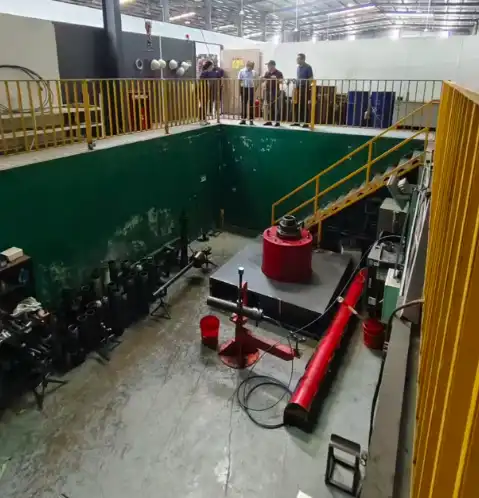
We do all of our alloy melting, extrusion (3,600-ton and 5,600-ton presses), and precision cutting in-house at HAGRIEN. This means that we can make dissolvable magnesium alloy extruded rods and billets up to Ø300 mm that are consistent from batch to batch and can be tracked. Our HTHP facility is certified by CNAS and tests performance in real-life downhole situations. ISO certifications and API recognition meet global standards for purchasing. We keep extras of standard sizes in stock and can deliver on common specs in two to four weeks. Custom engineering solutions take four to eight weeks to deliver, and there are fast-track choices for important projects.
Practical Tips for Bulk Purchasing and Supply Chain Optimization
To get magnesium alloys and dissolvable bars on a large scale, you need to plan ahead to make sure quality, cut costs, and make sure deliveries are on time across global supply lines.
Navigating Digital Procurement Platforms
Modern B2B platforms make it easier for buying teams to compare the skills of different suppliers, look at their certifications, and ask for technical datasheets. Use these tools to narrow down your choices for providers who offer full documentation openness, such as inspection records, batch traceability, and COA/COC packages that are ready for qualification. Digital RFQ systems shorten the time it takes to get quotes and standardize technical specs, which cuts down on misunderstandings and extra work.
Negotiating Pricing Structures and Contract Terms
When you commit to a certain amount of work, you can get better prices and be first in line for production times. This is especially helpful when metal supplies are low or magnesium prices are high. Talk about trade terms that are open, like EXW, FOB, or CIF, based on how much risk you are willing to take and how well you can handle transportation. Long-term framework deals with set delivery windows protect against changes in the market and make sure that materials are available at times that work with drilling plans. Think about performance-based terms that reward suppliers for consistent quality and on-time delivery.
Establishing Quality Assurance Protocols
Set up rules for inspecting arriving materials that compare their chemical make-up, mechanical qualities, and dissolution rates to the specs you were given when you bought them. Using standard methods (ASTM B93/B93M for makeup, static dissolution in 3% KCl at certain temps) for batch testing finds problems with materials before they are used in production. Make providers keep records of each ingot's melt batch, extruder run, and heat treatment cycle. This way, if problems happen in the field, they can quickly find the root cause.
Logistics Considerations for Global Supply Chains
To keep magnesium metals from oxidizing in transportation, they need to be stored in a climate-controlled area and packed in protective materials. Work with providers who can provide vacuum sealing, nitrogen blanketing, or protection coatings that are good for ocean freight that will be sent over a period of weeks. Look into North American coordination choices, like HAGRIEN's U.S. branch, that make clearing customs easier, offer local technical help, and lower the range of lead times. Just-in-time manufacturing models can be helped by regional warehouse methods that protect against supply problems.
Fostering Long-Term Supplier Relationships
Achieving good procurement goes beyond simple purchases and includes building long-term relationships that lead to constant growth. Reviewing business with providers on a regular basis can help find ways to improve processes, lower costs, and create new alloys. Working together on research projects, like trying materials for new CCUS or geothermal uses, is good for everyone and gives one company an edge over the others. Clear communication during changes in demand or technology issues builds trust and makes sure that help is available when project deadlines are slashed.
Conclusion
Magnesium alloys have huge benefits in terms of weight reduction, resistance to corrosion, ease of machining, and environmental sustainability. These benefits are in line with the practical and financial goals of oil and gas completion providers, E&P operators, and new energy developers. Advanced metallurgy solves important problems in the industry, like the Dissolvable magnesium Ingot, which gets rid of expensive treatments, boosts well output, and supports long-term resource development. Successful procurement strategies put an emphasis on providers who can show they have engineering skills, the ability to produce large quantities, the ability to track quality, and quick expert help. By using these materials in the creation of downhole tools and the completion process, procurement teams can cut down on rig time, running costs, and damage to the environment while also gaining a competitive edge in settings that are getting tougher to work in.
 FAQ
FAQ
1. What differentiates a dissolvable magnesium ingot from regular magnesium alloys?
Some types that dissolve include tiny alloying elements, such as iron or nickel, that cause controlled galvanic breakdown when they come into contact with certain ions. Regular alloys focus on long-term structural performance, while dissolvable alloys balance initial mechanical strength with designed degradation rates and disappear totally after their downhole purpose.
2. Can dissolvable magnesium materials withstand high-pressure fracturing operations?
During pumping activities, premium types keep their structural integrity at temperatures up to 150°C and pressures over 15,000 psi. Once the material is exposed to formation fluids after the frac, it starts to dissolve. This makes sure that it does its job of isolating before breaking down within the time limit.
3. Are the dissolution byproducts environmentally safe?
Magnesium hydroxide and hydrogen gas are the main leftovers. At industrial amounts, they are safe for people and the environment. Compliance with underground material compatibility standards has been confirmed by regulatory tests, and the process of dissolution leaves no metallic debris in the wellbore.
Partner with HAGRIEN for Reliable Dissolvable Magnesium Ingot Supply
HAGRIEN leverages materials expertise and large-scale manufacturing to provide high-performance Dissolvable magnesium Ingots that lower operational risks and accelerate project timelines. As a fully integrated manufacturer, we control every step from alloy melting and large-diameter extrusion to precision machining and CNAS-accredited HTHP laboratory testing. Our solutions help frac plug manufacturers and completion service providers secure certified, traceable raw materials with engineerable dissolution windows and batch consistency. With ISO 9001, 14001, 45001 certifications, API recognition, and U.S. coordination, standard specs ship in 2-4 weeks, custom in 4-8 weeks, backed by full documentation and responsive technical support. You can email our team at cyrus@us-hagrien.com to talk about your specific needs, ask for samples of our products, or look into OEM/ODM collaboration opportunities that will help your product line and place you in the market.
References
1. Davis, J.R. (2019). Magnesium Alloys: Properties, Processing, and Applications. ASM International Handbook Series.
2. Song, G. & Atrens, A. (2018). "Corrosion Mechanisms of Magnesium Alloys in Industrial Environments," Advanced Materials Research, Vol. 42, pp. 215-238.
3. Polmear, I.J., StJohn, D., Nie, J.F., & Qian, M. (2020). Light Alloys: Metallurgy of the Light Metals (Fifth Edition). Butterworth-Heinemann Technical Publications.
4. American Society for Testing and Materials (2021). ASTM B93/B93M-20: Standard Specification for Magnesium Alloy Ingots, ASTM International Standards.
5. Xu, W., Birbilis, N., & Atrens, A. (2022). "Controllable Degradation of Magnesium Alloys in Downhole Environments: A Review," Journal of Materials Science and Engineering, Vol. 58, pp. 103-127.
6. International Organization for Standardization (2020). ISO 9001:2015 Quality Management Systems—Requirements, ISO Standards Catalogue.

USER EVALUATE
Here is the customer's evaluation of us