




Why Use a Single-Use Frac Plug Setting Tool in Plug-and-Perf?
If you run wireline or coiled tubing operations, you already know how much a single failed setting run can cost — in rig time, crew hours, and project delays. A 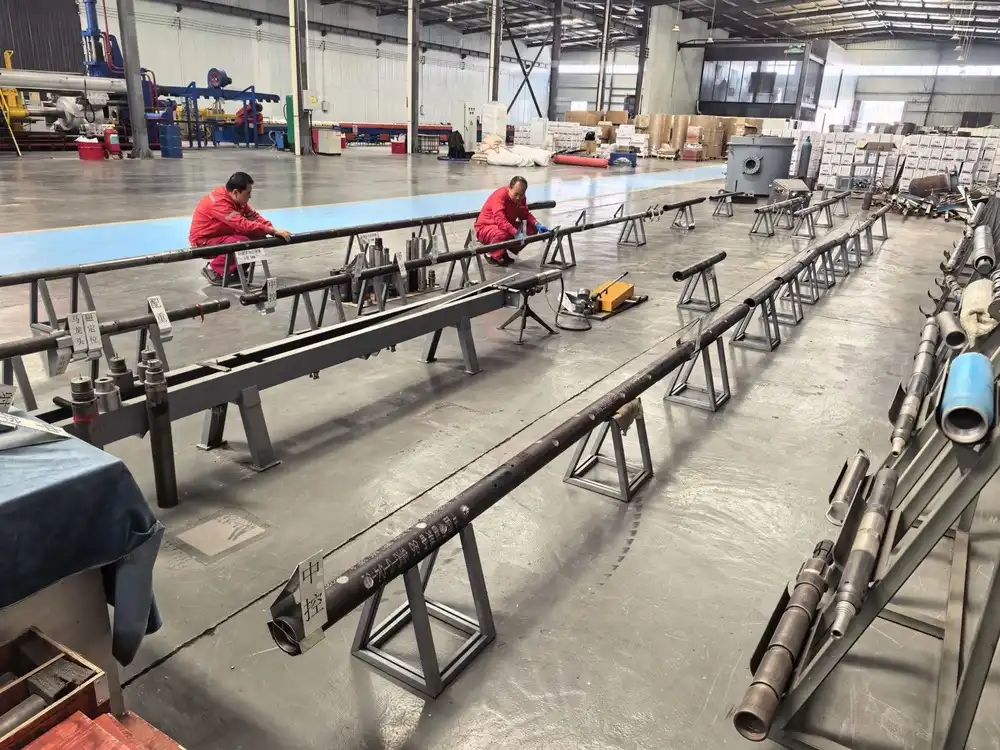
solves one of the most persistent pain points in plug-and-perf completions: the cost and risk tied to retrieving, inspecting, and redressing reusable setting equipment between stages. Designed for one-trip deployment, this disposable downhole device gives every stage a factory-fresh tool with zero accumulated wear, which directly supports more consistent plug isolation and lower non-productive time (NPT) across multi-stage horizontal wells.
Understanding Single-Use Frac Plug Setting Tools
What It Is and How It Works?
A single-use frac plug setting tool is a one-time use downhole intervention device made to use hydraulic or explosive force to set or release bridge plugs or frac plugs. The tool body is either left downhole or taken out as scrap after the plug is set and the shear pins are released. It is never redressed. This gets rid of the whole back-end loop that reusable tool programs have to go through, which includes transporting to a service center, inspection, seal replacement, and re-certification.
Material Construction and Design Logic
Built from high-strength metal steels that can handle up to 15,000 PSI of pressure and 300°F to 400°F of heat, these tools are very strong. The precise machining of the piston stroke ensures even compression of the plug, and a built-in dampening system keeps the cable string safe from setting shock. Since each unit is brand new from the factory, the internal seals have never been through any heat cycles or mechanical stress before. This is a big plus for reliability in HTHP wells.
Integration Into Plug-and-Perf Workflows
The usual plug-and-perf process starts with the setting tool being pumped down on e-line or slickline. It is then placed on top of the plug and fired by an explosive charge or hydraulic pressure. With a one-time-use design, cycle time from stage to stage is cut down because there is no need for an on-site tool technician to fix things up between runs. The HAGRIEN single-use frac plug setting tool is designed to be used only once. It has a setting force range of 5,000 to 30,000 lbf and can be used with composite, dissolvable, or cast-iron plugs by using universal crossover adapters.
 Advantages of Single-Use Frac Plug Setting Tools in Plug-and-Perf Operations
Lower Total Cost of Ownership
Setting tools that are thrown away cost more per unit than repair kits, but the total cost is very different. When you add up the cost of round-trip shipping, expert time, new seals, and a single NPT event caused by a worn tool, it usually makes sense to use single-use tools, especially when you have between 200 and 5,000 stages per year. When operators switch to a consumable model, they get rid of asset depreciation accounting and replace it with a simple cost line for each well.
Consistent Setting Force, Every Stage
Here are the main performance benefits that make wireline service companies want to use it:
- Zero-Hour Reliability: Every deployment uses brand-new seals and tight-tolerance parts, which get rid of any differences that could be caused by poor field redressing quality or wear and tear over time.
- Repeatable Setting Force: The piston stroke and charge shape are designed to make sure that every unit in the batch has the same setting force.
- HTHP-Rated Seals: Since seals are never used again, damage from previous heat cycles doesn't affect their reliability. In HTHP environments, operational reliability can be above 98%.
These performance traits directly address the most common worry among procurement managers, which is that a throwaway tool won't set properly or consistently. Full material traceability papers and testing at the batch level give operations teams the proof they need before committing to a project structure.
Safety and Field Handling Benefits
Single-use tools are usually smaller and lighter than reusable ones, which makes them easier to move around at the well site. They also get rid of the chance of a badly adjusted tool getting into the well, which is a failure mode that causes a lot of mechanical NPT in regular programs.
 Comparing Single-Use vs. Reusable Frac Plug Setting Tools
Durability and Reliability Tradeoffs
If you take good care of your reusable setting tools, they will work well for many runs, but how reliable they are depends on how consistently you fix them. In businesses with a lot of work, changing crews, and tight plans, it's hard to keep that level of consistency. A single-use frac plug setting tool gets rid of that variable by returning the tool to its original state at the end of each stage.
Cost Structure Differences
Reusable tools have an initial capital cost and ongoing maintenance costs. With single-use tools, that capital structure is turned into a running cost that goes up or down in a straight line with the number of stages. For wireline service companies that bill by the well or stage, this makes it easier to report on the finances at the project level and more directly links cost collection with revenue creation.
When Single-Use Makes the Most Sense
Single-use setting tools are clearly better in three situations:
- Multi-stage unconventional shale completions, where the main goal is to cut down on cycle time between steps.
- HTHP environments where elastomer breakdown from prior heat cycles causes unacceptable plug isolation risk.
- Remote or deepwater operations where it would be impossible or too expensive to transport tools to a service center for repair.
In these situations, managing a fleet of reused tools is more difficult than managing a fleet of consumable tools, which are ordered, delivered, used, and then recycled.
 Procurement Insights for Single-Use Frac Plug Setting Tools
Sourcing and Supplier Evaluation
Before you choose a supplier for a single-use frac plug setting tool, make sure that they offer full material test reports (MTR), hydrostatic shell test data, and dimensional inspection records using coordinate measuring machines (CMM). As a standard, you need to be certified in ISO 9001 and follow NACE MR0175 for sour service environments. HAGRIEN offers ISO-certified tools that can be fully tracked from batch to batch, as well as HTHP laboratory validation that is recognized by the CNAS. These tools meet the requirements for supplier qualification documentation.
Lead Times and Inventory Planning
Standard sizes usually have lead times of two to four weeks from stock, while engineered dissolution windows or sizes that are made to order take four to eight weeks. Setting up an annual framework deal with safety stock measures stops supply gaps during high-volume project peaks, which happen a lot in Permian Basin or Eagle Ford pad drilling programs. HAGRIEN offers choices for stocking and fast output that can be adjusted to fit the needs of each project.
Quality Control Checkpoints
Before accepting a batch, procurement teams should check five quality control areas: the pressure inside the shell, the full MTR traceability for load-bearing parts, the integrity of the nitrogen or hydraulic seal, the dimensions of the adapter threads using a computer machining system, and the performance of the product under axial loads in long lateral wells through tensile testing. One of the biggest worries people have when switching to a consumable tool model is that batches might not be consistent. These checks protect against this.
Troubleshooting and Pre-Deployment Inspection
Common Failure Modes to Watch
When throwaway setting tools are used in the field, the most common problems are crossover adapter thread engagement issues, shear pin setup issues for the target plug type, and pressure rating issues that don't match well conditions. Most failures can be avoided by using a pre-job inspection checklist to check the OD clearance for the casing weight, adapter compatibility, and charge specification.
Safe Disposal and Environmental Responsibility
The high-quality steel used to make HAGRIEN's single-use frac plug setting tool can be recycled over and over again. A recycling program for tools also lowers the carbon footprint per well compared to programs that have trucks take tools back and forth to service centers over and over again. This is an argument that is becoming more and more important to operators who care about the environment and society.
Supplier Feedback Loops
Design iteration goes faster when you work closely with the maker of your single-use tool on run reports and failure data. When it comes to field input, suppliers who do their own research and development and have closed-loop process control (from material design to final inspection) are faster to answer than those who use outside machining subcontractors.
 Conclusion
It's not just a matter of switching from reused to throwaway setting tools; it's a shift in how things are run. The numbers back it up: lower NPT risk, easier logistics, clear costs per well, and consistent setting performance no matter the crew or shift. The overall cost and reliability benefits are big for wireline service companies that run 200 or more stages a year. HAGRIEN's single-use frac plug setting tool program is designed to help with this shift on a large scale. It is made in a way that is ISO-certified, has a setting force range of 5,000 to 30,000 lbf, and full batch tracking.
FAQ
1. Can a single-use frac plug setting tool work with different plug types?
Yes. Universal crossover adapters are used in most one-time setting tools. These adapters are made to fit composite, dissolvable, and cast-iron frac plugs from major makers. A standard step in the procurement process is to make sure that the adapter threads will work with the plugs you already have before placing an order.
2. Does switching to disposable tools raise total completion cost?
No, not usually. The price per unit is higher than the cost of a redress kit, but the total cost of ownership is usually cheaper because of the saves in transportation, labor, and not having to use NPT. This is especially true when there are more stages.
3. Are these tools rated for H2S or sour service?
Yes, there are materials that meet NACE MR0175 standards that can be used in bad service settings. Check the bad service label when you place your order.
4. What actuation methods are supported?
Single-use setting tools come in two types: e-line (explosive power charge) and hydraulic. They can be used for both slickline and coiled tubing deployment.
5. What happens to the tool after setting?
The tool body either stays downhole or is found and taken away as scrap. Because it is made of high-quality steel, it can be recycled in any way, which helps with responsible disposal programs at the wellsite.
Request a Quote from HAGRIEN — Single-Use Frac Plug Setting Tool Supplier
HAGRIEN makes single-use frac plug setting tool that can only be used once. These tools are certified by ISO 9001, have been validated by a CNAS-accredited HTHP laboratory, and come with full batch tracking paperwork. Within 24 hours, our team answers technical questions, and within 1–3 business days, they give official quotes. You can talk to our engineering team directly about your project needs by emailing cyrus@us-hagrien.com or visiting us-hagrien.com. We can help you with anything from samples for a test project to a framework deal for yearly volume.
References
1. American Petroleum Institute. API 11D1: Packers and Bridge Plugs. American Petroleum Institute, 2015.
2. Economides, Michael J., and Kenneth G. Nolte. Reservoir Stimulation. 3rd ed., John Wiley & Sons, 2000.
3. Montgomery, Carl T., and Michael B. Smith. "Hydraulic Fracturing: History of an Enduring Technology." Journal of Petroleum Technology, Society of Petroleum Engineers, 2010.
4. NACE International. MR0175/ISO 15156: Petroleum and Natural Gas Industries — Materials for Use in H2S-Containing Environments. NACE International, 2015.
5. Bommer, Paul M. A Primer of Oilwell Drilling. 7th ed., University of Texas Press, 2008.
6. King, George E. "Hydraulic Fracturing 101: What Every Representative, Environmentalist, Regulator, Reporter, Investor, University Researcher, Neighbor, and Engineer Should Know About Estimating Frac Risk and Improving Frac Performance in Unconventional Gas and Oil Wells." SPE Hydraulic Fracturing Technology Conference, Society of Petroleum Engineers, 2012.

USER EVALUATE
Here is the customer's evaluation of us